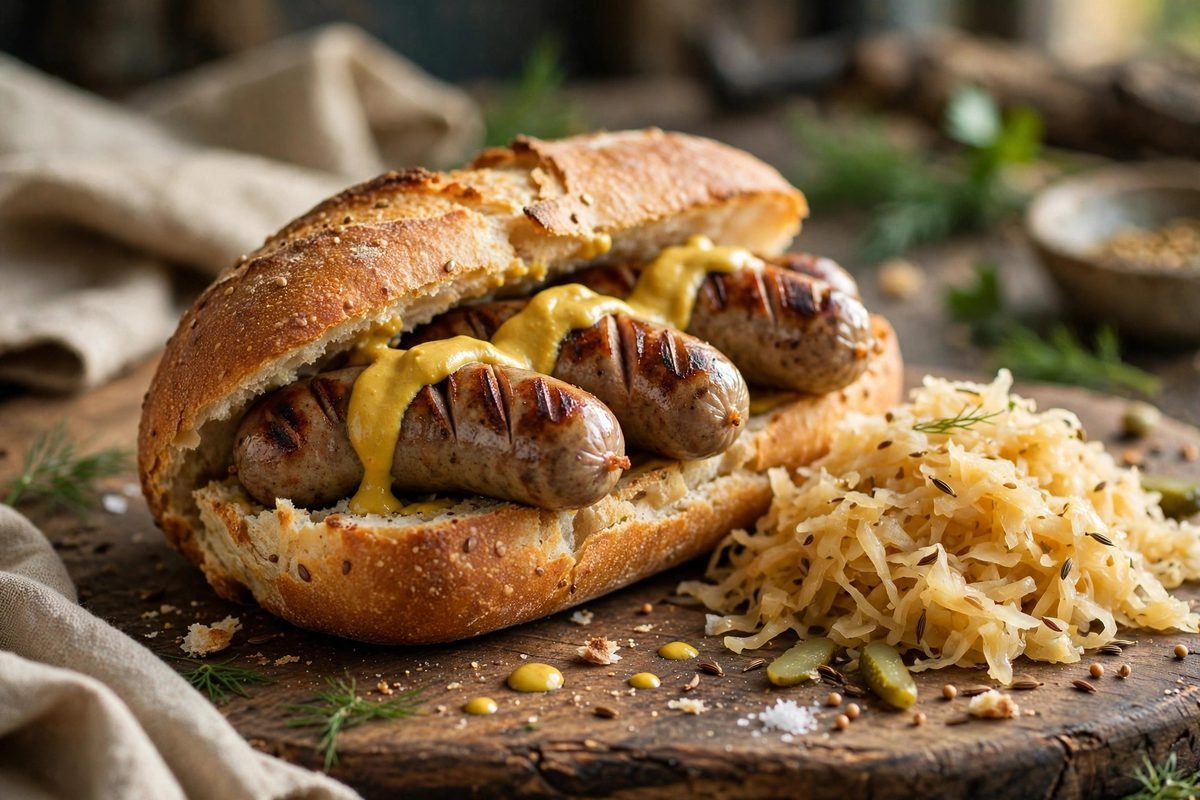

Bratwurst is the sausage that turns an ordinary barbecue into an occasion: plump, juicy and gently spiced, with a crisp snap when you bite through the skin. It comes from Germany, where hundreds of regional recipes exist, and it has become a fixture at grills, markets and street stalls far beyond its home country.
So what exactly is bratwurst, and how should you cook it? It is a fresh sausage, usually pork, sometimes veal or beef, seasoned with salt, pepper and spices such as nutmeg, marjoram or caraway, then stuffed into a natural casing. Cook it gently over medium heat until browned outside and cooked through, serve it in a bread roll with mustard, and it needs little else to be a proper meal.
Key takeaways:
- Bratwurst is a fresh German sausage, most often made from pork, seasoned with spices such as marjoram, nutmeg or caraway.
- Regional types differ in size, seasoning and texture — Nürnberger are small and slim, Thüringer longer and more robustly spiced.
- Cook bratwurst over medium heat on the grill, in a pan or in the oven, until browned outside and cooked through, with an internal temperature of 71°C (160°F).
- Serve in a bread roll with mustard, sauerkraut or grilled onions; refrigerate leftovers within two hours and use them within three to four days.
What is bratwurst?
The name comes from Old High German: brāt, meaning finely chopped meat, and wurst, meaning sausage. Bratwurst is a fresh sausage made from finely ground meat, lightly seasoned, and sold raw, ready to be grilled, fried or baked.
Pork is the classic base, and many recipes mix in some veal for a finer texture. Beef versions exist too, for those who do not eat pork. The meat is ground, mixed with salt, pepper and a spice blend, then filled into natural casings, which give the sausage its characteristic snap.
Unlike cured sausages such as salami, bratwurst is not dried or smoked before it reaches you, so it must be cooked through and eaten fresh. That freshness is its charm: the flavour is clean and meaty rather than salty and intense, which is why it pairs so well with sharp mustard and tangy sauerkraut. It has been part of German food culture for centuries, with the earliest records appearing in the fourteenth century.
What are the main types of bratwurst?
Most bratwurst falls into a few well-known types, differing in meat, grind, seasoning and size, and each suits a slightly different way of cooking.
| Type | Size and texture | Seasoning | Best for |
|---|---|---|---|
| Nürnberger | Small and slim, about the length of a finger | Marjoram, mild and delicate | Grilling, three to a roll |
| Thüringer | Long and medium thick, coarse grind | Caraway, garlic, pepper | The grill, with mustard and a bread roll |
| Fränkische | Medium thick, coarse and juicy | Marjoram, nutmeg, white pepper | Pan frying, with sauerkraut |
| Weisswurst | Pale, plump, finely ground veal and pork | Parsley, lemon, mace, ginger | Simmering, eaten before midday |
The Nürnberger is the most famous and the smallest: tradition says it should be no longer than a finger, and it is usually served three at a time in a bread roll. The Thüringer is its opposite, long and coarse, with a bold, peppery flavour that stands up to charcoal smoke. Weisswurst is a Bavarian speciality of veal and pork, pale because it is never smoked, simmered gently in hot water rather than grilled, and eaten before noon with the skin peeled away.
Outside Germany, supermarket bratwurst is usually a general-purpose pork version, close in style to the Thüringer or Fränkische, and it cooks well by every method in this guide.
How to cook bratwurst on the grill

The grill is where bratwurst belongs — and where most mistakes happen. The secret is patience: medium heat, regular turning, and no pricking, so the juices stay inside the casing.
Take the sausages out of the fridge about fifteen minutes before cooking, so they are not ice cold when they hit the heat. Let the grill settle to a steady medium heat: with charcoal, wait until the coals are covered in grey ash; with gas, set the burners to medium and close the lid for a few minutes.
Place the bratwurst on the grate and close the lid. Cook for fifteen to twenty minutes, turning every few minutes with tongs so each side browns evenly. Never pierce the skin: the juices escape, the sausage dries out, and fat dripping onto the coals causes flare-ups that burn the outside before the inside is cooked.
If the sausages brown too fast, move them to a cooler part of the grill, away from direct heat. Check with a meat thermometer: the centre should reach 71°C (160°F). Without one, cut a sausage open — the meat should be firm and evenly coloured, with no pink in the centre. Rest them for a few minutes before serving, so the juices settle.
How to cook bratwurst in a pan
Pan frying is the quickest way to cook bratwurst, and it works well when the weather keeps you indoors — and it lets you build flavour in the pan, with onions and a little beer or stock.
Warm a heavy pan over medium heat with a little oil or butter. Lay the sausages in, leaving space between them, and cook for twelve to fifteen minutes, turning regularly so they brown on all sides. High heat browns the outside before the inside is cooked, and low heat leaves them pale and grey.
For extra flavour, add sliced onions halfway through cooking and let them soften in the sausage fat. A splash of beer or stock in the last few minutes keeps the sausages moist. Check that the centre reaches 71°C (160°F), and rest briefly before serving.
How to cook bratwurst in the oven
The oven is the easiest method for a crowd, because it needs almost no attention, and it keeps the kitchen cleaner than pan frying.
Heat the oven to 200°C (180°C fan). Place the bratwurst on a lined baking tray, leaving space between them, and cook for twenty to twenty-five minutes, turning once halfway through. They are done when evenly browned and the centre reaches 71°C (160°F).
For a one-tray meal, add sliced onions, peppers and potatoes to the tray for the last fifteen minutes, tossed in a little oil; they roast in the sausage fat and everything comes out together. The oven is also best for frozen bratwurst: add about ten extra minutes, and make sure the centre is fully cooked.
How should you serve bratwurst?
The classic way to serve bratwurst is also the simplest: in a bread roll, with mustard. A soft white roll is traditional; a crusty roll holds up better with sauerkraut or onions. German mustard is sharper and darker than yellow mustard, and it suits the sausage well — but any good mustard will do.
Sauerkraut is the natural partner: its sharpness cuts through the richness of the pork. Grilled or fried onions are the other classic topping, sweet and soft against the snappy sausage. A spoonful of curry ketchup turns a plain bratwurst into currywurst, the Berlin street-food favourite.
As a meal, serve bratwurst with potato salad, mashed potatoes or roasted potatoes, and a simple green salad. A cold beer is the traditional drink, and a lager or wheat beer suits it best. Cheese works too: a slice left to soften on a grilled bratwurst is a crowd-pleaser, and our guide to the best cheese for burgers covers the varieties that melt well.
How should you store bratwurst safely?
Bratwurst is a fresh sausage, so storage matters more than for cured meats. Treat it like fresh minced meat: keep it cold, use it promptly, and cook it thoroughly.
Fresh bratwurst keeps in the fridge for one to two days, so buy it the day you plan to cook it, or freeze it the same day. Keep it in its sealed pack on the lowest shelf, where it cannot drip onto other food.
Leftovers should go into the fridge within two hours of cooking, and be used within three to four days. Reheat them until piping hot all the way through, and never reheat more than once. Frozen bratwurst keeps for two to three months in a sealed bag; defrost it in the fridge overnight, never on the counter, and cook it the same day.
Your bratwurst checklist
Use this list next time you buy, cook and serve bratwurst.
- Buy fresh: cook bratwurst within one to two days, or freeze it the same day.
- Pick the right type: Nürnberger for small rolls and parties, Thüringer for the grill, Weisswurst for simmering.
- Cook gently: medium heat, regular turning, never prick the skin.
- Check the temperature: the centre should reach 71°C (160°F), or be firm and evenly coloured with no pink.
- Rest before serving: a few minutes lets the juices settle.
- Serve simply: a bread roll, mustard, sauerkraut or grilled onions.
- Store safely: refrigerate leftovers within two hours, use within three to four days, never reheat more than once.
Frequently asked questions
What is bratwurst made of?
Bratwurst is most often made from pork, sometimes mixed with veal, and seasoned with salt, pepper and spices such as marjoram, nutmeg or caraway; beef versions are also available. The meat is finely ground and filled into natural casings.
Do you need to boil bratwurst before grilling it?
No — grill it gently over medium heat, turning regularly, until browned and cooked through. Simmering first and then searing is an option if you want extra insurance against undercooking, but it is not required.
How do you know when bratwurst is cooked?
Use a meat thermometer: the centre should reach 71°C (160°F). Without one, cut a sausage open — the meat should be firm and evenly coloured, with no pink in the centre, and the juices should run clear.
What is the difference between bratwurst and an ordinary sausage?
Bratwurst is a specific German fresh sausage, usually pork, with a fine grind and a gentle spice blend of marjoram, nutmeg or caraway. Ordinary sausages vary far more widely in meat, seasoning and texture, and many are coarser or more heavily spiced.
Can you cook bratwurst from frozen?
Yes, in the oven: add about ten extra minutes and check that the centre is fully cooked. On the grill or in a pan, frozen sausages cook unevenly, so defrost them in the fridge overnight first.
What do you serve with bratwurst?
The classics are a bread roll, mustard, sauerkraut and grilled onions. As a meal, add potato salad, mashed potatoes or roasted vegetables, and a cold lager or wheat beer to drink.
Sources
Background on bratwurst types and regional traditions follows standard German food writing, including the Nuremberg and Thuringia sausage traditions. Cooking temperatures and storage guidance follow the food safety guidance published by the US Department of Agriculture’s Food Safety and Inspection Service.
The bottom line
Bratwurst asks very little of the cook and gives a great deal back: good meat, gentle seasoning, medium heat and a little patience are all it takes. Choose a type you like, cook it slowly until it is browned and cooked through, and serve it simply, with mustard and a bread roll.
Your next step is simple: next time you light the grill, put bratwurst on the menu and try a type you have not cooked before. That is how a familiar sausage becomes a favourite.
Food safety note: always cook fresh sausages through to 71°C (160°F), refrigerate leftovers within two hours, use them within three to four days, and never reheat them more than once. If in doubt, throw it out.