


What do you call a haircut that looks like a bowl cut grew a stubborn streak? If you have scrolled through social media lately, you have probably seen the answer: the bull cut. It is one of those terms that seems to appear out of nowhere, gets repeated a thousand times, and suddenly everyone assumes it has always existed. It hasn’t.
The bull cut is best understood as an informal, social-media-driven label rather than a fixed style with a rulebook. Most of the time, it describes a short cut with a heavy, blunt fringe across the forehead and short sides, which puts it in the same family as the bowl cut and the French crop. But the term is slippery, and that is exactly why it is worth unpacking before anyone sits in a barber’s chair and asks for one.
Where the Term Comes From and Why It Is Confusing
Haircut names are not regulated. There is no official body that decides what a bull cut is, no standard definition in barbering textbooks, and no safety or industry code that applies. That matters because it means the term lives entirely in community usage, and community usage shifts fast.
The bull cut does not appear as a standard entry in mainstream barbering classification. It shows up mainly in informal online conversation, which is why two people can use the same phrase and mean two different things. In grooming language, “bull” usually attaches to other ideas entirely, like bull’s head or bull horn imagery, or to beard terminology. That suggests the haircut name is a recent coinage, borrowed for its vibe rather than its precision.
You will also see spelling variants floating around: bull cut, bullcut, and bull-cut. None is more correct than the others, because none is standardized. If you are searching for inspiration, try all three, and expect the results to blur together.
What a Bull Cut Usually Means in Practice
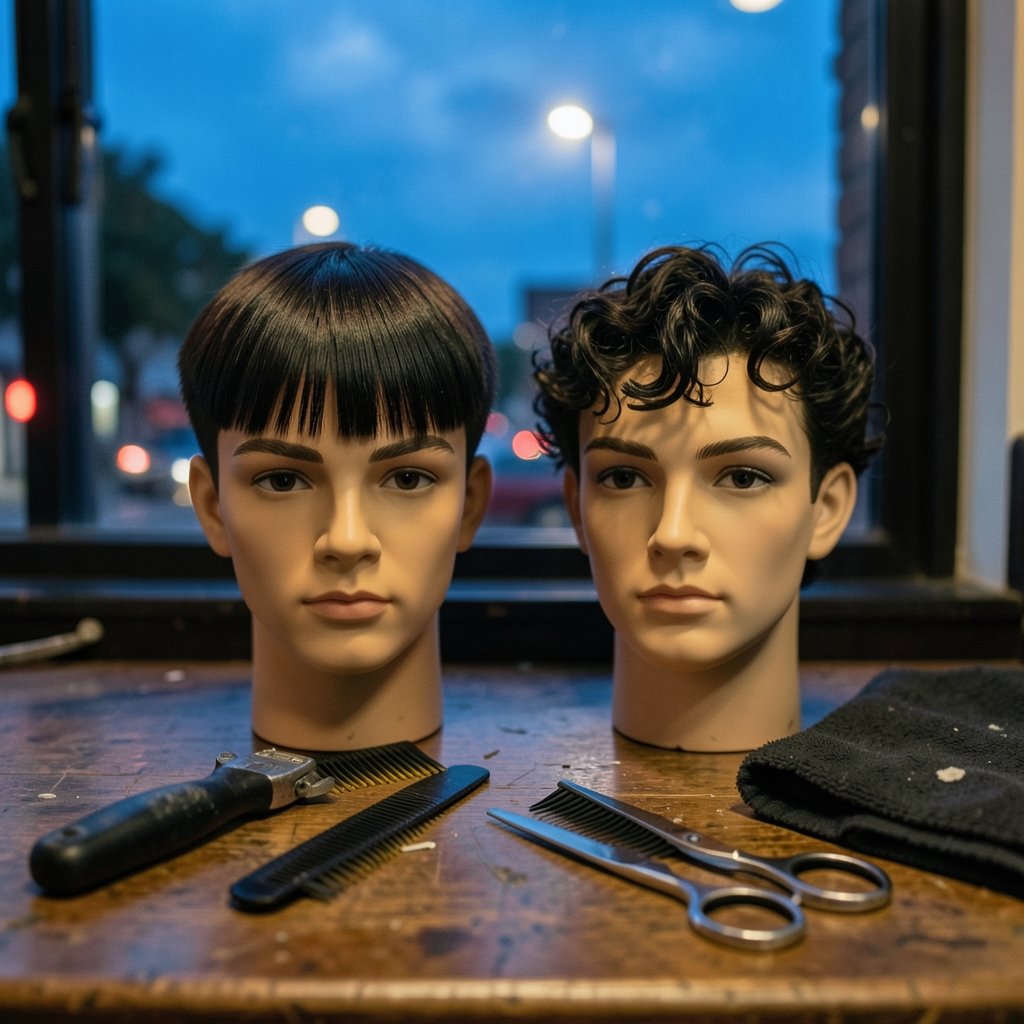
The most common usage describes a short men’s or boys’ cut with a thick, blunt, straight-across fringe and short sides. Picture the silhouette of a bowl cut, but with a heavier front and a more deliberate, almost helmet-like line across the forehead. It reads as bold, slightly retro, and a little stubborn, which is presumably where the “bull” association comes from.
A second, conflicting usage appears in some social posts: a short cut with tight curls or a textured, forward-swept fringe. This version leans on curl pattern rather than a blunt scissor line. Because the two definitions do not match, anyone researching the style should treat every photo as one person’s interpretation rather than a rule.
The closest recognized terms are the bowl cut, with its blunt fringe and rounded silhouette, and the French crop, which pairs short back and sides with a blunt fringe. The bowl cut’s mainstream popularity traces to the 1960s and 1970s, when bands wore it and it spread widely, and it has been revived repeatedly since. The bull cut is essentially a modern, internet-flavored cousin of that lineage.
| Feature | Bull cut (informal usage) | Bowl cut | French crop |
|---|---|---|---|
| Fringe | Thick, blunt, straight across | Blunt, rounded | Blunt, often textured |
| Sides | Short | Rounded, blended | Short back and sides |
| Length on top | Short to medium | Medium, curved over | Short to medium |
| Typical vibe | Bold, retro, playful | Retro, uniform | Clean, modern |
| Defined by | Social media, not standards | Long-established style | Long-established style |
How to Describe It to a Barber Without Saying “Bull Cut”
The single most practical tip for this style is simple: do not rely on the name alone. A barber who has never heard the term is not out of touch. They are working from established vocabulary, and the fastest way to get the cut you want is to speak that vocabulary.
Bring a photo. Two photos are better, ideally one from the front and one from the side. Point to the fringe line and say how heavy you want it. Say whether you want the sides faded, scissor-cut, or clipped to a specific guard. Say whether the fringe should sit flat or be textured with point cutting. Those four decisions cover most of what makes one blunt-fringe cut look different from another.
Common mistakes people make here are worth naming. The first is asking for a “bull cut” and hoping the barber fills in the blanks. The second is showing a photo of a model with a different hair type, hairline, or head shape and expecting an identical result. The third is forgetting the fringe’s growth pattern. A cowlick at the front hairline will fight a flat, blunt fringe every single morning, and no amount of styling product fixes it permanently.
What actually works is a short consultation before the cape goes on. Ask the barber to show you where the fringe will sit, how much weight will be removed, and how the cut will look in three weeks. A good blunt fringe needs regular maintenance, usually every three to five weeks, because the line loses its crispness quickly as it grows out.
If you are still narrowing down a direction, it helps to look at how cut choice works more broadly. A guide to hair styles for 2026 can help you match a trend to your face shape and routine rather than chasing a label. The same principle applies to men’s cuts: the smart move is to pick a cut that actually suits your hair, including its density, growth pattern, and how much time you will honestly spend styling it.
Who the Bull Cut Suits and Who Should Skip It
The blunt-fringe family is forgiving in some ways and unforgiving in others. It tends to work well on straight or gently wavy hair with reasonable density, because the hair needs enough body to hold a clean line across the forehead. It can look sharp on oval and longer face shapes, where the horizontal fringe adds width and balances length.
It is harder on very curly or coily hair in its blunt form, because the hair will not lie flat without heavy styling, and the line will not stay crisp. That does not rule it out; it just means the curly interpretation of the bull cut is a different cut, usually a textured crop with a shaped fringe rather than a hard horizontal line.
It also demands honesty about maintenance. A blunt fringe that is left too long starts to look like a helmet. One that is cut too short can look severe. The window between the two is narrow, which is why frequent trims matter more than the initial cut.
The result depends on the equipment and the operator as well as the request, and other tools and routines show the same pattern. Anyone who has tried to fade their own hair knows this. A guide on buzz cut trimmers that cut clean rather than hot makes the point well, because a dull blade drags and pulls no matter how good the intention. The same logic applies to a blunt fringe: sharp scissors and a steady hand produce the line, and nothing else does.
Styling and Maintaining a Blunt Fringe
The daily routine for a bull cut is short but not zero. Start with damp hair, not soaking wet, because water-heavy hair stretches and dries shorter than expected. Apply a small amount of light cream or mousse to the fringe, comb it straight down, and let it dry flat. If you want texture rather than a solid block, work a matte paste through the ends with your fingers instead of a comb.
Avoid heavy gels and pomades on the fringe itself. They clump the hair, make the line look greasy, and are difficult to brush out without pulling. A light hold product keeps the shape without the weight.
For maintenance, book trims before the fringe reaches your eyebrows. Most people need one every three to five weeks. Between visits, a tiny amount of trimming of stray hairs is fine, but resist the urge to “even out” the whole line at home. It rarely ends well, and a barber can usually spot a home trim instantly.
Sleep position matters more than people expect. If you sleep on your face or side, the fringe will flatten and kink overnight. A quick damp comb in the morning resets it. If your hair is prone to cowlicks, ask the barber to leave slightly more length at the front so the weight helps it lie down.
How the Bull Cut Fits Into Broader Hair Trends
Trend cycles in hair move faster now because social platforms reward novelty and memorable names. A label like bull cut spreads because it is short, punchy, and slightly absurd, not because it describes something new. The underlying shape has existed for decades under other names.
That is not a criticism. Informal names are how most people find styles in the first place, and a memorable label can help someone who has no idea what to ask for. The risk is only in treating the label as a specification. A name is a starting point for a conversation, not a substitute for one.
The same pattern shows up across trades and hobbies: a catchy term circulates, people adopt it, and the practical details get lost in the shorthand. A piece on blind woodworking and how blind makers cut, measure, and build confidence makes a similar point from a different angle. Precision comes from method and measurement, not from the name of the technique. Even something as specific as a veal chop shows how a single word can carry a lot of unstated assumptions that only become clear when you actually work with it.
The takeaway for hair is straightforward. If you like the look of a heavy blunt fringe with short sides, you already know what to ask for. The name is optional.
Conclusion
The bull cut is not an official style, and anyone who tells you otherwise is overselling a social media label. It is an informal term that most often points to a short cut with a thick, blunt fringe and short sides, sitting somewhere between a bowl cut and a French crop. A smaller camp uses it for a curly, textured variant, which is why the term causes confusion.
The practical path is the same either way. Find two photos that show the front and the side. Tell your barber exactly how heavy you want the fringe and how short you want the sides. Be honest about your hair type and your willingness to book trims every few weeks. Then let the scissors do the work.
Names come and go. A clean line, the right length, and a cut that suits your hair will outlast every label that tries to describe it.
What exactly is a bull cut hairstyle?
It is an informal, social-media-driven term rather than a standardized style. In most usage, it describes a short cut with a thick, blunt fringe across the forehead and short sides, similar to a bowl cut or a French crop. No barbering authority defines it, so treat any definition as one community’s interpretation.
Is a bull cut the same as a bowl cut?
Not exactly, but they are close relatives. The bowl cut has a blunt fringe and a rounded silhouette and has been a recognized style since the 1960s and 1970s. The bull cut usually reads as a heavier, more deliberate version of that same blunt-fringe shape, often with shorter sides.
What should I tell my barber if I want one?
Skip the name and describe the shape. Bring front and side photos, specify how heavy and how long you want the fringe, and say whether the sides should be faded, scissor-cut, or clipped to a guard number. Ask where the fringe will sit and how the cut will look in three weeks.
Will a bull cut work on curly hair?
A hard, flat, blunt fringe usually will not lie flat on very curly or coily hair without heavy styling. The workable version is a textured crop with a shaped rather than razor-straight fringe. Ask the barber to work with your curl pattern instead of fighting it.
How often does a blunt fringe need trimming?
Plan on every three to five weeks. The line loses its crispness quickly as it grows out, and a fringe that reaches the eyebrows starts to look like a helmet. Resist evening up the line at home between visits, because it is very hard to correct.
Why is it called a bull cut?
There is no documented origin. The name likely spread because it is short, memorable, and suggests a stubborn, headstrong look. In grooming language, “bull” usually appears in beard terminology and bull horn imagery rather than as a haircut name, which supports the idea that the term is a recent coinage.









