


What if the secret to a sharp, smudge-proof eyeliner was sitting in a little compact, waiting for a single drop of water? That is exactly how cake eyeliner works, and it is why makeup artists keep coming back to it decades after liquid pens took over drugstore shelves. This pressed powder eyeliner looks humble, applies like paint, and rewards anyone willing to learn its quirks. Here is how it actually behaves, where it goes wrong, and why it deserves a spot in your kit.
What Cake Eyeliner Actually Is
Cake eyeliner is a pressed powder eyeliner, usually sold in a small compact or pan. It contains pigments, fillers, and binders pressed into a solid block. On its own, it does nothing. Add a damp brush, and the surface turns into a paint-like paste you can drag into a line.
The word “cake” refers to the pressed solid form, not to any food ingredient. The term comes from cosmetic-industry usage, and it shows up in theatrical, stage, and drag makeup because the format allows high opacity and very precise edges.
It is not the same product as gel, liquid, or pencil liner. Each one behaves differently, and knowing the differences saves a lot of frustration.
| Feature | Cake eyeliner | Liquid liner | Gel liner | Pencil liner |
|---|---|---|---|---|
| Form | Pressed powder | Liquid in a tube | Cream in a pot | Wax-based stick |
| Application | Damp angled brush | Built-in felt or brush tip | Brush or angled brush | Direct from the stick |
| Opacity control | High, adjustable with water | Fixed by formula | Moderate to high | Low to moderate |
| Line sharpness | Very sharp | Very sharp | Sharp | Soft |
| Best for | Precision, stage, graphic looks | Quick everyday wings | Blended or bold lines | Tightlining, soft looks |
| Learning curve | Moderate | Low | Low | Very low |
The adjustable part matters. With a cake liner, you decide how wet the brush is, and that decision changes how the product performs. That control is the whole point.
How to Apply Cake Eyeliner So It Actually Works
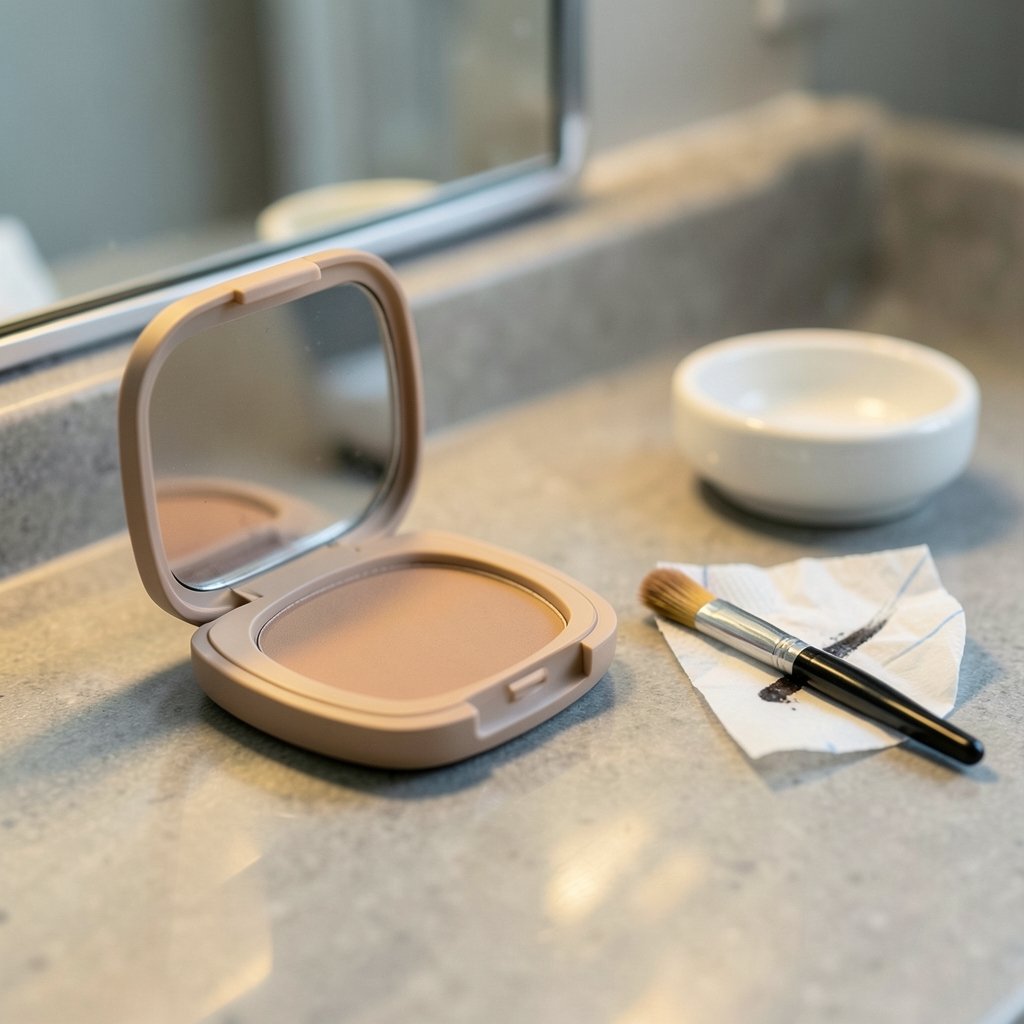
The technique is simple, but small mistakes cause most of the problems people blame on the product. Follow these steps in order.
- Start with a dry compact. Keep the surface dry between uses. Water left sitting on the powder dries into a hard crust that is difficult to work with later.
- Dampen the brush, not the cake. Wet an angled brush and tap off the excess. A slightly damp brush is right; a soaking one floods the powder and creates a watery, patchy paste.
- Load the brush by swirling gently. Drag the damp brush across the surface a few times until the tip is coated evenly. Do not dig or scrub.
- Build in thin layers. Draw a thin line first, let it set for a few seconds, then go over it to thicken. Thin layers dry faster and stay sharper than one heavy pass.
- Work one eye at a time. The paste dries quickly. Finish one line before loading the brush again.
- Let it set before touching. Give the line 20 to 30 seconds to dry, then check the shape. Adjusting wet cake liner smears; adjusting dry cake liner is easy.
- Close the compact tightly. Moisture and air are the two things that ruin a cake liner fastest.
A common mistake is dipping the brush, shaking off water onto the powder, and then wondering why the surface looks cracked. Another is using a fluffy brush. Cake liner needs a firm, angled brush with a fine tip to get a crisp edge.
Choosing the Right Brush and Water Ratio
The brush does more work than most people expect. A firm synthetic angled brush holds a sharp edge and releases product evenly. A soft brush picks up too little pigment and leaves a faint, uneven line.
The water ratio is the other half of the equation. Think of it as a dial:
- Barely damp: thin, precise, almost hairline strokes. Good for tightlining and subtle definition.
- Moderately damp: the sweet spot for classic wings and everyday lines.
- Wet: bold, graphic, and slightly translucent at the edges. Useful for stage looks and dramatic shapes.
If the line looks watery or beads up, the brush is too wet. If the brush drags and skips, it is too dry. Adjust by a few drops, not a splash.
Why Makeup Artists Still Use It
Cake liner has survived for practical reasons. It builds to high opacity, it holds a sharp edge, and it works well for shapes that need geometry rather than softness. Theatrical and drag performers favor it because a single compact can produce both a hairline and a bold graphic stroke.
It also travels well. A pressed cake will not leak in a bag the way a liquid liner can, and it does not dry out the way a gel pot eventually does. For anyone who has opened a gel liner to find it hardened, that is a real advantage.
The trade-off is speed. Liquid liner is faster for a rushed morning wing. Cake liner asks for a few extra seconds and a steadier hand. Whether that trade is worth it depends on how much control you want.
Common Problems and How to Fix Them
Most cake liner complaints trace back to technique rather than the product itself. Here is a quick troubleshooting guide.
| Problem | Likely cause | Fix |
|---|---|---|
| Line looks patchy | Brush too dry or too little product | Dampen the brush slightly and reload |
| Line bleeds or feathers | Brush too wet | Tap off excess water and build thin layers |
| Product cracks in the pan | Water left on the surface | Wipe the surface dry after use and close tightly |
| Line fades by midday | Oily lids or no primer | Use an eye primer and set with a matching powder |
| Crust forms on top | Moisture and repeated dipping | Scrape the crust gently with a clean tool |
| Line smudges when adjusting | Touching it while wet | Wait for it to set, then correct |
Longevity and smudge resistance depend heavily on the formula and on skin type. Oily lids break down most liners faster, and cake liner is no exception. A primer underneath and a light dusting of translucent powder over the finished line make a noticeable difference for many people.
Cake Eyeliner vs. the Rest: What the Format Does Better
The comparison is not about one product being universally superior. It is about matching the format to the job.
Cake liner wins on control and precision. You set the consistency, you set the opacity, and you get a very sharp edge. It wins on portability because it does not leak. It wins on versatility because one compact covers subtle definition and full drama.
Liquid liner wins on speed and on consistency for beginners. Gel liner wins on blendability if you want a smoky effect. Pencil wins on ease for tightlining and waterlines.
If your goal is a quick five-second wing before work, a liquid pen is probably the better tool. If your goal is a shape that needs to be exact, or a look that needs to hold up under stage lighting, cake liner earns its place. The same logic applies to most tool choices: match the instrument to the job, not to the trend.
Ingredients, Safety, and What to Check
Pressed powder liners typically contain pigments, fillers such as talc or mica, and binders. Exact formulations vary by brand and are not standardized, so two cake liners can behave quite differently.
A few practical safety points are worth keeping in mind:
- Never share the product or the brush. Eyes are sensitive, and shared tools spread bacteria.
- Do not add saliva to the cake. It sounds convenient, but it introduces bacteria directly into the product. Use clean water.
- Replace products that smell or look changed. Cosmetic ingredient rules differ by jurisdiction, and labeling requirements vary, so check the packaging for the maker’s guidance.
- Patch test new products. Sensitive skin reacts to different ingredients, and a small test on the inner arm is a cheap precaution.
Specific brand formulations and safety determinations cannot be confirmed without checking primary sources, and rules differ between regions. When in doubt, read the label and follow the maker’s instructions.
Practical Tips From Everyday Use
A few habits separate people who love cake liner from people who give up on it.
Keep a dedicated brush. A small angled brush reserved for liner stays sharp longer and does not pick up stray powder from other products. Wash it weekly with mild soap and let it dry flat.
Store the compact upside down on a tissue after a wet session. Any residual moisture pulls away from the surface instead of soaking in. This one habit prevents most crusting.
Match your setting powder to the liner shade. A translucent powder over a black line can look ashy. A black or dark brown shadow pressed lightly over the line locks it in without changing the color.
Practise on the back of your hand first. Cake liner behaves differently on skin than in the pan. A quick test stroke tells you whether the brush is too wet before you commit to your eyelid.
Do not chase perfection on the first pass. Build the line in two or three thin layers. Rushing produces a thick, uneven stroke that is harder to correct than a thin one.
For anyone who enjoys the control that comes with mixing and adjusting products, the appeal is obvious. It is the same satisfaction people get from a product that rewards a little technique, much like the way a carefully formulated Japanese hair care line rewards reading the instructions before the first wash. Good tools ask for attention, and they pay it back.
Who Should Try It and Who Should Skip It
Cake liner suits people who want precision, who perform or take photos under bright light, who like adjustable opacity, or who are tired of liquid liners drying out. It also suits anyone building a kit that needs to travel without leaks.
It is less suited to people who want a one-swipe application in ten seconds, who have very shaky hands and no interest in practice, or who prefer soft, blended edges. Those needs point toward liquid, gel, or pencil formats instead.
There is also a middle path. Many people keep a cake liner for detailed or dramatic looks and a liquid pen for rushed mornings. Owning both is not indecision; it is matching tools to tasks, the same way a home repair kit holds both a quick fix and a trenchless sewer repair option for when the job calls for something more involved. Different problems, different tools.
A Short History of a Workhorse Product
Cake liner’s roots are in stage and film makeup, where products needed to be opaque, buildable, and reliable under hot lights. The pressed format was practical: it did not spill, it lasted, and a performer could control the intensity with a brush and a little water.
That heritage explains why the product is still associated with theatrical and drag makeup today. It also explains why the format has not disappeared despite decades of liquid-liner innovation. When a tool does a specific job well, it tends to survive the trends. The same pattern shows up in other fields, where a single line on a map, like the 38th parallel, ends up shaping decisions for generations. Simple things often outlast complicated ones.
Conclusion
Cake eyeliner is not the fastest liner on the shelf, and it is not the most forgiving. It is, however, one of the most controllable. A damp angled brush, a dry compact, and a little patience turn a small pressed powder into a line that holds its edge through a long day or a bright stage.
The formula for success is short: keep the cake dry, dampen the brush rather than the product, build in thin layers, and let each layer set. Fix the small mistakes, and the format stops feeling fussy and starts feeling precise. For anyone who wants a sharp line and the ability to dial intensity up or down, cake liner is worth the extra thirty seconds.
Frequently Asked Questions
What is cake eyeliner made of?
Pressed powder liners typically contain pigments, fillers such as talc or mica, and binders that hold the powder together in a solid block. Exact formulations vary by brand, and two cake liners can behave quite differently depending on the ingredients and how tightly they are pressed.
Can you use cake eyeliner without water?
No. Cake eyeliner is a pressed powder that needs moisture to turn into a workable paste. Without a damp brush, it will not transfer to the eyelid in a usable line. A slightly damp brush is the right starting point, and it should be tapped off before touching the product.
Is cake eyeliner better than liquid eyeliner?
It depends on the job. Cake liner offers more control over opacity and produces very sharp edges, which suits precision and stage looks. Liquid liner is faster and easier for beginners. Many people keep both and choose based on how much time and control they need.
How do you stop cake eyeliner from cracking?
Keep the compact dry between uses. Do not leave water sitting on the surface, and close the lid tightly after each session. If a crust does form, scrape it gently with a clean tool. Storing the compact upside down on a tissue after a wet session also helps moisture pull away from the surface.
Does cake eyeliner smudge on oily lids?
It can, because smudge resistance depends on the formula and on skin type. Oily lids break down most liners faster. Using an eye primer underneath and lightly setting the finished line with a matching powder improves wear for many people.
How long does cake eyeliner last in the pan?
There is no single answer because shelf life depends on the formula and on how the product is stored. Keeping the compact sealed and dry extends usability. Replace any product that changes smell, texture, or color, and follow the maker’s guidance on the packaging.









