What if the reason your daily walk leaves you with aching feet has nothing to do with your fitness and everything to do with a shoe that was never built for the job? Most women buy walking shoes the same way they buy groceries: quickly, by look, and by whatever is on sale. Then they wonder why their knees complain after forty minutes on pavement. The truth is that the “best” walking shoe is not a single model on a shelf. It is a set of features matched to your foot, your gait, and where you actually walk. Get those three things right, and almost any well-made shoe will serve you for years.
Why There Is No Single Best Walking Shoe
Anyone who publishes a ranked list of the “top ten walking shoes” is making a promise they cannot keep. Shoe models get revised or discontinued every season, so recommendations age faster than the shoes themselves. More importantly, feet are not standardised. A shoe that feels like a cloud on one woman can feel like a brick on her friend.
There is also a vocabulary problem. Terms like neutral, stability, and motion control are industry conventions, not regulated standards. No authority defines exactly how much support makes a shoe a “stability” model. That means two shoes labelled the same way can behave very differently underfoot. Treat the label as a starting hint, not a guarantee.
What does hold up across clinical guidance is simpler: room for your toes to spread, roughly a centimetre of clearance at the front, and a firm heel counter that keeps the back of your foot from sliding. Those three basics do more for comfort than any marketing claim.
Start With Your Own Feet, Not a Brand
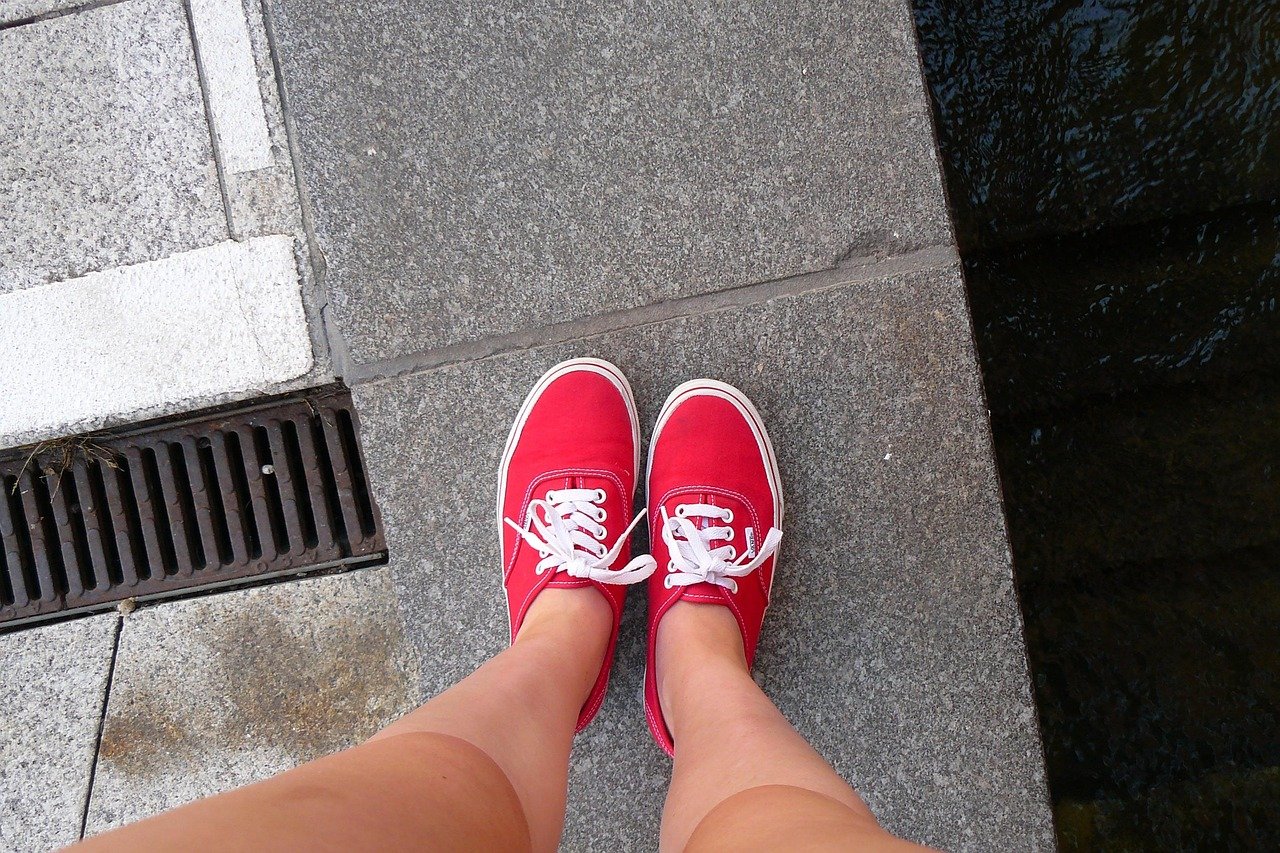
Before browsing, do a five-minute foot audit at home. It costs nothing and saves a lot of returns.
- Trace your foot. Stand on a sheet of paper in thin socks and trace the outline. Measure length and width. Compare that to the shoe’s size chart, since sizing is not uniform between brands. International sizing standards exist, but manufacturers still interpret them loosely.
- Check the wet footprint. Wet your sole and step on dry concrete. A wide print with little arch suggests a flatter foot; a narrow band suggests a higher arch. Neither is a problem, but it tells you what cushioning you may prefer.
- Note where you walk. Pavement, gravel towpaths, treadmill, and shopping-centre floors demand different outsoles. A soft, deeply cushioned shoe feels wonderful in a carpeted store and can feel unstable on rough ground.
- Consider your life stage. Foot shape changes with age, and pregnancy can increase foot length and width. A shoe that fit perfectly five years ago may genuinely be too narrow now. That is normal, not a sign you bought badly.
This is the same principle behind matching gear to conditions in other activities. Just as runners are urged to judge a shoe against the surfaces they will actually run on, walkers should judge a shoe against their real route rather than an idealised one. You can see how that reasoning works in this guide on how to judge shoes and surfaces before you commit.
The Features That Actually Matter
Strip away the marketing and a walking shoe is a fairly simple object. Here is what to prioritise, and why.
| Feature | What to Look For | Why It Matters |
|---|---|---|
| Toe box | Wide enough to wiggle toes freely | Prevents rubbing and pressure at the front of the foot |
| Heel counter | Firm, snug, no slipping | Reduces friction and keeps the foot stable |
| Midsole | EVA or polyurethane foam, appropriate firmness | Provides cushioning and durability; EVA is lighter, polyurethane often lasts longer |
| Upper | Breathable mesh with reinforced overlays | Improves airflow and holds the foot without pinching |
| Outsole | Tread suited to your surface | Grip on wet pavement or gravel reduces slipping risk |
| Weight | Light enough to feel easy, sturdy enough to support | Heavy shoes tire the legs; flimsy shoes tire the feet |
| Closure | Laces or adjustable straps | A secure, customisable fit beats a slip-on for longer walks |
Materials genuinely matter for durability and breathability, but no public standard ranks them for walking shoes specifically. Practical experience suggests mesh uppers with stitched overlays hold up better than thin knitted uppers if you walk daily on abrasive surfaces. A removable insole is a quiet bonus: it lets you swap in an orthotic or a fresh liner without replacing the whole shoe.
Cushioning, Drop, and the Comfort Trap
Walk into any shoe shop and the softest shoe will feel like the obvious winner. Resist that instinct for a moment. Very soft cushioning can feel unstable over a long walk, especially if you have a higher arch or roll inward. A little firmness under the midfoot often translates into less fatigue by the end of an hour.
Heel-to-toe drop is the height difference between the back and front of the shoe. There is no universally correct number, and drop is another industry convention rather than a health rule. Some walkers prefer a lower drop for a more natural feel; others find a moderate drop kinder to calves and Achilles tendons. The only reliable test is a few minutes of walking, ideally on a hard surface rather than carpet.
If you already wear shoes with a heel, you know how much geometry changes comfort. The same logic applies here: a shoe that fights your natural stride will make itself known. Anyone who has dealt with the trade-offs of elevated footwear will recognise the pattern described in this piece on why high shoes hurt and what you can do about it. Walking shoes should solve that problem, not recreate it.
How to Try Shoes On Properly
Most people try shoes on wrong, and it is not their fault. Shops encourage a quick slip-on and a stroll to the mirror. That tells you almost nothing.
- Go late in the day. Feet swell slightly over the course of the day, so an afternoon fitting is more realistic.
- Wear the socks you will actually walk in. Thin dress socks and thick wool socks change the fit dramatically.
- Try both shoes, not one. Most people have one foot slightly larger.
- Walk for at least five minutes. Include a hard floor and, if possible, a ramp or uneven surface.
- Check the heel. Your heel should stay put without you having to clench your toes.
- Test the flex point. The shoe should bend where your foot bends, not in the middle of the arch.
- Ask about returns before you pay. A generous try-at-home window is worth more than a small discount.
A common mistake is sizing up to fix width. If the shoe pinches across the ball of the foot, a longer shoe will simply slide and rub. Look for a wider fit in the same model instead. Another frequent error is breaking in a stiff shoe on a long walk. Break them in over short trips first, and return them promptly if blisters appear.
Matching the Shoe to the Walk
The same woman may need two different shoes for two different walks, and that is fine. A few realistic pairings:
- Pavement and city walking: a cushioned neutral shoe with a smooth, grippy outsole and a breathable upper.
- Park paths and light trails: slightly deeper tread, a protective toe bumper, and a firmer midsole.
- Treadmill and gym floors: lighter, lower-profile shoes with good ventilation.
- Travel and sightseeing: a secure lace-up that packs flat and handles cobblestones without slipping.
Gait analysis and pressure mapping are legitimate clinical tools for matching shoe features to an individual walking pattern. They are genuinely useful for people with persistent pain or a diagnosed condition. For most casual walkers, though, they are optional. A careful try-on and an honest look at your route will get you most of the way there.
When to Get Professional Advice
See a podiatrist or a qualified clinician if you have persistent pain, numbness, or a foot that changes shape suddenly. Diabetes, circulation problems, and previous injuries all raise the stakes of a poor fit. A manufacturer-run seal programme for footwear design features can be a useful neutral reference point, but it is submitted by the manufacturer, not an independent comparative test. Do not mistake a logo for a personal fitting.
The same caution applies to any “best of” list, including this one. Recommendations are individual and model-specific. A shoe reviewed in spring may be subtly redesigned by autumn. Check the version number, read recent reviews, and trust your own feet over any ranking.
Practical Buying Tips That Save Money
- Buy for the walk you do most, not the walk you imagine.
- Rotate two pairs if you walk daily. Foam recovers between wears, and shoes last longer.
- Replace worn shoes when the midsole feels flat or the tread is smooth, typically well before the upper looks tired.
- Keep receipts and boxes until you have completed two or three real walks.
- Ignore the colour premium. The same model in a less popular colourway is often cheaper.
If you are shopping for someone else, fit is the one thing you cannot guess. Gift cards and generous exchange policies beat a surprise pair that pinches. The same care applies to any footwear purchase, whether it is a technical shoe or an elegant one; the roundup of luxury gifts for women makes the point that style and fit should never be traded against each other. And if the woman in question loves beautiful bags more than trainers, the luxury handbags for women collection is a safer bet than a shoe size you are only guessing at.
Conclusion
The best walking shoes for women are the ones that fit your foot today, suit the ground you actually walk on, and stay comfortable past the five-minute mark. Start with a home foot audit, prioritise a roomy toe box and a secure heel, and treat cushioning labels and “best of” lists as hints rather than verdicts. Try shoes late in the day, walk in them properly, and keep the receipt until you have tested them on a real route. Do that, and you will spend less, walk further, and stop thinking about your feet altogether.
Frequently Asked Questions
How often should walking shoes be replaced?
For daily walkers, most shoes lose meaningful cushioning somewhere between 500 and 800 kilometres, which is often six to twelve months of regular use. Replace them when the midsole feels flat, the tread is smooth, or you notice new aches after familiar walks. The upper usually looks fine long after the support has gone.
Are expensive walking shoes always better?
No. Price often reflects branding, colourways, and retail margins as much as construction. A mid-priced shoe with a firm heel counter, a roomy toe box, and a suitable outsole can outperform a premium model that does not fit your foot. Fit beats price every time.
Do I need gait analysis before buying walking shoes?
Most casual walkers do not. Gait analysis and pressure mapping are useful clinical tools, particularly if you have persistent pain or a diagnosed condition. For general comfort, a careful try-on, a five-minute walk on hard flooring, and an honest assessment of your usual route are usually enough.
Should walking shoes be a size bigger than my normal shoes?
Not automatically. The goal is roughly a centimetre of space at the front of the toe box, which sometimes means sizing up and sometimes does not. If a shoe pinches across the width, sizing up will make it slide rather than fit. Look for a wider version of the same model instead.
Can I use running shoes for walking?
Often yes, especially cushioned neutral models, but running shoes are designed for a forward-moving stride with a different loading pattern. Some walkers find them too soft or too narrow in the toe box. Try them on a long walk before committing, and check the tread suits your surfaces.
What is the most important feature in a walking shoe?
A secure, comfortable fit. A firm heel counter, a toe box wide enough to spread your toes, and a midsole that bends where your foot bends matter more than any single technology. Everything else is refinement on top of those basics.