

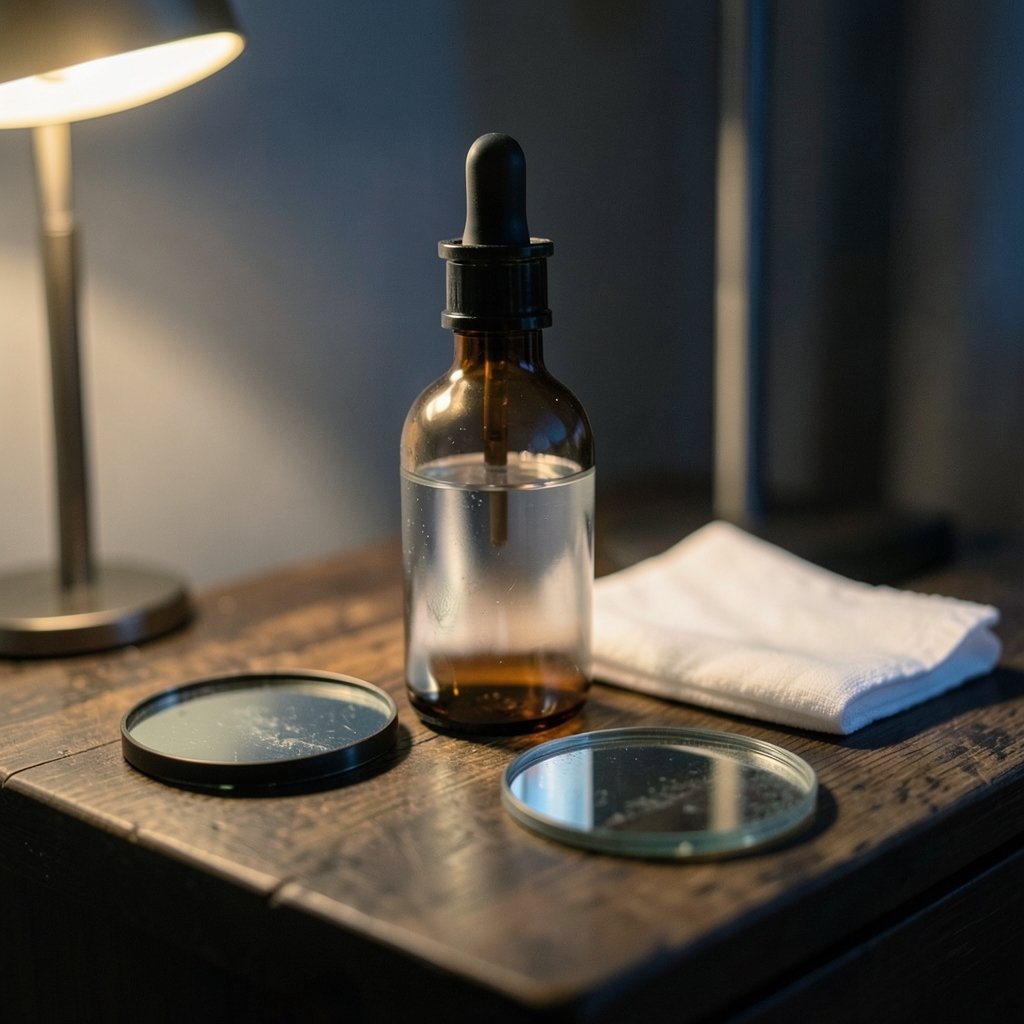
Can a liquid sold in amber bottles at health food stores really clear up stubborn acne, or is colloidal silver one of those remedies that sounds clever but falls apart under scrutiny? Search online and you’ll find glowing testimonials sitting right next to warnings about permanently blue-grey skin. Both can’t be the whole truth. This article walks through what colloidal silver is, what the science says about it and acne, the real risks, and what dermatologists actually recommend instead.
What colloidal silver actually is
Colloidal silver is a liquid suspension of tiny silver particles, usually in water. The particles are small enough to stay dispersed rather than sinking to the bottom, which is where the “colloidal” part comes from. Products vary wildly in concentration, particle size, and how the silver was produced, and there is no single standard formula.
The pitch for acne goes roughly like this: silver kills bacteria, acne involves bacteria, therefore silver on the skin should help acne. That chain of reasoning has a real starting point. Silver does show antimicrobial activity in laboratory settings. The problem is the leap from a petri dish to a human face with a complex, inflammatory skin condition.
The regulatory picture: no approved acne use

In the United States, colloidal silver has not been approved to treat any disease or condition, acne included. In 1999, the FDA ruled that over-the-counter colloidal silver products are not generally recognized as safe and effective for any medical use. That ruling is old, but it has not been reversed.
Because of that status, colloidal silver is typically sold as a dietary supplement rather than a drug. That matters more than it sounds. Supplements are not pre-approved for safety or effectiveness before they hit shelves. A bottle can carry bold claims on its label while never having been tested in a single clinical trial for acne.
Regulation also varies by country. In the European Union, silver as an ingredient in cosmetics is restricted, and products making medical claims would generally need authorization. Anyone shopping across borders should assume the rules are different from what they know at home.
Does colloidal silver work for acne?
Here’s the honest answer: nobody has produced solid clinical evidence that it does. There is no well-known randomized controlled trial of colloidal silver for acne vulgaris, the common form of acne. Claims of benefit rest on silver’s antibacterial activity measured outside the body, not on outcomes in real patients.
That absence of evidence is not proof of zero effect. It simply means effectiveness is unestablished. In medicine, that distinction matters, but for a consumer deciding what to put on their face, the practical takeaway is the same: you would be experimenting on yourself with a product that has never been properly tested for this use.
Why the bacteria argument is weaker than it looks
Acne is not a simple infection. It involves blocked pores, excess oil, inflammation, hormonal factors, and a bacterium called Cutibacterium acnes that lives on everyone’s skin, including people with clear complexions. Killing bacteria is only one part of the puzzle, and the bacteria involved are not the kind that a broad antimicrobial reliably fixes.
There is also a formulation problem. Colloidal silver products are not designed as skincare. They lack the delivery systems, pH balance, and stability testing that a real acne treatment goes through. Even if silver had a useful effect, an untested liquid is a poor way to deliver it.
The real risk: argyria and other harms
The most striking danger of colloidal silver is argyria, a permanent blue-grey discoloration of the skin, mucous membranes, and eyes. It comes from silver building up in the body over time, and it is generally irreversible. The FDA has highlighted this risk directly in its consumer guidance on colloidal silver products.
For acne, this risk deserves special attention because of how the product is used. People applying a remedy to their face, often daily for months, are exactly the kind of user most likely to accumulate exposure. Argyria is cosmetic rather than life-threatening, but “permanent blue-grey skin” is a steep price for a treatment with no proven benefit. If you have ever wondered what those odd dark marks on jewelry and coins really mean, it’s the same underlying chemistry: silver reacts and stains. On metal, that’s a curiosity. On skin, it’s a medical problem.
Beyond argyria, case reports have described neurological effects, including seizures in one widely cited case, and kidney or liver effects with chronic use. This evidence is limited to individual case reports, so how often these problems occur is unknown. Still, when a product has no proven upside, even rare serious harms tip the balance against it.
A common mistake: “natural means safe”
One of the most frequent errors people make is assuming that because silver is a metal found in nature, a colloidal version must be gentle. In practice, the dose and the delivery method are what determine safety, not the origin of the ingredient. Drinking or applying silver daily is not the same as touching a silver spoon.
Another common mistake is trusting label language. Words like “immune support” or “purifying” are marketing, not evidence. A product sold as a supplement can say things a drug never could, precisely because it has not been evaluated.
Silver in medicine versus silver in a bottle
It’s worth separating legitimate medical uses of silver from consumer colloidal products, because the two get blurred together in online discussions.
| Feature | Medical silver (wound care) | Consumer colloidal silver |
|---|---|---|
| Typical use | Burns and wounds | Self-treatment of acne and other conditions |
| Formulation | Standardized dressings and creams | Variable, unstandardized liquids |
| Regulatory path | Approved medical products | Sold as supplements, not pre-approved |
| Evidence for acne | Not indicated for acne | None established |
| Main known risk | Local irritation | Argyria with cumulative use |
Silver-containing dressings and creams, such as silver sulfadiazine, have a long history in burn and wound care. That is a genuinely different situation: a standardized product, a specific medical indication, and clinical oversight. It does not transfer to dabbing an unregulated liquid on your chin.
What actually works for acne
Evidence-based acne treatment is well established. Guidelines recommend topical retinoids, benzoyl peroxide, and topical or oral antibiotics used in defined combinations, with choices matched to the type and severity of acne. Colloidal silver does not appear among recommended treatments.
In practice, what tends to work looks like this:
- Start with a gentle cleanser and a non-comedogenic moisturizer so the skin barrier stays intact.
- Add a topical retinoid at night, beginning a few times a week to limit irritation.
- Use benzoyl peroxide, often as a wash or spot treatment, to reduce bacteria and help prevent antibiotic resistance.
- See a dermatologist if acne is moderate to severe, scarring, or not improving after a few months.
- Be patient. Most treatments need eight to twelve weeks before real change shows.
The single biggest mistake people make is quitting a proven treatment after two weeks because it “isn’t working” and switching to an unproven remedy instead. Consistency beats novelty.
There’s a broader lesson in how unproven remedies spread. Markets full of loud claims and thin evidence are exactly where careful buyers get hurt, whether the product is a skincare liquid or a business being sold. The same skepticism that protects your skin also protects your wallet, a theme that runs through guidance like this business succession and silver tsunami guide for people navigating high-stakes transitions. (Silver tsunami)
If you’re still curious about trying it
Some readers will want to experiment anyway, and it’s worth being straight about what that involves. There is no safe established dose for acne because there is no established use. Anyone considering it should at minimum avoid products marketed with disease claims, avoid drinking colloidal silver, and stop at the first sign of skin discoloration.
A more sensible path is to ask a dermatologist directly. Bring the product, ask what evidence exists, and ask what it might interact with. A clinician can also check whether what looks like acne is actually rosacea, folliculitis, or something else that needs a different approach entirely. Self-diagnosis is another quiet mistake that sends people down the wrong treatment road for months.
Conclusion
Colloidal silver is a case study in how a grain of truth can grow into a bad decision. Silver does have antimicrobial properties, and it does have legitimate medical uses in wound care. But none of that adds up to a safe, proven acne treatment. The FDA has not approved it for any medical use, no solid clinical evidence supports it for acne, and the best-known risk, permanent blue-grey skin discoloration, is exactly the kind of harm a cosmetic product should never carry. Established treatments exist, they are well studied, and they work when given time. The smarter move is to spend your effort there and leave the amber bottle on the shelf.
Frequently asked questions
Does colloidal silver cure acne?
No. There is no established clinical evidence that colloidal silver clears acne, and it is not an approved treatment for any medical condition. Claims of benefit rest on laboratory observations of silver’s antibacterial activity, not on studies of real acne outcomes.
Is colloidal silver safe to put on your face?
It carries real risks and no proven benefit for acne. Long-term or high-dose use can cause argyria, a permanent blue-grey discoloration of the skin, mucous membranes, and eyes. Case reports also describe neurological and organ effects with chronic use, though how often these occur is unknown.
How long does it take for colloidal silver to turn skin blue?
There is no reliable timeline, because argyria depends on the dose, the concentration, how long someone uses the product, and how their body handles silver. Some cases have followed months of use, others longer. Because the change is generally irreversible, waiting to see whether it happens is a poor strategy.
Can colloidal silver be used with other acne treatments?
There is no good data on combining them, and unregulated products can irritate skin already made sensitive by retinoids or benzoyl peroxide. Anyone using prescription acne treatment should talk to their dermatologist before adding anything, including supplements and home remedies.
Why is colloidal silver sold if it isn’t approved?
In the United States it is typically marketed as a dietary supplement, a category that is not pre-approved for safety or effectiveness before sale. That allows products to reach shelves without clinical trials, which is why label claims should be read with caution rather than taken as proof.
What should someone use instead of colloidal silver for acne?
Dermatology guidelines point to topical retinoids, benzoyl peroxide, and topical or oral antibiotics in defined combinations, chosen based on acne type and severity. A gentle cleanser and non-comedogenic moisturizer support those treatments. Moderate, severe, or scarring acne deserves a dermatologist’s input rather than another over-the-counter experiment.
That final point bears repeating: the strongest argument against colloidal silver is not that it is poisonous in every case, but that it asks you to accept a permanent, visible risk in exchange for a benefit nobody has ever demonstrated. Acne is stubborn and emotionally taxing, which makes fast promises unusually tempting. But the treatments that actually clear skin are unglamorous, widely available, and backed by decades of trials. Give them the weeks they need, and save the amber bottle for the shelf where it belongs.









