

What if the most important part of a dahlia never shows its face above ground? The flowers get all the attention, but the whole show depends on a knobby, dirt-covered cluster of roots that sits quietly underground. Dahlia tubers are where the plant stores its energy, where next season’s growth begins, and where most beginner mistakes happen. Buy the wrong piece, plant it too early, or store it somewhere too damp, and the results range from a no-show to a rotten mess.
This guide walks through what dahlia tubers actually are, how to tell a good one from a bad one, when and how to plant them, how to divide them without killing them, and how to keep them alive through winter. It also covers the practical habits that separate gardeners who get armloads of blooms from gardeners who get a lot of empty soil.
What Are Dahlia Tubers, Exactly?
A dahlia tuber is a swollen, food-storing root, not a bulb and not a true tuber. That distinction matters more than it sounds. A true tuber, like a potato, has buds scattered all over its surface and can sprout from many points. A dahlia’s storage root has no growth buds of its own. All the growing points sit on the crown, the short piece of stem above where the roots attach.
This is the single most useful fact for anyone buying dahlias. A long, fat, healthy-looking root with no crown attached will never grow. It has food in it, but no bud to send up a shoot. Sellers sometimes break clusters apart and offer single roots at a low price; those pieces are only viable if a sliver of crown with a visible eye comes with them.
Dahlias themselves are herbaceous perennials native to Mexico and Central America, and the dahlia is Mexico’s national flower. The genus is named for Anders Dahl, an 18th-century Swedish botanist. Plants reached Europe from Mexico in the late 1700s, and breeders have since produced thousands of named cultivars in every color except true blue. Gardeners who grow 4c hair-style high-drama flowers for cutting tend to gravitate toward dahlias for the same reason: the blooms are big, varied, and endlessly photogenic.
Anatomy of a Tuber Cluster: Crown, Neck, Eyes, and Roots
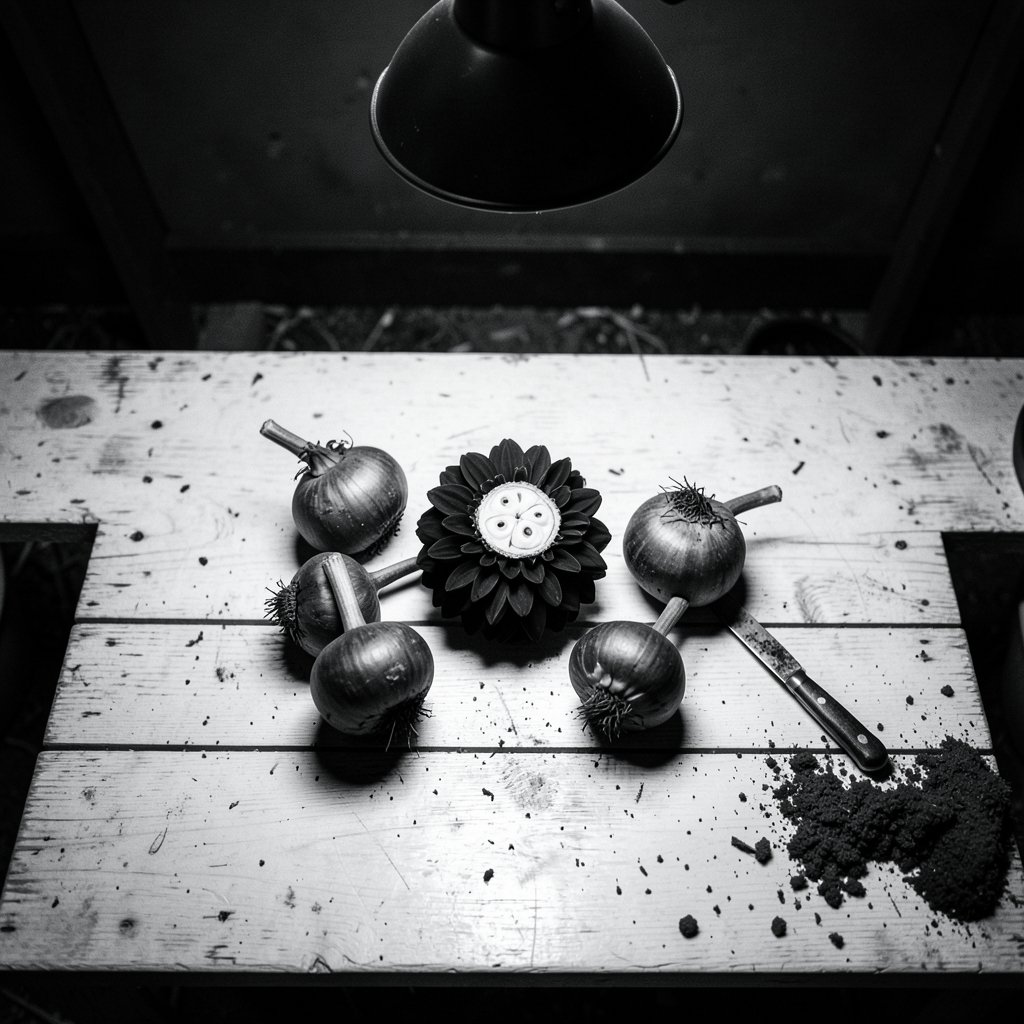
A freshly dug dahlia looks like a small octopus. Understanding its parts makes everything else easier.
| Part | What it is | Why it matters |
|---|---|---|
| Crown | Short stem section at the top of the cluster | Holds all the eyes; without it, nothing sprouts |
| Eyes | Tiny buds on the crown | Each one can become a new shoot |
| Neck | Narrow junction between crown and root | Fragile; if it snaps, that root is useless |
| Storage roots | The fat, finger-like pieces | Hold energy for the new plant |
| Feeder roots | Thin, stringy roots | Absorb water and nutrients; not saved for storage |
The neck is the weak point. When dividing, a root that breaks off at the neck is compost, no matter how plump it looks. Handle clusters by the crown, not by the roots, and cut rather than pull.
How to Choose Healthy Tubers Before You Buy
Buying dahlia tubers is a bit like buying avocados: appearance tells you a lot, but you have to know what to look for.
- Check for a crown and eyes. Look for a stem stub with at least one small, pale bump or sprout. A cluster with several eyes is more forgiving than a single-eye piece.
- Feel for firmness. Good tubers are solid, like a firm carrot. Soft, spongy, or wrinkled pieces have dried out or started to rot.
- Inspect for damage. Avoid deep cuts, black patches, mold, or a sour smell. Small surface blemishes are fine.
- Match the plant to your space. Border dahlias stay compact; dinnerplate types need staking and room. Read the label rather than guessing from the photo.
- Buy from growers who label clearly. A named cultivar with a known height and flower type is worth more than an unnamed bargain bag.
A practical tip from experienced growers: order early in the season. Popular cultivars sell out, and the leftovers are often the smallest, single-eye divisions. If a shipment arrives looking shriveled, pot the pieces up indoors rather than planting them straight into cold ground.
When and How to Plant Dahlia Tubers
Timing is everything. Dahlias are tender and hate cold, wet soil. Plant them outdoors only after the last frost has passed and the soil has warmed to roughly 60°F (about 15°C). In cool climates, that usually means late spring. Planting into cold ground is the classic beginner mistake: the tubers sit there, sulk, and rot.
Here is a planting sequence that works in most gardens:
- Pick a spot in full sun. Dahlias want six to eight hours of direct light. Good airflow helps prevent disease.
- Improve the soil. Loosen it deeply and mix in compost. Drainage matters more than richness; waterlogged soil kills tubers.
- Dig a hole about 4 to 6 inches deep. Lay the cluster flat with the crown and eyes facing up.
- Space plants 18 to 24 inches apart. Crowding invites mildew and makes staking awkward.
- Do not water heavily right away. Moist soil is enough until shoots appear; soaking a newly planted tuber invites rot.
- Stake at planting time. Push the stake in beside the tuber so you do not spear it later. Tall varieties will need it.
- Label everything. Once shoots emerge, one green stem looks much like another.
In short-season climates, start tubers indoors in pots four to six weeks before the last frost, then harden them off and plant out. This gains weeks of bloom time. If you garden in a warm climate with mild winters, tubers can often stay in the ground year-round, though clumps will need dividing every few years.
Dividing Dahlia Clumps Without Losing Them
Division is where confident gardeners become nervous gardeners. The goal is simple: every piece you keep must have at least one eye on a piece of crown.
Wait until the eyes are visible. In late winter or early spring, move stored clumps somewhere warm and lightly damp for a week or two. The eyes swell into small pale bumps, and suddenly the job becomes obvious rather than a guess.
Then work through the clump methodically:
- Cut the stem back to an inch or two above the crown.
- Clean the clump of loose soil so you can see the necks and eyes.
- Cut between the eyes, slicing down through the crown so each root keeps a section of it.
- Discard blind roots. Any root with no eye attached goes to the compost.
- Dust cut surfaces with sulfur or let them dry for a day before potting or replanting.
The most common mistake is dividing too early, before eyes show, and then guessing. The second most common is keeping every root out of thrift and ending up with a box of blind pieces. Be ruthless: a division with one strong eye beats three roots with none.
There is a visual logic to it, similar to how people learn to spot patterns in other style categories. Someone who can tell 2b hair from a loose wave at a glance is doing the same kind of close observation that dividing dahlias demands. Once your eye is trained, the task takes minutes. (The row)
Soil, Water, and Care Through the Season
Dahlias are heavy feeders and thirsty plants, but they punish overwatering. The balance is steady moisture, never a swamp.
- Water deeply once or twice a week rather than a light daily sprinkle. Roots follow the water down.
- Feed lightly and often. Too much nitrogen produces leafy plants with few flowers. A balanced feed or a tomato-type fertilizer suits them.
- Mulch to keep roots cool and to hold moisture, but keep mulch off the stems.
- Pinch the growing tip when plants are about a foot tall to encourage branching and more blooms.
- Deadhead regularly. The more you cut, the more flowers the plant produces. Cutting stems for the vase is not damage; it is encouragement.
Watch for slugs and aphids early in the season, and keep an eye out for virus symptoms such as mottled leaves or distorted growth. Virus status affects certification and trade in some regions, which is one reason buying from reputable growers matters. Dig and destroy clearly infected plants rather than passing them along.
Lifting and Storing Tubers for Winter
In cold-winter climates, dahlia tubers will not survive freezing soil. They must be lifted, cured, and stored.
Wait until frost blackens the foliage, then cut stems to about 6 inches. Dig wide of the plant to avoid slicing roots, lift the clump with a fork, and shake off soil gently. Do not wash them. Let clumps dry in a sheltered spot for a few days, then store them in a breathable medium such as dry potting mix, peat, or newspaper in a crate or cardboard box.
The storage conditions matter more than the packing material. Aim for cool but frost-free, commonly cited as around 40 to 50°F (4 to 10°C), in a dark, ventilated space. Check monthly. Remove any soft or moldy pieces, and mist lightly if tubers are shriveling. A dry basement corner or an insulated garage often works; a heated spare room does not.
Label clumps before storage. Every grower who skips this step swears they will remember which is which, and every grower who skips this step ends up with a box of mystery dahlias in spring.
Common Mistakes That Cost You Blooms
Most dahlia disappointments trace back to a handful of avoidable errors.
| Mistake | What happens | Fix |
|---|---|---|
| Planting too early | Tubers rot in cold, wet soil | Wait for warm soil after last frost |
| Buying eyeless roots | Nothing sprouts | Insist on crown with visible eyes |
| Overwatering new plantings | Rot before shoots appear | Water sparingly until growth shows |
| Skipping stakes | Stems snap in wind or rain | Stake at planting, tie as plants grow |
| Storing too warm or too wet | Mold, shriveling, or early sprouting | Cool, dark, ventilated, breathable packing |
| Never dividing | Clumps crowd, blooms shrink | Divide every two to three years |
None of these requires special skill to avoid. They require patience and a little observation, which is the whole game with dahlias. (2b hair)
Conclusion
Dahlia tubers reward a bit of knowledge more than almost any garden purchase. Understand that the crown and its eyes are the real plant, plant into warm soil, water with restraint, stake early, and store cool and dry, and the same clump can produce flowers for years. The learning curve is short, but the payoff is long: a single healthy tuber cluster, divided carefully, can become a whole row of plants, and a whole row of plants can fill a summer with color. Start with firm, well-labeled tubers, treat the necks gently, and let the eyes tell you when to divide. The flowers will handle the rest.
Frequently Asked Questions
How long do dahlia tubers last before planting?
Stored properly in cool, dark, frost-free conditions, tubers keep for roughly four to six months, which covers a normal winter. Check them monthly for shriveling or mold. Once spring arrives and eyes begin to swell, plant them rather than holding them longer.
Can I plant dahlia tubers straight into the garden?
Yes, once the soil has warmed to about 60°F and all frost risk has passed. In short-season climates, starting them indoors in pots a few weeks early gives a head start. Avoid planting into cold, soggy ground, which is the most common cause of failure.
Why did my dahlia tubers not come up?
The usual culprits are tubers without an eye, rot from cold or wet soil, or damage to the neck during storage or planting. Dig up a failed tuber and check. If it is soft and dark, drainage and timing were likely the problem. If it is firm with no sprout, it probably had no viable eye.
Do dahlia tubers multiply in one season?
They do. A single planted tuber typically grows into a cluster of several new storage roots by fall, all attached to one crown. That cluster can be divided into multiple plants the following spring, which is how a collection grows without buying more each year.
Should I soak dahlia tubers before planting?
Soaking is not necessary and can do more harm than good, especially in cool weather. If tubers look slightly shriveled from storage, a short soak of an hour or so before planting is acceptable, but firm tubers can go straight into moist soil.
Can I leave dahlia tubers in the ground over winter?
Only where winters are mild and the soil does not freeze. In cold climates, tubers left in the ground will freeze and rot. Lift them after frost blackens the foliage, cure them briefly, and store them cool and dry until spring.









