


What do you call the Day of the Dead in Spanish, and why does the name matter so much to the people who celebrate it? The answer is simpler than most English-language coverage suggests: Día de los Muertos, or Día de Muertos in most of Mexico. But the name is only the doorway. Behind it sits a two-day observance with its own vocabulary, its own foods, and its own rules about how to talk about the dead. (99 Best Birthday Puns to Make Their Day)
This guide walks through the Spanish terms you will actually hear, what they mean, how the holiday differs from Halloween, and the mistakes visitors and Spanish learners make most often.
What Is the Day of the Dead Called in Spanish?
The full name is Día de los Muertos, which translates literally as “Day of the Dead.” In Mexico, the everyday form is usually Día de Muertos, without the article “los.” Both are correct and widely used. The shorter version is not slang or laziness; it is simply the common usage, the way English speakers say “New Year’s” instead of “New Year’s Day” in casual conversation.
If you are writing formally or translating a document, Día de los Muertos is the safer full form. If you are talking to someone from Mexico City or Oaxaca, Día de Muertos will sound completely natural. Neither will get you a strange look.
One important note for Spanish learners: the holiday is not called El Día de los Muertos in the sense of a single day. It spans two days, and the plural framing reflects that. You will also hear Todos Santos in some regions, a reference to the Catholic All Saints’ observance that overlaps with it.
When Is Día de los Muertos Celebrated?
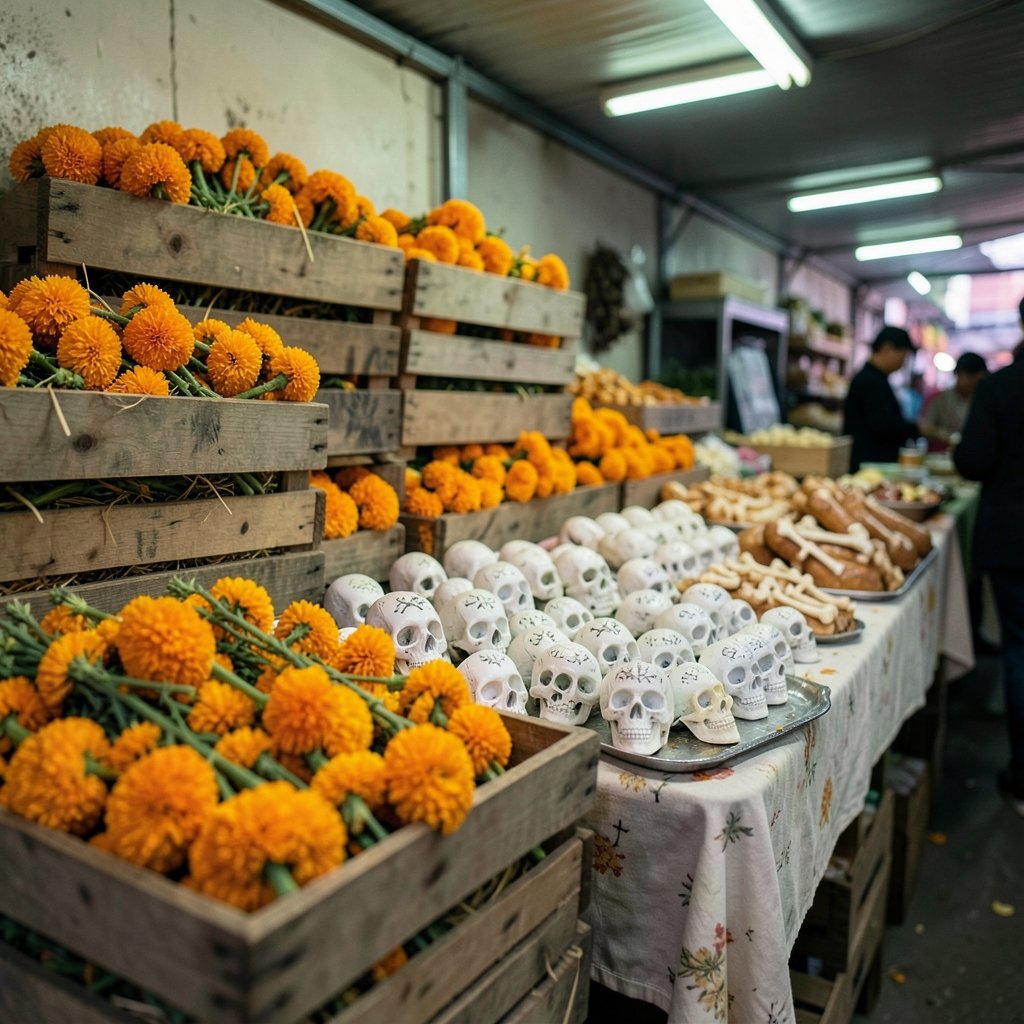
The core dates are November 1 and November 2, but the observance is not identical across those two days.
| Date | Spanish Name | Who Is Honored |
|---|---|---|
| November 1 | Día de los Inocentes / Día de los Angelitos | Deceased children |
| November 2 | Día de los Muertos / Día de los Fieles Difuntos | Deceased adults |
| October 31 or earlier | Varies by community | Preparations, some regional observances |
Some communities begin observances on October 31 or even earlier, and in parts of Mexico the celebrations stretch across several days. Regional practice varies widely, which is one reason no single description captures the whole holiday.
Is Día de los Muertos the Same as Halloween?
No, and this is the single most common misunderstanding in English-language coverage. Día de los Muertos is not a Spanish word for Halloween. Halloween in Spanish is Noche de Brujas (“Night of Witches”) or simply Halloween. The two holidays fall close together on the calendar, and both involve skulls and skeletons, but they are different observances with different origins and different purposes.
Halloween is generally about fright and play. Día de los Muertos is about remembrance and family continuity. The skull imagery is a good example of how the confusion happens: calaveras appear in both, but a sugar skull on an altar is an offering to a specific relative, not a costume prop.
Where Does the Tradition Come From?
The tradition is syncretic, meaning it blends two streams of practice. Pre-Hispanic Mesoamerican rituals honoring the dead, notably among the Aztec or Mexica, merged over centuries with Catholic observances of All Saints’ Day on November 1 and All Souls’ Day on November 2.
The degree of blending and the exact history of that merging are debated among scholars, so treat confident one-line origin stories with suspicion. Popular media often claims the holiday is 2,000 or 3,000 years old or that it originated with the Aztecs specifically. Those claims are hard to source precisely. Scholarly accounts describe a longer and more complex history of Mesoamerican death rituals rather than a single point of origin.
What is well documented is the official recognition. In 2003, the tradition was inscribed on the Representative List of the Intangible Cultural Heritage of Humanity under the name “Indigenous festivity dedicated to the dead” (La festividad indígena dedicada a los muertos), nominated by Mexico. That framing matters: the listing describes an indigenous festivity celebrated by indigenous peoples of Mexico, not simply a national holiday. English coverage often flattens that distinction away.
The Spanish Vocabulary of the Altar
If you want to understand the holiday in Spanish, learn the words for what sits on the ofrenda, the altar built for the deceased. This is where the language becomes concrete.
Ofrenda means “offering.” It is the altar itself, usually built on a table or tiered structure at home. Elements commonly include:
- Cempasúchil: marigolds, the bright orange flowers whose scent is said to guide spirits home
- Calaveras: skulls, often calaveras de azúcar (sugar skulls), sometimes with names written on the forehead
- Pan de muerto: a sweet bread baked specifically for the holiday, often decorated with bone-shaped pieces on top
- Velas: candles, which light the way for returning spirits
- Fotografías: photos of the deceased, the heart of any personal altar
- Comida y bebida: the favorite food and drink of the person being remembered
The altar is not decoration for its own sake. Each object has a purpose, and families often explain those purposes to children as they build it. That teaching moment is part of how the tradition survives.
How Do Families Observe the Holiday?
Observance varies enormously by region, but certain practices recur. Families build ofrendas at home, visit cemeteries, clean and decorate graves, and share meals. In some communities, families spend the night at the graveside. In others, the cemetery visit is a daytime affair with music and food.
The tone is worth understanding. The holiday is not somber in the way an English-speaking reader might expect from a death ritual. It includes humor, food, music, and often playful satirical poems called calaveras literarias, short rhyming verses that gently mock the living, including politicians. Death is acknowledged rather than avoided.
Common Mistakes People Make
A few practical pitfalls come up again and again:
- Calling it “Mexican Halloween.” It is not, and the comparison annoys people who celebrate it.
- Assuming one uniform tradition. Practices in Oaxaca, Michoacán, and Mexico City differ noticeably. Do not treat one region’s customs as the national standard.
- Treating the ofrenda as a photo opportunity. If you are invited into a home, ask before photographing an altar. It is a family space.
- Using the wrong article. Día de Muertos, not “el Día de los Muertos” as a fixed phrase in every context. Both forms exist, but forcing the long version everywhere sounds stiff.
- Confusing All Saints’ Day with the whole holiday. November 1 and November 2 are distinct days with distinct associations.
Spanish Phrases You Will Hear Around the Holiday
Certain expressions come up repeatedly. “Ya viene Día de Muertos” (“Day of the Dead is coming”) is a common seasonal remark. “Poner la ofrenda” means to set up the altar. “Visitar el panteón” means to visit the cemetery.
There is also the broader question of how Spanish speakers talk about death itself. The holiday’s vocabulary is direct: los muertos, los difuntos, los fieles difuntos. The language does not soften the subject, and that directness is part of the point. The dead are named, pictured, and fed.
If you are learning Spanish and want seasonal vocabulary beyond this holiday, themed word lists help; the same approach works for other calendar moments, whether you are picking up Valentine’s Day nails vocabulary or seasonal greetings. (Valentines day nails)
How Día de los Muertos Is Covered in English Media
English-language coverage has improved over the past decade, but two habits persist. The first is the Halloween comparison, which frames the holiday entirely in relation to a US tradition rather than on its own terms. The second is the flattening of an indigenous festivity into a national pop-culture event.
The 2003 recognition is a useful corrective. It names the tradition as an indigenous festivity, which centers the communities that maintained it. That framing does not exclude anyone; it simply locates the holiday accurately.
For readers who follow cultural coverage across the calendar, the pattern is familiar: a holiday gets stripped of context, becomes a visual motif, and then the motif circulates without the meaning. The same thing happens to seasonal content of all kinds, from Valentine’s Day nails: 10 ideas, from subtle to statement to holiday gift guides. The difference with Día de los Muertos is that the stripped context involves real families honoring real people.
Cultural Respect: What Visitors Should Know
If you are traveling in Mexico during the holiday, a few guidelines hold up well.
Ask before photographing altars, graves, or grieving families. Accept food if it is offered; refusing an ofrenda item can read as rejection. Do not wear sugar skull makeup to a cemetery unless you are participating in a local tradition that includes it. Do not assume the holiday is a party open to tourists; in many communities it is a family observance.
None of this is complicated. It comes down to treating the holiday as what it is: a set of practices with owners, not a themed event.
Why the Name Matters
Returning to the original question: Día de los Muertos or Día de Muertos. Getting the name right is a small courtesy with real weight. The holiday is about naming the dead and keeping them present. Using the correct Spanish name, rather than an English approximation or a Halloween comparison, is a version of the same gesture.
The holiday also has a way of traveling. Families in the United States build ofrendas, schools teach the vocabulary, and the tradition adapts without dissolving. That adaptability is a sign of health, not dilution. Traditions that cannot move tend not to survive.
Conclusion
The Day of the Dead in Spanish is Día de los Muertos, or more commonly in Mexico, Día de Muertos. It is observed on November 1 and 2, honors deceased children on the first day and adults on the second, and centers on the ofrenda, the home altar filled with marigolds, sugar skulls, pan de muerto, candles, and photographs. It is not Halloween, it is not a single day, and it is not uniform across Mexico.
The tradition blends pre-Hispanic Mesoamerican practice with Catholic observance, and its 2003 inscription as an indigenous festivity dedicated to the dead reflects that history. Scholars still debate the details of how the blending unfolded, and confident claims about the holiday’s exact age should be treated with care.
What is not in doubt is the vocabulary and the practice. Learn the words for the altar, learn the two dates, and learn to leave the Halloween comparison behind. That is enough to talk about the holiday accurately, in Spanish or in English.
What does “Día de los Muertos” mean in English?
It translates literally as “Day of the Dead.” The Spanish word día means day, de means of, and los muertos means the dead. In Mexico, the shorter form Día de Muertos is the everyday usage, while the full form appears more often in formal writing and translations.
Is it Día de los Muertos or Día de Muertos?
Both are correct. Día de los Muertos is the full form; Día de Muertos is the common Mexican usage. There is no authoritative ruling that one is wrong. Choose the full form for formal or translated documents and the shorter form for natural conversation with Mexican speakers.
Is the Day of the Dead the same as Halloween?
No. Halloween in Spanish is Noche de Brujas or simply Halloween. Día de los Muertos is a separate observance focused on remembrance of deceased relatives, held on November 1 and 2. The two holidays share skull imagery but differ in origin, purpose, and tone.
What are the main elements of an ofrenda?
Common elements include cempasúchil (marigolds), calaveras (skulls, often sugar skulls), pan de muerto (a sweet bread), velas (candles), photographs of the deceased, and the favorite food and drink of the person being remembered. Regional and family variations are common.
When was Día de los Muertos recognized officially?
In 2003, the tradition was inscribed on the Representative List of the Intangible Cultural Heritage of Humanity as “Indigenous festivity dedicated to the dead,” nominated by Mexico. The listing describes it as an indigenous festivity, a framing that popular English coverage often overlooks.
Can visitors participate in Día de los Muertos?
Visitors are generally welcome at public events and cemetery observances, but the holiday is primarily a family practice. Ask before photographing altars or graves, accept food if offered, and avoid treating the observance as a themed attraction. Local customs vary, so follow the cues of the community you are in.









