

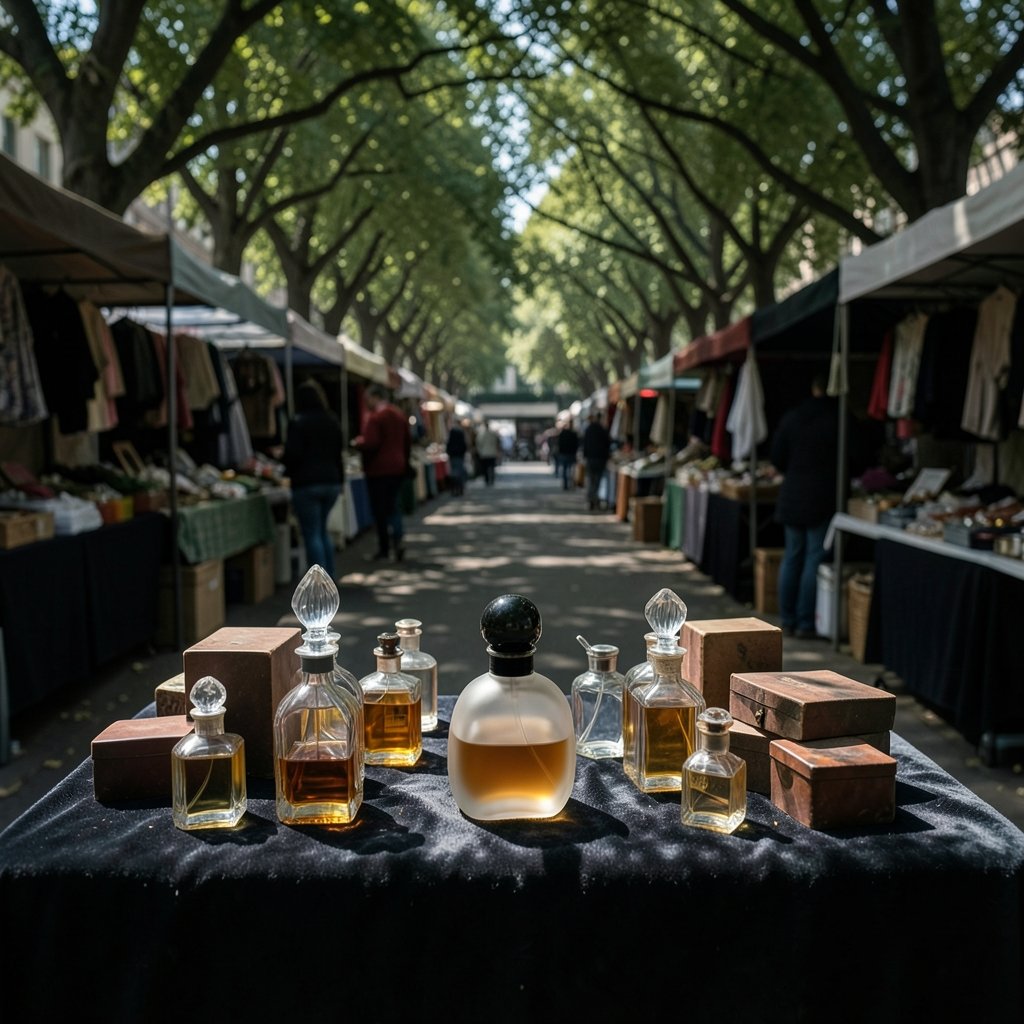
What comes to mind when you hear the word “discotheque”? Most people picture a dark room, a mirrored ball, and a DJ working a crowd. So when a French fashion house puts that word on a perfume bottle, it raises an obvious question: does the scent actually smell like a nightclub, or is the name just marketing?
The answer is more interesting than a simple yes or no. Discotheque is a real fragrance released by the French house Ungaro (Emanuel Ungaro) in 2007, and it sits in a long tradition of perfumes that borrow nightlife language to sell a mood rather than a place. It is also a name that gets confused with plenty of other things, which is why a straight answer about what it is, who made it, and what it smells like is worth having.
What Is Discotheque Perfume?
Discotheque is a fragrance by Ungaro, launched in 2007 and reportedly issued as a limited or special edition. It is usually described as a fruity-floral with a sweet, playful, “party” character, aimed at a buyer who wants something light and fun rather than a serious evening scent.
Two things are worth saying plainly. First, the word itself is French. Discothèque originally meant a record library or record collection, and by the 1960s it had come to mean the clubs where a DJ played records instead of a live band. The word crossed into English in that club sense during the 1960s. A perfume named Discotheque is therefore borrowing a word that already carries decades of music, dancing, and nightlife behind it.
Second, the exact note pyramid and the name of the perfumer behind Ungaro’s Discotheque are not something worth guessing at. Fragrance databases compile these details, but they are not primary sources, and launch information for limited editions is often thin. If you need certainty about the composition, the bottle itself and its packaging are the reliable reference.
The Name Problem: More Than One “Discotheque”

Here is the trap that catches a lot of shoppers. Search for “discotheque perfume” and you will find results that are not all the same product. The name has been used loosely across perfumery and retail, including novelty items, vintage listings, and club-themed fragrances from other brands entirely.
This matters for a practical reason. If you are trying to buy, replace, or identify a bottle, you need to know which product you are actually looking at. A few habits separate a confident purchase from a confusing one:
- Check the house name on the bottle. Ungaro is the one associated with the 2007 launch.
- Look at the concentration (eau de toilette, eau de parfum) and the bottle design as well as the word on the front.
- Note the batch code and packaging if you are buying a vintage or discontinued bottle.
- Treat auction listings with suspicion unless the seller shows the base of the bottle and the box.
A common mistake is assuming that a high price on a secondhand listing means rarity. For limited editions, price often reflects supply and hype more than quality. Another mistake is buying based on a single review describing “sweet and fruity” without checking whether the reviewer is talking about the Ungaro scent at all. Fragrance names get reused, and the internet does not always separate them neatly.
What a Fruity-Floral “Party” Scent Actually Means
Perfume marketing loves the word fruity-floral, but the term is genuinely useful once you know what it signals. A fruity-floral typically opens with bright, sweet fruit notes, moves into a floral heart, and dries down to something softer and warmer. It is the family most associated with easy, daytime, crowd-pleasing wear.
That structure explains why a nightlife name and a light scent are not actually a contradiction. Club-themed perfumes rarely smell like sweat and smoke. They sell the feeling of getting ready to go out: the sweetness of a drink, the lift of a bright opening, the confidence of a scent that announces itself without being heavy.
In practice, this family behaves in predictable ways that are worth knowing before you buy blind:
| What you notice | What it usually means |
|---|---|
| Bright, sweet opening | Fruit-forward top notes; fades within the first hour |
| Soft floral middle | The heart of the scent; where most of the “character” lives |
| Warm, slightly sweet finish | Base notes holding the scent to skin |
| Short wear time | Common in lighter eau de toilette concentrations |
If you want a scent that lasts a full evening, a light fruity-floral is not the tool for the job. If you want something cheerful and uncomplicated, it is exactly right.
Why Perfumes Borrow Nightlife Names
Naming a perfume after a club is a marketing decision, but it is not an arbitrary one. The discotheque as a venue is tied to the rise of DJ culture and dance music from the 1960s onward, and to the 1970s disco era that followed. That history gives the word a ready-made set of associations: music, movement, glamour, and a certain kind of freedom.
Perfume houses have always borrowed from culture this way. A name does a lot of work before anyone smells the juice. It tells you who the scent is for, when to wear it, and what mood to expect. Discotheque signals fun and sociability. It does not promise a literal transcription of a night out.
There is a practical lesson buried in this. When you evaluate a perfume, separate the story from the scent. The story is what the brand wants you to feel. The scent is what you actually wear for six hours. Both matter, but only one of them is on your skin.
How to Judge a Discotheque-Style Scent Before You Commit
Blind buying is the single biggest source of perfume regret, and it is entirely avoidable. The same discipline that applies to any mechanical problem applies here: test the thing in real conditions rather than trusting a description. If you have ever read about how to diagnose a car fault properly, you will recognize the logic in brake disc warping your pedal pulses actually fixes it — symptoms point to a cause, and guessing wastes money. Perfume works the same way. (The row)
Here is what actually works in practice:
- Test on skin, not paper. Paper strips show the opening only. Skin shows the dry-down, which is what you live with.
- Wear it for a full day before deciding. Spray one wrist in the morning and check it at lunch and again in the evening.
- Test one scent at a time. Your nose fatigues fast, and comparing four fragrances at once produces bad decisions.
- Check the concentration. An eau de toilette and an eau de parfum of the same name can behave completely differently.
- Buy small first. A decant or travel size costs far less than a full bottle and answers the real question.
The most common mistake is spraying on a card in a shop, liking the first thirty seconds, and buying a full bottle. The second most common is trusting a review written by someone with different skin chemistry. Fragrance is not universal. The same scent can read sharp on one person and soft on another.
What the Label Tells You
Perfume is a cosmetic product, and cosmetics are regulated. In the EU, perfumes fall under Regulation (EC) No 1223/2009, which has been in force since 11 July 2013 and requires ingredient labelling and a safety assessment for every product placed on the market. In the US, fragrance ingredients are regulated under the FD&C Act and the Fair Packaging and Labeling Act, with “fragrance” permitted as a collective term on the label.
That difference is bigger than it sounds. EU rules require certain fragrance allergens to be declared on the label when they exceed set thresholds. The allergen list was updated by Commission Regulation (EU) 2023/1545, with new requirements applying from 31 July 2026 for new products, alongside transition periods. If you have sensitive skin, the EU label is genuinely more informative than the US one, because it names more of what is inside.
Separately, the International Fragrance Association (IFRA) publishes usage standards for fragrance materials. These are industry standards rather than law, but they shape what a perfume can contain. They are revised periodically, which is one reason reformulations happen.
For a 2007 limited edition, all of this has a practical consequence. A bottle made in 2007 may not match a bottle made later, because ingredient rules and industry standards changed in between. If you are chasing a specific vintage bottle for its exact smell, understand that you are buying a snapshot of a formula, not a permanent one.
Practical Buying Advice for a Discontinued or Limited Scent
Limited editions do not stay on shelves. That creates a specific set of problems, and a few rules keep them manageable.
Buy the bottle, not the story. Ask for photos of the base of the bottle, the batch code, and the box. A seller who cannot provide these is a risk.
Understand what “vintage” does to a perfume. Citrus and light top notes fade first, which is why older bottles often smell flatter at the opening while the base survives. A 2007 fruity-floral is more vulnerable to this than a heavy oriental would be.
Store it properly once you own it. Heat, light, and air are the enemies. Keep bottles upright, capped, and away from bathroom steam. A cool dark drawer beats a sunny shelf every time.
Do not overpay for scarcity alone. Limited editions feel urgent, but the market for any single discontinued perfume is small. Patience usually beats panic buying.
If you enjoy the cultural side of fragrance naming, the same instinct that makes a club-themed scent interesting also drives whole communities around hair and identity — the conversation around 4c hair shows how a shared reference point can carry real meaning well beyond the product itself. Names do work. The trick is knowing how much work they are doing.
Conclusion
Discotheque perfume is a specific, identifiable thing: a 2007 fruity-floral from Ungaro, reportedly a limited edition, wearing a name borrowed from French nightlife. It is not a mystery, and it is not a category. It is one scent with a memorable label and a fairly short paper trail.
The sensible approach is the same one that works for any fragrance. Confirm which product you are looking at, test it on your own skin, check the concentration and the label, and buy small before you buy big. The name promises a party. Whether the scent delivers one is a question only your own wrist can answer.
Frequently Asked Questions
Who makes Discotheque perfume?
The fragrance is by Ungaro, the French fashion house founded by Emanuel Ungaro. It was launched in 2007 and is reportedly a limited or special edition. Because the name has also been used loosely by other brands and for novelty items, always confirm the house name on the bottle before buying.
What does Discotheque perfume smell like?
It is generally described as a fruity-floral with a sweet, playful character. That means a bright fruit-forward opening, a floral heart, and a softer warm finish. Exact notes and the perfumer’s name are best confirmed from the bottle and its packaging rather than from secondary listings, which are often incomplete for limited editions.
Is Discotheque perfume still available?
Limited editions are not produced indefinitely, so availability depends on remaining stock and the secondhand market. If you find a bottle, check the batch code, ask for photos of the base and box, and expect older bottles to smell slightly flatter at the opening because light top notes fade first.
Why is a perfume named after a nightclub?
The word discothèque originally meant a record library, and by the 1960s it meant the clubs where DJs played records instead of live bands. That history carries music, dancing, and nightlife associations, which is exactly the mood a perfume name is meant to evoke. The scent itself is usually light and sweet rather than smoky or heavy.
Do perfume labels have to list ingredients?
It depends where you are. In the EU, Regulation (EC) No 1223/2009 requires ingredient labelling and a safety assessment, and certain fragrance allergens must be declared above set thresholds. The allergen list was updated by Commission Regulation (EU) 2023/1545, applying from 31 July 2026 for new products with transition periods. In the US, “fragrance” may appear as a collective term.
How should I test a perfume before buying a full bottle?
Spray it on skin, not paper, and wear it for a full day before deciding. Test one scent at a time so your nose does not fatigue, check whether you are sampling an eau de toilette or an eau de parfum, and buy a decant or travel size first. The opening notes you smell in a shop are the least reliable part of the experience.









