


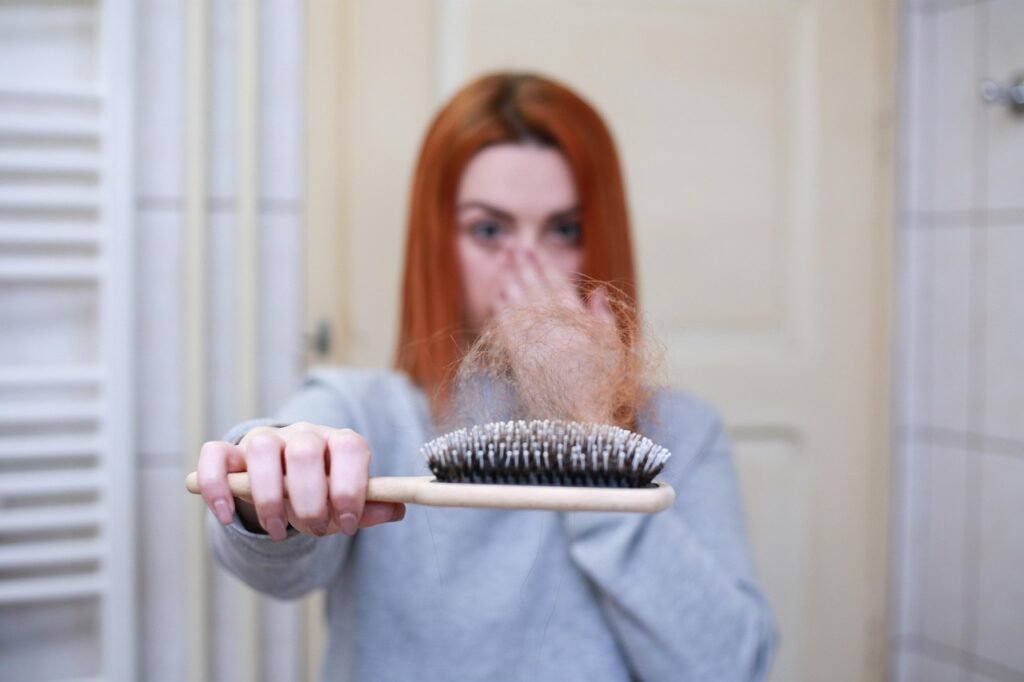
Quick Answer: Do you shed more hair in the summer?
It depends. Some people do notice extra shedding in summer, and researchers have reported a seasonal pattern in some populations, but the evidence is mixed and the mechanism is not proven. For most people, a slightly heavier summer shed is normal and temporary, so the practical steps are to track shedding for a few weeks, reduce heat and chlorine damage, and see a doctor if density visibly drops.
Seasonal shedding is not the same as true hair loss. It usually reflects more hairs entering the resting phase at once rather than follicles shutting down, and it typically settles within a few months. Other causes, including telogen effluvium after illness or stress, iron deficiency, and thyroid problems, can look similar but need different handling.
Before you act, check your daily shedding baseline, how long the increase has lasted, scalp health, recent illness or stress, diet and iron intake, and whether breakage rather than root loss is the real culprit.
Why Your Brush Looks Fuller in July
Run a hand through your hair on a hot afternoon and you may come away with what feels like a small animal’s worth of strands. You are not imagining it, and other people notice the same thing. Every July, search traffic for hair shedding spikes along with the temperature, and plenty of people convince themselves they are going bald by August.
Here is the reassuring part: shedding is supposed to happen. Most scalp hairs sit in a growth phase called anagen that lasts for years. Then comes a short transition phase, catagen, followed by a resting phase called telogen, which lasts roughly two to three months. When a telogen hair finally lets go, a new one is usually already pushing through underneath. A commonly cited clinical convention puts normal daily shedding at around 50 to 100 hairs, though treat that as a rough benchmark rather than a precise measurement.
So the real question is not whether you shed. It is whether summer changes the pattern. The honest answer sits somewhere between “a little, for some people” and “not really, and the rest is damage.” This article walks through what is known, what is guessed, and what you can actually do about it.
What the Research Actually Shows About Seasonal Shedding
A seasonal shedding pattern has been reported in several studies, with a summer or early-autumn peak showing up in some Northern Hemisphere populations. That is the fair summary. The evidence is modest and inconsistent across studies and latitudes, and some research finds no significant seasonal variation at all, or points to a different peak entirely.
That mixed picture matters. If you go looking for a definitive answer, you will find confident blog posts on both sides, and neither is fully backed by the literature. The most defensible position is this: a seasonal pattern is plausible and has been observed, but it is not settled science, and nobody has proven exactly why it would happen.
The leading theories, and why they stay theories
Researchers have floated a few possible mechanisms. One idea is that more hairs synchronize into the telogen phase during summer, possibly influenced by light exposure or by melatonin signaling tied to day length. Another is that heat, sweat, and a changed scalp environment nudge shedding along. None of these has been firmly established, and each has gaps.
What makes the question so slippery is that summer changes a dozen things at once. You swim in chlorinated pools, you spend hours in direct sun, you tie your hair up more often, you sweat more, and you may eat and sleep differently on vacation. Any of those can increase how much hair you appear to lose without touching your growth cycle at all. Teasing apart a true seasonal shift from a pile of lifestyle confounders is genuinely hard, which is why the research stays murky.
Seasonal Shedding vs. Real Hair Loss: How to Tell the Difference
The single most useful distinction in this whole topic is between shedding and thinning. Shedding is hair leaving the scalp. Thinning is density going down and not coming back. They overlap, but they are not the same thing, and confusing them sends people down the wrong path.
| Signal | Typical seasonal shed | Possible true hair loss |
|---|---|---|
| Duration | A few weeks to about three months | Ongoing or recurring over many months |
| Pattern | Diffuse, all over the scalp | Often localized, such as a widening part or receding temples |
| Regrowth | New short hairs appear at the hairline | Little or no regrowth; scalp becomes more visible |
| Triggers | Hot weather, swimming, sun, tight styles | Illness, major stress, crash diets, thyroid issues, iron deficiency, genetics |
| Reversibility | Usually resolves on its own | Often needs evaluation and treatment |
A useful gut check: take a photo of your part in bright, even light on the same day each month. Seasonal shedding shows up as a temporary blip. Real loss shows a trend. If the trend line keeps sliding for more than three months, that is your cue to stop guessing and get a professional opinion.
It also helps to know what heavy shedding looks like when it is not seasonal. Telogen effluvium is a well-documented condition in which a large share of hairs shift into the resting phase at once, often a few months after a trigger like a high fever, surgery, or a stressful period. If your shedding started two to three months after something significant, that timeline is worth mentioning to a doctor. You can read more about how that pattern works in this explanation of telogen hair loss and why your scalp sheds more than usual.
The Summer Habits That Make Shedding Look Worse
Here is where practical experience beats theory. In real life, a lot of what people call summer hair loss is breakage and mechanical damage wearing a convincing disguise. The hair never left the follicle early. It snapped.
Sun, salt, and chlorine
UV exposure can degrade the protein structure of hair over time, leaving strands weaker and more brittle. Chlorine and salt water strip oils and rough up the cuticle, which makes hair more prone to tangling and snapping. If you spend your summer in the water, a quick rinse with fresh water before and after swimming helps, and a leave-in conditioner or a light oil on the ends is a cheap insurance policy.
Heat styling in already-hot weather
Flat irons and blow dryers set to maximum do more damage when hair is already sun-weakened. Turn the temperature down a notch in summer, use a heat protectant, and let hair air-dry when you can. This is one of those small habits that pays off quietly over a season.
Tight styles and repeated tension
Summer means ponytails, buns, and braids, often pulled tight to beat the heat. Worn day after day in the same spot, tension can cause breakage and, over time, traction-related thinning at the hairline. Rotate your styles, loosen the tension, and give your edges a break. If you use extensions or accessories, be mindful that even fun additions like hair tinsel removal needs a gentle hand so you do not rip strands out along with the sparkle.
The vacation routine collapse
Late nights, restaurant food, less water, more alcohol, and a skipped multivitamin add up. None of these alone causes dramatic shedding, but together they can nudge a scalp that was already borderline. If your hair looks duller and sheds more after two weeks away, the trip itself may be the story, not the season.
What Actually Helps: A Practical Summer Hair Plan
You do not need a shelf full of products. You need a handful of habits applied consistently. Here is a sequence that works for most people, in order of impact.
- Establish a baseline first. Count hairs on your pillow and in the shower drain for one week before changing anything. Without a baseline, you cannot tell whether things are improving, and you will chase ghosts.
- Protect from the sun. A hat or a UV filter spray during long outdoor stretches is simple and effective, especially on the part line where scalp skin is most exposed.
- Rinse and condition after swimming. Fresh water rinse, gentle shampoo, and conditioner on the mid-lengths and ends. Skip harsh clarifying treatments unless you actually have buildup.
- Loosen up. Rotate hairstyles, avoid tight elastics on the same spot daily, and let hair down when you get home.
- Feed the follicle. Protein, iron, zinc, and vitamin D all matter for normal hair growth. If your diet has been shaky, a conversation with a clinician about testing is more useful than guessing at supplements.
- Manage stress and sleep. Both affect the hair cycle, and both tend to slip in summer.
- Book a professional check if the trend is down. A dermatologist or trichologist can look at the scalp, check for inflammation, and order blood tests if needed.
If you are already recovering from a procedure or planning one, timing matters too. Many clinics advise patients to be extra careful with sun exposure and swimming during the hair transplant recovery window, since a healing scalp is more vulnerable than an intact one.
One more practical note: book your trims before the damage accumulates. A good cut removes split ends before they travel up the shaft, and a stylist at a hair cuttery or similar salon can flag breakage patterns you cannot see yourself in the mirror. If you are also thinking about a color change this season, lighter shades demand extra care in strong sun, so read up on blonde hair shades and the maintenance they require before committing.
When to Stop Googling and See a Professional
Most summer shedding resolves on its own. Some does not, and knowing the difference saves time and worry. Consider booking an appointment if any of the following apply:
- Shedding continues heavily for more than three months.
- Your part is visibly wider, or your scalp shows through more than it did last year.
- You notice patchy bald spots, itching, flaking, or scalp pain.
- You have other symptoms such as fatigue, unusual weight changes, or heavy periods.
- You started a new medication shortly before the shedding began.
A clinician can distinguish between the common causes, and the fix is often surprisingly mundane, such as correcting an iron deficiency or adjusting a medication. The key is not to wait a full year hoping the season explains it.
Conclusion: A Little Perspective Goes a Long Way
So, do you shed more hair in the summer? For some people, yes, modestly, and the pattern has been observed in research even if the cause remains unproven. For plenty of others, the extra hair in the brush is sun damage, chlorine, tight ponytails, and a disrupted vacation routine rather than a shift in the growth cycle. Both stories are common, and neither means you are losing your hair for good.
The practical takeaway is refreshingly low-tech. Set a baseline, protect your hair from sun and water damage, loosen your styles, eat and sleep reasonably well, and watch the trend rather than the daily count. Seasonal shedding is a blip. Real hair loss is a trend. Give yourself a few months, take a monthly photo, and let the evidence tell you which one you are dealing with. And if the trend keeps heading the wrong way, get a professional opinion early. Hair is forgiving, but it rewards people who pay attention.
Frequently Asked Questions
How long does summer shedding usually last?
Most people who notice a seasonal increase see it settle within a few weeks to about three months. That timeline lines up with the length of the telogen phase, which runs roughly two to three months before a resting hair lets go. If heavy shedding stretches past three months, treat it as a signal to get checked rather than a season to wait out.
Is summer shedding worse for people with long hair?
Not exactly, but it looks worse. Long strands are simply more visible in the shower drain and on the pillow, so the same number of lost hairs feels far more dramatic. People with long hair also tend to deal with more tangling and breakage, which can add to the apparent loss. The underlying follicle behavior is not meaningfully different.
Can heat and sun actually cause hair to fall out?
Sun and heat are better understood as damage factors than as causes of root-level shedding. UV exposure can weaken the hair shaft over time, and heat styling on already-dry hair increases breakage. That broken hair looks like shedding but is really structural damage. Protecting hair from sun and turning down the styling tools addresses the real problem.
Does chlorine from swimming pools increase hair loss?
Chlorine is more of a shaft problem than a follicle problem. It strips natural oils and roughens the cuticle, which makes hair dry, tangly, and prone to snapping. It does not typically push follicles into the resting phase. Rinsing with fresh water before and after swimming, plus conditioning, keeps the damage in check.
Should I take supplements for summer shedding?
Only if a clinician finds a deficiency worth correcting. Iron, vitamin D, zinc, and protein all matter for normal hair growth, but taking supplements you do not need rarely helps and can occasionally cause problems. Testing first is the smarter move, especially if shedding is heavy or prolonged.
Could my summer shedding actually be something else?
Yes, and that is worth taking seriously. Heavy, diffuse shedding can follow an illness, major stress, surgery, crash dieting, or a thyroid change, and it can also reflect iron deficiency or genetic thinning. The distinguishing feature is duration and trend. A seasonal blip recovers. Anything that keeps worsening deserves a professional look.









