


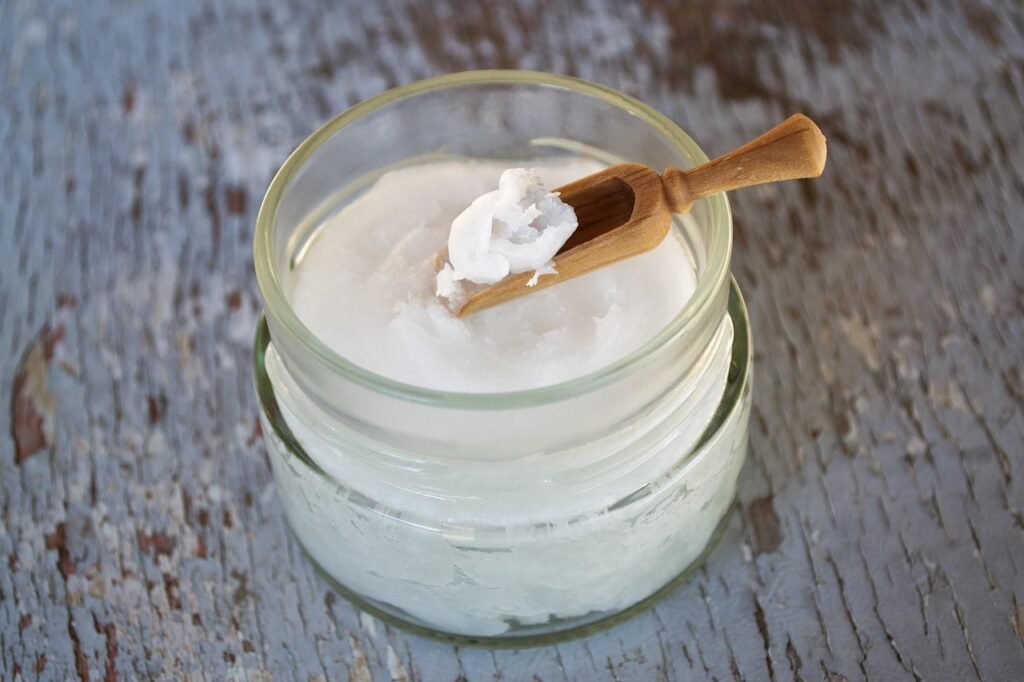
Quick Answer: Does coconut oil have mct?
Yes. Coconut oil does contain medium-chain triglycerides (MCTs), but only partly — roughly 60 to 65 percent of its fat falls into that category, and the rest is long-chain fat. The dominant MCT is lauric acid, which many researchers treat as a boundary case rather than a true medium-chain fat.
That gap between what the label implies and what the chemistry shows is where most confusion starts. Commercial MCT oil is a refined fraction built mostly from caprylic and capric acids, not whole coconut oil.
Before buying or swapping products, compare the fatty-acid profile, the lauric acid share, the carbon-chain definition being used, calorie content, and how the oil was processed.
Why This Question Trips Up So Many People

Walk down any supplement aisle and you will see bottles shouting “MCT” next to pictures of coconuts. Read the ingredient list and it often says something like “MCTs from coconut oil.” So it seems obvious: coconut oil equals MCT oil, right?
Not quite. It is one of those topics where a kernel of truth gets stretched into a marketing claim. Coconut oil genuinely contains MCTs, but the jar in your kitchen and the bottle of purified MCT oil on the shelf are different products with different fat profiles. Understanding the difference takes about five minutes, and it will save you money, confusion, and possibly a stomachache.
The short version: coconut oil is a whole food fat that happens to be unusually high in medium-chain fats. MCT oil is a processed extract designed to contain almost nothing else. Both have a place, but they are not interchangeable, and the word “MCT” itself is squishier than most people realize.
What Counts as an MCT, Anyway?
Here is where things get nerdy, and it matters. Fatty acids are carbon chains, and scientists sort them by length. Short chains have fewer than six carbons, long chains have more than twelve, and medium chains sit in the middle.
The trouble is that “the middle” has two competing definitions:
| Definition | Carbon range | Includes lauric acid? | Who uses it |
|---|---|---|---|
| Chemical or structural | C6 to C12 | Yes | Chemistry textbooks, some food science |
| Nutritional or metabolic | C8 to C10 | No | Much of the metabolism research, MCT product makers |
Under the broad chemical definition, coconut oil is loaded with MCTs because lauric acid (C12) makes up roughly 45 to 50 percent of its fatty acids. Under the narrower nutritional definition, most of that lauric acid does not count, because the body absorbs and metabolizes it more like a long-chain fat.
This is not a trivial technicality. It is the entire reason two honest people can look at the same jar and disagree about whether it is “an MCT.” One is counting carbons; the other is counting how the body actually handles them.
So How Much MCT Is Actually in Coconut Oil?
Roughly 60 to 65 percent of coconut oil’s fat is medium-chain by the broad definition. The rest is long-chain fat, which means a spoonful is never a pure MCT dose.
The fatty-acid breakdown looks approximately like this:
| Fatty acid | Chain length | Share of total fat |
|---|---|---|
| Lauric acid | C12 | About 45 to 50% |
| Myristic acid | C14 | About 15 to 20% |
| Palmitic acid | C16 | About 8 to 10% |
| Caprylic acid | C8 | About 5 to 8% |
| Capric acid | C10 | About 5 to 7% |
| Caproic acid | C6 | About 1% or less |
| Stearic and others | C18+ | Small amounts |
Notice what dominates. Lauric acid alone is nearly half the fat, and myristic acid, a long-chain fat, is the second biggest player. The “true” MCTs under the narrow definition — caprylic and capric acid — together add up to maybe 10 to 15 percent.
These figures are ranges on purpose. Coconut variety, growing conditions, and processing all nudge the numbers, so treat any source that quotes a single precise percentage with a raised eyebrow.
What Is Commercial MCT Oil, Then?
Commercial MCT oil is not squeezed from coconuts and bottled. It is a fractionated product: the oil is processed to isolate the medium-chain fats, usually caprylic (C8) and capric (C10) acids, and everything else is stripped away. Many products are derived from coconut oil, palm kernel oil, or a blend of both.
The result is a clear, odorless, thin liquid that stays liquid in the fridge, unlike coconut oil, which solidifies below about 24°C (75°F). That physical difference makes a useful at-home test. If your “MCT oil” turns solid in the cold, it probably contains compounds other than C8 and C10.
Because lauric acid is often removed during fractionation, most commercial MCT oils contain little to none of it. That is a deliberate choice tied to the metabolic definition, and it also reflects how lauric acid behaves in the body compared with C8 and C10.
The Lauric Acid Question Nobody Agrees On
Lauric acid is the most interesting character in this story. It is a 12-carbon chain, so chemistry says medium. But the body treats it differently: it is absorbed and processed more like a long-chain fat, and it raises LDL cholesterol more than caprylic and capric acids do. That metabolic difference is a documented reason researchers and product makers often set it apart from “true” MCTs.
So when someone asks whether coconut oil is a good MCT source, the honest answer depends on what they want it for. If they want the broad category of medium-chain fats, coconut oil delivers plenty. If they want the specific C8 and C10 fats that most MCT research focuses on, coconut oil is a modest source at best.
Practical takeaway: do not assume a spoonful of coconut oil equals a spoonful of MCT oil. It does not, and the gap is bigger than most labels suggest.
Does Virgin vs. Refined Coconut Oil Change the MCT Content?
Barely. Both virgin and refined coconut oil are dominated by lauric acid, and the fatty-acid profile stays broadly similar between them. Processing mainly affects the minor components — polyphenols, aroma, flavor, and smoke point — rather than the MCT share.
So if your goal is medium-chain fat content, paying extra for virgin coconut oil will not boost it. You are paying for flavor, aroma, and the retention of minor compounds, which is a perfectly good reason to buy it for cooking. It is just not an MCT upgrade.
One practical note from experience: refined coconut oil is the safer pick for high-heat cooking and for anyone who dislikes the coconut taste in savory dishes. Virgin coconut oil shines in baking, curries, and anything where that flavor is welcome.
Common Mistakes People Make With Coconut Oil and MCTs
The same handful of errors show up again and again, and each one is easy to avoid once you know about it.
Mistake one: treating coconut oil as a calorie-free or “keto magic” fat. It still delivers about 9 calories per gram, like every other fat. A generous spoonful in coffee adds real calories, and the long-chain portion is substantial. If you are tracking intake, log it like any other fat.
Mistake two: jumping straight into large doses of MCT oil. MCT oil is famously hard on the digestive system when introduced quickly. Starting with a teaspoon and building up over a week or two is the standard advice, and it exists for a reason. Coconut oil is gentler because its MCT content is diluted by long-chain fats, which is one small advantage of the whole-food version.
Mistake three: assuming “MCT” on a label means lauric acid is included. Often it is not. Read the supplement facts panel and look for caprylic and capric acid amounts if that distinction matters to you.
Mistake four: expecting coconut oil to behave like MCT oil in coffee or dressings. Coconut oil solidifies when cold and leaves an oily film. MCT oil stays liquid and blends more cleanly. Small thing, big difference in daily use.
Mistake five: ignoring the definitional debate entirely. Someone who says “coconut oil is 60 percent MCT” and someone who says “coconut oil barely counts as an MCT source” can both be right. Knowing which definition is in play turns an argument into a conversation.
How to Choose Between Coconut Oil and MCT Oil
The right pick depends on what you actually want, so here is a simple decision path.
- Cooking, baking, and everyday eating: choose coconut oil. It handles heat well, tastes good in the right dishes, and offers a broad mix of fats.
- A concentrated C8 and C10 source for coffee, shakes, or specific protocols: choose a fractionated MCT oil and check the label for caprylic and capric content.
- Sensitive digestion: start with coconut oil or a very small dose of MCT oil and build slowly.
- Budget concerns: coconut oil is generally far cheaper per serving, and it does deliver medium-chain fats, just not in concentrated form.
- Flavor preferences: refined coconut oil and MCT oil are both neutral; virgin coconut oil is not.
There is no universal winner here. The two products serve overlapping but distinct purposes, and plenty of people keep both in the pantry for different jobs. If you are also building a broader personal-care routine, the same logic applies — match the product to the job rather than chasing a label. That is true whether you are comparing essential oil diffusers for a bedroom or picking a fat for your morning coffee.
Where Coconut Oil Fits in a Real Routine
Coconut oil earns its place as a versatile cooking fat and a decent source of medium-chain fats, especially for anyone who prefers whole foods over processed extracts. It is not a magic bullet, and its lauric acid content means the “MCT” label deserves a caveat rather than a celebration.
For people managing dry skin or brittle nails alongside their dietary choices, small habits add up. A little cuticle oil massaged in at night does more for nail appearance than any single dietary fat, and it costs almost nothing. Similarly, hair care routines built around gentle cleansing and consistent moisture tend to matter more than which oil sits in the kitchen — though coconut oil remains a popular pre-wash treatment for 4c hair because its fatty acids help soften strands before shampooing.
The through-line is the same: understand what a product actually contains, then use it for what it does well.
Conclusion
Coconut oil does contain MCTs — roughly 60 to 65 percent of its fat by the broad chemical definition — but the story is more nuanced than the marketing suggests. Lauric acid dominates the profile, and whether it counts as a true medium-chain fat depends on which definition you use. Commercial MCT oil is a different product entirely: a refined fraction of caprylic and capric acids with most everything else removed.
For most people, the practical answer is simple. Cook with coconut oil if you like it, buy MCT oil if you specifically want concentrated C8 and C10, and read labels rather than trusting coconut imagery on a bottle. The chemistry is fascinating, but the decision at the store does not have to be complicated.
Frequently Asked Questions
Is coconut oil the same as MCT oil?
No. Coconut oil is a whole fat with a mixed fatty-acid profile, while MCT oil is a processed extract containing mostly caprylic and capric acids. Coconut oil contains MCTs, but it also contains substantial long-chain fats like myristic and palmitic acid. The two products behave differently in cooking, in coffee, and in the body.
How much MCT oil can I get from a tablespoon of coconut oil?
A tablespoon of coconut oil contains roughly 9 to 10 grams of medium-chain fats under the broad definition, but only about 1.5 to 2 grams of the caprylic and capric acids found in commercial MCT oil. That gap explains why coconut oil feels gentler on digestion than a concentrated MCT product.
Why is lauric acid sometimes not considered an MCT?
Lauric acid has 12 carbons, which places it at the boundary of the medium-chain range. In the body, it is absorbed and metabolized more like a long-chain fat, and it raises LDL cholesterol more than caprylic and capric acids do. For those reasons, much of the metabolism research and most MCT product makers exclude it.
Does coconut oil go bad, and does that affect its MCT content?
Coconut oil is shelf-stable for long periods, typically a year or more unopened, because it is highly saturated. Over time it can turn rancid, which affects smell and taste rather than the fatty-acid profile itself. Store it away from heat and direct light, and trust your nose if something seems off.
Can I use coconut oil instead of MCT oil in coffee?
You can, but the result is different. Coconut oil solidifies at cooler temperatures and tends to leave an oily film on the surface and on your lips. MCT oil stays liquid and blends more smoothly. If texture matters to you, the fractionated product is the better fit for drinks.
Is coconut oil a good choice on a ketogenic diet?
It can be, since fat is the dominant macronutrient either way. But coconut oil is not a concentrated MCT source, and its calorie density is identical to other fats at about 9 calories per gram. Anyone tracking ketones or macros should compare the actual caprylic and capric content rather than assuming all MCTs behave the same.









