

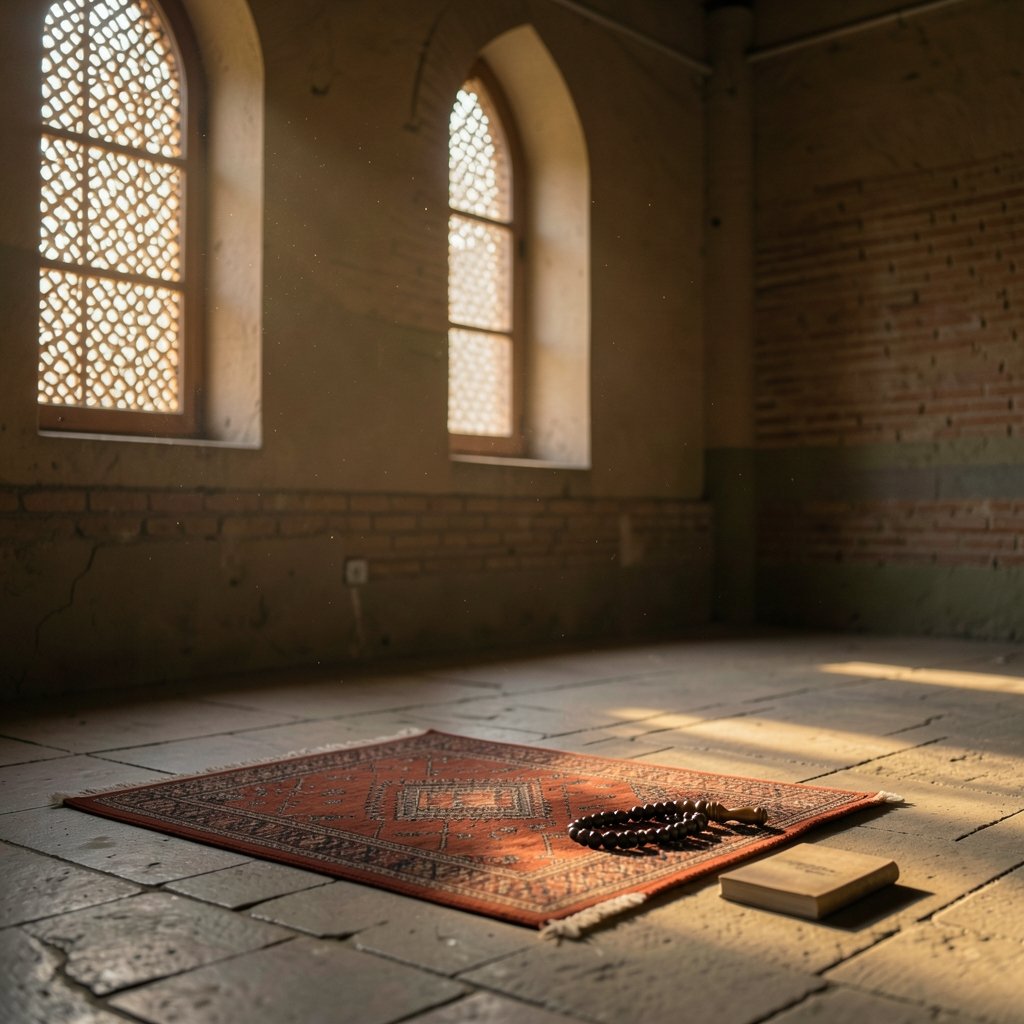
What do you say when you stand in the final unit of Witr, hands folded, and the imam’s voice rises into a supplication you have heard a hundred times but never quite learned? For millions of Muslims, that moment is where Dua Qunoot (also written dua qunut) stops being a phrase on a prayer app and becomes a practical problem: which words, which prayer, and where exactly does it go?
The short answer is that Dua Qunoot is a supplication recited while standing in prayer, most commonly in Witr and, in some traditions, in Fajr. The longer answer involves four schools of law that disagree, in respectful and well-documented ways, about wording, placement, and whether the practice is obligatory or recommended. This guide walks through the actual texts, the practical recitation steps, and the mistakes that trip people up most often.
What Is Dua Qunoot?
The Arabic word qunūt (قنوت) refers to a supplication made while standing in prayer. “Dua Qunoot” is simply the supplication itself. It is not a separate prayer and it is not a fixed liturgical formula like the Fatihah. It is a du’a, which means the wording has always varied, and scholars have transmitted several authentic versions.
Two texts dominate practice worldwide.
The first begins Allāhumma innā nastaʿīnuka (“O Allah, we seek Your help”). This longer form asks for guidance, forgiveness, protection, and relief from hardship, and it is the version most commonly heard in Hanafi Witr throughout the year.
The second begins Allāhumma ihdinī fīman hadayt (“O Allah, guide me among those You have guided”). This shorter form is widely used in Shafiʿi Witr and is often the first version a new learner memorizes because it is compact and rhythmic.
Both are traced to the early Islamic period in the 7th century CE. Neither is a single “official” text, and no single English translation is standard. Transliterations differ too, which is why you will see “qunoot,” “qunut,” and “qunūt” used interchangeably.
Where Dua Qunoot Appears in the Prayer

This is where most confusion starts, because the answer genuinely depends on which school of law a person follows. The table below summarizes the mainstream positions.
| School | Where Qunoot is recited | Common wording | Status |
|---|---|---|---|
| Hanafi | Witr, throughout the year | Allāhumma innā nastaʿīnuka | Wajib in Witr per Hanafi terminology |
| Shafiʿi | Fajr; Witr in the second half of Ramadan | Allāhumma ihdinī fīman hadayt | Sunnah |
| Maliki | Witr, with variation in placement | Varies | Recommended, placement debated |
| Hanbali | Witr; some recite before rukūʿ, others after | Varies | Recommended, placement debated |
The practical takeaway: if you pray behind an imam, follow the imam. If you pray alone and follow a particular school, learn that school’s position and stop worrying about the others. A person who switches wording every week because of something they read online usually ends up memorizing nothing.
Qunoot al-Nazila: The Supplication for Calamity
There is a second category worth knowing. Qunoot al-nazila is a supplication recited in obligatory prayers during times of hardship, such as war, famine, or widespread affliction. Its permissibility is broadly accepted, but scholars differ on how long it should continue and which prayers it belongs in. Some hold that the Prophet’s practice of Qunoot in Fajr was temporary and tied to a specific circumstance; others hold it was ongoing. These are school positions, not a single settled answer, and presenting them as one is where a lot of online content goes wrong.
The Full Text of Dua Qunoot, Line by Line
Below is the widely used Hanafi form, transliterated and translated in short segments so it can be learned in pieces rather than swallowed whole.
Allāhumma innā nastaʿīnuka — O Allah, we seek Your help.
wa nastaġfiruka — and we seek Your forgiveness.
wa nuʾminu bika — and we believe in You.
wa natawakkalu ʿalayka — and we place our trust in You.
wa nuṯnī ʿalayka al-ḵayra — and we praise You with all good.
wa nashkuruka wa lā nakfuruka — and we thank You and do not deny You.
wa naḵlaʿu wa natruku man yakfuruka — and we disown and abandon whoever disobeys You.
Allāhumma iyyāka naʿbudu — O Allah, You alone we worship.
wa laka nuṣallī wa nasjudu — and to You we pray and prostrate.
wa ilayka nasʿā wa naḥfidu — and toward You we strive and hasten.
wa narjū raḥmataka — and we hope for Your mercy.
wa naḵshā ʿaḏābaka — and we fear Your punishment.
inna ʿaḏābaka bil-kuffāri mulḥiq — indeed Your punishment will overtake the disbelievers.
The shorter Shafiʿi form reads: Allāhumma ihdinī fīman hadayt, wa ʿāfinī fīman ʿāfayt, wa tawallanī fīman tawallayt, wa bārik lī fīmā aʿṭayt, wa qinī sharra mā qaḍayt, fa innaka taqḍī wa lā yuqḍā ʿalayk, wa innahu lā yaḏillu man wālayt, wa lā yaʿizzu man ʿādayt, tabārakta rabbanā wa taʿālayt. In English: guide me among those You have guided, grant me well-being among those You have granted well-being, be my protector among those You have protected, bless what You have given me, and save me from the evil of what You have decreed.
Notice that neither version is long. The whole recitation takes roughly a minute at a measured pace, which is worth remembering when anxiety about “getting it right” makes it feel like a mountain.
How to Recite Dua Qunoot: A Practical Walkthrough
Learning the text is only half the job. Doing it inside a real prayer, at the right moment, without losing your place in the rak’ah, is the other half. Here is the sequence that works in practice.
- Complete the recitation of Surah al-Fatihah and a short surah in the final rak’ah of Witr.
- Remain standing. Raise your hands in supplication if your school permits it; some traditions keep the hands folded.
- Recite the Qunoot text at a moderate pace, pausing at the end of each phrase rather than racing to the finish.
- Say the takbir and go into rukūʿ, then complete the prayer as normal.
- If you are following an imam who recites Qunoot after rukūʿ instead, simply follow. Do not correct the imam mid-prayer.
What Actually Works When You’re Learning
The single most effective method is audio plus repetition, not reading. Pick one reciter, listen to the same Qunoot twenty times, then recite along. Most people who struggle for months are trying to learn from transliteration alone, which is a slow and error-prone path.
A second tip that saves real frustration: learn the shorter Shafiʿi form first even if you follow the Hanafi school. It is shorter, it teaches the rhythm of supplication, and it gives you something to recite confidently while you build toward the longer text. Confidence matters. A slightly shorter du’a recited with presence beats a longer one recited in a panic.
And a third: write the transliteration on a card and keep it near your prayer space. There is no virtue in reciting from memory before you have memorized. The early community transmitted these texts orally over years, not in an afternoon.
Common Mistakes People Make
The most frequent error is inserting Qunoot into the wrong prayer. Someone learns that Qunoot belongs in Fajr, then recites it in every Fajr for years while following a Hanafi imam who does not. Follow the congregation, not the internet.
The second error is treating placement as settled. Whether Qunoot comes before or after rukūʿ is genuinely debated, and both positions have supporters. Arguing about it in the mosque car park helps nobody.
The third is over-lengthening. Some people, newly enthusiastic, extend the Qunoot to several minutes and lose the congregation behind them. The purpose is supplication, not endurance.
The fourth is the quiet one: refusing to recite at all because the wording is not perfect. Qunoot is a du’a, and du’a in your own words, in any language, is still valid supplication. The formal text is a model to aspire to, not a password.
Why the Differences Exist
It helps to understand that these variations are not corruption or confusion. They reflect how the early community transmitted practice across different regions, and how scholars reasoned from those transmissions. A report describing the Prophet’s Qunoot in Fajr may be read as establishing a permanent practice or as describing a temporary response to a specific situation. Both readings have serious scholars behind them.
This is also why the same person can hear three different Qunoot texts in three different mosques in one city and all three can be correct. The practice is broad enough to hold the variation.
If you are working on related areas of prayer and appearance, resources on 4c hair and 2b hair cover practical care topics, while the row looks at congregation dynamics, all useful context for anyone settling into a new mosque community.
Learning Dua Qunoot in a New Community
New Muslims and people who have moved cities often face a specific challenge: the mosque they now attend recites a Qunoot they have never heard, in a melody they cannot follow. The instinct is to feel like a fraud.
The practical fix is simple and unglamorous. Arrive a few minutes early, listen to the imam’s recitation during the first weeks without trying to join, and ask one person after prayer which text the community uses. Almost everyone will be glad to be asked. Nobody is grading you.
For parents teaching children, the shorter form works best, and the phrases can be learned one per week. A child who knows twelve phrases by Eid has learned the entire Hanafi Qunoot without ever sitting through a formal lesson.
Conclusion
Dua Qunoot is a supplication, not a test. The two dominant texts, Allāhumma innā nastaʿīnuka and Allāhumma ihdinī fīman hadayt, are both well attested, both widely recited, and both within a minute’s length. Which one you say depends on your school and your imam, not on which version wins an argument online. Learn one text properly with audio, recite it at a measured pace, follow the congregation you actually pray with, and let the variation among schools be a sign of breadth rather than a source of anxiety. The point of standing in supplication was never perfect pronunciation. It was presence.
Frequently Asked Questions
Is Dua Qunoot obligatory in Witr?
It depends on the school. Hanafi scholarship treats Qunoot in Witr as wajib within its own terminology, which is a strong category but not identical to fard. Shafiʿi, Maliki, and Hanbali scholarship generally treat it as a confirmed sunnah or recommended practice rather than obligatory. A person following a Hanafi imam should recite it; a person following a Shafiʿi imam in Fajr should recite it there.
Can I recite Dua Qunoot in my own words?
Yes. Qunoot is a du’a, and supplication in your own words is valid. The transmitted texts are models that capture the priorities of the prayer: guidance, forgiveness, protection, and reliance on God. Many people recite the formal text and then add a short personal supplication in their own language.
Does Dua Qunoot go before or after rukūʿ?
Both placements are reported and both have scholarly support. Some traditions recite Qunoot while still standing before bowing; others recite it after rising from rukūʿ. The disagreement is old and well documented. If you pray behind an imam, follow the imam’s placement rather than correcting it.
Which version should a beginner learn first?
The shorter Shafiʿi form beginning Allāhumma ihdinī fīman hadayt is usually the easier starting point because it is compact and has a clear rhythm. Once that feels natural, the longer Hanafi form can be added phrase by phrase. Learning from audio rather than transliteration alone makes the biggest difference.
Is Dua Qunoot recited in Fajr every day?
In the Shafiʿi tradition, Qunoot in Fajr is a regular practice. In the Hanafi tradition, it is generally not recited in Fajr; the Hanafi Qunoot belongs to Witr. Some scholars hold that the Prophet’s Fajr Qunoot was tied to a specific circumstance and was temporary, which is why practice varies so widely between communities.
What is Qunoot al-Nazila?
It is a supplication recited during times of calamity, such as war, famine, or widespread hardship, within the obligatory prayers. Its permissibility is broadly accepted, but scholars differ on how long it should continue and which prayers it belongs in. It is distinct from the regular Witr Qunoot in purpose and occasion.









