

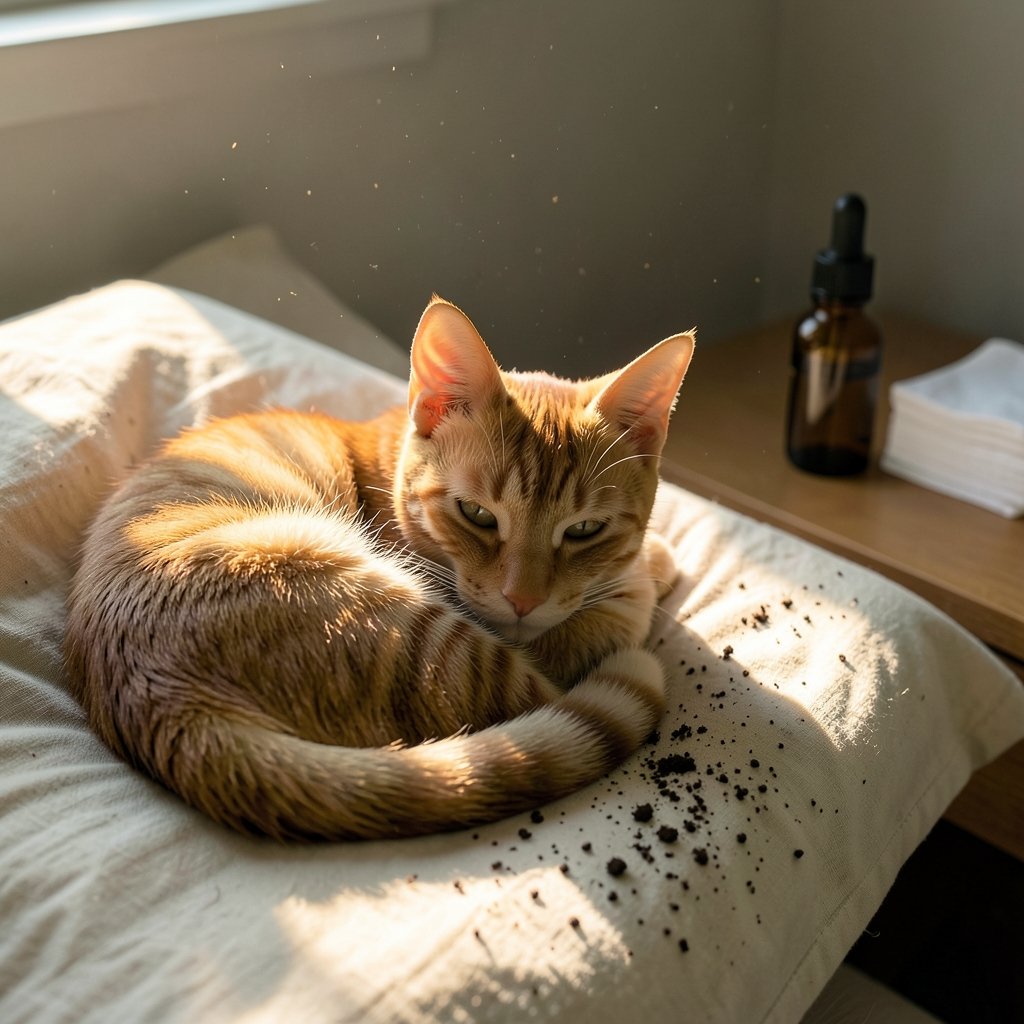
Has a cat been shaking its head like a tiny wet dog, scratching at its ears until the fur thins, and leaving dark crumbs on the pillow? That gritty, coffee-ground debris in the ear canal is one of the most recognizable clues in feline medicine, and it usually points to a single culprit: ear mites.
These microscopic parasites are among the most common causes of outer-ear inflammation in cats, especially in kittens and cats that live in groups or roam outdoors. The good news is that they are treatable, and the treatment is far simpler than the internet’s home-remedy forums suggest. The trick is getting the diagnosis right, because plenty of other problems mimic mites almost perfectly.
What Are Ear Mites, Exactly?
The mite behind almost all feline ear infestations is Otodectes cynotis, a psoroptid mite that lives on the surface of the skin lining the ear canal. It does not burrow into tissue. Instead, it feeds on epidermal debris and tissue fluid, scurrying around the canal surface and driving the cat to distraction.
Under a microscope, the mites look like tiny moving specks with legs. To the naked eye, they are barely visible, which is why owners usually notice the mess they leave behind rather than the mites themselves. That mess is a mix of wax, inflammatory debris, dried blood from scratching, and mite waste, and it has a characteristic dark, granular look.
How Common Are They, and How Do Cats Get Them?
Ear mites are one of the most frequent causes of otitis externa (inflammation of the outer ear canal) in cats. They turn up most often in kittens, in cats from shelters or multi-cat households, and in cats with outdoor access. Precise prevalence numbers swing wildly between studies and populations, so treat any single percentage with suspicion.
Transmission occurs mostly through direct contact between cats. Mites spread easily, and a mother cat can pass them to her kittens. Because mites survive only briefly off the host, the surroundings matter less than the cats themselves. That fact determines the treatment plan: every cat in the household needs treatment, including the one that is scratching.
For owners who are worried: ear mites are not a human-health problem in the usual sense. They are a veterinary concern, not a public-health one. Transient skin irritation in people has been reported, but humans are not part of the mite’s life cycle.
The Signs: What an Infestation Actually Looks Like
The classic picture is hard to miss once you know it:
- Intense scratching of the ears and around the head, sometimes to the point of self-injury
- Head shaking and frequent ear twitching
- A dark, waxy, coffee-ground-like discharge in the canal
- Redness and swelling of the ear flap or canal opening
- Crusty debris around the ear base or on bedding
Some cats are asymptomatic carriers, showing almost nothing while quietly hosting mites. That is one reason infestations keep bouncing back in group settings. It is also why a vet will often want to examine the whole household’s cats rather than just the itchy one.
A practical tip from the clinic floor: if the ears look dirty but the cat is not scratching, do not assume mites. And if the cat is scratching frantically but the ears look clean, do not rule them out either. Mites can hide deep in the canal, and cats can be genuinely itchy with a surprisingly small mite burden.
Why “Dark Ear Wax” Is Not a Diagnosis
This is the most common mistake owners make, and it costs time and money. Not all dark discharge is mites. A short list of look-alikes includes:
| Cause | What It Looks Like | Key Difference |
|---|---|---|
| Ear mites | Dark, granular, coffee-ground debris | Intense itch, often both ears, contagious spread |
| Yeast (Malassezia) | Brownish, waxy, sometimes musty-smelling discharge | Often secondary to allergies or moisture; itch varies |
| Bacterial otitis | Pus-like or creamy discharge, redness, pain | May smell sharp; often one ear or follows another cause |
| Ear polyps or foreign bodies | Discharge, head tilt, sometimes one-sided signs | No mite response to treatment; needs otoscopy |
Because these conditions overlap so heavily, diagnosis matters before treatment. Treating a yeast infection with a mite product, or vice versa, wastes weeks and lets the real problem worsen.
How Vets Confirm Ear Mites
Diagnosis rests on two tools. First, otoscopy: looking down the canal with an instrument to see mites, eggs, or the characteristic debris, and to check for polyps, foreign material, or a ruptured eardrum. Second, ear-swab cytology: material collected from the canal is suspended in mineral oil or a similar medium and examined under a microscope for mites or their eggs.
Here is the catch that experienced vets know well: mites can be missed on a single swab, especially in a waxy or inflamed ear. When the clinical picture screams mites but the microscope stays quiet, response to treatment becomes a legitimate diagnostic clue. If the cat improves dramatically on an appropriate parasiticide, mites were probably there all along.
Treatment That Actually Works
Modern treatment relies on licensed parasiticides effective against Otodectes, typically spot-on products or ear preparations. The old advice to use only mineral oil is not a reliable cure. Oil may soften debris and soothe the ear, but it does not clear an infestation on its own, and relying on it delays real treatment.
The non-negotiables of successful treatment:
- Treat every in-contact cat, whether or not they show signs. This is the single biggest determinant of success.
- Follow the product label for duration and repeat dosing. Some products need a second application at a set interval to catch newly hatched mites.
- Clean debris gently where the vet advises it, so the medication can reach the canal lining.
- Recheck as recommended. Persistent signs after treatment usually mean missed cats or reinfection, not drug resistance.
Environmental control is secondary but sensible. Mites do not survive long off the host, so there is no need to fumigate a house. Washing bedding and cleaning grooming tools is a reasonable, low-effort step.
Common Mistakes Owners Make
A few patterns show up again and again, and each one stretches out the problem:
- Treating one cat in a multi-cat home. The untreated cats reinfect the treated one within weeks.
- Stopping treatment when the scratching stops. Itch fades before the life cycle is fully interrupted.
- Using dog products on cats without checking the label. Some ingredients are not safe or not licensed for felines.
- Skipping the vet because “it’s just mites.” Yeast, bacteria, and polyps look identical to an untrained eye.
- Over-cleaning the canal. Aggressive swabbing can irritate the lining and push debris deeper.
If the household includes cats with thick, dense coats that hide skin problems, it pays to check ears during routine grooming. The same goes for anyone following coat-care routines for textured fur types like 4c hair on themselves: dense growth hides what is happening underneath, so scheduled checks beat reactive ones. Cats deserve the same diligence.
Kittens, Shelters, and Group Housing
Kittens are hit hardest. Their ears are small, their immune systems are still developing, and they share close quarters with littermates and mothers, which is ideal for mite transmission. Shelter and rescue cats frequently arrive with mites, and reputable organizations typically screen and treat before adoption.
For anyone bringing home a new cat, a simple routine helps: ask whether ears were checked and treated, inspect the ears yourself for dark debris, and book a vet visit in the first week. Early detection in a new pet prevents a household-wide problem later.
When It Is Something Else
If a cat has been treated correctly and is still scratching, the conversation shifts. Persistent signs can point to food or environmental allergies, yeast overgrowth driven by allergies, bacterial infection, ear polyps, or foreign material lodged in the canal. Some cats also develop proliferative changes in the ear canal after long-standing inflammation, which need proper otoscopic evaluation.
This is where a good veterinary exam earns its keep. A quick look with an otoscope can separate a simple mite case from a chronic problem that needs a completely different plan. Owners who track symptoms, note which ears are affected, and photograph the discharge give their vet a real head start.
Prevention in Plain Terms
There is no magic shield against ear mites, but a few habits lower the odds:
- Keep infected cats separate until treatment is complete.
- Treat all contact animals at the same time.
- Check ears weekly in multi-cat homes, especially after introducing a new cat.
- Keep bedding clean, particularly in shelters or foster setups.
- Ask about parasite prevention at routine visits, since some products cover mites alongside fleas.
For readers who enjoy keeping up with broader pet and style trends, the same seasonal planning that shapes wardrobes and grooming routines applies to pet care: a little foresight in spring and fall, when outdoor activity rises, goes a long way. The curated looks featured in guides like this 2026 fashion trends roundup show how planned routines beat last-minute scrambles, and parasite checks work the same way. Even runway-inspired minimalism, the kind associated with labels such as The Row, is built on discipline and repetition rather than luck. Ear care for cats is no different.
Conclusion
Ear mites in cats are common, contagious, and genuinely uncomfortable, but they are also one of the more solvable problems in veterinary medicine. The dark, crumbly discharge and frantic scratching have a well-known cause, a reliable diagnostic path, and effective licensed treatments. What separates a quick resolution from a months-long saga is almost always the same thing: treating every cat in the household, following the label, and confirming the diagnosis instead of guessing from the color of the wax. If a cat’s ears look wrong, get them checked. The answer is usually simple, and the relief is fast.
Frequently Asked Questions
Can humans catch ear mites from cats?
No, not in any practical way. Ear mites are a veterinary concern, and humans are not part of the mite’s life cycle. Brief, transient skin irritation has been reported in people with close contact, but a genuine human infestation is not a recognized concern. The cats in the home need treatment.
Are ear mites contagious between cats?
Yes, highly. Mites spread mainly through direct contact between cats, and a mother can pass them to her kittens. This is why every in-contact cat should be treated at the same time, even if only one is scratching. Skipping the quiet cats is the most common reason infestations come back.
How do vets tell ear mites apart from a yeast infection?
By looking. Otoscopy lets the vet see the canal directly, and an ear swab examined under a microscope can reveal mites or eggs. Yeast and bacteria show up differently on cytology. Because the discharge from mites, yeast, and bacterial otitis can look nearly identical to the naked eye, this step is not optional.
Does cleaning the ears cure ear mites?
No. Cleaning removes debris and helps medication reach the skin, but it does not kill mites. A licensed parasiticide is what clears the infestation, and the label’s repeat schedule matters because eggs hatch after the first dose. Mineral oil alone is not a reliable cure either.
How long does treatment take?
It depends on the product, but most regimens involve an initial application plus a repeat at a set interval to catch newly hatching mites, with a recheck afterward. Scratching often settles before the life cycle is fully interrupted, so finishing the schedule matters more than how the ears look on day three.
Why do my cat’s ears keep getting dirty after treatment?
The usual answer is reinfection from an untreated cat in the household, or a treatment course that was stopped early. Less often, the original diagnosis was incomplete and a yeast or bacterial problem is driving the discharge. A recheck with cytology sorts out which scenario applies.









