

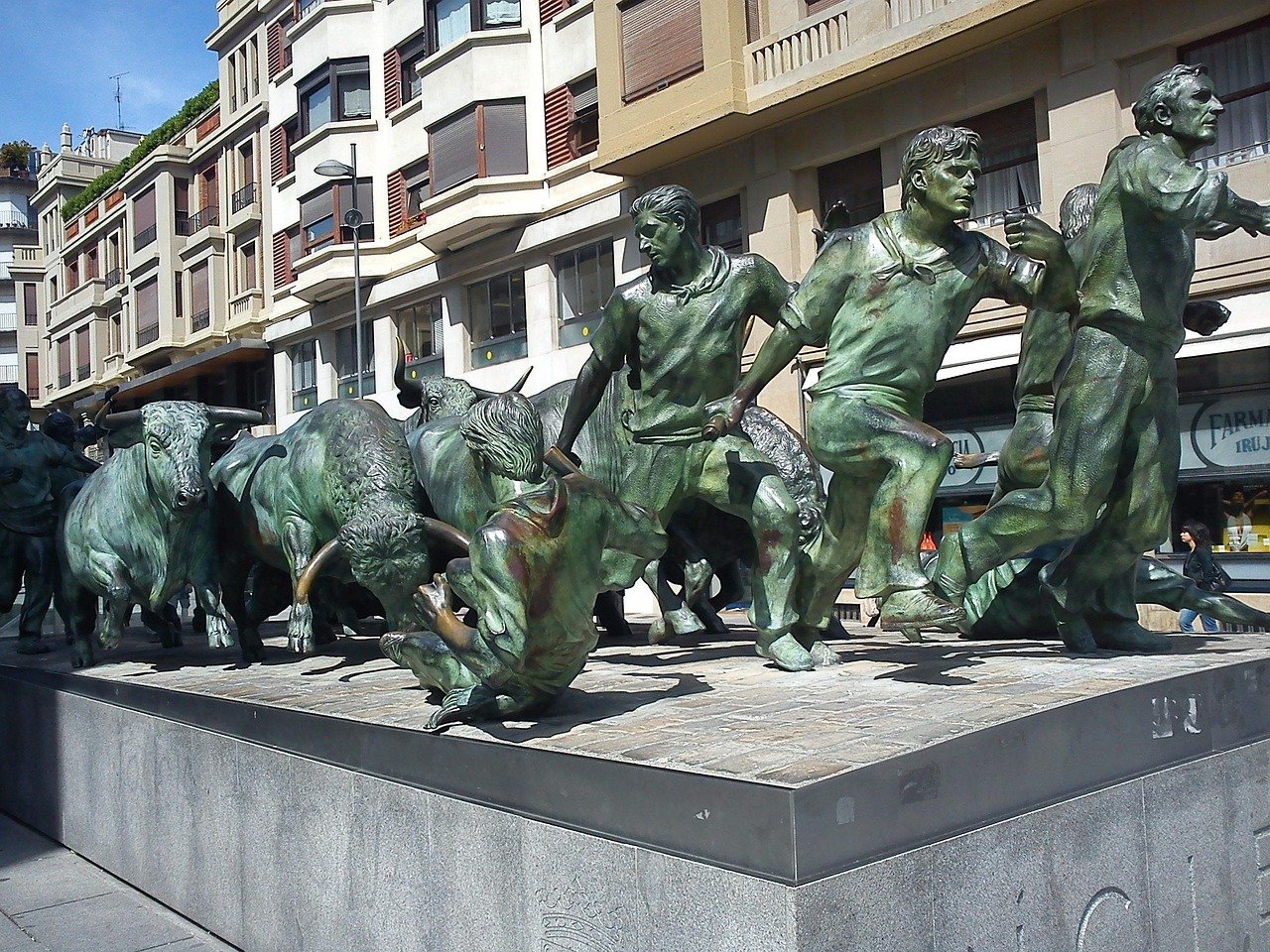
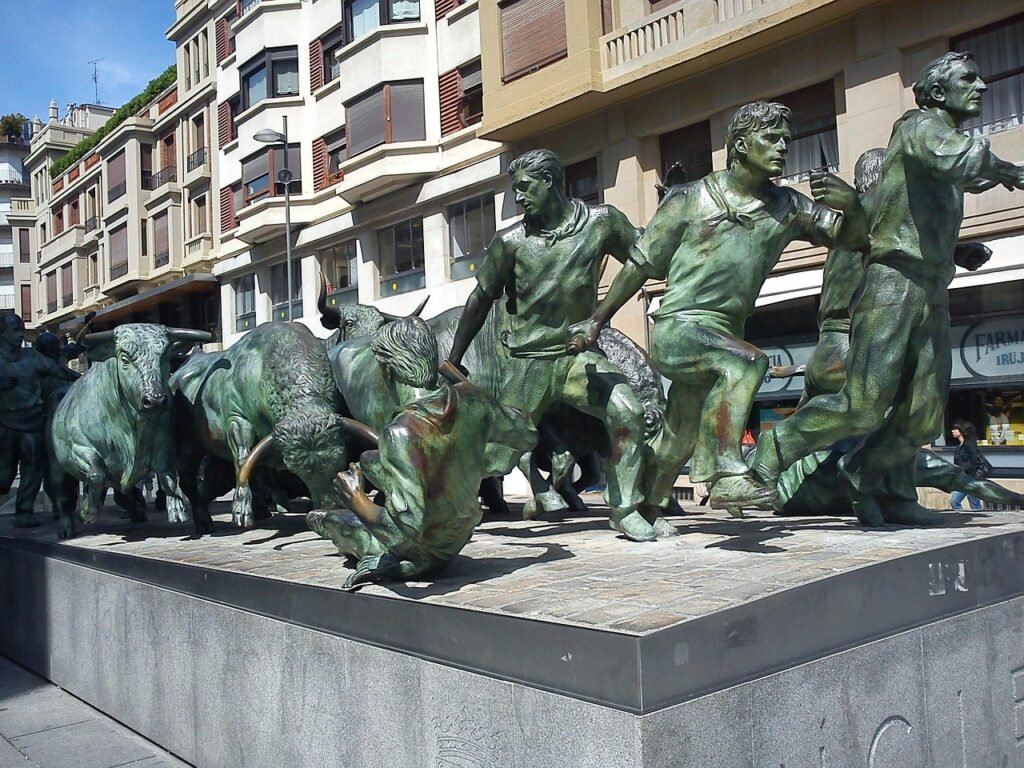
What makes a person get up before dawn, stand in a narrow street in northern Spain, and wait for six half-ton animals to come charging toward them? Every July, thousands of people do exactly that. The event is called the encierro, and it is one of the most famous, most photographed, and most argued-about traditions in Europe.
It is also widely misunderstood. Many visitors arrive in Pamplona expecting a party with a bit of danger attached. What they find is a tightly regulated, deeply local ritual with strict rules, real consequences, and a history that stretches back centuries. This article walks through what the encierro actually is, how it works, who takes part, and what the debates around it look like.
What Is the Encierro?
The word encierro comes from the Spanish verb encerrar, meaning “to enclose” or “to pen.” In its broadest sense, it refers to the act of driving bulls from one place to another. In everyday usage, though, it means something more specific: people running in front of and alongside bulls through cordoned-off streets.
The most famous version takes place in Pamplona during the San Fermín festival, held every year from 6 to 14 July. A run is held each morning of the festival at 8 a.m. The animals are moved from a holding corral through the old town and into the bullring, where the afternoon bullfight will later take place.
The route is often described as roughly 850 meters long, starting at the Santo Domingo corral and finishing inside the plaza. The exact details are best checked against official municipal information before you travel, since rules and arrangements can change.
One thing worth getting straight early: the encierro is not the same as the corrida (bullfight). They are linked in the festival program and involve the same animals, but they are separate events. Running with the bulls and watching a bullfight are two very different experiences, and many people who follow one have strong feelings about the other.
A Short History of the Tradition
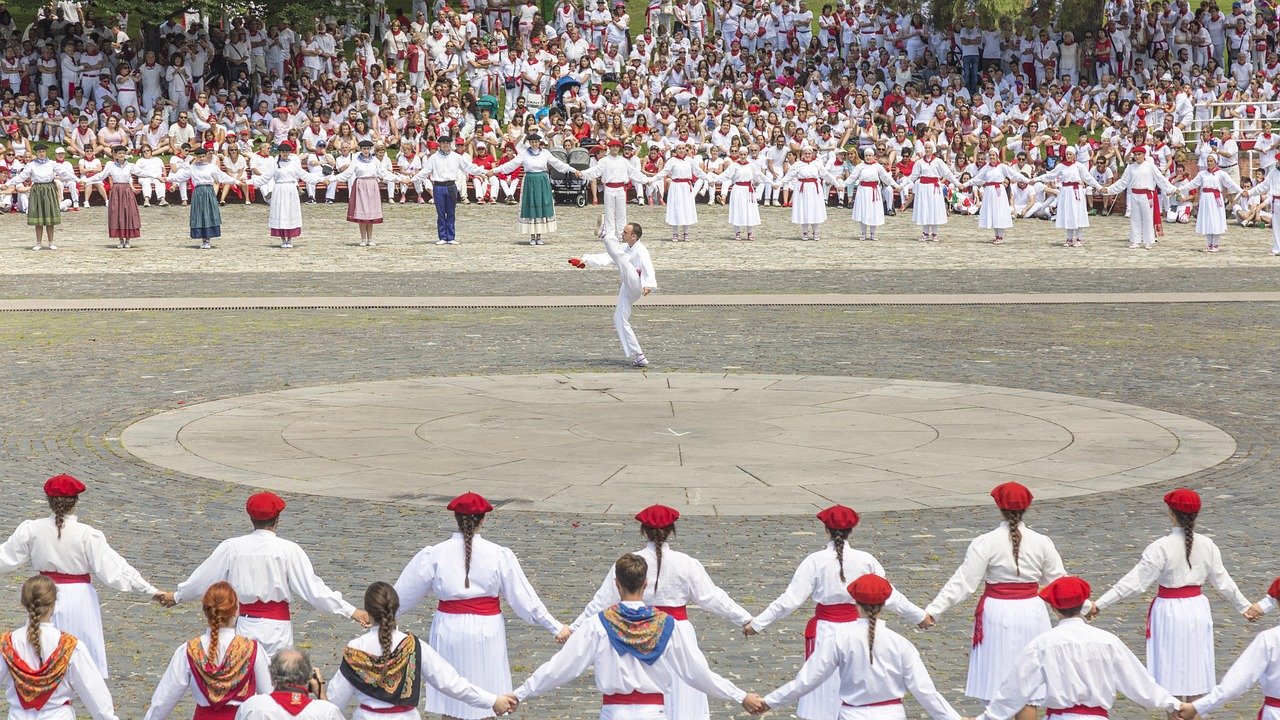
Moving bulls through town to the ring is an old practical necessity. But the modern custom of running in front of them as a mass public event is usually dated to the 19th century. The precise origin stories are folkloric and vary depending on who tells them, so treat dramatic claims about a single founding moment with caution.
The San Fermín festival itself is tied to the feast of Saint Fermín, traditionally celebrated on 7 July. The festival’s modern 6–14 July format is commonly dated to the 16th century, with 1591 often cited as the year the celebration was formally established. That date is worth verifying against a reliable historical source if precision matters to you.
What is clear is that the encierro is not exclusively a Pamplona thing. Running events with bulls happen in other Spanish towns too, including the bous al carrer tradition in the Valencian Community and runs in places such as San Sebastián de los Reyes and Cuéllar. Pamplona’s version is simply the biggest and most internationally known.
How a Morning Run Actually Works
For spectators, the encierro looks like chaos. In practice, it is a scheduled operation with a lot of moving parts. Here is the rough sequence of a Pamplona morning.
- The night before. Participants are supposed to be rested and sober. Officials have repeatedly stressed that running under the influence is dangerous and prohibited.
- Early morning. Runners gather along the route and in the town square. Many sing traditional songs before the run. Police clear the route of anyone who should not be there.
- The start. A rocket is fired to signal that the bulls have been released from the corral. A second rocket signals that all the animals are out and running.
- The run itself. The animals move through the streets with runners ahead of and beside them. Stewards and police line the route. Doors and barriers give people an escape route if they need one.
- The finish. The bulls enter the bullring. A third rocket signals that they are safely inside.
- The aftermath. Medical teams treat injuries. The route reopens. The next day, it happens again.
The atmosphere is not a carnival from start to finish. There is a strange, tense quiet in the minutes before the first rocket. Then it is over in a matter of minutes. Most of the morning is waiting.
Who Runs, and What the Rules Say
Runners come from all over the world, but the event is regulated by regional and local authorities, and participants are subject to rules. Exact requirements are set out in official regulations, and anyone planning to run should read the current version rather than rely on secondhand advice.
Several rules are widely reported and consistently enforced in spirit:
- Runners must be adults. Age restrictions apply.
- Running while intoxicated is prohibited.
- Participants may not incite or provoke the animals.
- Touching or grabbing the bulls is not allowed.
- Runners should not stop in the middle of the route or lie down in front of the animals.
In practice, the most common mistakes are not exotic rule violations. They are basic ones. People drink the night before and then decide at 7:30 a.m. to have a go. People wear the wrong shoes. People stand in the middle of the street to film rather than staying near an escape route. People overestimate their fitness and underestimate how fast a bull can move.
If there is one piece of practical advice that comes up again and again from experienced runners and local officials, it is this: if you are not certain you can run safely, don’t run. Watch from behind a barrier. The view is better and the risk is lower.
Injuries, Deaths, and the Safety Debate
The encierro is genuinely dangerous. Injuries happen every year, and deaths, while rare, do occur. Notable fatalities in Pamplona include an American runner in 1995 and a Spanish runner in 2009. A Spanish man was widely reported to have died after a run in 2024, though details of that case should be checked against reliable reporting.
Most injuries are not gorings. They are the result of falls, trampling, and collisions between runners in crowded streets. That surprises people. A stampede of panicked humans can be just as hazardous as the animals themselves.
The safety debate splits into a few strands. One is about participant safety: should the event be more tightly restricted, or even limited to locals who understand the route? Another is about animal welfare. The bulls used in Pamplona are typically toro de lidia, the Spanish fighting bull breed, raised on breeding estates called ganaderías. Each day’s run features animals from a named ganadería. Animal-welfare organizations have long argued against the treatment of the animals, both in the run and in the bullfight that follows.
A third strand is about tourism. Pamplona’s population swells dramatically during San Fermín, and the event has become a global bucket-list item. Locals are divided. Some see the festival as central to the city’s identity and economy. Others see the crowds, the drinking, and the injuries as a distortion of a tradition that was never meant to be a tourist attraction.
The Encierro Beyond Pamplona
Pamplona dominates the conversation, but it is not the only place where this happens. Across Spain, hundreds of local festivals include some form of bull run, often on a much smaller scale. The Valencian bous al carrer tradition, for example, involves bulls running through streets in a way that is distinct from the Pamplona model, with its own regional rules and customs.
These smaller events rarely make international news, but they matter for understanding the encierro as a cultural practice rather than a single spectacle. They also shape regulation. Regional governments, along with Pamplona’s city council, have a say in how these events are run.
If you are interested in the broader culture of hair and appearance in festival contexts, or in how different communities style themselves for public celebrations, there is a whole world of regional dress and grooming tradition worth exploring. The same goes for communities with very different hair textures and styling needs — see this overview of 4c hair for a sense of how varied those needs can be. Festival style is a topic in its own right, from the traditional white-and-red Pamplona uniform to the carefully styled looks people wear on the row at major events.
Watching Versus Running: A Practical Comparison
Many visitors arrive unsure whether to run or watch. The two experiences are very different, and it helps to compare them honestly.
| Factor | Running | Watching |
|---|---|---|
| Risk level | High; injuries are common | Low if you stay behind barriers |
| Best for | Experienced, fit adults who understand the route | Most visitors, including families |
| Timing | Early morning, brief window | Early morning, then the rest of the day |
| Cost | Free, but requires preparation | Free from public viewing points |
| Preparation needed | Serious: sleep, sobriety, footwear, route knowledge | Minimal |
The honest answer for most travelers is watching. The run lasts only a few minutes, and the view from a balcony or behind a barrier is often better than the view from inside the crowd. Running is a decision that should be made with clear eyes, not after a night of celebration.
Common Mistakes Visitors Make
A few patterns come up repeatedly among first-time visitors.
- Treating it as a party first and a sporting event second. The run is a scheduled, regulated event. People who treat it as an extension of the night before put themselves and others at risk.
- Wearing the wrong clothing. The traditional white clothes and red neckerchief are fine, but footwear matters more than the rest of the outfit. Sturdy shoes with grip are necessary.
- Standing in the middle of the route. This is one of the most dangerous things a spectator or would-be runner can do.
- Assuming you can run on a whim. Preparation, sleep, and sobriety are not optional extras.
- Ignoring the difference between the run and the bullfight. They are separate events with separate debates around them.
For anyone thinking about hair and grooming for festival travel, the practicalities are similar to any hot-weather event: lightweight styles, sun protection, and products that hold up. If you have looser waves or curls, you may find guidance for 2b hair useful when planning a look that survives a long day outdoors.
Conclusion
The encierro is many things at once: a centuries-old local tradition, a global tourist spectacle, a genuine test of nerve, and an ongoing argument about risk and animal welfare. It is not a simple party, and it is not a simple villain either. It is a complex cultural practice that rewards understanding over assumption.
If you go, go informed. Read the official rules. Watch before you decide to run, if you decide at all. Respect the animals, the route, and the people who live there. The encierro has survived for generations because it is more than a thrill. Treat it that way, and you will get far more out of it than a few seconds of adrenaline.
Frequently Asked Questions
What is the encierro?
The encierro is the Spanish tradition of running in front of and alongside bulls through cordoned streets. The most famous version takes place in Pamplona during the San Fermín festival, held 6–14 July, with a run each morning at 8 a.m. The animals are moved from a corral through the old town and into the bullring.
Is the encierro the same as a bullfight?
No. The encierro is the run through the streets. The corrida, or bullfight, is a separate event held in the afternoon involving the same animals. They are linked in the festival program, but they are distinct activities with different rules and different debates around them.
How dangerous is running with the bulls?
It is genuinely dangerous. Injuries occur every year, and deaths, while rare, do happen. Notable fatalities in Pamplona include an American runner in 1995 and a Spanish runner in 2009, with a Spanish man widely reported to have died after a run in 2024. Most injuries come from falls and trampling rather than gorings.
Can anyone run in the encierro?
Participants are subject to rules set by regional and local authorities, including age restrictions and prohibitions on running while intoxicated. Anyone planning to run should read the current official regulations rather than rely on secondhand advice. Fitness, sleep, and sobriety all matter.
Does the encierro happen anywhere besides Pamplona?
Yes. Bull runs take place in other Spanish towns, including the bous al carrer tradition in the Valencian Community and runs in places such as San Sebastián de los Reyes and Cuéllar. Pamplona’s version is the largest and most internationally known, but it is not the only one.
What should I wear if I plan to watch or run?
The traditional Pamplona outfit is white clothing with a red neckerchief. Whatever you wear, footwear matters most: sturdy shoes with good grip are necessary if you are anywhere near the route. If you are watching from behind a barrier, dress for a long morning outdoors in hot weather.









