


What do you picture when you hear the word “church”? A stone cathedral in Europe? A storefront chapel? Now imagine a rock-hewn sanctuary carved straight down into red volcanic stone, where pilgrims in white shawls gather before dawn and ancient chants rise in a language most of the world has never heard. That is the world of the Ethiopian Orthodox Tewahedo Church, usually shortened to EOTC. In Ethiopia, those four letters point to one of the oldest Christian institutions on Earth, and one of the least understood outside the Horn of Africa.
This guide explains what the EOTC is, what makes it different, how it is organized, and why its story matters far beyond Ethiopia’s borders.
What Does EOTC Stand For?
EOTC stands for the Ethiopian Orthodox Tewahedo Church. The word Tewahedo means “made one” in Ge’ez, the ancient language of Ethiopian liturgy. It points to a core belief: that Christ’s divine and human natures are united in a single, inseparable nature.
That belief places the church in the Oriental Orthodox family, alongside the Coptic, Syriac, Armenian, Malankara and Eritrean churches. These churches split from the wider Christian world after the Council of Chalcedon in 451 CE, over how to describe the person of Christ. The EOTC has carried that tradition ever since.
One note before going further: the acronym EOTC also appears in education circles, where it means “Education Outside the Classroom,” a term used in New Zealand schools. In the context of Ethiopia, however, EOTC almost always means the church.
A Church Older Than Most Nations
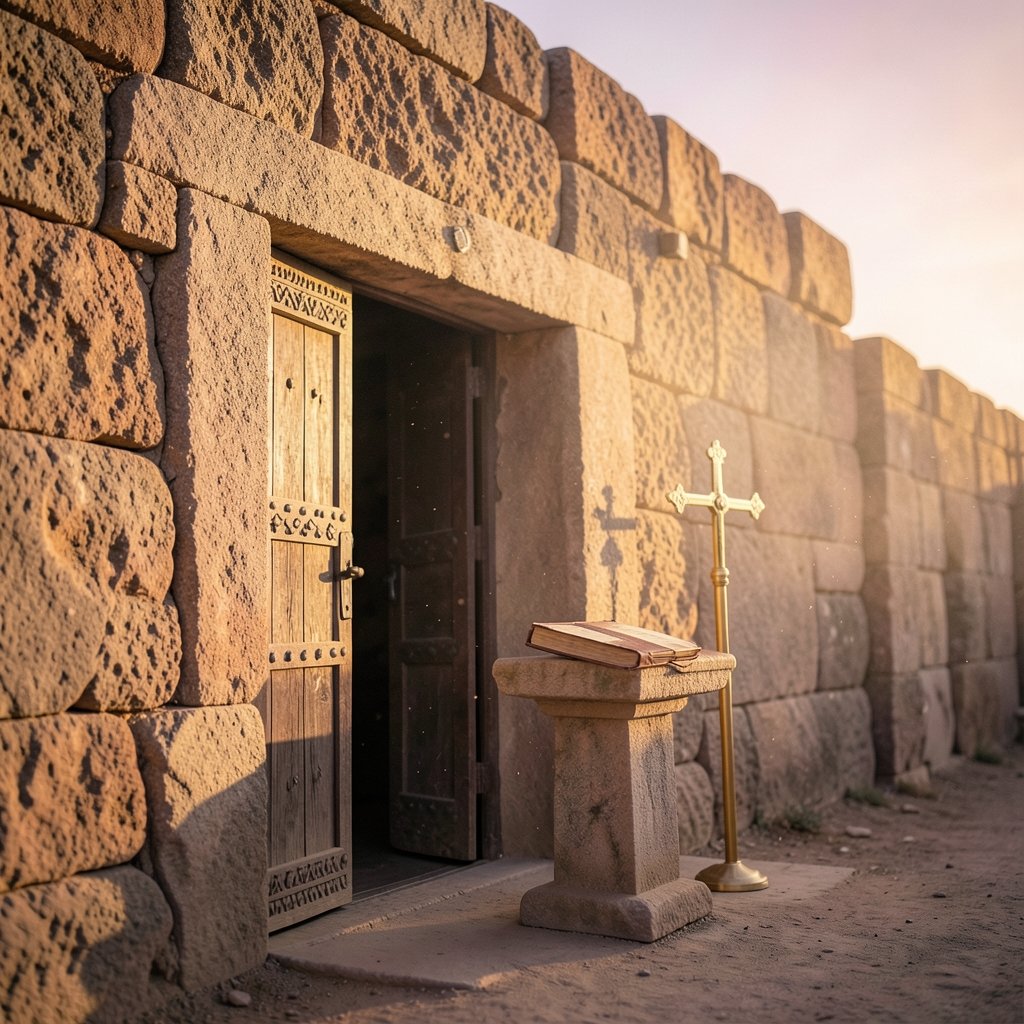
Ethiopia’s Christian story starts early. The church traces its roots to the fourth century, when Christianity became the faith of the royal court in the kingdom of Aksum. Over the centuries that followed, the EOTC built monasteries, translated scripture and developed a liturgical culture entirely its own.
For most of its history, the church was led by an Egyptian metropolitan appointed by the Coptic Patriarch of Alexandria. That changed in 1959, when the church gained its own patriarch. Abune Basilios was enthroned as the first patriarch that year, and autocephaly, or self-governance, became a defining moment in modern Ethiopian church history.
How the Church Is Organized
The EOTC is governed by a Holy Synod of bishops, led by the Patriarch. The current patriarch, Abune Mathias, has held the office since 2013. Under the synod sit dioceses, parishes and monasteries, each with its own responsibilities.
| Feature | EOTC practice |
|---|---|
| Governance | Holy Synod of bishops under a Patriarch |
| Liturgical language | Ge’ez, with local languages used in teaching and preaching |
| Calendar | The church’s own calendar of 13 months, roughly seven to eight years behind the Gregorian calendar |
| Biblical canon | Includes books such as Enoch and Jubilees, absent from most other Bibles |
| Monastic centers | Debre Damo, the Lake Tana island monasteries, and others |
| Major pilgrimage site | The rock-hewn churches of Lalibela |
The liturgical calendar deserves a moment of attention. Because the church follows its own reckoning, Ethiopian Christmas and other feast days often fall on different dates than in Western churches. For visitors, this can be confusing at first, but it is also one of the most visible signs of how distinct the tradition really is. (4c hair)
The Bible You Won’t Find Elsewhere
One of the most striking features of the EOTC is its biblical canon. The Ethiopian Bible includes texts such as Enoch and Jubilees, which most other Christian traditions do not treat as scripture. These books survive in full mainly through the Ge’ez textual tradition, which makes Ethiopian manuscript collections enormously important to scholars of ancient religion.
The church’s schools have long preserved this heritage. Traditional institutions known as nebab bet and qine bet taught literacy, chant and theology for generations, and they remain part of Ethiopia’s religious education landscape today. Long before modern schooling spread across the country, these church schools were where many Ethiopians learned to read and write.
Worship, Fasting and Everyday Life
To understand the EOTC, you have to understand how deeply it shapes daily rhythms. Fasting is central. The church observes numerous fasting periods across the year, and many adherents follow them closely. Worship traditionally uses Ge’ez, and services can be long, rhythmic and deeply sensory, with drums, sistrums and call-and-response chant.
Practical tip for visitors: dress modestly, remove shoes where required, and never assume you can photograph a service without permission. In practice, the most common mistake outsiders make is treating a working place of worship as a tourist attraction. Ask first, watch quietly, and follow the lead of local congregants.
Lalibela and the Great Pilgrimage Sites
The rock-hewn churches of Lalibela, carved in the 12th and 13th centuries, are the church’s most famous monument and a major pilgrimage destination. Pilgrims travel from across Ethiopia and beyond, especially around major feast days, to pray in churches cut directly into the living rock.
Other historic centers include Debre Damo, a monastery reachable only by climbing a rope, and the island monasteries of Lake Tana. These sites are not museums. They are active communities of monks and worshippers, and they have shaped Ethiopian art, music and manuscript culture for centuries.
A Community Under Pressure
The EOTC’s recent history has been difficult. During the Tigray war from 2020 to 2022, churches and monasteries were damaged and clergy were displaced. Reporting on the scale of the damage has been partial and contested, and independent verification has been hard to obtain.
The church has also faced internal strain. Around 2023, a breakaway synod backed by some Oromia-based clergy emerged, prompting government mediation and a 2024 reconciliation effort. The situation remains fluid, and observers continue to watch how the Holy Synod handles the dispute. (The row)
How Large Is the Church?
Most estimates describe the EOTC as the largest religious body in Ethiopia, with tens of millions of adherents. Exact figures are debated. The 2007 national census recorded Orthodox Christians at about 43.5% of the population. A 2024 household survey reported roughly 33%. That gap is significant, and church leaders and some analysts have disputed the newer figure. Anyone citing numbers should treat them carefully and note which source they come from.
The drop reflects a mix of factors: a fast-growing population, changing affiliation patterns, and the difficulty of measuring religious identity accurately in a country as diverse as Ethiopia.
Why the EOTC Matters Beyond Ethiopia
The church’s influence reaches well past its own membership. It has preserved a vast manuscript tradition, including texts lost elsewhere. Its chant and liturgical music form a distinct branch of Christian sacred music. Its architecture, from Lalibela’s monoliths to remote monasteries, is a global heritage asset.
For anyone studying world Christianity, the EOTC is a reminder that the faith’s center of gravity has never been only European. An African church that split from Chalcedon in 451 CE and still worships in Ge’ez today carries a history that is both ancient and living.
Common Mistakes People Make When Researching the EOTC
A few practical pitfalls come up again and again:
- Confusing the church with the Ethiopian government. The EOTC is a religious institution, and its relationship with the state has varied over time.
- Assuming the church is identical to the Coptic Church. They are close relatives in the Oriental Orthodox family, but they are separate bodies with separate leadership.
- Treating the 2024 affiliation figure as settled. It is disputed and should be presented with context.
- Overlooking the Eritrean Orthodox Church. It became independent in 1993, and its relationship with the EOTC is its own story.
- Assuming all Ethiopian Christians are Orthodox. Ethiopia has large Protestant and Catholic communities as well.
The Church’s Future
The EOTC’s next chapter will be shaped by how it resolves internal disputes, how it manages its relationship with the state, and how it adapts to a rapidly changing society. Its schools, monasteries and parishes remain deeply embedded in Ethiopian life, and its liturgical heritage continues to attract scholars and pilgrims alike. For a church this old, change is nothing new. The question is how it carries its traditions forward without losing what makes them distinctive.
Conclusion
The Ethiopian Orthodox Tewahedo Church is not a footnote in Christian history. It is a living tradition with its own canon, calendar, language and architecture, shaped by more than fifteen centuries of worship on the Ethiopian plateau. From the rock-hewn churches of Lalibela to the rope-climbed monastery of Debre Damo, from the disputed census figures to the unresolved internal schism, the EOTC remains one of the most fascinating and least understood religious bodies in the world. Understanding it starts with getting the basics right: who leads it, what it believes, and why its story still matters today.
What is the EOTC in Ethiopia?
EOTC stands for the Ethiopian Orthodox Tewahedo Church, the country’s largest religious body by most estimates. It is an Oriental Orthodox church with its own patriarch, Holy Synod, liturgy and calendar. It traces its roots to fourth-century Aksum and has shaped Ethiopian culture for centuries.
How old is the Ethiopian Orthodox Tewahedo Church?
The church traces its origins to the fourth century, when Christianity became the faith of the Aksumite court. It split from the wider Christian world after the Council of Chalcedon in 451 CE. It gained full self-governance in 1959, when Abune Basilios became its first patriarch. (2b hair)
What makes the EOTC different from other Orthodox churches?
Several things stand out: the use of Ge’ez in worship, a calendar of 13 months, a biblical canon that includes Enoch and Jubilees, and a Christology rooted in the Tewahedo teaching of a united divine and human nature in Christ. Its monastic tradition and rock-hewn churches are also distinctive.
Who leads the Ethiopian Orthodox Tewahedo Church?
The church is led by a Holy Synod of bishops under a Patriarch. The current patriarch, Abune Mathias, has held the office since 2013. A breakaway synod emerged around 2023, prompting government mediation and a 2024 reconciliation effort, and the situation remains fluid.
How many followers does the EOTC have?
Exact numbers are contested. The 2007 national census recorded Orthodox Christians at about 43.5% of the population, while a 2024 household survey reported roughly 33%. Church leaders and some analysts dispute the newer figure, so treat any single number with caution.
Why is Lalibela important to the EOTC?
Lalibela’s rock-hewn churches, carved in the 12th and 13th centuries, are a major pilgrimage site for the church. Pilgrims travel there especially around major feast days to pray in churches cut directly into the rock. The site is both a working place of worship and a global heritage landmark.
For first-time researchers, the most useful starting point is the church’s own structure: a Holy Synod, a patriarch, and a network of dioceses, parishes and monasteries, each with its own responsibilities. | Feature | EOTC practice | |—|—| | Governance | Holy Synod of bishops under a Patriarch | | Liturgical language | Ge’ez, with local languages used in teaching and preaching | | Calendar | The church’s own calendar of 13 months, roughly seven to eight years behind the Gregorian calendar | | Biblical canon | Includes books such as Enoch and Jubilees, absent from most other Bibles | | Monastic centers | Debre Damo, the Lake Tana island monasteries, and others | | Major pilgrimage site | The rock-hewn churches of Lalibela | The liturgical calendar deserves a moment of attention. Because the church follows its own reckoning, Ethiopian Christmas and other feast days often fall on different dates than in Western churches. For visitors, this can be confusing at first, but it is also one of the most visible signs of how distinct the tradition really is. ## The Bible You Won’t Find Elsewhere One of the most striking features of the EOTC is its biblical canon. The Ethiopian Bible includes texts such as Enoch and Jubilees, which most other Christian traditions do not treat as scripture. These books survive in full mainly through the Ge’ez textual tradition, which makes Ethiopian manuscript collections enormously important to scholars of ancient religion. The church’s schools have long preserved this heritage. Traditional institutions known as nebab bet and qine bet taught literacy, chant and theology for generations, and they remain part of Ethiopia’s religious education landscape today. Long before modern schooling spread across the country, these church schools were where many Ethiopians learned to read and write. ## Worship, Fasting and Everyday Life To understand the EOTC, you have to understand how deeply it shapes daily rhythms. Fasting is central. The church observes numerous fasting periods across the year, and many adherents follow them closely. Worship traditionally uses Ge’ez, and services can be long, rhythmic and deeply sensory, with drums, sistrums and call-and-response chant. Practical tip for visitors: dress modestly, remove shoes where required, and never assume you can photograph a service without permission. In practice, the most common mistake outsiders make is treating a working place of worship as a tourist attraction. Ask first, watch quietly, and follow the lead of local congregants. ## Lalibela and the Great Pilgrimage Sites The rock-hewn churches of Lalibela, carved in the 12th and 13th centuries, are the church’s most famous monument and a major pilgrimage destination. Pilgrims travel from across Ethiopia and beyond, especially around major feast days, to pray in churches cut directly into the living rock. Other historic centers include Debre Damo, a monastery reachable only by climbing a rope, and the island monasteries of Lake Tana. These sites are not museums. They are active communities of monks and worshippers, and they have shaped Ethiopian art, music and manuscript culture for centuries. ## A Community Under Pressure The EOTC’s recent history has been difficult. During the Tigray war from 2020 to 2022, churches and monasteries were damaged and clergy were displaced. Reporting on the scale of the damage has been partial and contested, and independent verification has been hard to obtain. The church has also faced internal strain. Around 2023, a breakaway synod backed by some Oromia-based clergy emerged, prompting government mediation and a 2024 reconciliation effort. The situation remains fluid, and observers continue to watch how the Holy Synod handles the dispute. ## How Large Is the Church? Most estimates describe the EOTC as the largest religious body in Ethiopia, with tens of millions of adherents. Exact figures are debated. The 2007 national census recorded Orthodox Christians at about 43.5% of the population. A 2024 household survey reported roughly 33%. That gap is significant, and church leaders and some analysts have disputed the newer figure. Anyone citing numbers should treat them carefully and note which source they come from. The drop reflects a mix of factors: a fast-growing population, changing affiliation patterns, and the difficulty of measuring religious identity accurately in a country as diverse as Ethiopia. ## Why the EOTC Matters Beyond Ethiopia The church’s influence reaches well past its own membership. It has preserved a vast manuscript tradition, including texts lost elsewhere. Its chant and liturgical music form a distinct branch of Christian sacred music. Its architecture, from Lalibela’s monoliths to remote monasteries, is a global heritage asset. For anyone studying world Christianity, the EOTC is a reminder that the faith’s center of gravity has never been only European. An
For anyone studying world Christianity, the EOTC is a reminder that the faith’s center of gravity has never been only European. An accurate picture of global Christian history has to include the Ethiopian highlands alongside Rome, Constantinople and Canterbury. Researchers who follow the citations above, read the church’s own materials where possible, and resist the temptation to rely on a single headline figure will find a tradition that rewards careful study. Whether you come to the EOTC as a historian, a pilgrim or simply a curious reader, the essentials are the same: respect the living community, verify the numbers, and let the church’s own voice have the final word.









