

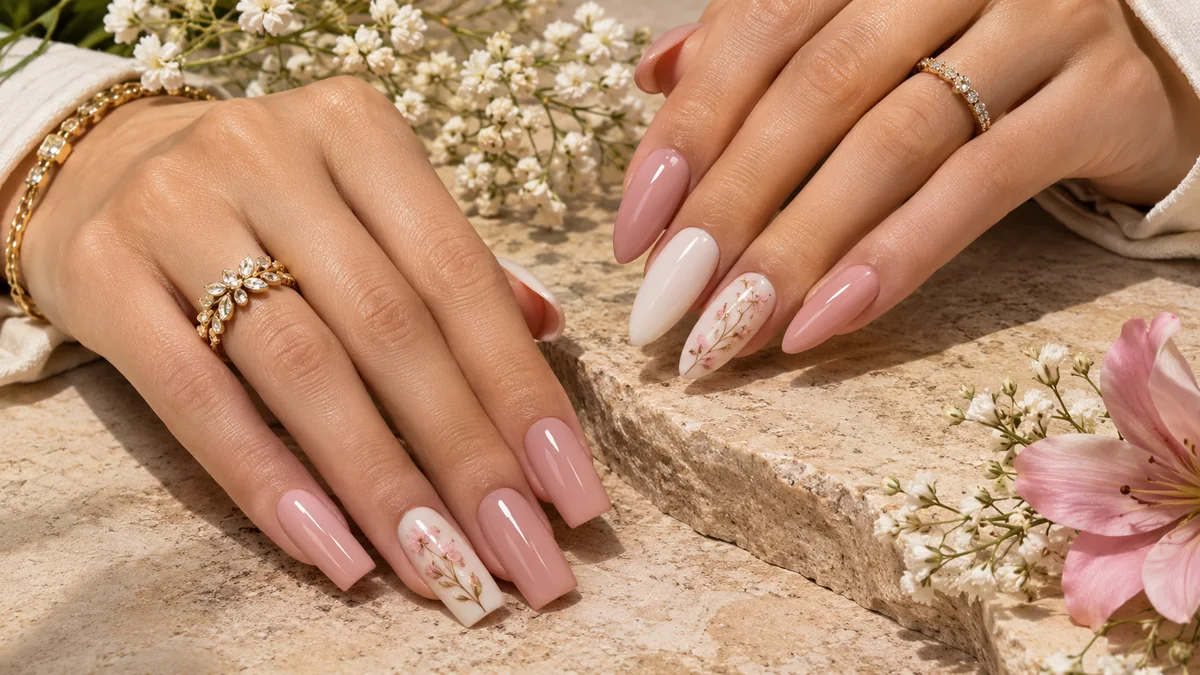

Fake nails are artificial nail enhancements used to add length, change nail shape, or create a finished manicure. The main options include press-on nails, acrylic nails, soft gel extensions, hard gel extensions, and dip powder nails.
Press-ons are quick and temporary, acrylics offer strong sculpted length, soft gel extensions provide a lightweight pre-shaped option, and hard gel is built and shaped over the natural nail or an extension. Dip powder creates a durable coating but does not automatically add length. Each type has different application, maintenance, and removal requirements.
The best choice depends on your budget, desired length, daily activities, and willingness to maintain the set. More importantly, safe application and removal matter: repeated filing, skin contact with uncured products, and forced removal can damage natural nails.
Key Takeaways
- Fake nails include press-ons, acrylics, soft gel extensions, hard gel extensions, and dip powder.
- Press-ons suit temporary manicures, while salon extensions are better for sculpted length and longer-term wear.
- Dip powder usually adds a coating rather than extension length.
- Removal depends on the exact product: some systems soak off, while hard gel generally needs filing.
- Never pull, pry, or scrape off artificial nails that remain firmly attached.
- Uncured gel and some nail adhesives can cause allergic reactions if they contact the skin.
- Ask about maintenance, removal, and hygiene before booking a salon service.
Why Choosing Fake Nails Is Not as Simple as Picking a Design

A set can look perfect on the day you get it and still become frustrating a week later. Maybe the corners keep lifting, the extensions feel too heavy, or your natural nails look thin after removal.
These problems often come from choosing a system that does not fit your routine. Long extensions, for example, need more maintenance than short press-ons. Some products need acetone to come off, while others must be filed down. Treating every artificial nail as if it uses the same removal method can cause avoidable damage.
Before choosing a design, understand what is actually being applied to your nails.
1. The Five Main Types of Fake Nails

Press-On Nails
Press-on nails are pre-shaped artificial nails attached with adhesive tabs or nail glue. They are available in different lengths, shapes, colors, and finishes, so you can change your manicure without booking a salon appointment.
Best for: Temporary looks, special occasions, beginners, and people who prefer changing designs often.
Advantages
- Quick application at home.
- Usually less expensive than a salon extension service.
- Available in many ready-made designs.
- Some sets can be reused if removed and stored carefully.
Limitations
- Adhesion depends heavily on nail fit and preparation.
- Poor sizing can leave gaps or make the nails look bulky.
- Water exposure and everyday activity can loosen some sets.
- Nail glue can irritate skin or cause an allergic reaction in some people.
A useful example is a weekend event. Adhesive tabs may be enough if you only need the nails for a short period. Nail glue generally offers a longer hold, but it also makes careful removal more important.
If you want to compare ready-made styles, see our guide to Glamnetic nails.
Acrylic Nails
Acrylic nails are made by combining a liquid monomer with a polymer powder. The mixture forms a workable material that a nail technician shapes over the natural nail or an extension tip. It hardens without a curing lamp.
Acrylics are popular for long extensions, dramatic shapes, and detailed salon designs. They also need regular maintenance as your natural nails grow.
Best for: People who want sculpted length, defined shapes, and a manicure maintained through salon appointments.
Advantages
- Suitable for a wide range of extension lengths and shapes.
- Can be sculpted into custom designs.
- Usually maintained through infills rather than replacing the whole set.
Limitations
- Application often involves filing the natural nail.
- The products can irritate skin or cause allergic reactions.
- Poor application or excessive filing can weaken the natural nail.
- Removal usually involves filing down the product and using an appropriate acetone soak.
Acrylics are not automatically the strongest or safest option. The technician’s application technique, product quality, and maintenance schedule all matter.
Soft Gel Extensions
Soft gel extensions use pre-shaped gel tips that are attached to the natural nail with gel and cured under a suitable lamp. Gel-X is one well-known example of this approach.
Unlike traditional acrylic extensions, the tip already has much of its shape. This can make application more consistent and reduce the amount of sculpting needed.
Best for: People who want extensions with a lighter feel and a ready-made shape.
Advantages
- Pre-shaped tips make application more predictable.
- Available in different lengths and shapes.
- Can create a smooth, natural-looking extension.
- Many systems are designed to be soaked off.
Limitations
- The gel must be cured correctly.
- Uncured gel should not touch the surrounding skin.
- Removal depends on the exact product system.
- Lifting or poor adhesion can create problems if ignored.
Not every gel extension is removable in the same way. Ask whether the product is soak-off or file-off before your appointment.
You can explore the technique in our guide to Gel-X nails.
Hard Gel Extensions
Hard gel is a thicker gel product that a technician builds and shapes over the natural nail or an extension form. It cures under a compatible lamp and is generally removed by filing rather than soaking off completely.
Hard gel can be useful when you want a sculpted extension or a structured overlay. However, it should not be described as universally stronger or better than acrylic. The right material depends on the nail, the desired result, and the technician’s skill.
Best for: People who want custom-built extensions and are comfortable returning to a salon for maintenance and removal.
Advantages
- Can be shaped and built to suit the nail.
- Useful for custom lengths and structured overlays.
- Does not rely on a pre-shaped plastic tip.
Limitations
- Usually requires professional filing for removal.
- Incorrect filing can thin the natural nail.
- Needs regular maintenance as the nail grows.
- Requires proper lamp curing and careful product application.
If you prefer removing your extensions at home, hard gel may not be the most convenient choice.
Dip Powder Nails
Dip powder manicures use a bonding liquid and colored powder to create a durable coating over the natural nail. Some systems can also be used with extension tips, but a standard dip manicure does not automatically make your nails longer.
Best for: People who want a durable color coating without necessarily adding extension length.
Advantages
- Offers a range of colors and finishes.
- Does not require the same type of lamp curing used by gel systems.
- Can provide a durable manicure.
Limitations
- Removal usually requires filing down the coating and soaking in acetone.
- Repeated aggressive application and removal can damage nails.
- Shared dipping powder containers can raise hygiene concerns if multiple clients dip directly into them.
A salon should use a hygienic method, such as pouring powder over the nail or using an individual portion, rather than having several clients dip their fingers into the same container.
2. Fake Nails Compared: Wear Time, Removal, and Best Use

Wear time is an estimate, not a guarantee. Your nail growth, application technique, product system, daily activities, and maintenance all affect how long a set stays in good condition.
| Type | Typical maintenance or wear window | Usual removal approach | Best suited to |
| Press-ons | A few days to around two weeks, depending on adhesive | Follow the kit instructions; tabs and glue may need different methods | Temporary styles and home use |
| Acrylics | Often around 2–3 weeks before maintenance | Product reduction and acetone soak | Sculpted length and custom shapes |
| Soft gel extensions | Often around 2–3 weeks before maintenance | Soak-off or filing, depending on the system | Pre-shaped, lightweight extensions |
| Hard gel | Often around 3–4 weeks before maintenance | Professional filing | Custom-built extensions |
| Dip powder | Often around 2–3 weeks | Product reduction and acetone soak | Durable color on natural nails |
The numbers above are common salon estimates, not promises. A set that begins lifting, cracks, causes pain, or traps moisture should not be kept on simply to reach a target wear time.
3. How Much Do Fake Nails Cost?

The price depends on where you live, the salon, the product brand, the length, and the design. A basic set and a detailed custom manicure can have very different prices even when they use the same material.
Think about the total cost rather than only the first appointment.
| Cost factor | What to check |
| Initial application | Does the quoted price include length, shape, and basic color? |
| Nail art | Are chrome, French tips, or detailed designs extra? |
| Maintenance | How much do fills or rebalance appointments cost? |
| Removal | Is removal included, or is it charged separately? |
| Repairs | What happens if one nail breaks or lifts? |
| Home products | Will you need adhesive, remover, or replacement sets? |
Press-ons generally have the lowest starting cost because you can apply them yourself. Salon extensions require a larger initial commitment and may involve repeat appointments.
A useful question to ask before booking is: What will the first set, maintenance, and eventual removal cost together?
That gives you a more realistic comparison than the advertised starting price.
4. How to Choose Fake Nails for Your Lifestyle

The best system is not necessarily the one that lasts the longest. It is the one you can wear comfortably and maintain properly.
Choose Press-Ons If You Want Flexibility
Press-ons make sense if you only need a manicure for a party, holiday, photoshoot, or weekend. They are also useful if you enjoy changing colors and shapes regularly.
Choose a size that fits each nail from sidewall to sidewall. If a tip is too narrow, it may leave exposed natural nail at the edges. If it is too wide, it may press against the surrounding skin.
Choose Acrylics If You Want Sculpted Length
Acrylics are worth considering if you want long extensions or a shape that needs a built structure. However, think about your daily routine first. Long nails can make typing, cleaning, opening packages, and wearing gloves more difficult. If you use your hands constantly, start with a shorter length before committing to dramatic extensions.
Choose Soft Gel Tips If You Prefer Pre-Shaped Extensions
Soft gel tips may suit you if you want a consistent shape without having each extension sculpted from scratch. Ask the technician which gel system is being used and how it should be removed. The word gel alone does not tell you whether a product is soak-off.
Choose Hard Gel If You Are Comfortable With Salon Maintenance
Hard gel is an option when you want a custom-built structure and do not mind professional filing during removal. It is less convenient if you expect to remove your nails at home. Make sure you understand the maintenance process before choosing it.
Choose Dip Powder If You Mainly Want Color and Durability
If your natural nails already have the length you want, dip powder may provide the finish you are looking for without adding extensions. It is still an artificial nail coating, so application, hygiene, and removal deserve the same attention as other systems.
5. How to Remove Fake Nails Without Damaging Natural Nails
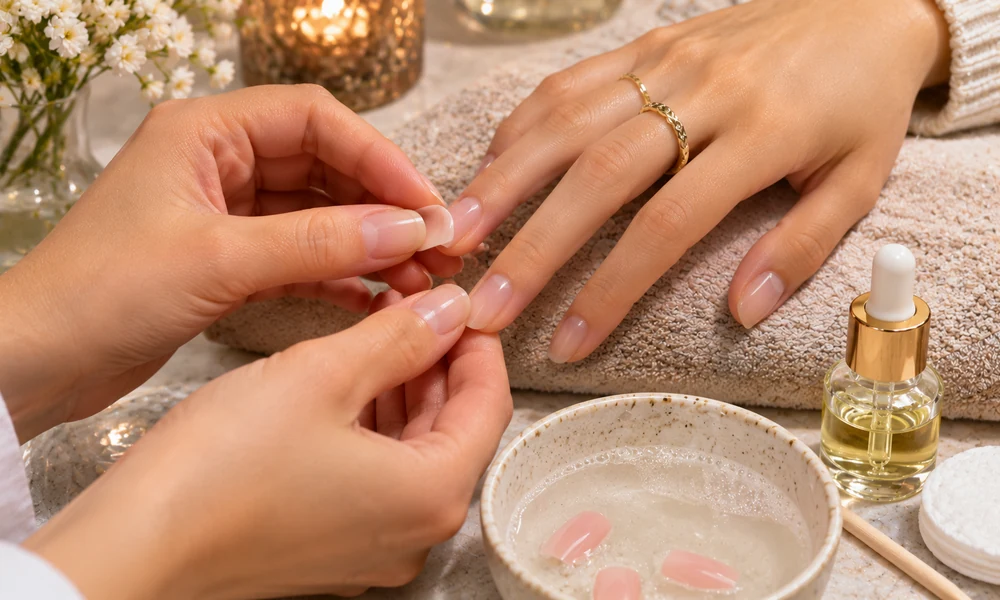
The most damaging mistake is treating removal as a job that should take only a few minutes. If a product is still firmly attached, forcing it off can pull away layers of your natural nail.
First, identify the product. Acrylic, dip powder, soft gel, hard gel, and press-ons do not all respond to the same remover.
Removing Press-On Nails
The correct method depends on the adhesive.
- Adhesive tabs: Follow the kit instructions. Warm, soapy water may help loosen some tabs.
- Nail glue: Some products require an acetone-based removal method. Check the manufacturer’s directions.
- Stubborn tips: Do not pull or twist them off. Give the adhesive more time to loosen.
Some press-on brands offer their own removal products or instructions. Follow those directions rather than assuming every glue behaves the same way.
Removing Acrylic Nails
Acrylic removal commonly involves reducing the length and filing down much of the artificial product before using acetone. A professional can judge how much material to remove without filing into the natural nail. If you attempt removal at home, use a product-specific method and never scrape or pry away acrylic that remains firmly attached.
Removing Soft Gel Extensions
Some soft gel tips are designed to soak off, while other extension systems require filing. Check the manufacturer’s instructions or ask the technician who applied them. If the gel does not soften or release as expected, stop rather than forcing it away.
Removing Hard Gel
Hard gel is generally file-off. It does not dissolve completely in acetone in the way soak-off products do. Professional removal is the safer choice because filing too deeply can remove layers of the natural nail. If you do not know which gel was used, do not guess.
What to Do After Removal
Once the artificial product is off:
- Wash your hands gently.
- Avoid aggressive buffing to make the nail plate look smooth.
- Apply a moisturizer or petroleum jelly to the nails and surrounding skin.
- Keep nails at a manageable length while they recover.
- Avoid applying another enhancement over sore, cracked, or visibly damaged nails.
The American Academy of Dermatology explains that artificial nails can leave natural nails thin, brittle, and dry, particularly when repeated filing and maintenance are involved. Its advice on reducing artificial nail damage is useful before your next appointment.
6. Fake Nail Safety: Problems to Watch For

Artificial nails are cosmetic products, but that does not mean every application is risk-free. Pay attention to the product, the technician’s technique, and changes in your natural nails.
Allergic Reactions to Nail Products
Acrylates and methacrylates used in some nail systems can cause allergic contact dermatitis. Symptoms may include redness, itching, swelling, or irritation around the fingers. A reaction can sometimes appear on other areas of the body after contact.
Uncured gel should not touch your skin. If you develop a rash or swelling after a manicure, stop using the suspected product and seek medical advice. Do not try to cover the reaction with another set.
The FDA’s guidance on nail care products explains common nail-product ingredients and why following product warnings matters.
Nail Thinning and Peeling
Repeated filing, picking, scraping, and forceful removal can damage the nail plate. If your nails feel unusually thin or painful after a set, avoid immediately applying another enhancement.
Give the natural nail time without artificial coverage. Moisturizing can help with dryness, but it does not instantly repair a nail plate that has been thinned.
Infection and Nail Separation
Lifting creates a space between the artificial product and the natural nail. Moisture and debris can collect in that space, so do not ignore a loose extension.
Do not glue a lifted enhancement back down if you notice pain, discoloration, swelling, or an unusual smell. Remove it appropriately and seek medical advice if symptoms persist or suggest infection.
Poor Salon Hygiene
Before booking, look for a clean station and properly cleaned or disinfected reusable tools. Ask how tools are handled between clients.
Also ask the technician not to cut your cuticles. The cuticle area helps protect the nail from infection, and cutting it can create an entry point for germs.
The AAD’s manicure and pedicure safety advice provides a useful salon checklist.
UV and LED Curing Lamps
Some gel systems use lamps that emit ultraviolet radiation to cure the product. The AAD recommends protecting the hands during gel manicures, including applying broad-spectrum, water-resistant SPF 30 or higher sunscreen beforehand or using dark, fingerless protective gloves.
A lamp must also be compatible with the gel product. An incompatible or inadequate cure can leave product insufficiently hardened.
7. Questions to Ask Before Getting Fake Nails

A short conversation with your nail technician can prevent confusion about the product and its maintenance.
Ask:
- What product are you applying? Acrylic, soft gel, hard gel, and dip powder have different removal requirements.
- Is it soak-off or file-off? This tells you how the set should eventually be removed.
- How much will you file my natural nail? Aggressive preparation can weaken the nail plate.
- How often will I need maintenance? Get a realistic schedule based on the length and product.
- What happens if a nail lifts? You should know when to return and when to remove the set.
- How do you clean your tools? Reusable tools should be handled hygienically between clients.
A technician should be able to explain the product and process clearly. If you feel pressured to continue despite pain, burning, or skin irritation, stop the service.
8. Common Fake Nail Mistakes That Cause Problems

Choosing a tip that does not fit: A tip that is too small can press against the sides of your nail. One that is too large may overlap the skin. Choose a size that fits properly rather than forcing a close match.
Ignoring lifting: A lifted edge is not something to seal over with extra glue. It may trap moisture or hide damage underneath.
Leaving extensions on too long: Natural nails continue to grow, changing the balance of an extension. Follow the maintenance schedule recommended for the product.
Using nails as tools: Artificial nails can crack or pull against the natural nail when you use them to open cans, scrape labels, or pry objects apart.
Mixing removal methods: Acetone, warm water, and filing do not work equally well on every system. Identify the product before starting.
Applying gel to the skin: Repeated skin contact with uncured gel products can contribute to sensitization. Keep the product on the nail plate and use the correct curing system.
Frequently Asked Questions
What type of fake nails looks the most natural?
Short press-ons and well-fitted soft gel extensions can look natural when their shape and width match your nail beds. A sheer pink, nude, or milky finish can make the result look subtle. The fit usually matters more than the product name.
Which fake nails last the longest?
Hard gel and acrylic extensions can both provide extended wear with regular maintenance. Hard gel is often maintained around every three to four weeks, while acrylics commonly need attention around every two to three weeks. Actual wear depends on the product, application, nail growth, and daily activities.
Are fake nails bad for your natural nails?
They can cause damage, especially with repeated aggressive filing, poor application, allergic reactions, and forced removal. The AAD advises taking breaks from artificial nails and avoiding them over existing nail problems.
Can I wear fake nails if my natural nails are short?
Yes. Press-ons and extensions can be applied to short natural nails when the nail plate and surrounding skin are healthy. The technician still needs enough natural nail surface for the chosen system to attach properly.
Can I reuse press-on nails?
Some press-on sets can be reused if you remove them carefully and the tips remain in good condition. However, reuse depends on the product and adhesive. Do not reuse tips that are cracked, misshapen, or contaminated.
Can I remove all fake nails with acetone?
No. Acrylic, dip powder, and many soak-off gel systems use acetone during removal. Hard gel is generally file-off, and press-on adhesives vary. Always follow the product’s removal instructions.
Should I take a break between fake nail sets?
A break can help you notice changes in your natural nails and reduce repeated exposure to filing, adhesives, and nail products. It is especially sensible if your nails have become thin, brittle, sore, or discolored.
What should I do if my skin itches after getting fake nails?
Stop using the suspected nail product and avoid applying another set over the irritated area. Redness, itching, swelling, or a rash can indicate irritation or an allergic reaction. Speak with a healthcare professional, particularly if symptoms spread or persist.
Final Thoughts
The best fake nails are not necessarily the longest-lasting or most dramatic. They are the ones that suit your routine, fit your natural nails, and can be maintained and removed safely.
Choose press-ons when flexibility matters, consider acrylic or gel extensions when you want sculpted length, and look at dip powder when you mainly want a durable coating. Before committing, find out exactly what product will be used and how it comes off. That small step can make the difference between a manicure you enjoy and one that leaves your natural nails struggling afterward.









