

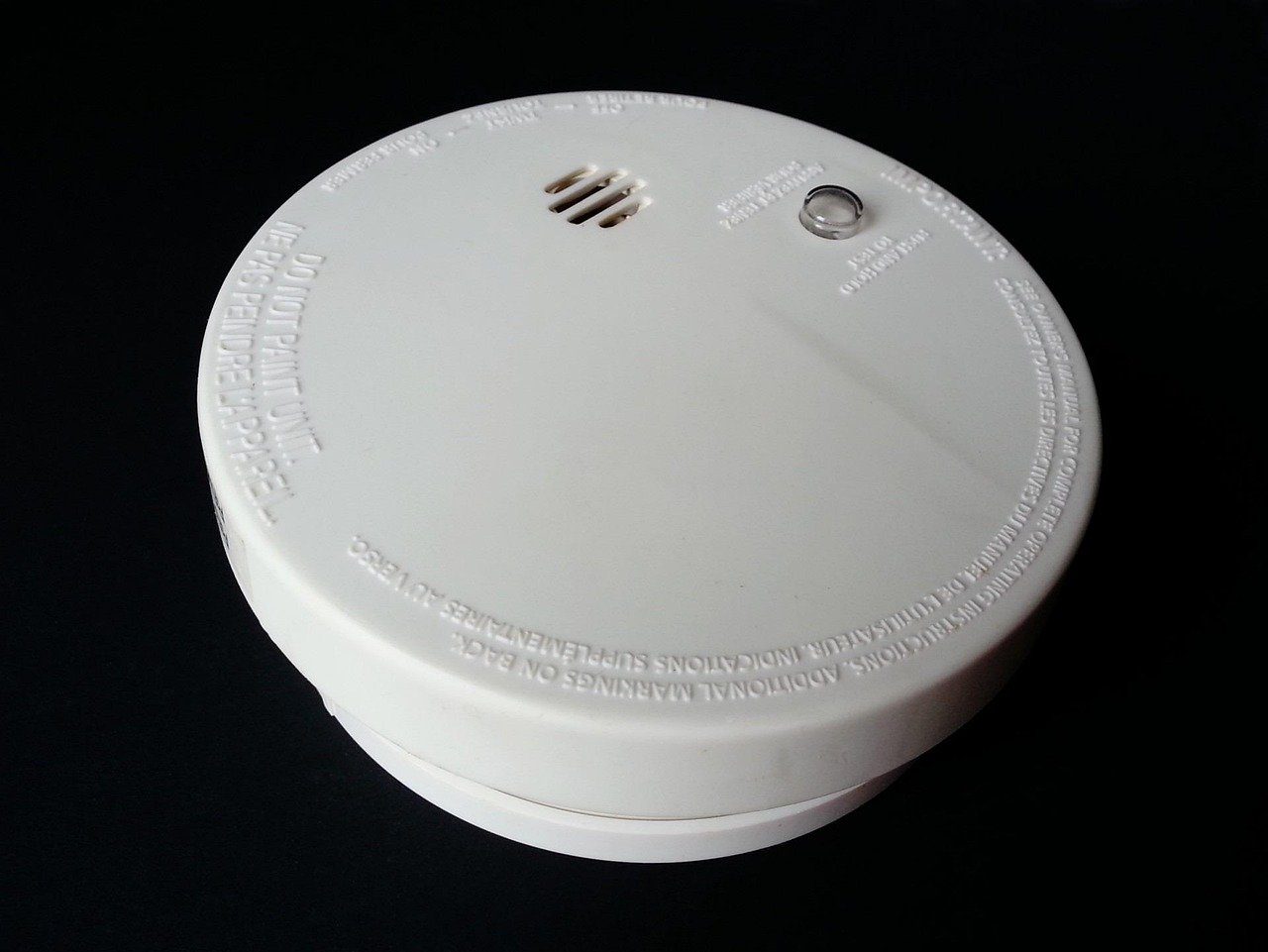

When was the last time you actually thought about the battery inside your smoke alarm? If the answer is “not since I moved in,” you are in good company. Most people install an alarm, hear it chirp once a year, and then forget about it entirely. That little battery is the difference between a working warning system and a plastic disc on the ceiling.
This guide walks through the practical side of fire smoke detector batteries: which types exist, how long they last, when to swap them, what the chirp really means, and the mistakes that quietly undermine protection. It also covers the difference between replaceable cells and sealed 10-year units, because that distinction trips up a lot of homeowners.
What Powers a Smoke Alarm, and Why the Battery Matters
A smoke detector is technically just the sensing component. The complete unit that senses smoke, sounds an alarm, and holds the power source is a smoke alarm. The terminology matters because it shapes what you read on packaging and in safety guidance.
Residential alarms come in two power configurations:
- Battery-only alarms run entirely on a cell, usually a 9V or a set of AA batteries. They work during a power outage because they never depended on mains electricity.
- Hardwired alarms with battery backup draw power from household wiring but keep a battery in reserve. That backup is what keeps the unit alive when the grid goes down, which is exactly when a fire is more likely to go unnoticed.
Safety guidance has long recommended both types be installed and interconnected, so that one alarm sounding triggers all of them. Interconnection matters more than most people realize. A fire in a basement gives you far more warning if the alarm in your bedroom also goes off.
The battery’s job is simple and unforgiving: deliver enough current to run the sensor and the horn, in a hot or cold room, after months or years of sitting idle. When it cannot, the alarm tells you with a chirp. When it fails silently, you get nothing at all.
Ionization vs. Photoelectric: Does Battery Choice Depend on Sensor Type?

It does, a little. Ionization alarms generally respond faster to flaming fires, the kind that burst from a pan of oil or a spark in wiring. Photoelectric alarms generally respond faster to smoldering fires, the smoky, slow-building kind that often starts in upholstery or overloaded outlets.
Because each technology has a blind spot, guidance recommends using both types or choosing dual-sensor units that combine them. Battery choice follows from that decision. A dual-sensor alarm draws more current than a single-sensor one, which is why some units drain cells faster than their labels suggest.
This is also where hair-texture analogies from the beauty world sneak into home maintenance conversations, oddly enough. People compare alarm types the way they compare curl patterns: a 2b hair routine and a 4c hair routine both need moisture, but the products differ. Same logic here. Both alarm types need a healthy battery, but the drain rate and the recommended replacement schedule can differ by model.
Battery Types Compared: Alkaline, Lithium, and Sealed 10-Year Units
This is where most confusion lives. Three distinct products get marketed as “smoke alarm batteries,” and they are not interchangeable.
| Battery type | Typical life | Best for | Watch out for |
|---|---|---|---|
| Standard 9V alkaline | About 1 year | Battery-only and hardwired alarms with replaceable backup | Loses capacity in cold rooms; needs annual swapping |
| 9V lithium | Longer than alkaline, varies by alarm design | Hardwired alarms where access is awkward | “10-year” marketing does not apply to replaceable cells |
| AA alkaline (often 3 cells) | About 1 year | Many modern battery-only alarms | Mixed old and new cells cut performance |
| Sealed lithium pack | 10 years, non-replaceable | Whole alarm unit, not a battery purchase | You replace the entire alarm, not the cell |
The critical distinction: a “10-year battery” claim belongs to sealed units, not to ordinary replaceable cells. A sealed alarm has its battery soldered in and cannot be opened. A replaceable lithium 9V in a standard alarm is a different product with a different lifespan, and no manufacturer can promise a decade from it because performance depends on the alarm’s design and the room’s temperature.
Several US states have required 10-year sealed-battery alarms in certain residential settings since the mid-2010s. The exact scope and effective dates vary by jurisdiction, so check your local rules rather than assuming a neighboring state’s law applies to you.
How Often Should You Replace the Battery?
The long-standing recommendation is to replace conventional 9V or AA backup batteries at least once a year, and to replace the alarm unit itself every 10 years. Many fire services tie the annual swap to a seasonal reminder, often phrased as “change your clock, change your battery,” pairing it with daylight saving time changes.
That annual rhythm works because it is memorable, not because batteries fail on a calendar. A cell that has run for eleven months in a cool hallway may still have plenty of charge. A cell in a hot garage may be nearly flat at eight months. The annual habit is a floor, not a ceiling.
Practical rules that hold up in real homes:
- Replace the battery the same month every year and write the date on the back of the alarm with a marker.
- Replace all cells in a multi-battery alarm at once. Never mix old and new, and never mix brands or chemistries.
- Test every alarm monthly using the test button. It takes ten seconds.
- Replace the whole alarm if it is 10 years old, even if it still chirps happily. Sensors degrade with dust and age.
- If an alarm chirps again within weeks of a fresh battery, the battery is not the problem. The unit or the wiring is.
What the Chirp Actually Means
A periodic chirp, commonly every 30 to 60 seconds, signals a low battery. The exact pattern is set by the alarm’s listing standard, and in the US that standard is UL 217, which governs smoke alarm performance including audible signals.
Not every chirp is a battery chirp, though, and this is one of the most common misdiagnoses. A chirp can also indicate:
- A dirty sensor. Dust or insect debris inside the chamber triggers intermittent alerts. Vacuuming the unit often fixes it.
- An end-of-life signal. Many modern alarms chirp differently when the sensor has reached the end of its service life. No battery swap will silence it.
- An expired backup in a hardwired unit. The alarm has mains power but the backup cell is dead.
- A loose battery connection. The cell is fine but not seated properly.
If you have replaced the battery and the chirp persists, stop replacing batteries. Check the manufacture date on the back of the unit. If it is approaching ten years, replace the alarm.
Common Mistakes That Undermine Protection
Years of watching people troubleshoot alarms turns up the same errors again and again. None of them are exotic. All of them are avoidable.
Removing the battery to stop a chirp. This is the single worst move in home fire safety. A disconnected alarm protects no one. If a chirp is unbearable at 2 a.m., replace the battery or move the alarm to a drawer until morning, but never leave a unit on the ceiling with no power and no indication.
Assuming hardwired means battery-free. Hardwired alarms still need a working backup. Plenty of households have mains-powered units with backup cells that died years ago and were never noticed because the alarm only tests the mains circuit.
Skipping the test after installation. Press the test button after every battery change. It confirms the cell is seated, the horn works, and the sensor responds.
Placing alarms badly. An alarm near a bathroom door triggers on steam. One near a kitchen stove triggers on cooking smoke. One in a dead-air corner of a ceiling may not get smoke at all. Keep them away from steam and cooking fumes, and follow the placement guidance that comes with the unit.
Ignoring interconnection. If you are replacing one alarm, consider whether the whole set should be linked. A single loud alarm on another floor is easy to sleep through. A network of them is not.
Forgetting disposal rules. Remove the battery before disposing of an alarm, and recycle cells according to local rules. Some jurisdictions ban certain batteries from household trash entirely, so check before you bin them.
Battery Life in Real Conditions
Manufacturer estimates assume moderate temperatures and normal humidity. Real homes are not laboratories.
Heat accelerates the chemical reactions inside a cell, which is why an alarm in an unconditioned attic or above a water heater tends to eat batteries faster than one in a hallway. Cold slows a battery’s ability to deliver current, which is why a cell that tests fine in July can fail on the first freezing night of December. Both effects are worse for alkaline cells than for lithium.
The practical takeaway is to treat battery life as a range, not a number. If your alarm lives somewhere extreme, shorten the replacement interval rather than trusting the label. If you cannot remember when you last changed it, change it now.
There is a cultural dimension too. Home maintenance advice circulates in the same way beauty and styling tips do, through social feeds and word of mouth, and it drifts. A tip about the row of hair products someone swears by travels faster than a dull paragraph about battery chemistry. That is fine, as long as the boring safety basics still get done. An alarm with a fresh battery is unglamorous and quietly essential.
When to Replace the Whole Alarm Instead of the Battery
Battery replacement is maintenance. Alarm replacement is a different decision, and it comes due on a schedule regardless of how well the unit seems to work.
Replace the entire alarm when:
- The unit is 10 years old or older, measured from the manufacture date stamped on the back, not the date you installed it.
- The alarm chirps persistently after a fresh battery and a cleaning.
- The test button produces a weak or inconsistent sound.
- The unit shows physical damage, corrosion in the battery compartment, or a cracked housing.
- You cannot find a manufacture date at all, which usually means the unit predates current labeling.
When you do replace, consider a sealed 10-year unit for hard-to-reach spots. It removes the annual battery ritual entirely, which is a genuine advantage in a stairwell ceiling or a rental property where maintenance slips. The trade-off is that you replace the whole alarm at the end of its life rather than a cheap cell each year.
Conclusion
The battery inside a smoke alarm is a small, cheap part doing a very large job. The rules that keep it working are not complicated: know which type you have, replace replaceable cells at least yearly, test monthly, respect the 10-year alarm lifespan, and never leave a unit disconnected because a chirp got annoying.
The distinction between a replaceable cell and a sealed 10-year unit deserves one more mention, because marketing blurs it constantly. A sealed alarm genuinely lasts a decade. A replaceable lithium 9V in a standard alarm does not carry that promise, no matter what the packaging implies. Buy for the alarm you actually own.
And if you take one thing from this article, make it this: go press the test button on every alarm in your home right now. It takes less than a minute, and it is the only way to know the answer.
Frequently Asked Questions
How long does a smoke detector battery last?
Conventional 9V and AA batteries should be replaced at least once a year, and the alarm unit itself every 10 years. Sealed lithium units are designed to last the full 10-year life of the alarm and cannot be replaced. Actual battery life varies with temperature, humidity, and how much current the alarm draws.
Why does my smoke alarm chirp even after I changed the battery?
A chirp after a fresh battery usually means something other than low power. Common causes include a dirty sensor chamber, a battery that is not seated properly, an end-of-life signal from an aging unit, or a defective cell. Clean the unit, reseat the battery, and check the manufacture date. If the alarm is near 10 years old, replace it.
Can I use any 9V battery in a smoke alarm?
Use the type the manufacturer specifies. Alkaline and lithium 9V cells are both common, but they behave differently in heat and cold, and some alarms are calibrated for one chemistry. Never mix old and new batteries, and never mix brands or types within the same alarm.
Is a 10-year battery the same as a 10-year alarm?
No, and this is the most misunderstood point in the category. A 10-year battery refers to a sealed lithium pack built into a complete alarm unit that cannot be opened. A replaceable 9V lithium cell sold for alarms is a different product and does not carry a decade-long guarantee.
Do hardwired smoke alarms still need a battery?
Yes. Hardwired alarms use a battery backup so they keep working during a power outage, which is exactly when you need them most. That backup cell still needs annual replacement and testing, even though the alarm runs on mains power day to day.
Where should smoke alarms be installed?
Install alarms on every level of the home, inside each bedroom, and outside each sleeping area, and interconnect them so one sounding triggers all. Keep units away from bathrooms, cooking appliances, and dead-air corners where smoke may not reach the sensor.









