

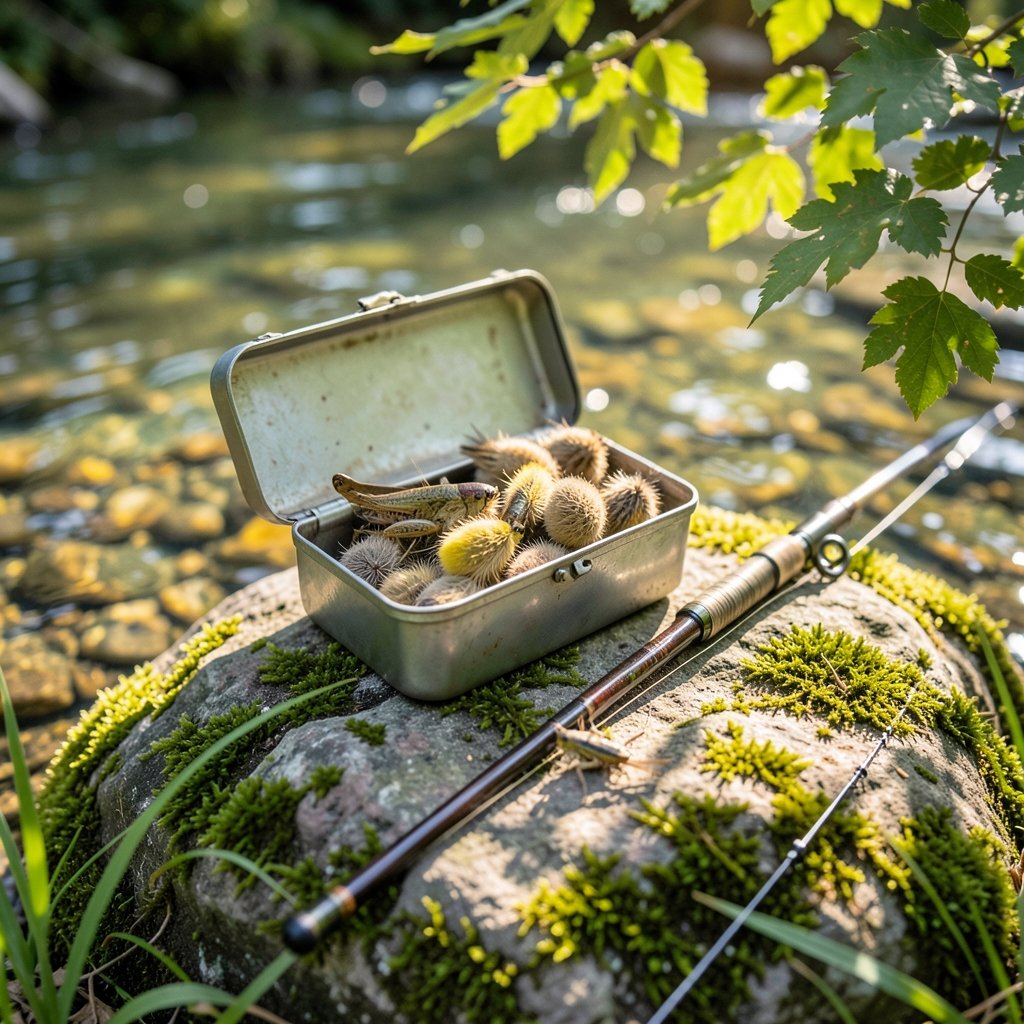
What do you do when the trout in your local river ignore every mayfly imitation in your box and the water is low, clear, and warm? For a lot of anglers, the answer arrives on six legs. Every year, roughly from midsummer into early autumn, grasshoppers tumble off grassy banks and into streams, and trout that have spent weeks staring at tiny insects suddenly switch their attention to something big, clumsy, and impossible to miss.
That is the moment hopper fishing comes into its own. The term needs a little unpacking, because “fishing hopper” is not a fixed phrase in the way “dry fly” or “nymph” is. In most English-language angling writing, it means fishing with a hopper pattern — a fly tied to imitate a grasshopper or cricket. It can also mean literally baiting a hook with a live grasshopper, a practice with a long history in freshwater fishing. Both readings describe the same idea: match a food source that appears for a short window each year and catch fish that are primed to eat it.
What “Fishing Hopper” Actually Means
The phrase is ambiguous enough that it is worth being precise before going further. In fly fishing circles, a hopper is a terrestrial imitation — a fly that copies an insect whose normal life is spent on land, not in the water. Grasshoppers, crickets, beetles, ants, and cicadas all fall into that category, and all of them end up in rivers and lakes by accident rather than design.
A hopper pattern is usually tied large and buoyant. Common constructions use foam bodies, deer hair, or a combination of both, because the fly has to float well while carrying the weight of a hook and still look convincing from below. The classic reference point in angling literature is Dave’s Hopper, a pattern widely attributed to the American fly tier Dave Whitlock. That attribution is repeated across fly-tying writing, though anyone citing it should check the original publication before treating it as settled fact.
The bait-fishing reading is simpler and older. Grasshoppers are free, abundant, and effective. Anglers have used them as bait for generations, particularly in rural areas where meadows meet water. Some regional usage also applies “hopper” to a bait container or a small boat, though that sense is much less standard and worth confirming before relying on it.
Why Trout Switch Onto Hoppers in Late Summer
The seasonality of hopper fishing is the single most important thing to understand, and it is also where beginners go wrong most often. Hopper patterns work because they match a seasonal food supply, not a year-round one.
Grasshoppers are most active and most numerous in the heat of summer. As the season moves toward autumn, they grow larger, and the grassy margins along streams and lakes hold huge numbers of them. Wind, gravity, and simple bad luck send a steady trickle of them into the water. Fish that live near undercut banks and grassy edges learn quickly that this food source is worth watching.
This explains a pattern many anglers notice without understanding it: hopper flies fished in June often produce nothing, while the same flies in August can draw explosive strikes. The fly is not the variable. The fish’s expectation is. Trout are opportunistic but not stupid, and a large, unfamiliar shape presented in spring does not match anything they are currently eating.
There is a second factor. Late summer often brings low, clear water and spooky fish. Counterintuitively, a big fly can help here. It gives the fish a clear target and creates a natural disturbance on the surface that reads as food rather than threat.
Reading Water: Where Hoppers Fall and Fish Wait
Hopper fishing rewards anglers who think about where the insect actually lands rather than where the angler wants to cast. Three zones matter most.
Grassy Banks and Undercuts
The prime water is directly beneath overhanging grass. This is where hoppers fall in, and it is where fish position themselves to intercept them. Undercut banks offer shade and cover, and a fish holding tight to a bank has a short, safe run to food. Casting tight to the edge — sometimes uncomfortably tight — is where the best fish usually are.
Meadow Edges and Windward Shores
On lakes and slower rivers, pay attention to wind direction. Wind pushes terrestrials across the surface and piles them against the shore they blow toward. A windward grassy bank can concentrate both insects and feeding fish, and it is often the single most productive piece of water on a breezy summer day.
Structure and Shade
Individual features matter too: a lone rock, a fallen branch, a patch of shade under a tree. Fish hold in these spots for the same reason they hold under banks — cover plus proximity to food. A hopper drifted past a shaded rock is a low-percentage cast that occasionally produces a very good fish.
How to Fish a Hopper: The Technique That Works
Presentation matters more than pattern choice in most hopper fishing, and the core skill is making the fly behave like a struggling insect rather than a perfectly delivered dry fly.
- Cast close to the bank, not to the middle. The goal is to land the fly within inches of grass or cover, even at the risk of the occasional snag.
- Aim slightly upstream of the target. This lets the fly settle and drift naturally into the zone rather than landing on top of a fish.
- Let it sit for a beat. A hopper that just fell is stunned for a moment. A short pause before the drift begins is often what triggers the strike.
- Twitch it sparingly. Small, deliberate twitches imitate a struggling insect. Constant motion looks wrong and drags the fly out of the zone.
- Watch the fly, not the water. Hopper takes can be violent, but in flat light a subtle swirl is easy to miss.
- Set the hook firmly and downstream. Big terrestrial flies are bulky, and a soft hookset often pulls the fly out of the fish’s mouth.
The most common mistake is overcasting. Anglers see a grassy bank, worry about snagging, and drop the fly two feet out into open water where nothing is feeding. The second most common mistake is overworking the fly. A hopper imitation that skates and twitches constantly looks like a damaged insect being chased, not a meal.
A Note on Drag
Drag ruins more hopper drifts than bad casting does. Because the fly is large and buoyant, it catches the current and starts to skate. A reach cast or a slack-line presentation keeps the fly drifting naturally for longer. In practice, most successful hopper anglers fish a short line and stay mobile rather than making long, drag-prone casts.
Choosing and Tying Hopper Patterns
Pattern selection is less critical than size and silhouette, but a few principles hold up.
| Pattern type | Best for | Notes |
|---|---|---|
| Foam-bodied hoppers | Fast, broken water; long floats | Buoyant, durable, easy to see |
| Deer-hair hoppers | Clear, slow water; spooky fish | More natural profile, needs floatant |
| Cricket imitations | Shaded banks, evening fishing | Darker silhouette, good in low light |
| Small hoppers (size 12-14) | Pressured water, late season | Fewer refusals from cautious fish |
Color matters less than most anglers believe, but tan, olive, and yellow cover the common natural shades. Size matters more: matching the local grasshoppers is the reliable approach, and in heavily fished water, going one size smaller often converts follows into takes.
Tying hoppers is a good entry point into terrestrial patterns because the shapes are forgiving. Foam hoppers in particular are simple to build, float well, and survive repeated strikes. Anglers who tie their own have an advantage here: they can adjust size and color to match what is actually crawling on the bank they plan to fish. (The row)
Gear, Line, and the Practical Details
Hopper fishing does not demand specialized tackle, but a few choices make it easier.
- Rod weight: A 5-weight covers most trout situations. On windy days, a 6-weight helps punch bulky flies.
- Leader: Shorter and stiffer than a standard dry-fly leader. A heavy fly on a long, fine leader twists and lands badly.
- Floatant: Essential for deer-hair patterns. Foam needs less, but a drying agent helps after a fish has slimed the fly.
- Hook quality: Large flies put leverage on hooks. Cheap hooks bend on good fish.
For anglers who also fish other hair types and textures in their tying, understanding how different materials behave is genuinely useful — the same principles that govern 2b hair in everyday styling apply to how deer hair stacks, spins, and floats on a hook. It sounds like an odd comparison, but material behavior is material behavior. (4c hair)
Common Mistakes and What Actually Works
Experience, passed around on riverbanks, tends to converge on the same lessons.
- Fishing hoppers too early in the season. Wait for the grass to grow tall and the hoppers to get big. June is usually too soon.
- Ignoring the wind. A breezy day is a hopper day. Wind is an ally, not a reason to stay home.
- Fishing the middle of the river. The fish are at the edges. Cast where the insect would actually fall.
- Using too large a fly in clear water. Big hoppers catch big fish, but pressured fish refuse oversized patterns. Downsize before you give up.
- Striking too hard or too softly. Bulky flies need a firm, steady hookset, not a violent jerk.
- Forgetting that hoppers work on lakes too. Windward grassy shorelines on stillwater can be outstanding.
One more practical point: hopper fishing is a search-and-move game. Rather than camping on one pool, cover water quickly, hitting the likely edges and moving on. The fish are concentrated in specific spots, and covering more bank beats perfecting one cast.
Hopper Fishing Around the World
The technique varies by region, and the differences are worth knowing. In the Rocky Mountain states of the US, hopper fishing is a late-summer institution on trout streams, often paired with droppers. In the UK, terrestrial fishing on chalk streams is a smaller but real part of the season, usually with smaller patterns. In Australia and New Zealand, grasshopper activity can be intense, and local anglers often fish very large imitations.
Bait regulations vary widely, and anyone planning to fish with live grasshoppers should check local rules first. Some jurisdictions restrict or prohibit live bait in certain waters, particularly where native fish are protected.
Conclusion
Hopper fishing is one of the most satisfying games in angling because it is so tied to a specific time and place. It rewards observation over equipment, timing over technique, and a willingness to cast into tight, awkward spots where the best fish live. The window is short — roughly late summer into early autumn — and that is exactly what makes it worth planning around.
Get the season right, fish the grassy edges, present the fly like a struggling insect, and keep moving. Do that, and a simple foam-bodied imitation will outfish a box full of more sophisticated patterns. The trout have been waiting all summer for the hoppers to fall. It pays to be there when they do.
Frequently Asked Questions
What is a fishing hopper?
A fishing hopper is most commonly a fly pattern designed to imitate a grasshopper or cricket that has fallen into the water. The term can also refer to using live grasshoppers as bait. In both cases, the idea is to match a seasonal food source that appears in late summer and early autumn.
When is the best time to fish a hopper?
Late summer into early autumn is the prime window. Grasshoppers are largest and most numerous then, and fish near grassy banks have learned to expect them. Fishing hopper patterns in spring or early summer usually produces far fewer strikes because the food source is not yet established.
Do hopper patterns work on lakes?
Yes. Windward grassy shorelines on lakes can be excellent, because wind pushes grasshoppers across the surface and concentrates them against the bank. Fish gather where the insects pile up. The same principles of cover, shade, and food proximity apply as on rivers.
What size hopper fly should I use?
Match the local naturals, which usually means sizes 8 to 12. In heavily pressured or very clear water, dropping one size often turns follows into takes. Color is less important than silhouette and float quality, though tan, olive, and yellow cover most natural shades.
Can I fish a hopper with a dropper?
Yes, and it is a popular approach. A buoyant foam hopper can carry a small nymph beneath it, letting an angler cover surface and subsurface feeding at once. The hopper acts as both an attractor and an indicator, which is useful when fish are not fully committed to the surface.
Why do trout refuse my hopper?
The usual causes are drag, overworking the fly, or fishing it in the wrong place. A hopper that skates constantly looks unnatural, and one drifting in open water is not where fish expect food. Check your drift first, then your fly size, then your location.









