A fridge is the one appliance every kitchen has, and it is also one of the hardest to buy well. The best fridge for most homes is a French door or a bottom freezer model with a capacity that matches the household, a good energy rating and enough room for the way you actually shop. This guide explains the main types, the sizes, the features worth paying for, and how to look after the one you buy.
What makes fridge shopping confusing is that the differences between models are mostly hidden. Two fridges can look identical and cost very different amounts, because of the compressor, the insulation, the drawers and the energy rating. The questions below cut through the marketing and focus on what actually matters.
Key takeaways:
- French door and bottom freezer fridges suit most homes, because the fresh food you use most is at eye level.
- Measure the space, the doorways and the delivery route before you buy, and leave ventilation space around the fridge.
- Capacity matters more than features: allow roughly 100 litres per person, plus room for shopping habits.
- A good energy rating saves money every year, and a fridge runs 24 hours a day for a decade or more.
What are the main types of fridge?
The first choice is the layout, and it decides how you will use the fridge every day. The five main types are top freezer, bottom freezer, French door, side by side and single door, and each one suits a different kind of household.
Top freezer
A top freezer fridge has the freezer on top and the fridge below, which is the oldest and simplest layout. It is usually the cheapest, the most reliable and the most energy efficient of the main types, because the design is simple and there are fewer parts to fail. The trade-off is that the fresh food you use most is at the bottom, so you bend down for it several times a day.
Bottom freezer
A bottom freezer fridge reverses the layout: the fridge is on top, at eye level, and the freezer is a drawer at the bottom. It suits most homes well, because the fresh food is easy to reach and the freezer, which you open less often, is out of the way. The freezer drawer usually has baskets or dividers, which make it easier to organise than a top freezer shelf.
French door
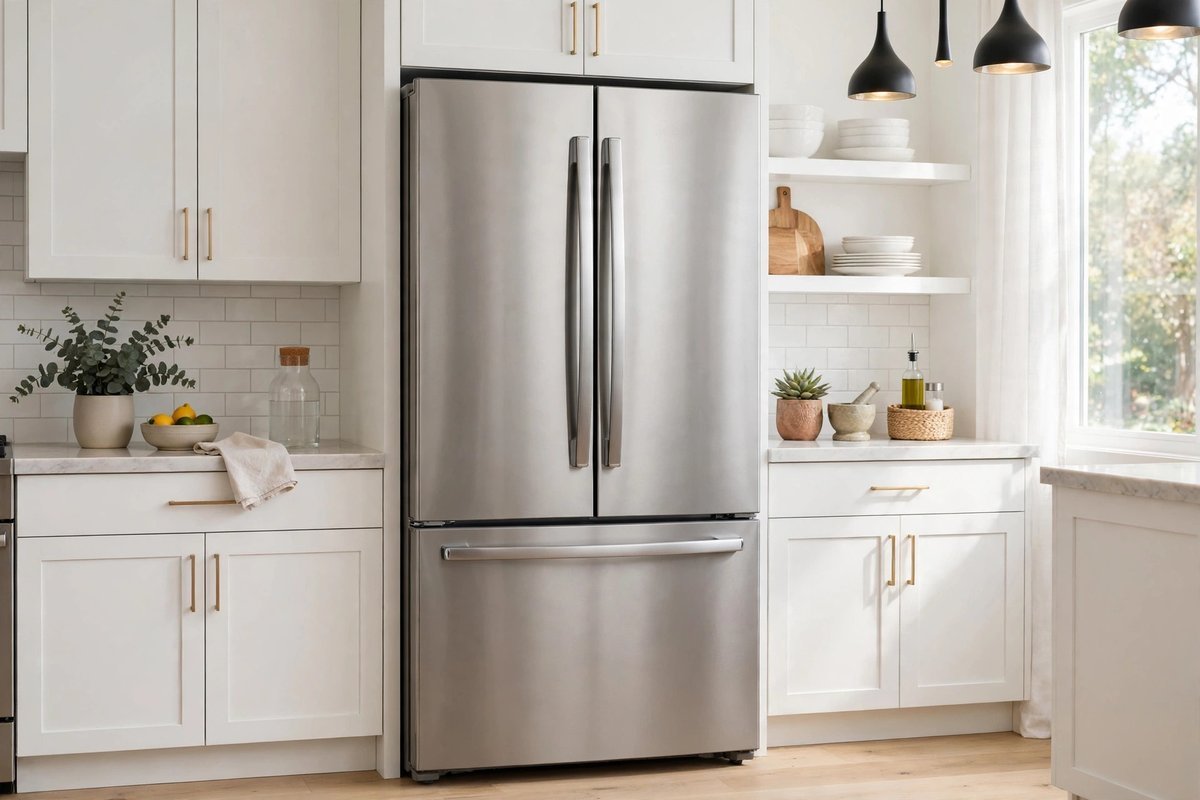
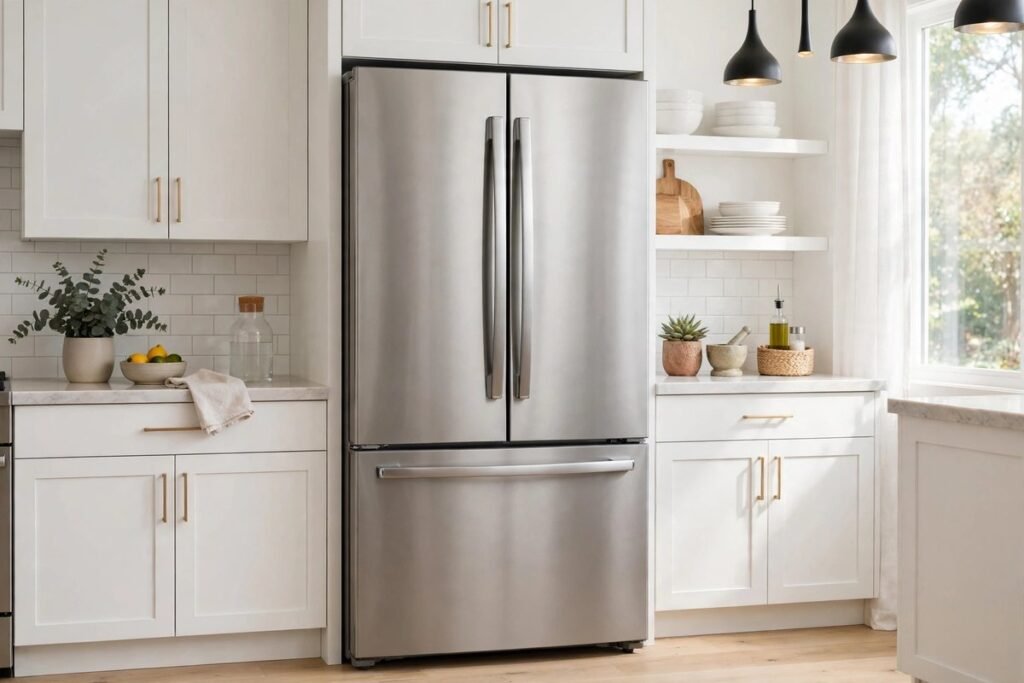
A French door fridge has two doors on the fridge section and a freezer drawer below. It is the most popular layout in larger kitchens, because the wide fridge section fits platters, pizza boxes and wide trays, and the two narrow doors need less clearance to open. The downside is the price: French door fridges are usually the most expensive of the main types.
Side by side
A side by side fridge has the fridge on one side and the freezer on the other, both running the full height. It suits a narrow kitchen, because the doors are slim and need little clearance, and it usually comes with an ice and water dispenser. The trade-off is that both sections are narrow, so wide items such as a pizza box or a large platter will not fit.
Single door
A single door fridge is a tall, narrow unit with one door, usually with a small freezer compartment inside or none at all. It suits a small kitchen, a flat or an office, where space is tight and the household is small. It is the cheapest and simplest option, but it holds the least.
How do the fridge types compare?
| Type | Layout | Strengths | Best for |
|---|---|---|---|
| Top freezer | Freezer on top | Cheapest, most reliable | A tight budget |
| Bottom freezer | Fridge on top | Fresh food at eye level | Most households |
| French door | Two fridge doors, freezer drawer | Wide shelves, easy access | A larger kitchen |
| Side by side | Fridge and freezer side by side | Narrow doors, dispenser | A narrow kitchen |
| Single door | One tall door | Small and simple | A small kitchen or flat |
Fridge sizes: measure first, buy second
Measure before you buy, because a fridge that does not fit is an expensive mistake. Measure the width, height and depth of the space, and leave at least 5 centimetres of ventilation space at the back and on the sides, because a fridge that cannot breathe works harder and costs more to run.
Measure the doorways and the route the delivery team will take, including any turns, stairs and lifts. A fridge is delivered in its box, which is wider than the fridge itself, and a tight corner can stop a delivery. Check the door swing too: the fridge doors need room to open fully, and the handles add a few centimetres to the depth.
Capacity is measured in litres, and the right size depends on the household. A rough guide is 100 litres per person, plus extra if you cook a lot, buy in bulk or entertain often. A couple might manage with 250 litres, a family of four usually needs 400 to 500, and a large household or a keen cook may need more.
Features worth paying for
Some features are worth the extra money, and some are not. The ones that matter are the ones you will use every day.
Frost-free is worth having: it stops ice building up in the freezer, which saves you the job of defrosting and keeps the freezer working efficiently. Adjustable shelves and door bins are worth having too, because they let you fit tall bottles and wide dishes without wasting space.
A good energy rating is worth paying for, because a fridge runs 24 hours a day for a decade or more. The difference between a poor rating and a good one adds up to a real saving over the life of the appliance, and a more efficient fridge is usually quieter as well. For the running costs of a kitchen, our guide to how to save on electricity bills covers the wider picture.
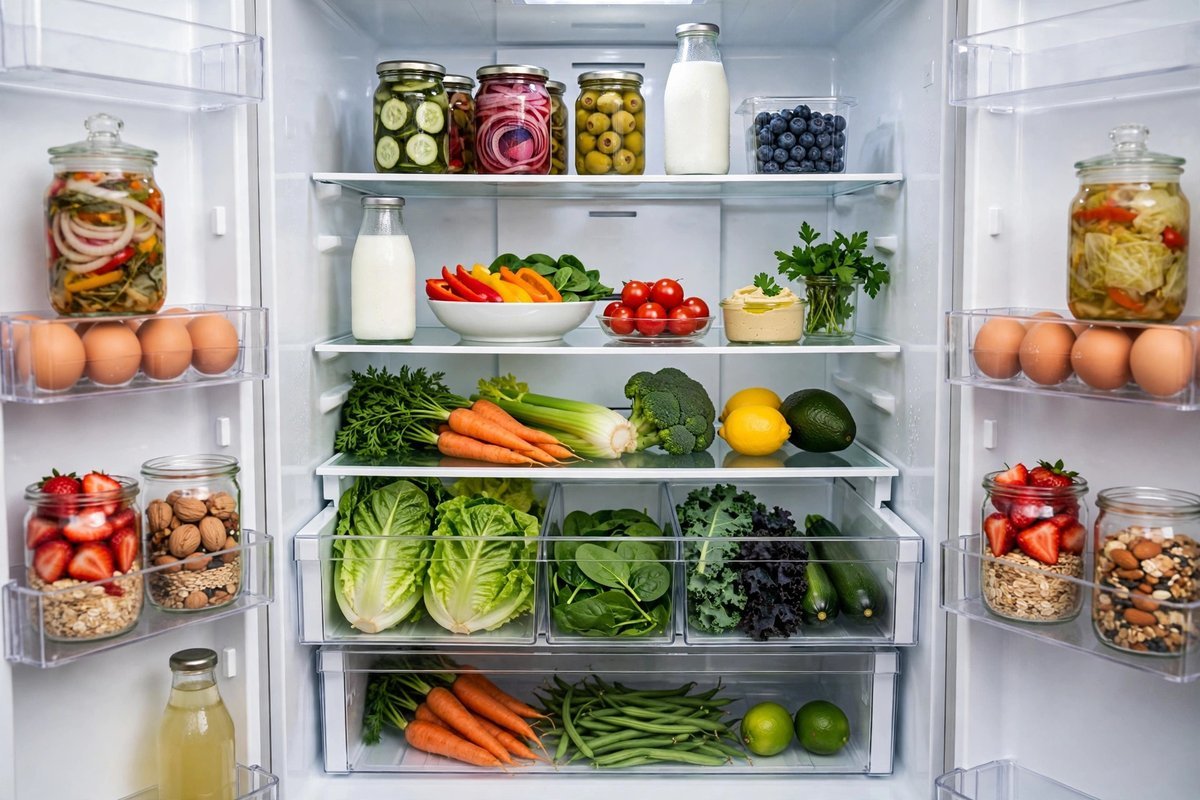
An ice and water dispenser is a nice extra, but it takes up space in the door, needs a water connection, and is one more part that can fail. A crisper drawer with humidity control is worth having if you buy a lot of fresh vegetables, because it keeps them fresh for longer.
Features you can skip
Some features sound impressive and add little. A built-in screen on the door is the most obvious: it is expensive, it needs software updates, and most people stop using it within weeks. A smart fridge that orders your shopping is a similar story: the idea is appealing, but in practice most people prefer to choose their own food.
A wine rack is worth having only if you keep wine in the fridge, and a door alarm is useful only in a household where the door is often left open. For more on what actually saves money in a kitchen, see our guide to how to save on electricity bills.
Energy efficiency and running costs
A fridge is one of the few appliances that never switches off, so its energy rating matters more than the price tag suggests. The rating label shows how much electricity the fridge uses in a year, and the difference between ratings can be hundreds of kilowatt-hours.
The running cost depends on the size, the rating and the temperature of the room. A fridge in a hot kitchen works harder than one in a cool room, and a full fridge is more efficient than an empty one, because the food inside holds the cold. Set the fridge to 3 to 5 degrees Celsius and the freezer to minus 18, and check the seals regularly: a worn seal lets cold air escape and makes the compressor work harder.
How to look after a fridge
A fridge needs little maintenance, but a few habits keep it working well. Clean the inside every few weeks with warm water and a little bicarbonate of soda, and wipe up spills as they happen. Clean the door seals with warm water and check that they grip a sheet of paper firmly all the way round: if the paper slides out easily, the seal is worn.
Vacuum the back of the fridge once or twice a year to clear dust from the coils, and leave space behind it for air to circulate. Do not overfill it, because the cold air needs room to move, and do not put hot food inside, because it makes the compressor work harder and warms everything else.
Your fridge buying checklist
Work through this list before you buy, and you will avoid the common mistakes.
- Measure the space: width, height and depth, plus ventilation space and the delivery route.
- Choose the layout: bottom freezer or French door suits most homes.
- Size it to the household: about 100 litres per person, plus room for how you shop.
- Check the energy rating: a good rating saves money every year the fridge runs.
- Test the drawers and shelves: open them fully and check they slide smoothly.
- Check the door swing: the doors need room to open, and the handles add depth.
- Look at the warranty: a longer warranty on the compressor is a good sign.
- Plan the delivery: confirm the delivery team will take the old fridge away.
Frequently asked questions
How long does a fridge last?
Most fridges last 10 to 15 years, and some last longer. The compressor is usually the first part to fail, and a longer warranty on it is a good sign. If a fridge is more than 15 years old and struggling, a new one will usually be more efficient.
What size fridge do I need?
A rough guide is 100 litres per person, plus extra if you cook a lot or buy in bulk. A couple might manage with 250 litres, a family of four usually needs 400 to 500.
Is a French door fridge worth it?
It is worth it if you have the space and the budget. The wide fridge section fits platters and wide trays, and the fresh food is at eye level. If the kitchen is narrow or the budget is tight, a bottom freezer fridge is a better choice.
Should the fridge be frost-free?
Yes, for most households. A frost-free fridge stops ice building up in the freezer, which saves you the job of defrosting and keeps the freezer working efficiently.
How cold should a fridge be?
Set the fridge to 3 to 5 degrees Celsius and the freezer to minus 18. Use a thermometer to check, because the dial is not always accurate.
Sources
Appliance guidance here reflects widely published advice from manufacturers, consumer guides and energy rating schemes on fridge types, sizes and efficiency.
The bottom line
The best fridge is the one that fits your space, your household and the way you shop. A bottom freezer or French door model, sized at about 100 litres per person, with a good energy rating, will serve most homes well for a decade or more.
Your next step is simple: measure the space and the delivery route, choose the layout that suits your kitchen, and check the energy rating before you compare prices. The features can wait; the fit and the size cannot.