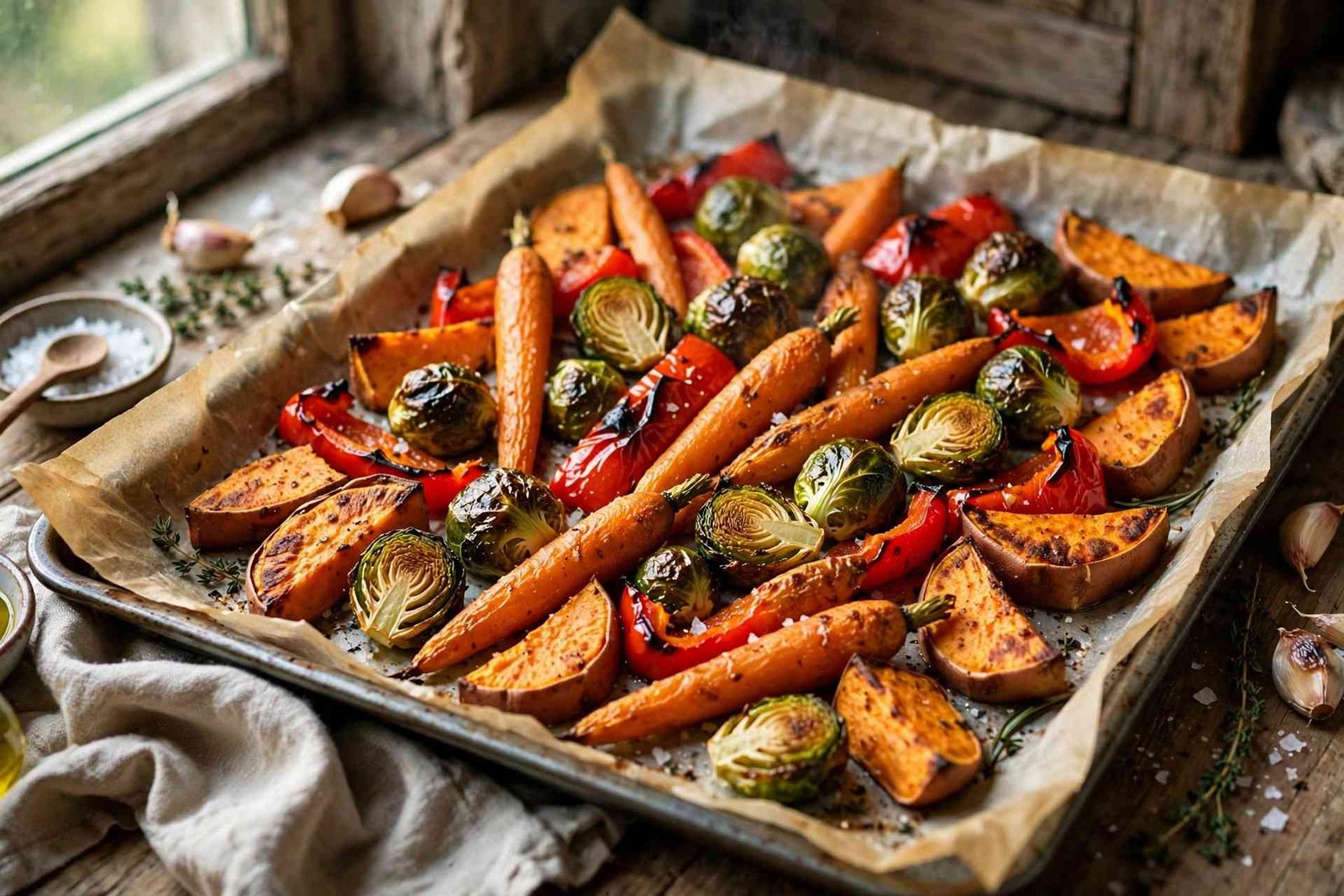
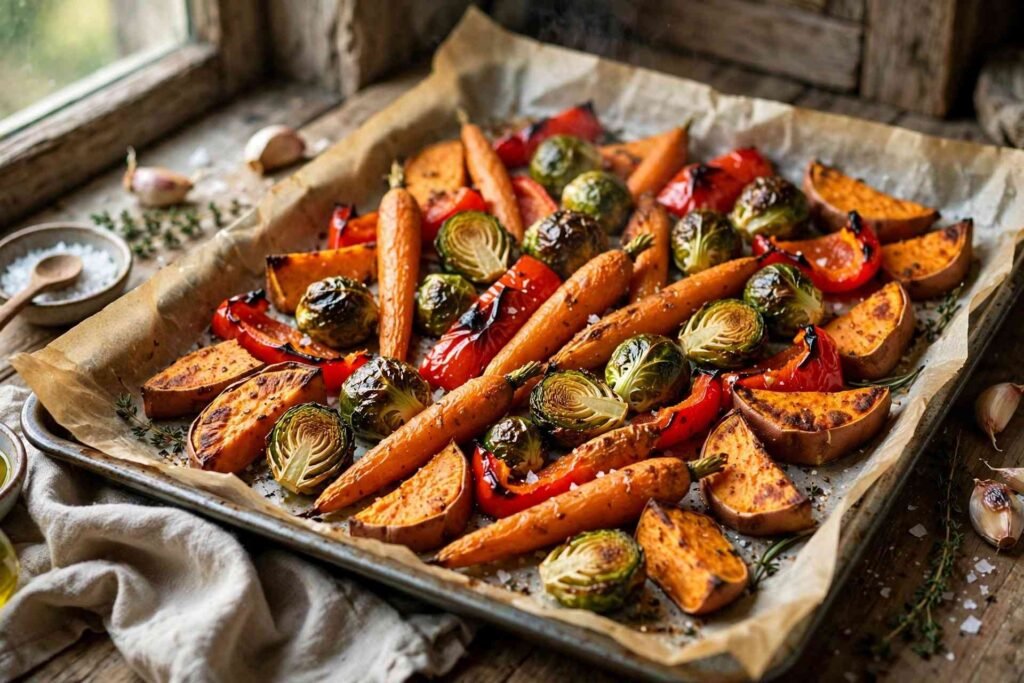
Roasted vegetables are one of the simplest dishes a home cook can make, and one of the most rewarding. Cut them evenly, toss them in oil and salt, spread them in a single layer, and roast in a hot oven until the edges crisp and the centres turn tender. That is the whole method, and once you understand it, almost any vegetable can be roasted well.
So how do you make roasted vegetables that turn out crisp rather than soggy? Use a hot oven, cut everything to a similar size, give each piece space on the tray, and stir only once. This guide walks through each step, from choosing and cutting to seasoning, timing and serving, so the tray that comes out of your oven tastes the way you hoped.
Key takeaways:
- Cut vegetables to a similar size so they cook evenly, and spread them in a single layer with space between the pieces.
- A hot oven and a preheated tray give the best browning, and a light, even coating of oil helps the edges crisp.
- Season simply with salt, pepper and oil, then add herbs, garlic or lemon at the end for flavour.
- Roast dense vegetables such as carrots and potatoes for longer than soft ones such as courgettes and peppers, or add the soft ones later.
Why roasting works so well
Roasting is dry heat, and dry heat does two things boiling and steaming cannot. It drives moisture off the surface, letting the edges brown and crisp, and it concentrates flavour as the vegetable’s natural sugars slowly caramelise, which is why a roasted carrot tastes sweeter than a boiled one.
The same heat can also spoil the dish. If the oven is too cool or the tray is crowded, the vegetables steam in their own moisture instead of roasting, and the result is soft and pale. A hot oven, a roomy tray and a single layer tip the balance, and they cost nothing at all.
Choosing your vegetables
Almost every vegetable can be roasted, but some suit it better. Root vegetables such as carrots, parsnips, sweet potatoes and beetroot are natural choices: their dense flesh holds up to long cooking and their sugars caramelise beautifully. Brassicas such as Brussels sprouts, cauliflower and broccoli also roast well, crisping at the edges while staying tender inside.
Softer vegetables need a lighter touch. Courgettes, peppers, aubergines, mushrooms and red onions cook quickly and release a lot of water, so give them a shorter roast or add them partway through. A good tray often mixes one or two dense vegetables with one or two soft ones, which gives a pleasing range of textures.
Freshness matters more than variety: choose vegetables that feel firm and heavy for their size, with bright colour and no soft spots. If you grow your own, our guide to how to start a vegetable garden covers the easiest vegetables to grow.
Preparing the vegetables
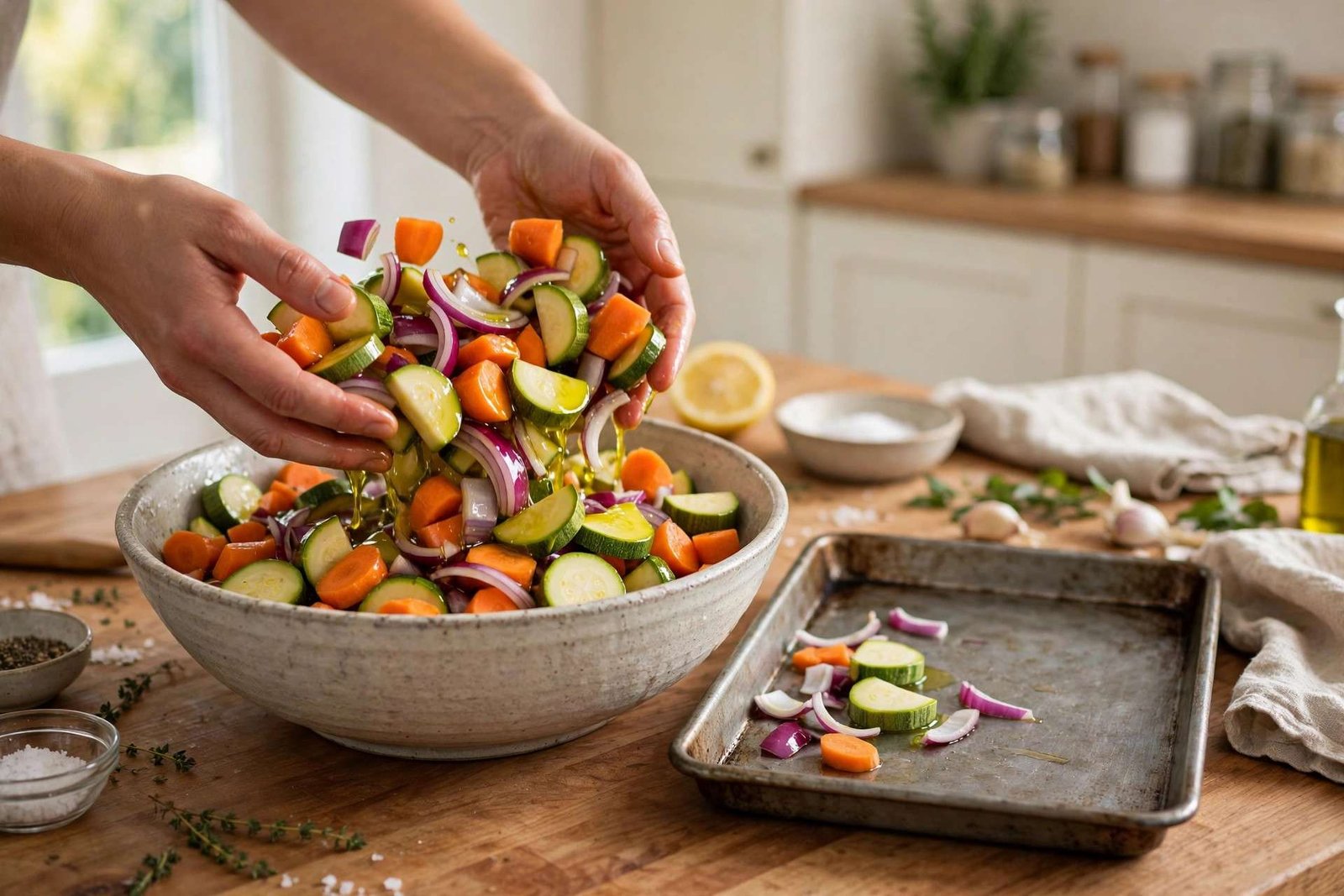
Start by washing and drying. Rinse the vegetables, then dry them properly with a clean tea towel or kitchen paper, because water left on the surface turns to steam in the oven and works against crisping. Peel only where the skin is tough; carrot and sweet potato skins roast well once scrubbed.
Cutting decides whether everything cooks evenly. Aim for pieces of a similar size, roughly the size of a walnut, so no piece is raw while another burns. Cut dense vegetables a little smaller than soft ones, which evens out the cooking time, and keep the shapes roughly similar so the pieces sit flat on the tray.
Some vegetables need a little extra care. Halve Brussels sprouts through the core so they stay together, and cut cauliflower into florets of a similar size. Cut onions into wedges with the root end left intact, which holds the layers together as they roast and turn sweet at the edges.
Oil, salt and seasoning
Oil does three jobs: it carries heat to the surface, helps the edges brown, and stops the pieces sticking. Use enough to coat every piece lightly, but not so much that the vegetables sit in a puddle. A tablespoon or two per tray is usually right, and tossing in a bowl coats them more evenly than drizzling oil over the tray.
Any neutral cooking oil with a reasonably high smoke point works, and olive oil is a good everyday choice. Salt should go on before roasting, because it seasons the vegetable all the way through. Add pepper at the same time, but save delicate herbs, garlic and spice blends for near the end, since long roasting can turn garlic bitter and burn dried herbs.
The method, step by step
1. Heat the oven and the tray
Set the oven to a hot temperature and put the empty tray inside to heat while you prepare the vegetables. A preheated tray gives the pieces a burst of heat the moment they land on it, which starts the browning straight away and stops them sticking.
2. Cut and toss
Cut the vegetables to a similar size, dry them well, and toss them in a large bowl with oil and salt until every piece is lightly coated. A bowl gives a far more even coating than the tray, and it keeps the oil off the tray itself.
3. Spread in a single layer
Tip the vegetables onto the hot tray and spread them out so no two pieces overlap. This is the step most people rush: pieces that touch steam each other, while pieces with space around them roast, so use a second tray rather than crowding one.
4. Roast, then turn once
Roast until the undersides are golden, then turn the pieces once with a spatula and return the tray to the oven. One turn is usually enough. Turning too often cools the tray and interrupts the browning, while leaving the vegetables untouched can burn the undersides.
5. Check for doneness
Test the largest piece with the tip of a knife: it should slide in easily, and the edges should be crisp and browned. If they are tender but pale, give them a few more minutes; if they are browning too fast, lower the heat slightly.
How long do different vegetables take?
Timing depends on the vegetable, the size of the pieces and the heat of the oven, so treat the table below as a guide. Dense roots take longest, soft vegetables take least, and the best test is a knife and your eyes rather than the clock.
| Vegetable | Cut | Typical time | Notes |
|---|---|---|---|
| Carrots and parsnips | Batons or chunks | Longest | Sweeten and crisp well at the edges |
| Sweet potatoes | Wedges or cubes | Long | Caramelise deeply, so watch the edges |
| Brussels sprouts | Halved | Medium | Cut side down for the best browning |
| Cauliflower and broccoli | Florets | Medium | Edges crisp while centres stay tender |
| Peppers and courgettes | Strips or chunks | Short | Add partway through with dense roots |
| Red onions | Wedges | Short to medium | Turn sweet and soft at the edges |
When mixing vegetables, start the dense ones first and add the soft ones partway through, so everything finishes together.
Mistakes that spoil roasted vegetables
The most common mistake is crowding the tray. A crowded tray steams instead of roasting, and no amount of extra time fixes it. Two trays with space between the pieces always beat one tray piled high.
The second mistake is cutting pieces to different sizes, so the small pieces burn while the large ones stay raw in the middle. The third is an oven that is not hot enough, often because the tray went in before the oven had fully heated. Give the oven time to reach temperature, and the vegetables will reward you.
Serving ideas
Roasted vegetables are at their best straight from the oven, while the edges are still crisp. Serve them beside a roast dinner, or pile them onto a grain bowl with yoghurt and herbs. Our guide to how to roast a chicken pairs naturally with this one, and the two dishes can share the oven.
They also work cold, tossed through salads, folded into wraps or blended into soup. Our sweet potato recipes show how far one roasted tray can go. A squeeze of lemon, a crumble of feta or a drizzle of tahini at the end lifts the whole dish.
Storing and reheating leftovers
Let leftovers cool fairly quickly, then store them in a covered container in the fridge and eat them within a few days. Use them in salads, wraps and grain bowls, or reheat them in a hot oven until steaming hot throughout. Avoid the microwave if you want to keep any crispness. They also freeze reasonably well, though the texture softens on thawing, so frozen portions suit soups and stews best.
Your roasted vegetables checklist
Work through this list before the tray goes in the oven, and the result will take care of itself.
- Heat the oven fully: wait until it reaches temperature, and preheat the tray inside it.
- Dry the vegetables: pat them dry so the surface roasts instead of steaming.
- Cut evenly: keep the pieces a similar size, with dense vegetables cut a little smaller.
- Coat lightly in oil: toss in a bowl so every piece is covered.
- Season early: salt and pepper before roasting, delicate herbs and garlic near the end.
- Give them space: one layer, no overlapping, and a second tray rather than a crowded one.
- Turn once and test: turn halfway, then check the largest piece with a knife.
Frequently asked questions
Why are my roasted vegetables soggy?
The likeliest causes are a crowded tray, an oven that was not hot enough, or vegetables that went in wet. Give the pieces space, preheat the oven and tray, and dry the vegetables well first.
Should you peel vegetables before roasting?
Only when the skin is tough. Carrot, sweet potato and beetroot skins roast well once scrubbed. Peel parsnips and celeriac, whose skins stay tough even after roasting.
What temperature should you roast vegetables at?
A hot oven works best, since it drives off surface moisture and browns the edges. If they colour too fast, lower the heat a little and move the tray to a lower shelf.
Can you roast frozen vegetables?
Yes. Spread them straight from the freezer in a single layer on a hot tray, give them plenty of space, and allow extra time for the moisture to evaporate before browning begins.
Sources
The method here follows widely published advice from professional cooks on oven temperature, cutting and seasoning. Our guide to the best cookware set covers heavy roasting trays that hold heat well, and our guide to how to roast sweet peppers goes deeper on one quick vegetable.
The bottom line
Roasted vegetables ask for very little: a hot oven, even cutting, a light coat of oil and a tray with room to spare. Get those four things right and the rest follows, whether the tray holds carrots for a Sunday roast or peppers for a weeknight grain bowl.
Your next step is simple: pick three vegetables you already have, cut them evenly, and roast them tonight. Once you have seen what a hot oven and a little space can do, the tray will become one of the most reliable dishes in your kitchen.
Food safety note: this guide gives general cooking and storage advice. Wash vegetables well, store leftovers in the fridge and eat them within a few days, reheat until steaming hot, and follow your country’s food safety guidance when cooking for young children, pregnant people or anyone with a weakened immune system.