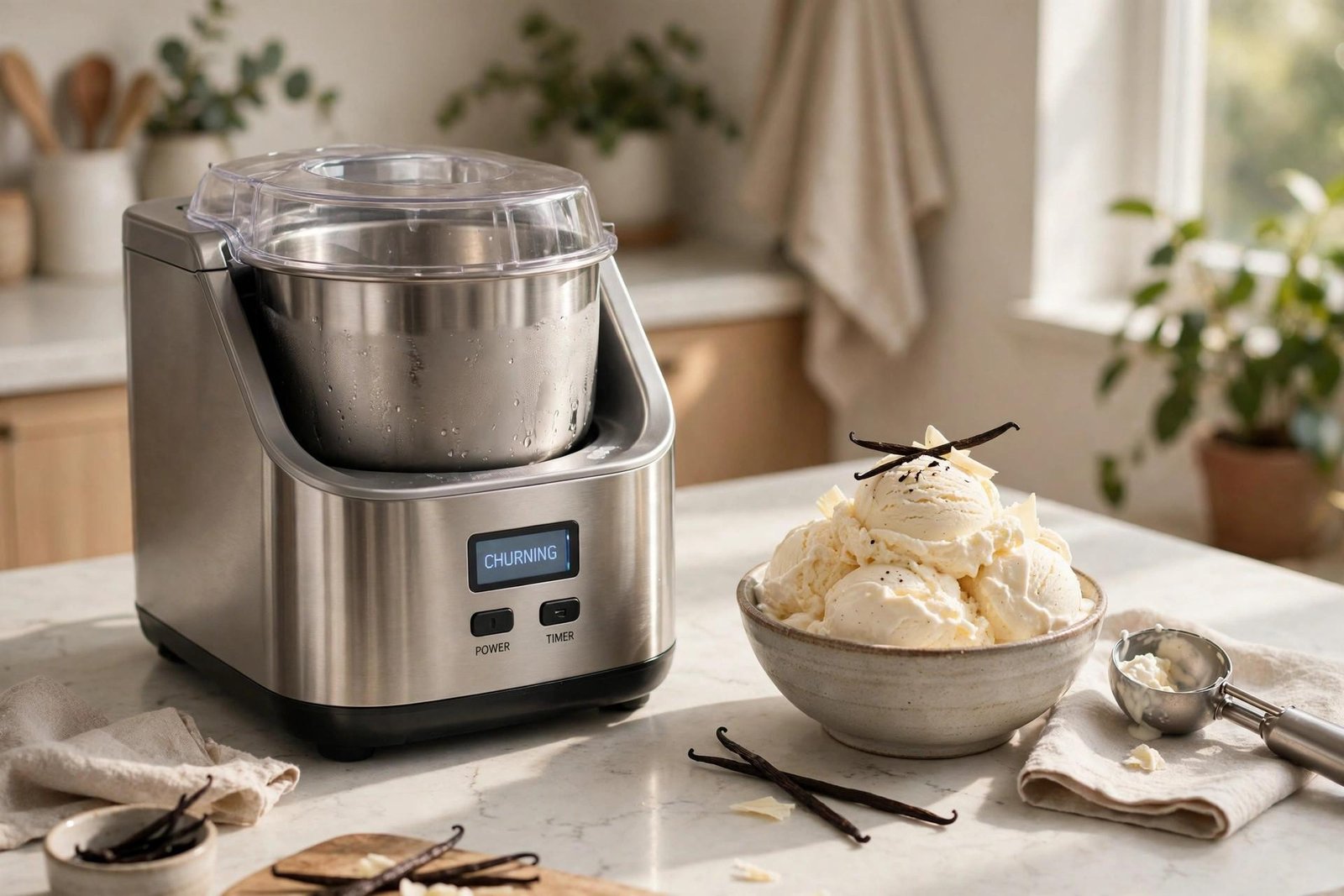
The best ice cream maker for home use is the one that fits the way you actually cook: a machine that turns a simple cream, milk, sugar and vanilla base into smooth, scoopable ice cream without a fuss. The best ice cream maker in 2027 still comes down to that same promise.
So which ice cream maker should you buy? A compressor machine is the best choice for most households, because it churns and freezes in one go with no pre-freezing, while a freezer-bowl machine is the best value if you have space in the freezer and do not mind planning ahead. This guide ranks ten ice cream maker types, explains the three ways they freeze, and helps you match the machine to your kitchen.
Key takeaways:
- A compressor machine is the best all-rounder: it freezes as it churns, so batches need no waiting.
- A freezer-bowl machine is cheaper and lighter, but the bowl needs a full day in the freezer first.
- Salt-and-ice churns are the traditional choice, and they make wonderful ice cream.
- Chill your base before churning, and give the finished ice cream a few hours in the freezer to firm up.
How churning works: compressor, freezer bowl and salt-and-ice
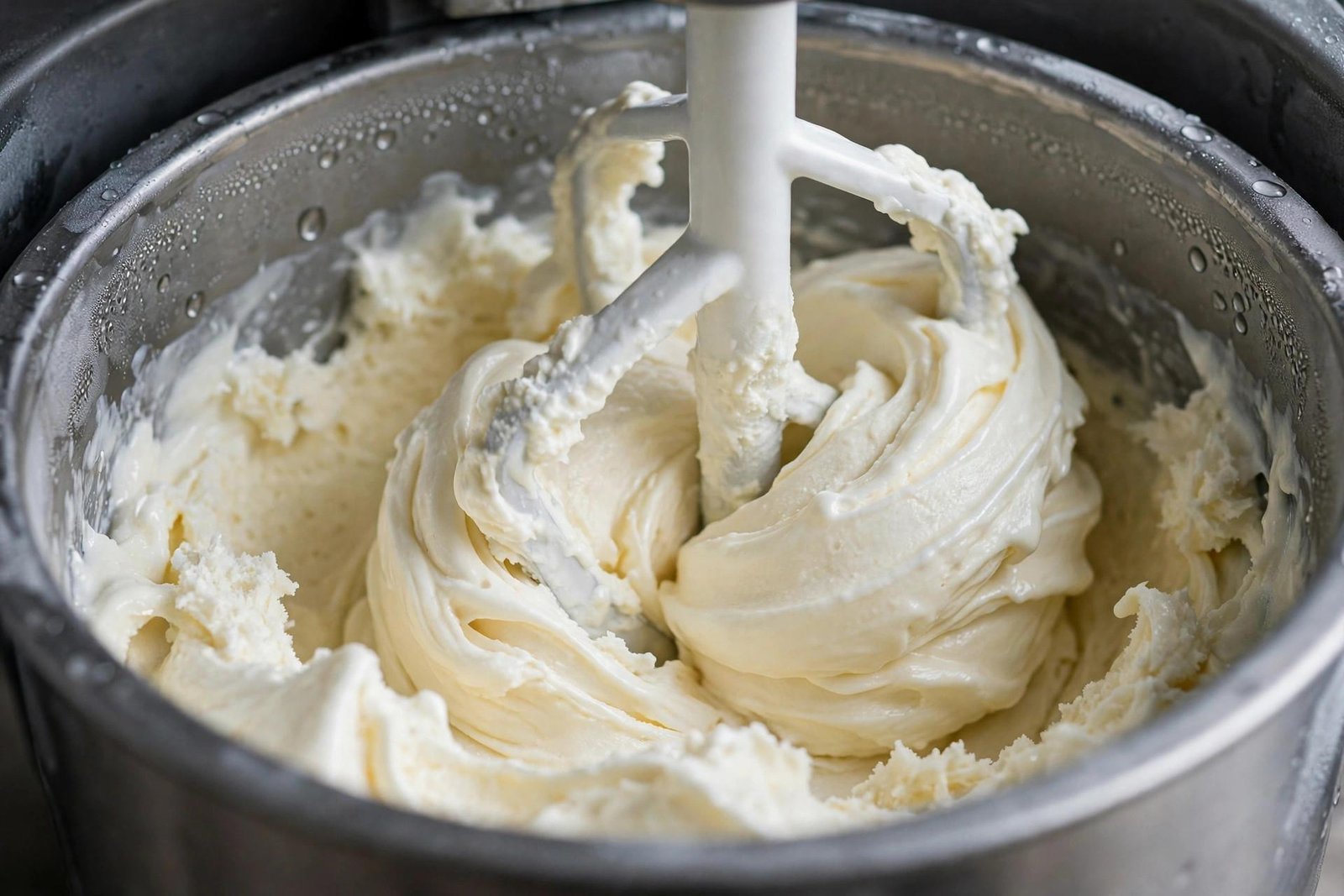
Every ice cream maker does two jobs at once: it freezes the base and stirs it constantly so that ice crystals stay tiny. The stirring is what makes ice cream smooth instead of icy, and it also folds in a little air. The difference is simply how they freeze, and that shapes the price, the size and the planning involved.
A compressor machine has its own freezer built in. You pour in the chilled base, switch it on, and the machine cools the bowl while the paddle turns, so a batch is ready in well under an hour. It is the easiest type to live with. The trade-off is size, weight and price.
A freezer-bowl machine is the classic home choice. Its bowl has a layer of gel sealed between two walls, and that gel freezes solid in your home freezer overnight. These machines are lighter, quieter and far cheaper than compressor models, and brands such as Cuisinart have made them a familiar sight. The catch is the planning: a warm bowl will not churn, so the bowl must go back in the freezer for a full day between batches. If your freezer is already full, check our guide to the fridge before choosing a freezer-bowl machine.
Salt-and-ice churns are the oldest type of all, and they still work beautifully. Ice and rock salt go in an outer bucket around a metal canister, the salt lowers the freezing point of the ice, and a paddle or hand crank keeps the base moving as it freezes. They make rich, old-fashioned ice cream and suit outdoor gatherings, because the churn needs no electricity. They are messier and slower than the other two types, but the ritual is half the pleasure.
The 10 best ice cream maker picks in 2027
1. Compressor ice cream maker
A compressor ice cream maker is the best all-rounder. It freezes its own bowl, so you can make two flavours in one afternoon with no waiting. It is heavier and dearer than the other types, so it suits a kitchen where it will be used often.
Best for: regular ice cream makers who want batch after batch with no waiting.
2. Freezer-bowl ice cream maker
A freezer-bowl ice cream maker is the best value way into homemade ice cream. The machine is light and affordable. Pour in a chilled base, switch it on, and in under half an hour you have ice cream that firms up after a few hours in the freezer. The only drawback is the planning: the bowl needs a full day in the freezer before each batch.
Best for: occasional makers who want great ice cream at a modest price.
3. Salt-and-ice churn
A salt-and-ice churn is the traditional choice, and it makes ice cream the way families have made it for generations. Rock salt and ice pack around a metal canister, the paddle keeps the base moving, and the slow freeze gives a dense, creamy texture that is hard to beat. It suits a garden party, though the clean-up is messier than an electric machine.
Best for: traditionalists and families who want ice cream as an occasion.
4. Stand mixer ice cream attachment
An ice cream attachment for a stand mixer is the cleverest choice if you already own the mixer. The attachment is a freezer bowl and paddle that fit the mixer you have, so you get a proper churner without another appliance. KitchenAid makes the best-known version. It shares the freezer-bowl drawback, but for a keen baker it is the tidiest way to add ice cream to the repertoire.
Best for: bakers who already own a stand mixer.
5. Soft-serve ice cream maker
A soft-serve ice cream maker is the machine for households with children, or for anyone who likes their ice cream straight from the nozzle. These machines churn a base into soft, swirly ice cream and dispense it into a cone or a bowl, which makes serving part of the fun. The texture is soft by design, so allow a few hours in the freezer if you prefer a firm scoop.
Best for: families with children and anyone who loves soft serve in a cone.
6. Gelato maker
A gelato maker is the choice for anyone who prefers dense, silky gelato to airy ice cream. Gelato is churned more slowly, with less air folded in, which gives it a rich, smooth body and a flavour that tastes more intense. A dedicated gelato maker runs its paddle at that slower pace. Pair it with a bowl of the best dark chocolate for a simple, elegant dessert.
Best for: gelato lovers who want a dense, silky scoop.
7. Frozen dessert maker
A frozen dessert maker, the style popularised by the Ninja Creami, works differently from a churner: you freeze a base solid in a tub, then the machine shaves and blends it into a smooth, creamy dessert. The appeal is control. You can make low-sugar, dairy-free or high-protein versions from simple ingredients, and re-spin a tub whenever you want. It is the most flexible machine on this list for special diets.
Best for: anyone making low-sugar, dairy-free or high-protein frozen desserts.
8. Hand-crank ice cream churn
A hand-crank churn is the simplest machine on this list, and in some ways the most charming. There is no motor and no electricity: you turn the crank by hand while the salt-and-ice mixture freezes the base in the canister. It is quiet, it works anywhere, and it needs nothing more than ice, salt and a little patience. Cranking is a genuine effort, so it suits a household that enjoys the making as much as the eating.
Best for: a slow afternoon, a garden party, or a home without mains power.
9. Single-serve ice cream maker
A single-serve ice cream maker is the right size for one person, or a couple, who want a small batch without leftovers. These are usually compact freezer-bowl machines that churn just enough for two bowls, and they are light enough to lift with one hand. The small bowl freezes faster than a full-size one, which is a genuine advantage.
Best for: one or two people who want a small, quick batch.
10. Large-capacity compressor churner
A large-capacity compressor churner is the machine for parties, big families and anyone who makes ice cream in quantity. It pairs the convenience of a compressor with a bowl big enough for a generous batch, so one churn can serve a table full of guests. It is the biggest and heaviest machine on this list, but for a household that hosts often, one batch and one clean-up is the point. A best blender alongside it makes milkshakes from any leftovers in minutes.
Best for: big families, parties and anyone who churns in quantity.
How do the best ice cream maker types compare?
| Type | Freezing method | Pre-freezing | Best for |
|---|---|---|---|
| Compressor | Compressor | None | Batch after batch |
| Freezer bowl | Gel bowl | A full day | Best value |
| Salt-and-ice churn | Ice and rock salt | None | Traditional use |
| Stand mixer attachment | Gel bowl | A full day | Mixer owners |
| Soft-serve maker | Gel bowl | A full day | Children |
| Gelato maker | Compressor | None | Silky gelato |
| Frozen dessert maker | Shaves a frozen tub | Freeze the tub | Special diets |
| Hand-crank churn | Ice and rock salt | None | Off-grid use |
| Single-serve maker | Gel bowl | Overnight | One or two |
| Large-capacity churner | Compressor | None | Parties |
Your ice cream maker checklist
Work through this list before you buy.
- Measure your freezer: a freezer-bowl machine needs a bowl that fits flat in the freezer for a full day.
- Count your batches: for several flavours in one afternoon, only a compressor machine will do.
- Chill the base: refrigerate your mixture for at least four hours before churning.
- Leave room in the bowl: never fill past the fill line, because the mixture grows as it churns.
- Add extras late: stir in chocolate chips, nuts or fruit in the last few minutes.
- Freeze to firm up: churned ice cream is soft-serve straight from the machine, so give it a few hours in a sealed tub.
- Warm the scoop: a scoop dipped in hot water cuts cleanly through firm ice cream.
Frequently asked questions
What is the best ice cream maker for home use?
A compressor machine is the best ice cream maker for home use for most households, because it needs no pre-freezing and can make batch after batch. If you make ice cream only occasionally, a freezer-bowl machine gives excellent results for much less.
Do I need to pre-freeze the bowl?
Only with a freezer-bowl machine, where the bowl needs a full day in the freezer. Compressor machines freeze their own bowl, salt-and-ice churns use ice and salt, and frozen dessert makers freeze the base in a tub.
How long does homemade ice cream take to churn?
Most machines take between twenty and forty minutes to churn a batch. The finished ice cream then needs a few hours in the freezer, so start in the morning for dessert after supper.
Why is my homemade ice cream icy?
Icy ice cream usually means the base was too warm, the machine was not cold enough, or the mixture had too little fat or sugar. Chill the base thoroughly, use the full amount of cream, and freeze the finished ice cream quickly in a shallow tub.
How do I store homemade ice cream?
Store it in a shallow, sealed tub in the freezer, with baking paper pressed on the surface to stop ice crystals forming. It keeps its best texture for about two weeks, and needs ten minutes on the worktop to soften before scooping.
Sources
Freezing and churning guidance here reflects widely published advice from appliance makers and food writers. Our guide to the best blender covers milkshakes and frozen drinks.
The bottom line
The best ice cream maker in 2027 is the one that matches your habits. A compressor machine is the easiest all-rounder, a freezer-bowl machine is the best value, a salt-and-ice churn is the most traditional, and a frozen dessert maker suits special diets best. The machine matters less than the base: chill it well and churn it patiently.
Your next step is simple: measure your freezer, decide how often you will really churn, and choose the type that fits. Then make a plain vanilla first, because a good vanilla tells you everything about your machine.