


What comes to mind when you hear the words “Givaudan Lakeland”? If you picture a Swiss company far from home, you are halfway there. If you picture citrus groves, flavor labs, and a small Florida city with a big food-industry footprint, you are closer still. The pairing of a global flavor and fragrance giant with a central Florida town is one of those business stories that rarely makes headlines but quietly shapes what people taste every day.
This article explains what Givaudan is, why Lakeland, Florida matters to the flavor business, what kinds of work happen at a site like this, and what readers should keep in mind when they search for current details. Some specifics about the site change over time, so the focus here is on the durable picture rather than a snapshot that may already be out of date.
What Is Givaudan?
Givaudan is a Swiss company headquartered in Vernier, near Geneva, and it is one of the largest businesses in the world devoted to flavors and fragrances. Its customers are mostly other companies, not individual shoppers. Food and beverage makers buy flavor systems from Givaudan so their products taste consistent from batch to batch. Household and personal care brands buy fragrances for soaps, detergents, lotions, and perfumes. A smaller but growing part of the business supplies ingredients and cosmetic actives.
The company’s reach is easy to underestimate because its name rarely appears on a label. When a soda tastes the same in three different countries, or a snack keeps its signature seasoning across production runs, flavor houses like Givaudan are usually part of the reason. They build the formulas, source the raw materials, and test how a flavor behaves through processing, storage, and shelf life.
Givaudan reports its results and site news through its own corporate channels and annual reports. Anyone tracking the Lakeland operation specifically should treat those primary sources, plus local Florida business coverage, as the places where confirmed details appear first.
Why Lakeland, Florida Is a Flavor Town
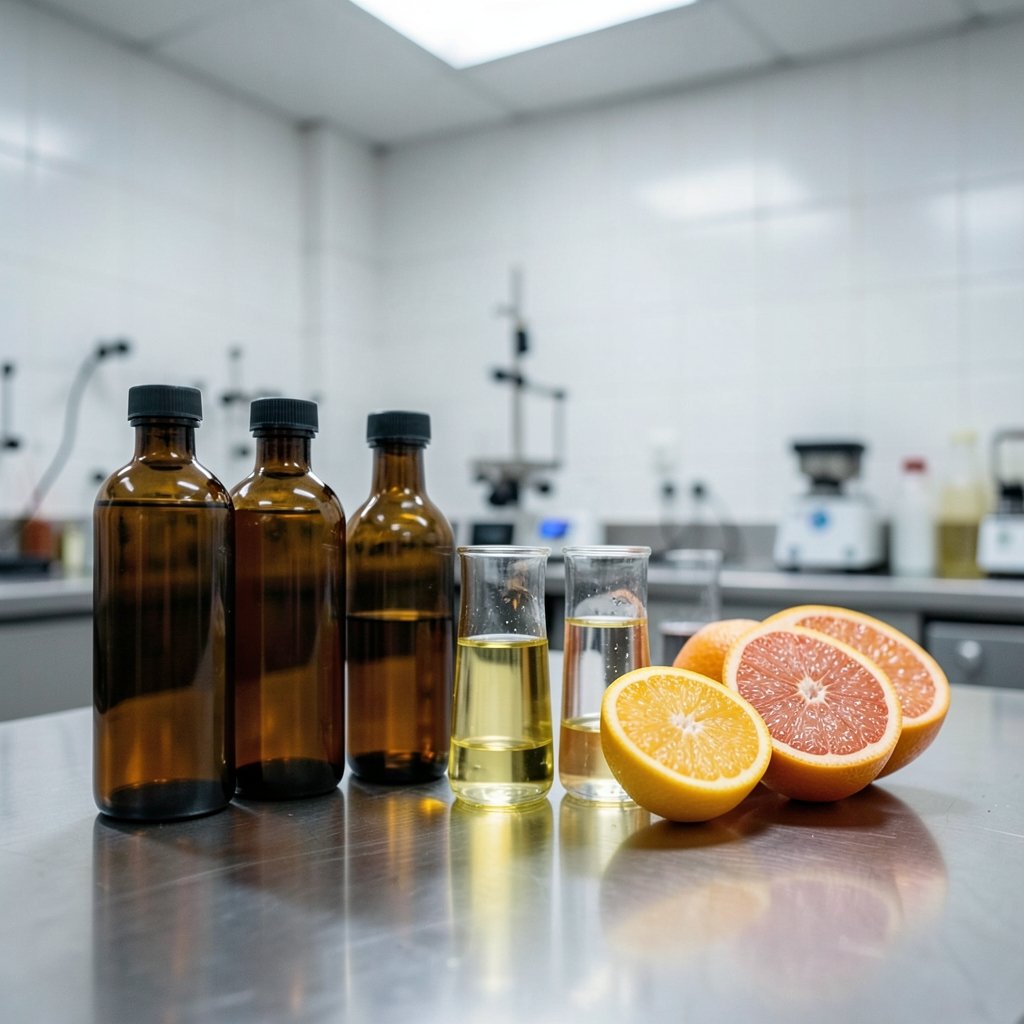
Lakeland sits in Polk County, roughly halfway between Tampa and Orlando, and its identity has long been tied to citrus. The surrounding region was once a powerhouse of Florida orange and grapefruit production, and the city’s name says it plainly: lakes and groves shaped the local economy for generations.
For the flavor industry, that geography matters. Citrus oils, essences, and juice concentrates are core building blocks for beverages, confectionery, and bakery products. A flavor company with a presence in central Florida is close to growers, processors, and the know-how that comes with a century of citrus work. That proximity is not a small convenience. It shortens supply chains, supports freshness-sensitive ingredients, and gives formulators direct access to the raw materials they build flavors around.
Anyone who wants the fuller backstory of the region should look at how the area’s geography and government are organized, which shapes everything from land use to economic development. A useful primer on that structure is available in this explanation of Lake orion michigan village lake township explained, which walks through how local boundaries and jurisdictions work in practice. The same logic applies in Polk County: knowing who governs what tells you a lot about how a plant or lab gets built and permitted.
Florida’s citrus industry has also faced serious pressure from disease and weather in recent decades, and that context affects every business tied to the crop. A parallel case of how environmental stress reshapes a local resource is covered in this look at what the Anna lake invasive species evidence actually shows. The lesson carries over: when the raw material base shifts, the companies built around it adapt, diversify, or relocate parts of their work.
What Happens at a Flavor Site Like This
A flavor production and development site is part lab, part small-scale factory, and part logistics hub. The work usually falls into a few recognizable buckets.
Flavor creation and application
Flavorists and food scientists build formulas that meet a customer’s brief. That might mean matching a competitor’s taste profile, recreating a traditional flavor, or making a reduced-sugar product taste fuller. Application labs then test how the flavor performs in a real product matrix, such as a beverage, a baked good, or a dairy item.
Citrus processing and ingredient handling
In a citrus-linked location, expect work with essential oils, extracts, and concentrates. Handling these materials well is a craft in itself. Oils oxidize, concentrations vary by harvest, and storage conditions affect quality. Practical experience matters more here than theory.
Quality, safety, and regulatory work
Food ingredients are heavily regulated, and flavor houses carry the documentation burden. Specifications, allergen controls, traceability, and audit readiness are daily concerns rather than occasional projects.
Supply chain and customer support
Flavor is a service business as much as a manufacturing one. Samples, pilot runs, and fast turnaround on reformulations are part of what customers pay for.
| Function | Typical work | Why it matters to customers |
|---|---|---|
| Flavor creation | Building and matching taste profiles | Products that meet a brief and a budget |
| Application testing | Trying flavors in real products | Fewer surprises at scale-up |
| Citrus handling | Oils, essences, concentrates | Consistent, fresh-tasting citrus notes |
| Quality and compliance | Specs, audits, traceability | Products that clear regulatory checks |
| Supply chain | Sourcing, samples, logistics | Reliability and speed to market |
Practical Tips If You Are Researching the Site
People search for “Givaudan Lakeland” for very different reasons: a job hunt, a supplier inquiry, a school project, or curiosity about a local employer. A few habits make the research far more productive.
Check the date on everything. Site-level details such as expansions, closures, or leadership changes go stale quickly. A news story from five years ago may describe a facility that looks very different today. Always find the most recent confirmation you can.
Separate corporate facts from local facts. Company-wide information, such as annual results and global strategy, is well documented. Site-specific details, such as headcount or which product lines run where, are thinner and change more often. Do not assume a global press release describes the Florida operation in detail.
Prefer primary sources for anything you plan to repeat. A corporate newsroom post or an annual report beats a summary site. Local newspapers and regional economic development offices are the next best tier for site-level news.
Watch for name confusion. “Lakeland” appears in many contexts, from a Florida city to a retail brand to place names in other countries. If search results seem to describe a completely different business, you have probably landed on the wrong Lakeland.
Do not over-read job postings. A single listing can hint at activity at a site, but it is weak evidence on its own. Treat it as a lead to verify, not a conclusion.
The most common mistake people make is assuming a famous parent company means abundant public detail about one location. In practice, flavor houses are quiet businesses that serve other businesses. The public record on any single plant is usually modest and uneven.
How the Florida Site Fits the Bigger Picture
Givaudan’s business model depends on being close to customers and close to raw materials, and those two goals sometimes pull in different directions. A Florida presence leans toward the raw-material side, especially for citrus-derived ingredients, while also serving beverage and food customers across the region.
That dual role explains why a site in a mid-sized Florida city makes strategic sense. It sits near a historic citrus base, within reach of major food and beverage markets, and along freight routes that connect to the rest of the country. For a company whose products are often shipped as concentrates and small-volume, high-value ingredients, that combination is attractive.
For readers who enjoy seeing how companies adapt to unusual local conditions, there are good comparisons elsewhere. A practical guide to the Lake texoma practical guide texas oklahoma border lake shows how a single body of water can support recreation, water supply, and cross-state regulation at once. Industrial sites work the same way: they sit inside a web of local rules, resources, and community expectations, and understanding that web explains more than a company profile alone.
There is also a broader trend worth noting. Flavor and fragrance companies have spent the past decade consolidating, investing in natural ingredients, and building capabilities in health and nutrition. A regional site’s role can shift as that strategy evolves, which is exactly why dated, verified information matters more than general impressions.
What to Expect If You Visit or Apply
For job seekers, a flavor site typically hires across several tracks: production and warehouse roles, quality and lab technicians, food scientists, maintenance and engineering staff, and supply chain or customer service positions. The work environment is closer to a regulated manufacturing and laboratory setting than to a test kitchen, even though the output is sensory.
For suppliers and community partners, the practical starting point is the company’s official channels rather than third-party directories, which often carry outdated addresses and phone numbers. For students or journalists, the strongest material usually comes from annual reports, local business coverage, and regional economic development sources that track major employers.
For anyone simply curious, the most interesting takeaway is how invisible infrastructure works. A city known for citrus became a node in a global flavor network, and the products that pass through that node end up in grocery aisles far from Florida. That is a more useful insight than any single fact about a building.
Conclusion
Givaudan Lakeland is best understood as the meeting point of a global flavor business and a Florida region built on citrus. The company brings formulation expertise, quality systems, and a customer-facing service model. The location brings proximity to citrus ingredients, regional food and beverage customers, and freight connections that make shipping practical.
The details of any single site are thinner in the public record than the scale of the parent company might suggest, and they change. Readers who want current facts should go to corporate disclosures and local Florida business coverage, check dates carefully, and resist the urge to treat old news as present truth. What does not change is the underlying logic: flavor houses go where the ingredients, the customers, and the logistics make sense, and central Florida has long checked all three boxes.
Frequently Asked Questions
What is Givaudan Lakeland?
It refers to the presence of Givaudan, a Swiss flavor and fragrance company headquartered near Geneva, in Lakeland, Florida. The Florida location is most plausibly tied to flavor production and citrus-related work, given the region’s citrus history. Anyone needing current site details should confirm them through corporate and local business sources, since site-level facts change over time.
Is Givaudan a Swiss company?
Yes. Givaudan is headquartered in Vernier, near Geneva, Switzerland, and is one of the largest flavor and fragrance businesses in the world. It sells mostly to other companies rather than directly to consumers, which is why its name rarely appears on retail products.
Why would a flavor company be based in central Florida?
Central Florida, and Polk County in particular, has a long history in citrus production. Citrus oils, essences, and concentrates are key building blocks for many flavors, especially in beverages and confectionery. Being close to growers, processors, and regional food and beverage customers makes the location strategically useful.
What kinds of jobs exist at a flavor production site?
Typical roles include production and warehouse operators, quality and lab technicians, food scientists and flavorists, maintenance and engineering staff, and supply chain or customer service positions. The setting is a regulated manufacturing and laboratory environment rather than a restaurant kitchen.
How can I find current information about the Lakeland site?
Start with the company’s own newsroom and annual reports, then check local Lakeland-area newspapers and regional economic development sources. Always note the publication date, because site news such as expansions, closures, or leadership changes becomes outdated quickly. Avoid relying on third-party business directories for addresses or contact details.
Does the Lakeland site serve customers outside Florida?
Flavor ingredients are typically high-value and ship efficiently, so a production site is rarely limited to its own region. A Florida location can supply customers across the United States and beyond, depending on the product line. The exact distribution footprint is a detail best confirmed through current corporate disclosures rather than assumed.









