


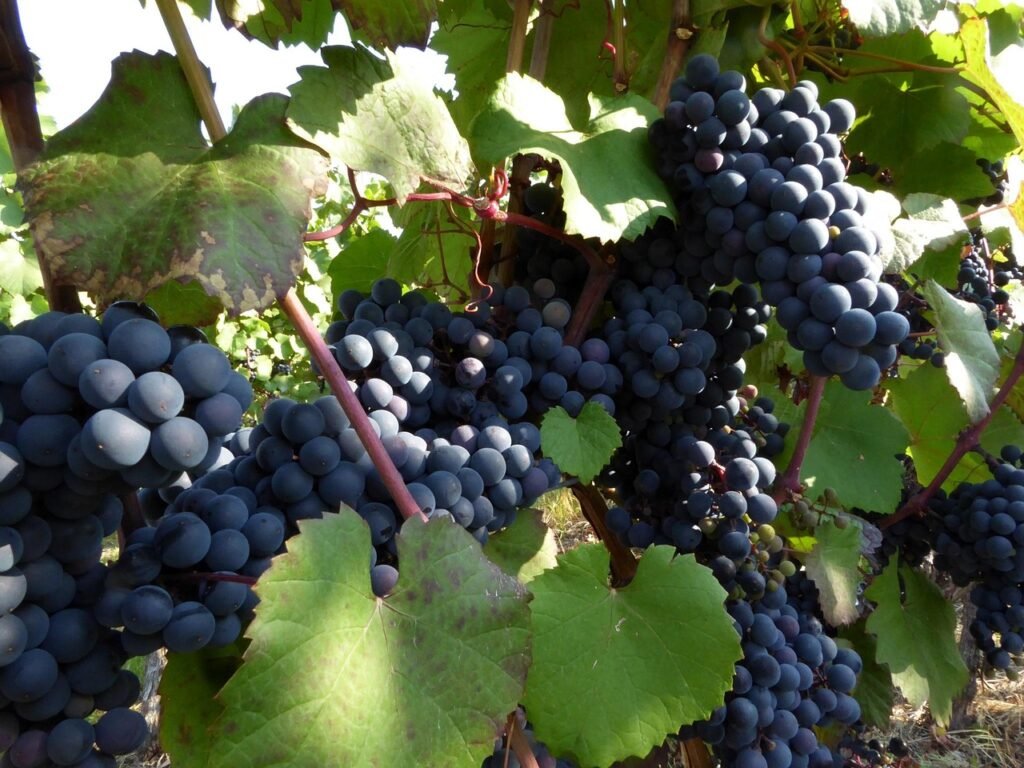
Why does a single grape name show up on wine lists from Napa to Nanjing, and why do winemakers treat it like the backbone of the wine world? The answer starts with one small, thick-skinned berry. Cabernet is not one grape but a family of related varieties, and the most famous member, Cabernet Sauvignon, has shaped how people grow, blend, and talk about red wine for centuries. This article breaks down where the grape came from, how it grows, what the wine tastes like, and how it differs from its relatives. It also covers the practical details that matter to anyone planting, buying, or simply enjoying a bottle.
What “grape cabernet” actually refers to
The phrase “grape cabernet” is a loose label. In most wine shops and conversations, it means Cabernet Sauvignon. But the cabernet family includes several distinct grapes:
- Cabernet Sauvignon: the global heavyweight, known for deep color, firm tannin, and aging potential.
- Cabernet Franc: one of Cabernet Sauvignon’s two parent varieties, lighter and more aromatic.
- Cabernet Gernischt: a name used in China that has been identified through DNA testing as Carmenère.
So when someone says “cabernet,” context decides the meaning. A Bordeaux blend usually contains Cabernet Sauvignon and Cabernet Franc together. A Chinese bottle labeled Cabernet Gernischt is, genetically, Carmenère. Knowing this saves a lot of confusion at the shelf.
The surprising family tree behind Cabernet Sauvignon

Cabernet Sauvignon did not appear out of nowhere. DNA analysis published in 1997 by Bowers and Meredith in the journal Nature Genetics showed it is a natural cross between Cabernet Franc and Sauvignon Blanc. That is an odd pairing on paper: one red grape and one white. Yet the offspring inherited the deep color and structure of its red parent.
The cross most likely happened in Bordeaux, France, sometime in the 17th century. That date is an inference drawn from genetic and historical evidence rather than a documented event, so treat it as the best available estimate. The variety was first described and named in the 18th century, and the “Sauvignon” part of the name became attached during the 19th century. Early naming records are messy, which is typical for grape history.
This parentage explains a lot. Cabernet Sauvignon carries some of the aromatic lift of Sauvignon Blanc and the tannic grip of Cabernet Franc. It is a hybrid in the natural sense, not a lab creation.
How the vine grows and where it thrives
Cabernet Sauvignon is a late-ripening variety with small berries and thick skins. Those thick skins are the source of its color and tannin. The vine is also famously fussy in certain conditions:
- Powdery mildew is a constant threat in humid climates.
- Coulure, or poor fruit set, can strike when cold, wet weather hits during flowering.
- Late ripening means the grape needs a long, warm growing season to reach full maturity.
These traits are standard in viticulture references such as Wine Grapes by Robinson, Harding, and Vouillamoz (2012). In practice, growers choose sites carefully. Warm, well-drained soils and good air circulation reduce disease pressure. In cooler regions, winemakers may struggle to ripen the fruit fully, which produces greener, more herbal wines. In hot regions, the grape ripens easily but can lose acidity.
The variety is among the most widely planted wine grapes in the world. Exact rankings and hectare counts shift every year, so anyone quoting a fixed figure should check the latest statistics from the International Organisation of Vine and Wine (OIV) rather than trusting an old number.
What Cabernet Sauvignon wine tastes like
The general sensory profile is well established: high tannin, high acidity, dark fruit, and cedar notes. Think blackcurrant, black cherry, and plum, often wrapped in aromas of cedar, graphite, or tobacco. The wine is typically full-bodied and built to age.
That structure is why Cabernet Sauvignon is so often blended. In Bordeaux, it is married with Merlot and Cabernet Franc to soften tannin and add complexity. In other regions, winemakers may blend it with Syrah or Petit Verdot. A varietal bottling, labeled simply Cabernet Sauvignon, showcases the grape on its own.
Climate changes the picture. Warmer vintages tend to raise sugar levels and lower acidity, producing riper, jammier wines. Cooler vintages keep more freshness and herbal character. This is a general viticulture finding rather than a rule tied to one study, but growers observe it season after season.
For readers curious about how other grape types behave, the differences in skin thickness and ripening are just as important as they are here. The same principles that govern cabernet also shape 4c hair comparisons in curl-pattern guides, where structure and texture decide everything.
Cabernet Franc: the parent with its own identity
Cabernet Franc deserves attention beyond its role as a parent. It ripens earlier than Cabernet Sauvignon and has thinner skins, which means lighter color and softer tannin. Its aromas lean toward raspberry, bell pepper, and violets.
It shines in two places. First, Bordeaux, where it adds freshness and perfume to blends. Second, the Loire Valley, where it makes the red wines of Chinon and Bourgueil as a standalone varietal. Growers in cooler climates often prefer Cabernet Franc because it ripens reliably where Cabernet Sauvignon might struggle.
A practical tip for buyers: if a Cabernet Sauvignon feels too tannic or heavy, a Cabernet Franc from a cool region can offer the same family character with less grip. It is a useful bridge for people easing into structured reds.
Cabernet Gernischt and the Chinese connection
In China, a grape called Cabernet Gernischt appears on many labels. DNA testing has shown it is actually Carmenère, a variety once common in Bordeaux and now closely associated with Chile. Trade and academic sources report this identification, though anyone citing it should confirm the specific study before stating it as settled fact.
This matters for two reasons. First, it shows how names travel and mutate across wine regions. Second, it reminds drinkers that a label is not always a precise botanical description. Synonyms are common, and official registries maintain lists to keep things straight. France’s CTPS and INRAE catalogue, along with the OIV, are the bodies that track these names.
Other synonyms for Cabernet Sauvignon include Bouchet, Petit Cabernet, and Vidure. Seeing these on an old bottle does not mean you have found something rare. It usually means you have found a regional naming tradition.
Old World versus New World styles
The same grape produces very different wines depending on where it grows and how it is handled. Here is a practical comparison:
| Feature | Old World (e.g., Bordeaux) | New World (e.g., Napa, Chile, Australia) |
|---|---|---|
| Fruit profile | More restrained, herbal, earthy | Riper, jammier, more upfront fruit |
| Tannin | Firm but often softened by blending | Bold and concentrated |
| Oak use | Subtle, integrated | Often more pronounced vanilla and toast |
| Alcohol | Generally moderate | Often higher |
| Aging style | Built for long cellaring | Varies widely, many approachable young |
Neither style is better. The table simply helps a shopper predict what is in the bottle. A Bordeaux blend tends to reward patience. A New World Cabernet often delivers immediate pleasure.
This idea of matching structure to purpose shows up in plenty of style guides. Just as a the row breakdown helps readers compare options side by side, a region-by-region table makes wine choices less intimidating.
Practical tips for growing and buying
For anyone planting cabernet vines, experience points to a few common mistakes:
- Choosing a site that is too cool. Late ripening means the fruit may never fully mature. Pick a warm, sunny spot with good drainage.
- Ignoring airflow. Dense canopies trap humidity and invite powdery mildew. Pruning and trellising matter.
- Overcropping. Too much fruit dilutes flavor. Reducing yield usually improves quality.
- Harvesting too early. Underripe cabernet tastes green and harsh. Patience pays.
For buyers, the tips are simpler. Decant young, tannic bottles for an hour to soften them. Serve at around 16 to 18 degrees Celsius. And if a wine feels too heavy, look for a cooler-climate bottling or a blend with more Cabernet Franc.
If you are comparing grape varieties more broadly, texture and structure are the keys. A 2b hair guide uses the same logic: small differences in structure change the whole experience.
Why the grape still matters
Cabernet Sauvignon remains one of the most planted wine grapes on earth, and its influence reaches beyond the vineyard. It is a teaching grape, used to explain tannin, acidity, and aging. It is a blending tool, giving backbone to softer varieties. And it is a business, underpinning some of the most valuable wine regions in the world.
The variety’s protected status in the European Union, governed by Regulation 1308/2013 on the common organisation of agricultural markets, shows how seriously the name is treated. That regulation and its implementing acts set labeling rules that protect both growers and consumers. Anyone who wants the current legal text should consult EUR-Lex directly, since regulations are amended over time.
Conclusion
The grape behind the cabernet name is more interesting than a single bottle suggests. Cabernet Sauvignon is a natural cross with a documented parentage, a demanding growing habit, and a flavor profile built for aging. Its relatives, Cabernet Franc and the mislabeled Cabernet Gernischt, each tell their own story about how names and grapes travel. Whether you are planting a vine, choosing a bottle for dinner, or simply curious about what is in your glass, understanding the grape’s structure and history makes every sip more meaningful. The next time a wine list offers a cabernet, you will know exactly what you are getting and why it earned its place.
Frequently asked questions
Is Cabernet Sauvignon the same as Cabernet Franc?
No. They are related but distinct. Cabernet Franc is one of Cabernet Sauvignon’s parent varieties, alongside Sauvignon Blanc. Cabernet Franc ripens earlier, has thinner skins, and produces lighter, more aromatic wines. Cabernet Sauvignon is darker, more tannic, and more structured.
What does Cabernet Sauvignon taste like?
It typically shows dark fruit such as blackcurrant and black cherry, along with cedar, tobacco, or graphite notes. The wine is high in tannin and acidity, full-bodied, and often aged in oak. Warmer climates bring riper, jammier flavors, while cooler climates keep more herbal freshness.
Where did Cabernet Sauvignon come from?
DNA analysis published in 1997 established that it is a natural cross between Cabernet Franc and Sauvignon Blanc. The cross most likely occurred in Bordeaux, France, around the 17th century, though that date is an inference rather than a documented event.
Is Cabernet Gernischt really Cabernet Sauvignon?
No. Cabernet Gernischt is a name used in China that DNA testing has identified as Carmenère, not Cabernet Sauvignon. It is a separate variety that became known under a different name in a different region.
Why is Cabernet Sauvignon so widely planted?
It adapts to many climates, produces structured wines that age well, and serves as an excellent blending component. Its thick skins resist some disease pressure, and its global reputation supports strong demand. Exact planting figures change yearly and should be checked against current industry statistics.
How should I serve a Cabernet Sauvignon?
Serve it at around 16 to 18 degrees Celsius. Young, tannic bottles benefit from decanting for about an hour to soften the tannin. Pair it with grilled meat, hard cheese, or rich stews, which balance its firm structure.









