A luxury watch is the only piece of jewellery most men wear every day, and one of the few accessories most women wear that is also a machine. It tells the time, but it also marks a milestone and is made to be worn for decades. Buying one should feel exciting, yet the watch world is full of jargon and waiting lists.
The good news is that a first luxury watch does not have to be the most expensive watch, the rarest watch, or the watch everyone else is talking about. It has to be the watch that fits your life, your wrist, and your budget, and that you will still enjoy wearing in ten years. A steel sports watch that goes with everything will serve most first-time buyers better than a delicate dress watch left in a drawer.
This guide walks through the whole decision in plain language: how much to spend, which style suits your life, how movements and materials work, where to buy safely, and which mistakes to avoid. It also compares the most recommended first watches side by side.
Key takeaways
- Set an all-in budget, including tax, insurance, and a servicing reserve, and buy for your real life, not an imagined one.
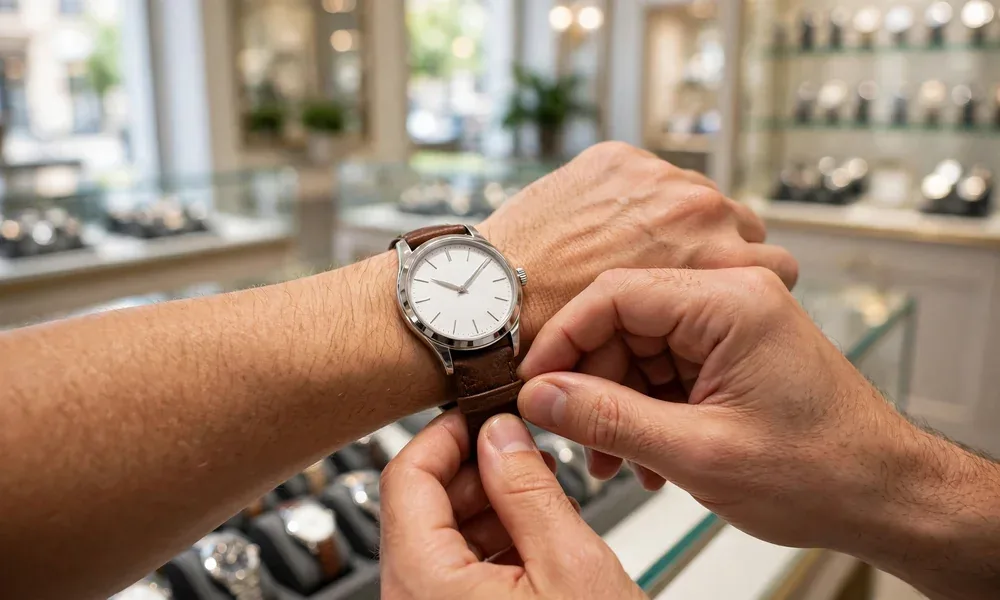
- Try watches on in person: diameter alone does not tell you how a watch wears; lug-to-lug length, thickness, and bracelet shape matter too.
- Choose a versatile first watch from a house with strong service support, and learn its exact reference number before you pay.
- Buy from an authorised dealer or a trusted pre-owned specialist, with a written authenticity guarantee, a clear return window, and box and papers where possible.
- Most luxury watches lose value, so buy for the pleasure of wearing it, not as an investment.
Start with how you actually live
Before you look at a single watch, look at your week. Do you wear a suit most days, or do you live in knitwear and denim? Do you swim, travel, or attend formal dinners? A first watch should match the life you already have, not the life you hope to have one day. The most common first-watch mistake is buying for an imagined occasion instead of for Tuesday morning. The watch you wear every week is the right first watch.
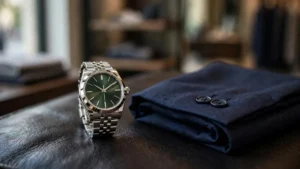
A dress watch is slim and elegant, with a clean dial and a leather strap, and it sits neatly under a cuff. A sports watch is tougher and more water resistant, with a steel bracelet. Comfort is the whole point: a watch that pinches or catches on a cuff will end up unworn, however beautiful it looked in the case.
Set a budget that includes everything
A realistic first luxury watch budget for most buyers sits in the range of a few thousand, and many excellent first watches sit below five thousand. Entry-level luxury from Tudor, Longines, and Cartier offers serious Swiss watchmaking at that level, while Omega and Rolex sit a step higher. A well-chosen watch at a lower price, worn happily every day, beats a stretched purchase that brings worry with every knock.
The purchase price is only the entry cost. Include sales tax, shipping or import duty, insurance, and sizing. Mechanical watches need periodic servicing, so keep a separate reserve rather than spending every penny on the watch itself. A watch should never consume emergency savings or be bought on revolving credit.
Understand movements, materials, and size
A movement is the engine inside the watch, and there are two main kinds. A quartz movement uses a battery and is accurate, convenient, and low maintenance. A mechanical movement uses a wound mainspring, and it appeals through engineering, finishing, and tradition. Most luxury watches are mechanical: automatic, wound by the motion of your wrist, or manual, wound by hand each day. An automatic with a power reserve of around seventy hours keeps running through a weekend off the wrist.
Stainless steel is the sensible default for a first watch: tough, versatile, and easy to service. Gold is warmer and more formal, but it scratches more easily and costs far more. A sapphire crystal resists scratches far better than mineral glass. Size is about proportion, not just diameter: lug-to-lug length, thickness, and bracelet taper all affect how large a watch appears. As a rough guide, 36 to 41 millimetres suits most wrists, and the lugs should not overhang your wrist.
Eight first watches worth comparing
The same handful of references comes up again and again when collectors recommend a first luxury watch. Each one is proven, versatile, and supported by a strong service network. Our guide to the best luxury watches of 2027 looks at nine of them in depth. Prices change, so check the current price with the seller before you decide.
| Watch | Style | Movement | Why it suits a first buyer |
|---|---|---|---|
| Tudor Black Bay Fifty-Eight | Vintage diver | Automatic, in-house | Serious quality at a fair price, in a 39 mm case. |
| Omega Seamaster Diver 300M | Modern diver | Automatic, Master Chronometer | Tough and accurate, for office, beach, and evenings. |
| Omega Speedmaster Professional | Chronograph | Manual-wind chronograph | The Moonwatch, with unmatched history. |
| Rolex Datejust 36 | Classic everyday | Automatic, in-house | The most versatile Rolex, for suits and weekends alike. |
| Rolex Oyster Perpetual | Simple sports-dress | Automatic, in-house | Clean and understated, with strong service support. |
| Cartier Tank Must | Dress watch | Quartz or automatic | Elegant and instantly recognisable. |
| Cartier Santos | Dress-sport | Automatic, in-house | A square case with real history. |
| Grand Seiko Snowflake | Refined everyday | Spring Drive | Exceptional finishing, for buyers who value craft. |
If you want one safe answer, the Tudor Black Bay Fifty-Eight or the Omega Seamaster Diver 300M are the two most often recommended: versatile, well made, and fairly priced. If you want the biggest name, the Rolex Datejust or Oyster Perpetual is hard to beat, though availability can be difficult. If you want elegance, the Cartier Tank is the classic choice.
New, pre-owned, or grey market: where to buy
An authorised dealer is the safest route for a first purchase. You get the manufacturer warranty and a relationship that can help with servicing and straps. The trade-off is availability: some steel sports models are hard to buy new at retail, and a dealer may ask you to wait. That is frustrating, but it is not a reason to rush into a risky purchase elsewhere.
Pre-owned is often the smarter route, because the right pre-owned watch can cost less than a new equivalent and lose value more gently. Buy only from a trusted dealer with a verified track record, a written authenticity guarantee, and a clear return window. Ask about service history and any work done to the case. Papers alone do not prove a watch is real, so the seller’s reputation matters more than any single document.
How to spot a good watch and avoid a bad one
Before you pay, research the exact reference number, not just the collection name. Similar-looking watches can differ in size, movement, and materials across production years. The reference number records the model, the case metal, the bezel type, and the dial layout. Check the condition of the case, bezel, dial, and bracelet, and compare the asking price with current market values.
Authenticity and originality are two different things. An authentic watch is made entirely of genuine parts; an original watch also keeps the exact factory-born components it left the workshop with. Look closely: the dial printing should be crisp, the hands should align neatly, and the bracelet should feel solid rather than rattly. If anything looks inconsistent, ask questions, and if the answers are vague, walk away. Our diamond buying guide makes the same point for jewellery: know the exact specification, buy from a seller you trust, and never let excitement replace checking.
Your first-watch checklist
- Write down three priorities before shopping: how you will wear the watch, the style you love, and your maximum all-in cost.
- Try on at least three watches in person, including one smaller and one larger than you expect.
- Check the exact reference number, movement, power reserve, water resistance, and case measurements before you pay.
- Confirm the seller, the warranty, the return window, the box and papers, and the service history in writing.
- Compare the asking price with current market values for the same reference in the same condition.
- Arrange insurance and a safe place to keep the watch before you take it home.
Looking after your watch
A mechanical watch is a machine, and machines need care. Keep it away from strong magnets, hard knocks, and extreme heat, and rinse it with fresh water after swimming in the sea. Have it serviced at the intervals the manufacturer recommends, by an authorised service centre, because a missed service can turn a small problem into an expensive one. Keep the box, papers, and service receipts together.
Style the watch as part of an outfit, not as an afterthought. A steel sports watch works with almost everything, while a leather-strap dress watch suits tailoring and evening wear. Our guide to the best luxury fashion brands shows how the strongest houses build a whole look around a few considered pieces, and a watch works the same way.
Frequently asked questions
How much should I spend on my first luxury watch?
Most first-time buyers spend a few thousand, and many excellent first watches sit below five thousand. Set an all-in budget that includes tax, insurance, and a servicing reserve, and do not stretch beyond it for a name alone.
Should my first luxury watch be new or pre-owned?
Both can be right. New from an authorised dealer gives you the full manufacturer warranty, while pre-owned from a trusted specialist can cost less and lose value more gently. For a first purchase, pre-owned is often the smarter route, provided the seller has a verified track record, a written authenticity guarantee, and a clear return window.
Which luxury watch brand is best for a first buyer?
There is no single best brand, only a best fit for you. Tudor and Longines offer excellent value, Omega offers heritage and technical strength, Cartier offers elegance, and Rolex offers recognition and strong service support.
What size watch should I buy?
For most wrists, 36 to 41 millimetres works well, but diameter alone is not enough. Check the lug-to-lug length and the thickness, and try the watch on.
Are luxury watches a good investment?
Usually not. A small number of scarce references hold or gain value, but most lose value after purchase. Buy a watch because you love wearing it, not because you expect a return.
How often does a luxury watch need servicing?
It depends on the brand, the model, and the movement, so follow the manufacturer’s current guidance. Many mechanical watches are serviced every few years. Ask the dealer for the recommended interval and typical cost before you buy.
The bottom line
Buying your first luxury watch deserves patience rather than pressure. Start with your real life, set an honest all-in budget, try watches on in person, learn the exact reference, and buy from a seller you trust. The best first watch is rarely the most expensive; it is the one you reach for every morning, that fits comfortably and still makes you smile years later.
Take your time, compare a few references side by side, and do not be afraid to walk away from a deal that feels rushed or unclear. When you find the watch that fits your wrist, your wardrobe, and your budget all at once, you will know, and that is the moment to buy.
Note: Prices, availability, and waiting lists change frequently, and they vary by country and by seller, so always confirm the current price, warranty, and return terms with the seller before you buy.