
The strap is the part of a watch you actually live with. The case catches the eye in a shop window, but the strap touches your wrist from morning until night, and it decides whether a watch feels comfortable and looks right with what you are wearing.
Choosing well is not about spending the most or following a trend. It is about matching three things: the fit of your watch, the material that suits your day, and the look you want. A leather strap that suits a quiet office afternoon will suffer on a sweaty summer hike.
This guide walks through the choice step by step: how to measure your watch, what each material does well, how to match a strap to your watch and wardrobe, and how to change and care for a strap.
Key takeaways
- Measure the lug width first: the gap between the lugs, in millimetres, is the number a new strap must match.
- Leather suits dress and office wear but dislikes water; rubber and silicone suit swimming and sport; steel suits almost everything.
- A NATO strap keeps the watch on your wrist even if one spring bar fails.
- Match the strap to the watch: slim leather for dress watches, rubber or steel for divers, fabric for field watches.
- Use the right tool to swap straps, check both spring-bar tips are seated, and clean each material the way it needs.
Start With the Fit: Lug Width and Strap Length
Before you fall in love with a colour or a material, measure your watch. The most important number is the lug width: the distance, in millimetres, between the inside faces of the two lugs where the strap attaches. A strap must match that number exactly, or it will rattle and leave visible gaps.
Remove the old strap, lay the watch face down on a soft cloth, and measure straight across the inside of the gap with a metric ruler. A digital caliper is more accurate and worth using for odd sizes such as 19 or 21 millimetres. Most watches use 18, 20 or 22 millimetres, with 20 the most common. Length is a separate question: wrap a tape snugly around your wrist and compare it with the maker’s short, regular or long options. Listings often show two numbers, such as 20/16 millimetres: the first is the width at the case, which must match your lugs, and the second is the width at the buckle.
Leather Straps: The Classic Choice
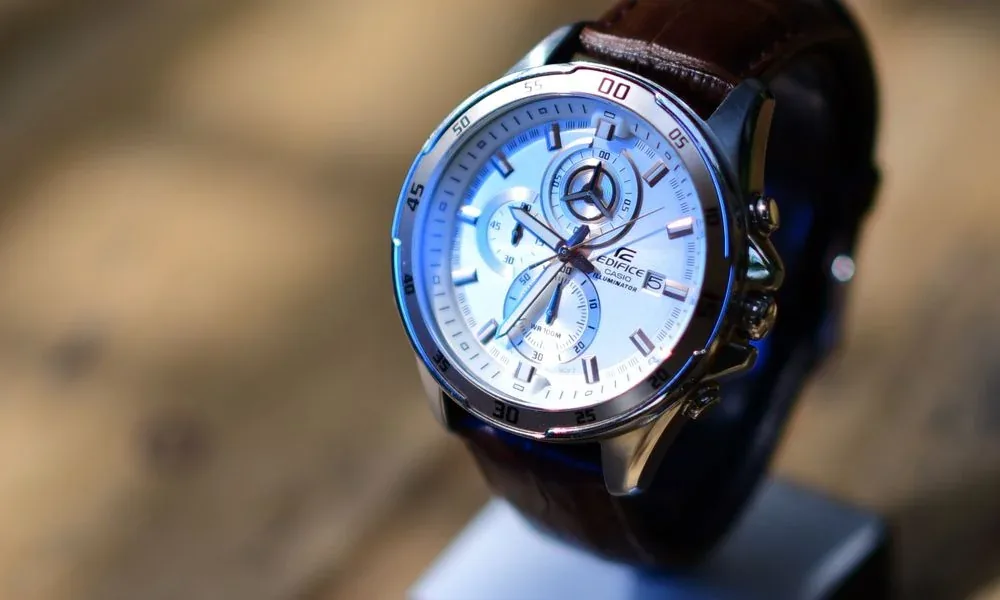
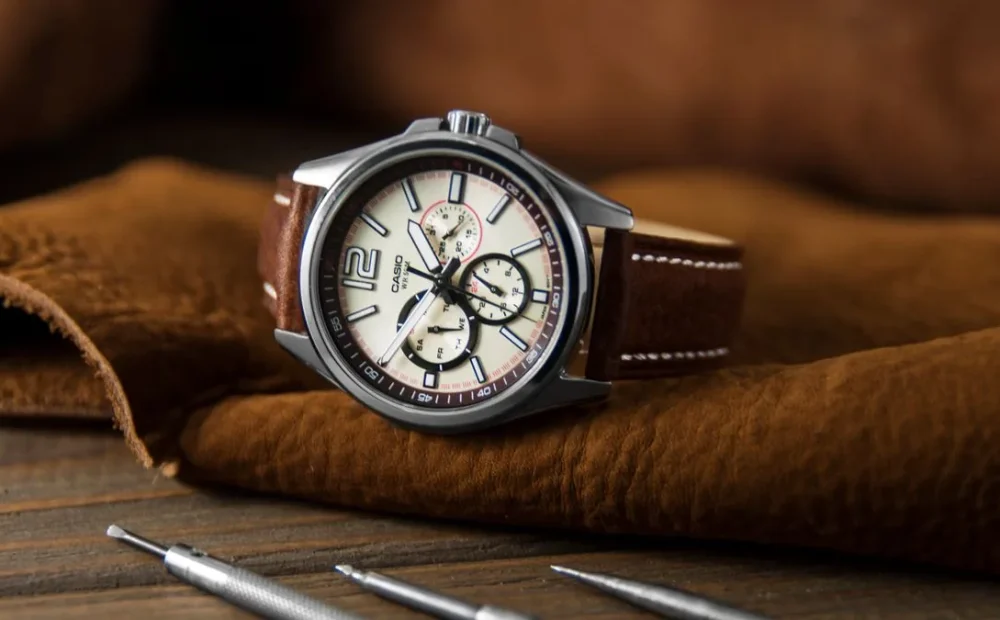
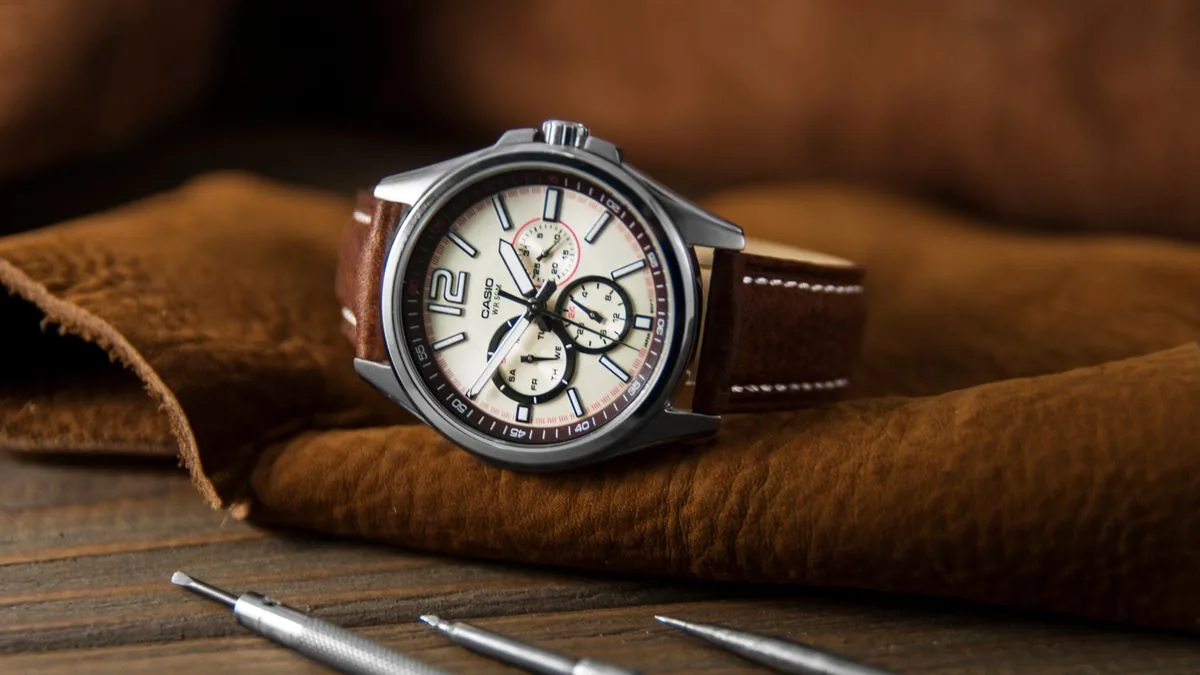
Leather is the default dress strap for a reason. It is soft against the skin, it moulds to your wrist over the first weeks of wear, and it develops a patina that makes the strap feel personal. Smooth calfskin is the classic all-rounder and suede is softer and more casual.
The trade-off is water. Leather absorbs moisture, sweat and rain, and repeated soaking can stiffen, stain or crack it. Keep it away from swimming and showers, wipe it with a slightly damp cloth when dirty, and let it dry flat away from heat. A light conditioner, applied sparingly, helps stop the surface drying out. A leather jacket in a matching tone ties the outfit together.
Metal Bracelets: The Everyday Workhorse
A steel bracelet is the most durable option and the hardest to wear out. Linked steel shrugs off water, sweat and daily knocks, needs little upkeep beyond an occasional clean, and suits almost every setting. The three-link style looks sporty and robust, while a five-link style reads dressier. A Milanese mesh bracelet, woven from fine steel strands, is lighter and adjusts precisely with a sliding clasp.
Metal has two drawbacks: weight, since steel is noticeably heavier than leather or fabric, and fit. A bracelet needs the right number of links removed from each side so the clasp sits centred, and end links shaped to your case. That sizing is best done with a link-removal tool or by a watchmaker. Once sized, a steel bracelet can last the life of the watch, making it the most economical choice over time.
Rubber, Silicone and FKM: Built for Water and Activity
If your watch goes near water, rubber is the honest answer. Rubber and silicone straps are waterproof, flexible, easy to clean, and comfortable through heat and exercise. They are the natural partners for dive and sports watches, and modern versions come in far more than plain black. FKM, a fluoroelastomer rubber, is the premium version: it resists heat, chemicals and stretching better than ordinary rubber.
Silicone is the softer, lighter cousin: gentle on the skin and comfortable all day, though it can attract lint and feel sticky in hot weather. Care is easy: rinse with fresh water after the sea or a pool, wash with mild soapy water when needed, and air-dry away from heat. Hardening or a shiny surface are signs a rubber strap is nearing the end of its life.
NATO, Nylon and Canvas: Casual, Colourful and Practical
A NATO strap is a single length of woven nylon that threads under the watch case and through both spring bars. It was designed for military use, and that shows in its best feature: if one spring bar fails, the watch stays attached. NATO straps are light, breathable, cheap, and available in almost any colour, making them the easiest way to change a watch’s character in under a minute.
Canvas and sailcloth sit in the same casual family with a more rugged feel. Canvas is tightly woven cotton that ages nicely and suits field and pilot watches, while sailcloth has a woven top over a lining, and the lining decides how it handles water: rubber copes with splashes, leather does not. Perlon, a woven nylon mesh, is another light option, very breathable and adjustable to any length.
Matching the Strap to Your Watch and Your Wardrobe
A strap should agree with the watch it holds. A slim dress watch wants a slim leather strap in black or dark brown; a thick strap would overpower it. A dive watch wants rubber, a steel bracelet or a NATO, and leather is a poor choice if the watch will be in the water. A field watch looks at home on NATO, canvas or worn leather, and a sports watch is happy on steel or rubber.
Colour and metal matter just as much. Match the hardware to the case: silver buckles with steel cases, gold-toned buckles with gold cases, black hardware with black cases. Brown leather warms up navy, grey and earth tones, and tan leather adds a relaxed note to denim. A good rule is to echo one other accessory: a brown strap with brown shoes and belt. Our round-up of the best luxury watches shows how the finest watches are paired. For evenings, a slim leather strap also sits neatly beside gold jewellery for everyday wear.
Strap Materials at a Glance
| Material | Best for | Water | Comfort | Formality | Care |
|---|---|---|---|---|---|
| Leather (calfskin) | Dress, office, evenings | Avoid | Softens with wear | High | Keep dry, condition occasionally |
| Suede | Smart-casual days | Avoid | Very soft | Medium | Brush clean, keep dry |
| Steel bracelet | Everyday, all-round wear | Excellent | Heavier, needs sizing | Medium to high | Brush links with soapy water |
| Milanese mesh | Warm weather, dressy days | Good | Light, breathable | High | Rinse and dry |
| Rubber and FKM | Swimming, diving, sport | Excellent | Flexible, can feel warm | Low to medium | Rinse with fresh water |
| Silicone | Sport, all-day comfort | Excellent | Soft and light | Low | Wipe clean, rinse |
| NATO and nylon | Field, casual, outdoors | Good | Light, breathable | Low | Hand wash, air dry |
| Canvas and sailcloth | Field, pilot, weekends | Fair to good | Textured, rugged | Low | Rinse and air dry |
How to Change a Strap Without Scratching the Case
Swapping a strap is a small job with the right tool and a steady hand. Work on a soft cloth so the crystal and case are protected. With a spring-bar tool, press one end of the bar inward with the forked tip and lift the strap away, then fit the new strap by seating one end of the bar in its lug hole and compressing the other end until it clicks into place. Quick-release straps are easier still: pull the small lever with a fingernail and the strap lifts out. Always check your work: tug each side gently and confirm both tips of the spring bar are fully seated. A bar that is slightly short can look seated and then pop free, so replace bent or corroded bars. If a bar will not compress, the lug holes look worn, or the watch has an integrated bracelet, let a watchmaker handle it.
Caring for Each Material So It Lasts
Good care is material-specific, and the wrong method can ruin a strap faster than neglect. Leather needs the gentlest treatment: wipe with a slightly damp cloth, never soak it, condition it lightly now and then, and store it flat away from heat and sunlight. Keep perfume off the strap, since it can stain and dry the surface. Suede needs a soft brush rather than water.
Metal, rubber and fabric are more forgiving. Soak a steel bracelet in warm water with mild dish soap, brush gently between the links, rinse, and dry thoroughly before refitting. Rinse rubber and silicone with fresh water after salt or chlorine and air-dry away from radiators. Hand-wash fabric straps in lukewarm water and lay them flat to dry. Avoid bleach, solvents and abrasive cleaners.
Before You Buy: A Quick Checklist
- Measured the lug width and confirmed it against the maker’s specification.
- Checked your wrist size against the strap’s length options.
- Picked a material that suits your real week: water, sweat, office or evenings.
- Matched the buckle colour to the case, and the strap colour to your outfits.
- Confirmed the end shape: straight ends for open lugs, curved ends where needed.
- Checked whether the strap uses standard or quick-release bars.
Frequently Asked Questions
What size watch strap do I need?
You need two numbers: the lug width and the strap length. Measure the gap between the inside faces of the lugs in millimetres; the strap’s case-end width must match exactly. Then measure your wrist and compare it with the maker’s short, regular or long lengths.
Can I put a leather strap on a dive watch?
You can, but only if the watch stays dry. Leather absorbs water and sweat, so it stiffens and wears out quickly when wet often. For a dive watch that swims, choose rubber, FKM, silicone or a steel bracelet.
What is the difference between a NATO strap and a normal strap?
A normal strap is two separate pieces that attach to the spring bars. A NATO is one continuous piece of woven nylon that threads under the case and through both spring bars, so the watch stays on your wrist even if one spring bar fails.
How often should I replace a watch strap?
It depends on the material and how often you wear it. A leather strap worn daily usually lasts one to three years. Rubber and fabric last longer but should be replaced when they harden, fray or crack. A steel bracelet can last the life of the watch.
Are quick-release straps as secure as standard spring bars?
Yes, when they are the right size and fitted properly. A quick-release bar works like a standard bar with a small lever that retracts one pin. Buy the exact lug width and check both tips are seated before wearing it.
How do I stop a leather strap smelling?
Smell comes from sweat and moisture absorbed into the leather. Wipe the strap with a slightly damp cloth after hot days, let it dry fully in fresh air, and rotate it with another strap so it rests between wears. Never soak leather to clean it.
The bottom line
The perfect watch strap is not the most expensive one. It is the one that fits your watch to the millimetre, suits the life you actually lead, and looks right with the clothes you already own. Measure first, choose the material for your real week, and match the hardware and colour to the watch.
Start with one good strap rather than a drawer full of compromises. Wear it for a few weeks, then add a second strap for the days the first one cannot cover: leather for the office, rubber for the water, or a NATO for the weekend.
Note: Always confirm lug width and strap compatibility against your watch maker’s specification before ordering, especially for curved, recessed or integrated lug designs.