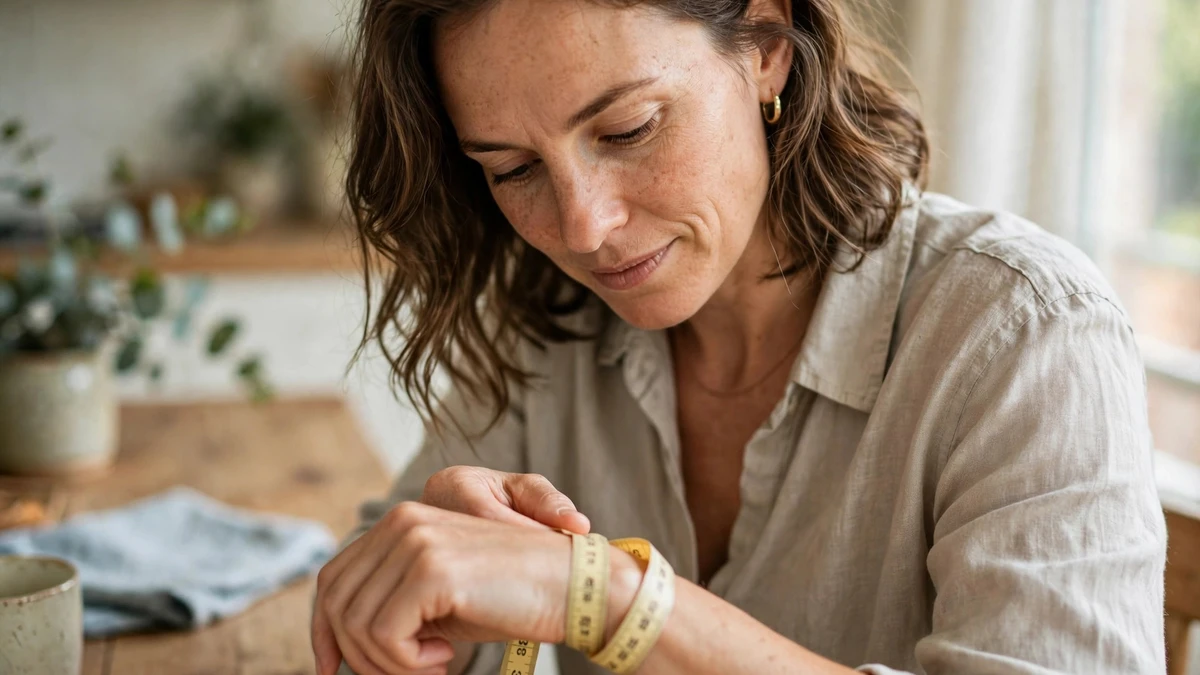
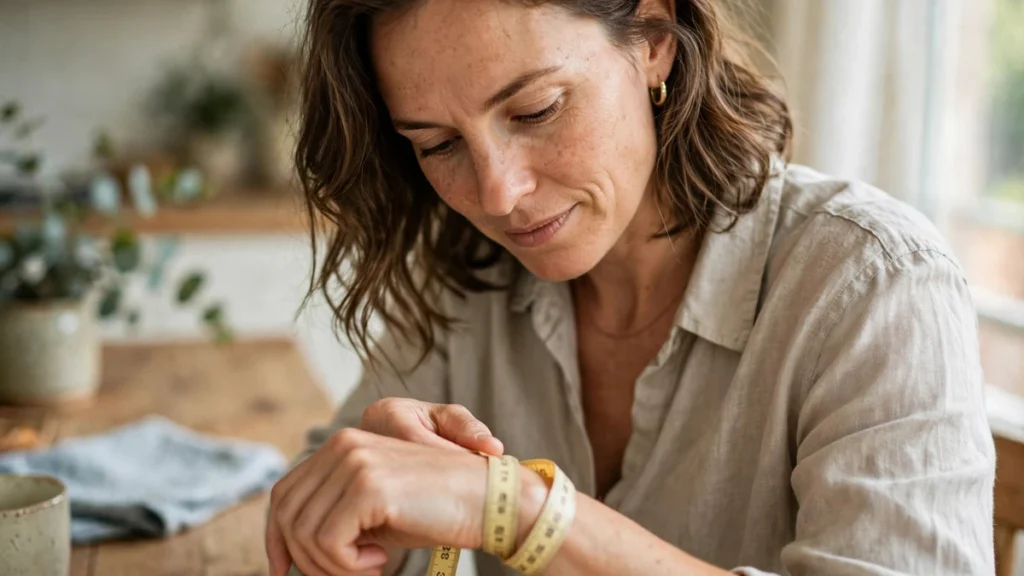
Buying a bangle online should be simple, but the size is where most people go wrong. A bangle is a rigid circle with no clasp, so it has to slide over your whole hand, and the number that matters is not your wrist size but the width of your hand when it is squeezed into the shape it makes going through a circle. Measure bangle size wrong and the bangle either will not pass your knuckles at all, or it slides on easily and then slips off your wrist every time you move.
The good news is that measuring takes about five minutes, a strip of paper or a soft tape, and one honest squeeze of your hand. You do not need a jeweller, a bangle sizer, or a special tool. What you need is the right method for the type of bangle you are buying, because a slim solid bangle, a wide cuff-style bangle, and a stretchy beaded bangle are all sized in different ways.
Below are nine steps that take you from a bare hand to a size you can order with confidence, including the two measurements that matter, the common mistakes that make a bangle feel too tight or too loose, and a size chart you can check before you pay. Each step says what to do, what to avoid, who it suits, and how long it takes.
Key takeaways
- A bangle must fit over your hand, not just your wrist, so hand circumference at the knuckles is the measurement that matters most.
- Measure in the evening, when your hands are at their warmest and largest, and measure twice before ordering.
- Bangle size is usually given as an inner diameter in millimetres or centimetres, and a 2 to 3 millimetre difference changes how a bangle feels.
- Slim bangles need a snugger fit than wide bangles, and beaded or hinged bangles follow different rules entirely.
- No chart replaces trying a bangle on, and a bangle that pinches, spins freely, or slides over your hand without resistance is the wrong size.
What bangle size actually means
Bangle size is the inner diameter of the bangle, the distance straight across the inside of the circle, usually given in millimetres or centimetres. A size 60 bangle has an inner diameter of 60 millimetres. That number is what decides whether the bangle passes over your hand, because your hand has to fold itself small enough to fit through that opening. Your wrist measurement alone cannot tell you that, which is why bangle sizing feels confusing the first time you do it.
The second measurement is your hand circumference at the widest point, usually across the knuckles with your thumb tucked into your palm. This is the shape your hand makes when it slides through a bangle, and it is the number most size charts are built from. Sellers who only ask for a wrist measurement are really selling you a bracelet, not a bangle, and the difference matters. Our guide to measuring your bracelet size explains the wrist method, which works for clasped bracelets but will leave you with a bangle that does not fit.
The fit you want is a bangle that slides over your knuckles with gentle pressure and then sits on your wrist with a little room to move. It should not spin wildly, and it should not pinch. A slim bangle can sit closer to the wrist, while a wide bangle needs more room because it cannot tilt to pass your hand the way a slim one can. Knowing this before you measure saves you the most common mistake in bangle shopping, which is ordering your wrist size and receiving a bangle you cannot get on.
How we chose these steps and what to look for
These steps are ordered the way you would actually do them, from the first measurement to the final check before ordering. They cover the two standard methods, paper strip and soft tape, plus the diameter method for bangles you already own, and they flag the points where people usually go wrong, such as measuring a cold hand in the morning or pulling the tape too tight.
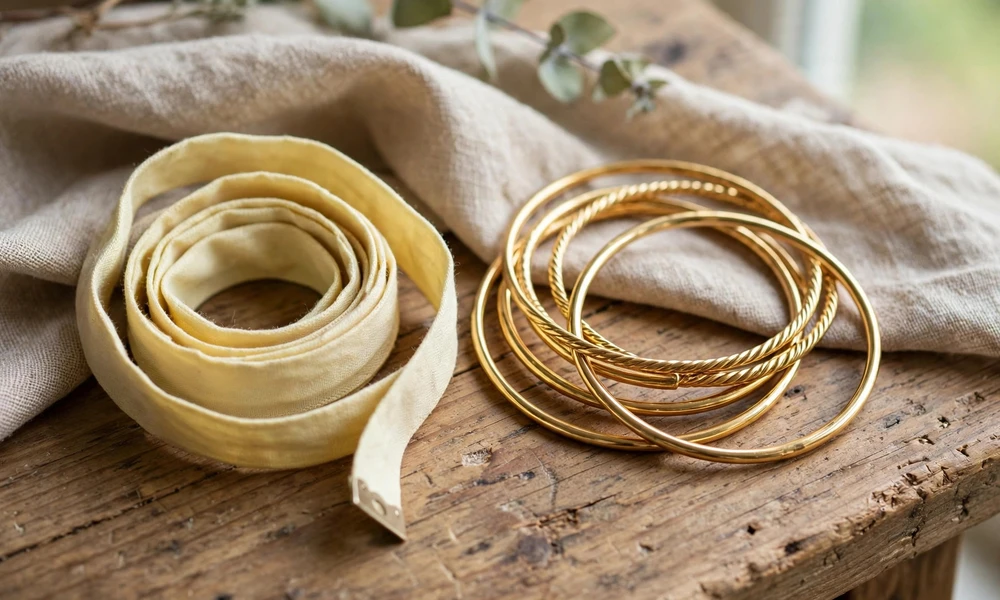
Look for a size chart from the seller that lists both hand circumference and inner diameter, because you need the second number to check a bangle you already own against a new one. If a seller only lists small, medium and large, ask for the diameter in millimetres before ordering. A small from one maker can be a 58 and from another a 62, and that gap is the difference between a bangle that fits and one that does not.
Finally, remember that your two hands are not the same size. Measure the hand you will wear the bangle on, and if you wear bangles on both wrists, measure both. Most people have one hand slightly larger, usually the hand they write with, and a bangle that fits one wrist comfortably can be tight on the other.
The 9 steps to measuring your bangle size
Warm up your hands first
What to do: Spend a few minutes with warm hands before you measure, and measure in the evening if you can. What to avoid: Measuring first thing in the morning or with cold hands, when your hand is at its smallest. Best for: Everyone, especially anyone whose hands swell in warm weather. Time needed: 5 minutes. Standout tip: Wash your hands in warm water and wait a minute before measuring.
Tuck your thumb into your palm
What to do: Hold your hand out with your fingers together and your thumb folded across your palm, as if you were sliding it through a bangle. What to avoid: Measuring with your thumb sticking out, which adds centimetres that do not exist when a bangle goes on. Best for: Anyone measuring for a solid or slim bangle. Time needed: 1 minute. Standout tip: Keep your fingers relaxed, not spread wide or clenched tight.
Measure around your knuckles with a soft tape
What to do: Wrap a soft measuring tape around the widest part of your hand, across the knuckles, with your thumb tucked in. What to avoid: Pulling the tape tight enough to dent the skin, or leaving it loose enough to slip. Best for: Most people, and the most reliable method if you own a soft tape. Time needed: 2 minutes. Standout tip: The tape should sit flat and snug, with no gaps and no squeezing.
Use a paper strip if you have no tape
What to do: Cut a strip of paper about 2 centimetres wide, wrap it around your knuckles in the same tucked-thumb position, and mark where it overlaps. What to avoid: Using string or ribbon, which stretches and gives a longer reading than your hand really is. Best for: Anyone without a soft tape, and the easiest method to do at home. Time needed: 3 minutes. Standout tip: Use stiff paper, not tissue, and mark with a pen, not a fold.
Match your measurement to a size chart
What to do: Find your hand circumference on the seller’s chart and read across to the bangle size, usually given as an inner diameter in millimetres. What to avoid: Guessing from small, medium and large labels without checking the numbers behind them. Best for: Anyone ordering online, where trying the bangle on first is not possible. Time needed: 2 minutes. Standout tip: If you fall between two sizes, choose the larger one for a solid bangle.
Measure a bangle you already own
What to do: Lay a bangle that fits you well on a ruler and measure straight across the inside, from one inner edge to the other. What to avoid: Measuring the outside of the bangle, which includes the metal and gives a number several millimetres too large. Best for: Anyone who owns one good-fitting bangle and wants to repeat the size. Time needed: 2 minutes. Standout tip: Measure in two directions and take the average, in case the bangle is slightly oval.
Try the circle test before ordering
What to do: Cut a circle of stiff card to the inner diameter of the size you plan to order, and try sliding your tucked hand through it. What to avoid: Skipping the test when you are between sizes or ordering a wide bangle for the first time. Best for: First-time buyers and anyone between sizes. Time needed: 5 minutes. Standout tip: Use card, not paper, so the circle holds its shape while you test it.
Adjust for wide and slim bangles
What to do: Go up one size, about 2 millimetres, for a wide bangle, and stay at your measured size for a slim one. What to avoid: Ordering a wide bangle in your usual size, because a wide band cannot tilt to pass your hand. Best for: Anyone buying cuffs, wide gold bangles, or chunky wooden bangles. Time needed: 1 minute. Standout tip: Stacked slim bangles can stay at your normal size, since each one passes over your hand separately.
Check the return policy before you pay
What to do: Read the seller’s returns policy for sized jewellery before ordering, and keep the bangle unworn until you have tried it on. What to avoid: Wearing a bangle out for a day and then trying to return it, which most sellers will not accept. Best for: Anyone ordering a bangle as a gift or from a new seller. Time needed: 3 minutes. Standout tip: Try the bangle on over a thin plastic bag to protect it while you check the fit.
Which measuring method is right for you
If you own a soft tape, the tape method is the most reliable, because it gives a direct circumference reading with no extra steps. If you do not, the paper strip method is just as accurate, as long as you use stiff paper and mark carefully. The bangle-you-own method is best when you already have a comfortable bangle, because it skips the hand entirely and measures the size that already works.
For a gift, the circle test is the most useful, because you can test it against the hand of the person who will wear it without them knowing you are measuring for jewellery. And if you are buying a wide bangle or a rigid cuff, always go up a size from your chart reading, because the width changes how the bangle passes your hand. A bangle bracelet comes in more shapes than most people expect, and the shape changes the size.
Whatever method you use, measure twice and write the number down. A measurement you remember is a measurement you will misremember, and the difference between a 60 and a 62 is small enough to forget. Keep the number with your jewellery notes, and you will never have to measure twice for the same wrist.
The caveats that matter
Bangle sizing is not exact science, and no chart can account for the shape of your hand. Some hands are wide across the knuckles and slim at the wrist, which makes a bangle that fits over the hand feel loose once it is on. Other hands are narrow at the knuckles and thick at the wrist, which makes a bangle hard to get on but snug once it is there. The chart gives you a starting point, and the circle test tells you whether that starting point works for your hand.
| Detail | What is known |
|---|---|
| What bangle size means | Inner diameter in millimetres, usually 52 to 70 |
| The key measurement | Hand circumference across the knuckles, thumb tucked in |
| When to measure | Evening, with warm hands, when your hand is largest |
| Between sizes | Go up a size for solid bangles, especially wide ones |
| Wide bangles | Add about 2 millimetres, because they cannot tilt over the hand |
| Slim bangles | Stay at your measured size, and stack at the same size |
| Hinged and stretch bangles | Follow the seller’s own chart, as they open or stretch to fit |
| What it does not do | No chart replaces trying the bangle on, or accounts for hand shape |
If a bangle pinches, leaves a mark, or makes your hand tingle, it is too small, even if the chart says it should fit. Take it off and go up a size. A bangle that is comfortable to wear all day is the right size, and a chart is only a way of getting close to it. Our roundup of bangle bracelets for everyday shows how different widths and materials sit on the wrist, which helps you judge the fit before you order.
Checklist: measuring your bangle size honestly
Use these checks before you order, and again when the bangle arrives.
- Measure in the evening with warm hands, not first thing in the morning.
- Tuck your thumb into your palm and keep your fingers together while you measure.
- Measure around the knuckles with a soft tape or a stiff paper strip, never string.
- Measure twice and write the number down, in centimetres and millimetres.
- Match your number to the seller’s chart, and check the inner diameter in millimetres.
- Go up a size for wide bangles, and check the return policy before you pay.
Frequently asked questions
Is bangle size the same as bracelet size?
No. A bracelet is measured around the wrist, because it fastens with a clasp. A bangle is measured around the hand at the knuckles, because it has to slide over your whole hand. A wrist measurement will give you a bangle that is too small to get on.
What size bangle do I need if my wrist is 16 centimetres?
A 16 centimetre wrist usually takes a bangle around 60 to 62 millimetres in inner diameter, but it depends on your hand. Measure your hand circumference across the knuckles and match it to the seller’s chart, because two wrists of the same size can have very different hands.
How tight should a bangle feel?
It should slide over your knuckles with gentle pressure and then sit on your wrist with a little room to move. It should not pinch, leave a mark, or spin freely around your wrist. If it slides on with no resistance at all, it is too big.
Should I size up for a wide bangle?
Yes, usually by one size, about 2 millimetres. A wide bangle cannot tilt as it passes over your hand, so it needs a larger opening than a slim bangle for the same wrist. Slim bangles can stay at your measured size.
Can I measure bangle size with a ruler?
You can measure a bangle you already own with a ruler, by measuring straight across the inside. For your hand, a soft tape or a paper strip is better, because a ruler cannot wrap around your knuckles. The paper strip method works well if you do not own a tape.
What if I am between two bangle sizes?
Go up to the larger size for a solid bangle, especially a wide one. A bangle that is slightly loose is comfortable and wearable, while a bangle that is slightly tight will pinch and may not go on at all. The circle test can confirm the choice before you order.
The bottom line
Measuring your bangle size is a five-minute job once you know the trick, and the trick is measuring your hand, not your wrist. Tuck your thumb in, measure around your knuckles in the evening, match the number to a chart that lists inner diameter in millimetres, and go up a size for wide bangles. The circle test takes five more minutes and tells you whether the size will work before you pay.
Keep the number written down and you will never have to measure the same wrist twice. A bangle that slides on with gentle pressure and sits comfortably all day is the right size, whatever the chart says, and a seller with a fair exchange policy makes the whole thing low risk.