

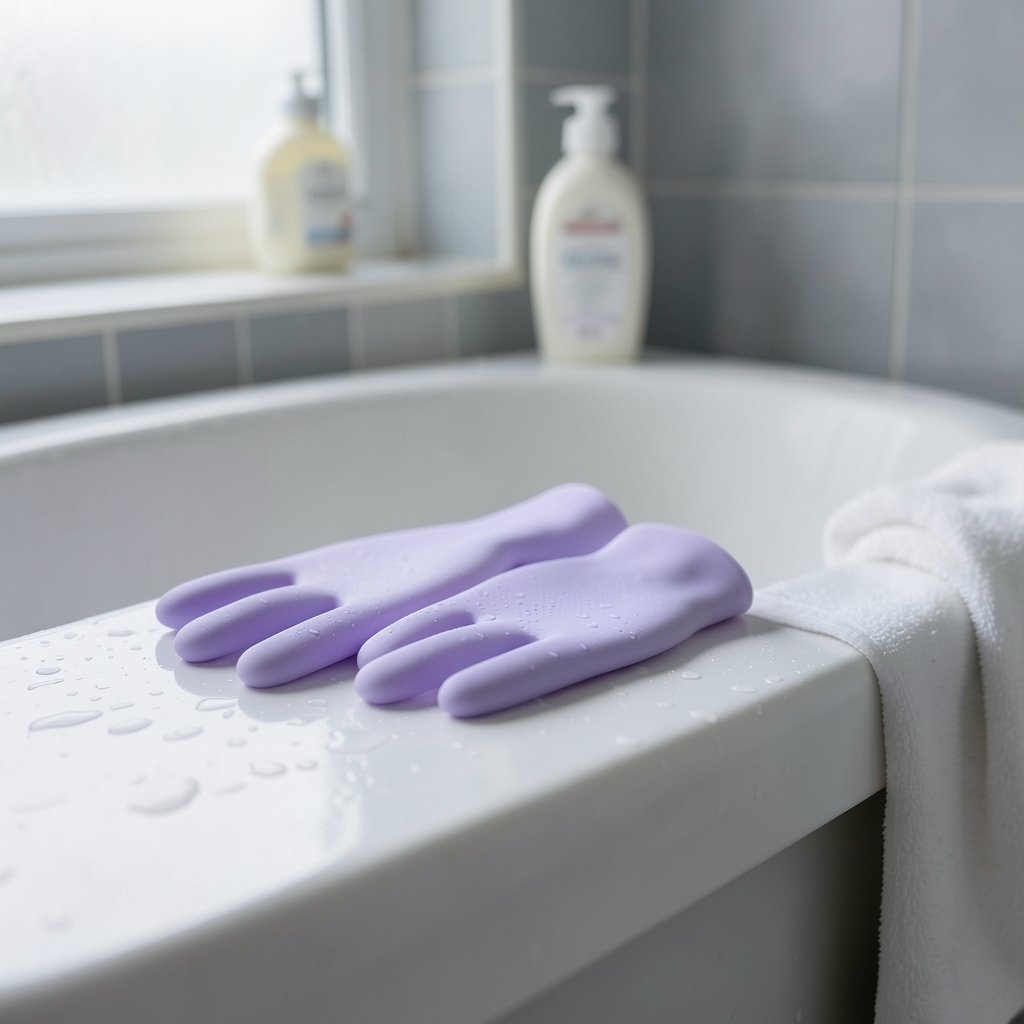
What if the tool that changes your wash day costs less than a bottle of decent shampoo and fits in the palm of your hand? That is the pitch behind hair washing gloves, a small category of products that has quietly grown from novelty gadget to genuine routine staple for a lot of people. The trouble is that the term covers more than one thing, and the marketing around it promises more than the evidence supports. This guide sorts out what these gloves are, what they can realistically do, and where the hype outruns the science.
What Are Hair Washing Gloves, Exactly?
The phrase gets used for two different products, and mixing them up leads to bad buying decisions.
The first and far more common category is silicone scalp massagers shaped like gloves or mitts. These are flexible silicone tools covered in soft nubs or bristles, worn on the hand or held in the palm, and used to work shampoo into the scalp. Some are full five-finger gloves; others are palm-sized pads with a strap. The point is to replace fingertips with something that lathers faster and reaches the scalp more evenly.
The second category is literal waterproof gloves worn while washing someone else’s hair. Think caregivers helping an elderly parent bathe, hairdressers working at a shampoo bowl, or pet groomers. Here the glove is protective equipment, not a styling tool.
Most search traffic and most product listings point to the first meaning. So this article focuses there, with a section on the protective-glove use case because it matters for a real group of readers.
Why Silicone Is the Material of Choice

Silicone shows up in nearly every scalp-massage tool for good reason. It is flexible, water-resistant, and easy to clean, which matters when the tool lives in a wet shower environment and touches skin daily. It also holds up to repeated exposure to warm water and shampoo surfactants without degrading quickly.
The cleaning itself, though, does not come from the silicone. Shampoo works because surfactants lower surface tension and lift oily soil, including sebum, the oil your scalp glands produce. The tool is a delivery and agitation mechanism. It spreads lather and provides gentle mechanical movement. That is a real benefit for people who find fingertip scrubbing awkward, but it is not magic.
One practical note from experience: silicone nubs vary enormously in firmness. Soft, rounded nubs suit sensitive scalps and anyone prone to irritation. Firm, dense bristles feel satisfying but encourage pressing harder than you should. If a tool leaves your scalp tender or pink, it is too aggressive, full stop.
What These Gloves Can Realistically Do
Here is where a balanced view helps. Scalp massage is a well-established relaxation practice, and mechanical scalp stimulation gets discussed in dermatology and trichology circles. But the evidence that scalp massage meaningfully drives hair growth is limited and mixed. Anyone selling a glove as a hair-loss treatment is overselling. (Blonde hair shades)
What the tools do well:
- Speed up lather distribution. The nubs spread shampoo across the scalp faster than fingers alone, especially through thick or dense hair.
- Reach the scalp rather than the hair. People with long or curly hair often scrub the strands and neglect the scalp. A tool makes scalp contact easier.
- Deliver consistent pressure. Fingernails are the enemy of a healthy scalp. A silicone tool removes that risk entirely.
- Make the wash feel better. This is not a small thing. A pleasant routine is a routine you repeat.
What they do not do:
- They do not replace shampoo or make a poor shampoo work better.
- They do not “detox” the scalp or remove buildup that a normal wash would leave behind.
- They do not reliably regrow hair.
If growth is the goal, the more evidence-backed path runs through scalp health basics and possibly hair growth serums used consistently over months. A glove is a supporting player, not the headline act.
How to Use Them Without Wrecking Your Scalp
The most common mistake is treating the glove like a scrubbing brush. It is not. Follow this sequence:
- Soak your hair first. Thirty seconds of warm water pre-rinse loosens surface oil before shampoo goes on.
- Apply shampoo to the scalp, not the ends. Dilute a small amount with water if it is a thick formula.
- Place the glove or pad flat against the scalp and move in small circles with light pressure. Let the nubs do the work.
- Work section by section rather than raking back and forth. Two minutes total is plenty.
- Rinse thoroughly. Trapped shampoo residue is a bigger irritation risk than the tool itself.
- Rinse and dry the tool after every use and store it outside the shower spray.
A few more field-tested tips. Do not share your scalp tool with anyone else, because it traps skin cells and product residue. Replace it every few months, or sooner if the silicone starts to feel tacky or develops a smell. And if you use a heavy conditioner or a treatment mask, apply it after the scalp scrub, not before, or you will be fighting your own product.
For anyone layering in treatments, the same logic applies as with a how to use a hair mask routine: order of operations matters more than the product itself. Cleanse and stimulate first, treat second, seal last.
Matching the Tool to Your Hair Type
Not every glove suits every head. Wavy hair types and curlies generally do better with softer, longer nubs that can push through the pattern without disrupting clumps. Straight, fine hair tolerates firmer tools. Very dense or coily hair benefits from a tool with deeper reach, because fingers alone struggle to get past the density to the scalp. (Hair transplant recovery)
| Hair type | Best tool style | Pressure | Watch out for |
|---|---|---|---|
| Fine and straight | Palm pad, medium nubs | Light | Over-scrubbing the hairline |
| Wavy | Soft, longer nubs | Light to medium | Breaking up curl clumps |
| Curly and coily | Deep-reach glove or brush | Medium | Dry use, which causes friction |
| Thick and dense | Firm silicone glove | Medium | Missing the scalp entirely |
| Sensitive or reactive scalp | Softest available nubs | Very light | Fragrance-heavy shampoo pairing |
The Other Kind of Hair Washing Glove: Protective Gloves
Now the second meaning, which deserves its own space. In caregiving, washing another person’s hair is a standard activity of daily living, and waterproof gloves are used for hygiene and to protect the caregiver’s skin. In salon work, gloves shield hands from water, dyes, and chemicals, and occupational skin problems are a recognized risk for hairdressers.
If this is your use case, ignore the beauty aisle and look at the protective equipment shelf. Gloves marketed for wet work are covered by standards frameworks such as EN ISO 374 for chemical protection and EN 388 for mechanical risk. Check that the glove you buy actually names a standard, and check the current edition, because these standards get revised. A glove with no standard listed is a glove with no verified protection claim.
Practical guidance here: nitrile generally beats latex for chemical resistance and avoids latex allergy issues. Cuff length matters more than thickness for keeping water out. And fit matters more than anything, because a loose glove lets water in at the wrist and a tight one tears at the thumb within a week.
Common Mistakes People Make
A short list, drawn from the questions that come up again and again:
- Using the glove on dry hair. Silicone dragging across dry strands causes friction and breakage. Always wet first.
- Pressing too hard. More pressure does not mean cleaner. It means irritated skin.
- Skipping the rinse on the tool. A damp silicone tool left in a wet shower grows things you do not want near your scalp.
- Expecting hair growth. Buy it for the wash experience and scalp care, not as a treatment.
- Ignoring contact dermatitis signs. Repeated exposure to fragrances and preservatives in shampoo can trigger irritant or allergic reactions. If your scalp itches or flakes more after starting a new tool-and-product combo, stop and simplify.
Buying Checklist
Before adding one to the cart, run through these:
- Material: Body-safe silicone, not stiff plastic or hard rubber.
- Nub shape: Rounded tips, no sharp edges, no metal cores.
- Grip: A strap or finger loops so it does not slide out of a wet hand.
- Drainage: Holes or open design so water does not pool inside.
- Cleanability: Dishwasher-safe is a bonus, but hand-washing in warm soapy water is fine.
- Return policy: Firmness is personal, and you may need to try two before you find your fit.
Where This Fits in a Bigger Routine
Hair washing gloves are a small upgrade to a routine you already have. They do not replace a good shampoo, a sensible wash frequency, or professional advice if you are losing hair. They do make the wash step faster, gentler on the scalp, and more pleasant, which is more than most gadgets can claim.
Readers who color or lighten their hair should note that a scalp scrub is best done before a color appointment, not after, since freshly stimulated skin is more sensitive. Anyone weighing a bigger change, like a blonde hair shades switch, should get the scalp routine settled first. And if you are booking a trim alongside your routine overhaul, a hair cuttery haircuts appointment is a good moment to ask a stylist which tool suits your density. (Hair tinsel removal)
Conclusion
Hair washing gloves are neither a gimmick nor a miracle. The silicone scalp-massage versions are a genuinely useful, low-cost upgrade to the wash step: they spread lather, protect the scalp from fingernails, and make a daily chore feel a little better. They do not regrow hair, and anyone claiming otherwise is selling you something. The protective-glove versions serve a completely different and equally valid purpose for caregivers and stylists, where the priority is barrier protection and verified standards rather than scalp comfort. Buy for the job you actually have, use light pressure, keep the tool clean, and treat it as one small piece of a routine rather than the whole answer.
Frequently Asked Questions
Do hair washing gloves really help with hair growth?
The honest answer is that the evidence is limited and mixed. Scalp massage is a recognized relaxation practice, and mechanical scalp stimulation gets discussed in hair and scalp health circles, but no strong evidence supports the idea that a silicone glove drives noticeable regrowth. Buy one for a better wash and gentler scalp care, not as a hair-loss treatment.
Can I use a scalp massaging glove on dry hair?
It is not recommended. Silicone dragging across dry strands creates friction, which can cause breakage and frizz, especially on fine or curly hair. Always use the tool on wet, shampooed hair so it glides and the lather does the work.
How often should I replace a silicone hair washing glove?
Every three to six months is a reasonable rule. Replace sooner if the silicone feels tacky, looks discolored, or develops any smell. Rinse and dry it after every use, store it outside the direct shower spray, and never share it, since it collects skin cells and product residue.
What is the difference between hair washing gloves and waterproof gloves?
Hair washing gloves usually means silicone scalp-massage tools used to lather shampoo. Waterproof gloves are protective equipment worn while washing someone else’s hair, whether in caregiving or salon work. If you need protection, look for gloves that name a recognized standard rather than a beauty product.
Are hair washing gloves safe for a sensitive scalp?
Generally yes, if you choose soft, rounded nubs and use very light pressure. Stop if you notice redness, itching, or flaking that gets worse after use. Repeated exposure to fragrances and preservatives in shampoo can trigger irritant or allergic skin reactions, so simplify your products if symptoms appear.
Can I use a hair washing glove with a hair mask or conditioner?
Yes, but apply the mask after the scalp scrub, not before. Cleansing and stimulating the scalp first means the treatment goes onto clean skin and can do its job. Applying a rich mask first just gives the glove something slippery to fight against and wastes product.









