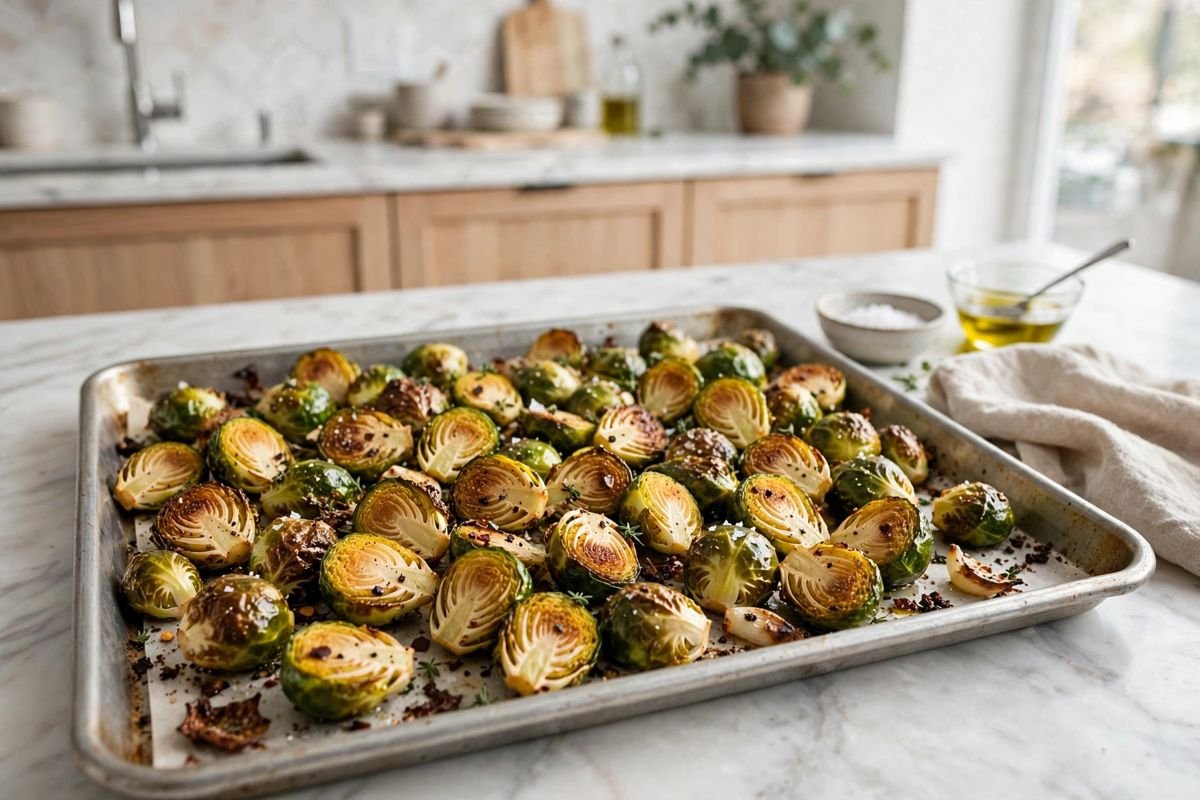

Learning how to roast Brussels sprouts is the fastest way to turn a vegetable many people only know boiled and bitter into something crisp, sweet, and genuinely good. Roasting Brussels sprouts at a high heat, cut side down on a hot tray, gives them browned edges and a tender middle, and the whole job takes less than half an hour from start to finish.
The method is simple, but the details matter: choose firm, bright green sprouts, trim them neatly, give them plenty of space on the tray, and season them well. This guide covers each step, from choosing and trimming to roasting, variations, serving, and storing leftovers safely, so you can get crisp sprouts every time.
Key takeaways:
- Choose small, firm, bright green sprouts with tight leaves, and avoid any that are yellow, soft, or loose.
- Halve the sprouts, toss them in oil and salt, and roast them cut side down in a single layer at a high heat.
- Give them space on the tray: crowded sprouts steam instead of roasting, and stay pale and soft.
- Cook until tender and steaming hot, refrigerate leftovers within two hours, and use them within three to four days.
Choosing Brussels sprouts
Good roasting starts at the shop. Look for sprouts that feel firm and heavy for their size, with bright green leaves held tightly together and no yellow patches. Smaller sprouts tend to cook more evenly and taste sweeter, so pick sprouts of a similar size where you can.
Avoid sprouts with loose or wilting outer leaves, dark spots, or a strong, sour smell, all of which suggest they are past their best. Plan to cook them within a few days of buying, and keep them in the fridge in the meantime.
Trimming and preparing the sprouts
Trimming takes only a few minutes, and it makes a real difference to the result. Rinse the sprouts in cold water, then cut a thin slice off the stem end of each one and peel away any yellowed or damaged outer leaves. Do not cut the stem off completely, because the leaves will fall apart in the oven if you do.

Cut each sprout in half from top to stem, so the flat cut side can sit against the tray and brown. Very small sprouts can be left whole, and very large ones can be cut into quarters, so everything cooks at roughly the same rate. Pat the sprouts dry with a clean tea towel or kitchen paper, because wet sprouts steam rather than crisp, and toss them in a bowl with olive oil, salt, and pepper until every piece is lightly coated.
The roasting method
Heat the oven to 220°C, or 200°C for a fan oven, and put the baking tray in to warm while the oven heats. A hot tray helps the cut sides brown as soon as they touch it. Spread the sprouts in a single layer, cut side down, with a little space between each one, and use a second tray rather than crowding them onto one.
Roast for 20 to 25 minutes, turning them once halfway through, until the outer leaves are crisp and browned at the edges and the centres are tender when pierced with a knife. Smaller sprouts may be ready a few minutes sooner, and larger ones may need a few minutes more, so check them rather than relying on the clock alone. Taste one before you serve them: it should be tender and steaming hot right through, with no raw crunch in the middle.
Why sprouts go soggy or bitter
Soggy sprouts are almost always crowded, under-oiled, or roasted at too low a heat. When sprouts sit close together, the moisture they release has nowhere to go, so they steam in their own juices instead of browning. Give them space, use a hot oven, and dry them well before oiling, and the edges will crisp up as they should.
Bitterness is usually a matter of overcooking or old sprouts. Sprouts left in the oven too long turn soft and develop a stronger, more bitter flavour, while fresh, small sprouts roasted until just tender taste noticeably sweeter. A little acid at the end, such as a squeeze of lemon or a splash of vinegar, also balances any bitterness, as does a drizzle of honey or maple syrup in the last few minutes.
Variations to try
Once you have the basic method, the variations are easy. For a classic finish, toss the hot sprouts with a knob of butter, a squeeze of lemon, and a handful of toasted hazelnuts or flaked almonds. For a sharper version, add a spoonful of wholegrain mustard to the oil before roasting, or scatter over crumbled feta and a few pomegranate seeds once they are out of the oven.
For a richer plate, roast the sprouts with diced pancetta or smoked bacon lardons scattered over the tray. For a warm, spiced version, toss them with smoked paprika and a pinch of chilli flakes before roasting, and finish with a drizzle of honey. Each of these builds on the same method, so the roasting time and temperature stay the same.
Serving Brussels sprouts
Roasted Brussels sprouts are at their best straight from the oven, while the edges are still crisp. Serve them as a side dish with a roast dinner, alongside chicken or fish, or as part of a spread of vegetables. A baked chicken breast and a pile of roasted sprouts makes a simple weeknight supper, and they sit happily next to mashed potatoes on a Sunday roast plate.
They also work beyond the roast dinner: toss them through a grain salad, pile them onto toast with a fried egg, or fold leftovers into a frittata the next day. If you are serving them to people who think they dislike sprouts, keep the seasoning simple and let the crisp edges do the persuading.
Storing leftovers safely
Let leftover sprouts cool for a short while, then refrigerate them within two hours of cooking, in a covered container. Use them within three to four days, and reheat them until they are steaming hot all the way through. Never reheat them more than once, and throw away any leftovers that have been left out at room temperature for longer than two hours.
Reheating in a hot oven or an air fryer brings back some crispness, while the microwave leaves them softer. If you would rather not reheat them, eat the leftovers cold in a salad, where their firm texture works well. Cooked sprouts do not freeze well, as they turn soft and watery when thawed, so it is better to cook only as many as you need.
| Method | Time | Texture | Flavour | Best for |
|---|---|---|---|---|
| Roasting | 20 to 25 minutes | Crisp edges, tender middle | Sweet, nutty, browned | Everyday side dish |
| Boiling | 8 to 10 minutes | Soft all through | Mild, can turn bitter | Quick cooking for salads |
| Steaming | 8 to 12 minutes | Tender, slightly firm | Clean, mild | Keeping colour bright |
| Pan-frying | 12 to 15 minutes | Browned, firm | Rich, buttery | Small batches |
| Air frying | 15 to 18 minutes | Very crisp edges | Sweet, nutty | Crisp results in a hurry |
| Raw, shredded | 5 minutes to prepare | Crunchy, fresh | Bright, peppery | Salads and slaws |
Your roasting checklist
- Choose well: pick small, firm, bright green sprouts of a similar size, and avoid yellow or soft ones.
- Trim neatly: slice the stem end thinly, peel damaged leaves, and halve each sprout from top to stem.
- Dry and oil: pat the sprouts dry, then toss them in olive oil, salt, and pepper until lightly coated.
- Preheat the tray: heat the oven to 220°C, or 200°C for a fan oven, with the tray inside.
- Give them space: roast cut side down in a single layer, and use a second tray rather than crowding one.
- Check for doneness: roast 20 to 25 minutes, turning once, until crisp at the edges and tender inside.
- Store safely: refrigerate leftovers within two hours, use within three to four days, and never reheat more than once.
Frequently asked questions
Do I need to parboil Brussels sprouts before roasting them?
No, there is no need to parboil them. Halved sprouts roast well from raw in 20 to 25 minutes at a high heat, and skipping the parboil keeps the edges crisper. Parboiling only helps if your sprouts are very large, and even then, cutting them into quarters usually does the job better.
Why are my roasted Brussels sprouts soggy?
Soggy sprouts are usually crowded on the tray, wet when they go in, or roasted at too low a heat. Dry them well, spread them in a single layer with space between them, use a second tray if needed, and keep the oven hot. Turning them once halfway through also helps the cut sides brown evenly.
How do I stop roasted Brussels sprouts tasting bitter?
Use fresh, small sprouts, do not overcook them, and finish with a little acid, such as lemon juice or vinegar, which balances bitterness. A drizzle of honey or maple syrup in the last few minutes also helps. Older sprouts and very long cooking times both make bitterness worse.
Can I roast Brussels sprouts ahead of time?
You can roast them a few hours ahead and reheat them in a hot oven for five to eight minutes, though they will not be quite as crisp as fresh from the oven. A better option is to trim and halve them ahead of time, keep them covered in the fridge, and roast them just before serving.
How long do leftover roasted Brussels sprouts keep?
Refrigerate leftovers within two hours of cooking, in a covered container, and use them within three to four days. Reheat them until steaming hot all the way through, and never reheat them more than once. Throw away any leftovers left out at room temperature for longer than two hours.
Can I freeze roasted Brussels sprouts?
You can, but they do not freeze well. Cooked sprouts turn soft and watery when thawed, and lose the crisp edges that make roasting worthwhile. It is better to cook only as many as you need, and to use leftovers in salads or a frittata within a few days.
Sources
- BBC Good Food — guidance on roasting Brussels sprouts, trimming and cooking times.
- Food Standards Agency — guidance on chilling, storing and reheating cooked vegetables safely.
- Delia Smith — guidance on preparing and roasting Brussels sprouts.
Roasted Brussels sprouts earn their place on the plate once you have tried them crisp from a hot oven, and the method is forgiving enough to make your own. A cast iron skillet also works well for roasting them, giving the cut sides an even deeper brown, and a good baking sheet with a rim keeps the oil where it belongs. Either way, the same rules apply: hot oven, dry sprouts, and plenty of space.
Your next step is simple: buy a bag of small, firm sprouts, halve them, oil them, and roast them cut side down at 220°C. Taste one straight from the tray, and if the edges are crisp and the middle is tender, you have the method. From there, try a variation or two, and roasted sprouts may become the vegetable you reach for first, not last.
Food safety note: Cook Brussels sprouts until tender and steaming hot all the way through. Refrigerate leftovers within two hours, use them within three to four days, reheat until steaming hot, and never reheat them more than once.