A silk blend sweater is the most forgiving luxury knit you can own, and the easiest to get wrong. The sheen that makes it beautiful also makes it honest. It shows a poor fit, a clashing texture, and a careless wash in a way a wool sweater never will. Styling a silk blend is less about rules and more about letting the fabric do what it is good at: draping, glowing softly, and making a simple outfit look considered.
Silk is fluid, so it needs something with structure nearby: a tailored trouser, a crisp shirt, a coat with a clean shoulder. Silk is also light, so it needs a little weight in the outfit, a leather shoe, a structured bag, a belt that holds the line.
Washing, layering, and storing a silk blend all work differently from a cotton or cashmere sweater, and the steps reflect that.
Key takeaways
- Silk drapes and glows, so balance it with structure: tailored trousers, a crisp shirt, a clean-shouldered coat.
- Check the silk share on the label before styling, because a high-silk sweater drapes and needs more care than a low-silk one.
- Silk-cashmere suits evening and cold weather, silk-cotton suits daytime and warmer days, and silk-wool suits everyday wear.
- Hand-wash in cool water, dry flat on a towel, and fold the sweater for storage, because hangers stretch a silk knit out of shape.
- No styling trick fixes a sweater washed hot or dried in a dryer, so care is part of styling.
What a silk blend sweater is
A silk blend sweater is a knit made from silk mixed with another fibre, most often cashmere, cotton, or wool. The silk gives it a soft sheen and a fluid drape that no other fibre quite matches. The partner fibre decides how the sweater behaves: cashmere adds warmth and softness, cotton adds structure and breathability, and wool adds spring and resilience.
The proportion matters more than the brand. A high-silk sweater drapes like liquid, needs gentle washing, and shows every crease. A sweater that is 15 percent silk will behave mostly like its partner fibre, with a hint of shine. Both can be good sweaters, but they need different styling. A high-silk sweater wants a simple, uncluttered outfit so the drape can be seen.
That is why the first step in styling is reading the label, feeling the knit, and knowing what you are working with. A silk blend that is understood, and styled around its nature, will look better the more you wear it.
How to read the label before you style it
Start with the fibre percentages on the care label. If silk is the largest share, expect a fluid drape, a visible sheen, and a sweater that needs hand-washing and flat drying. If silk is a smaller share, expect a sweater that behaves more like its partner fibre, with a subtler glow and more tolerance for a gentle machine wash.
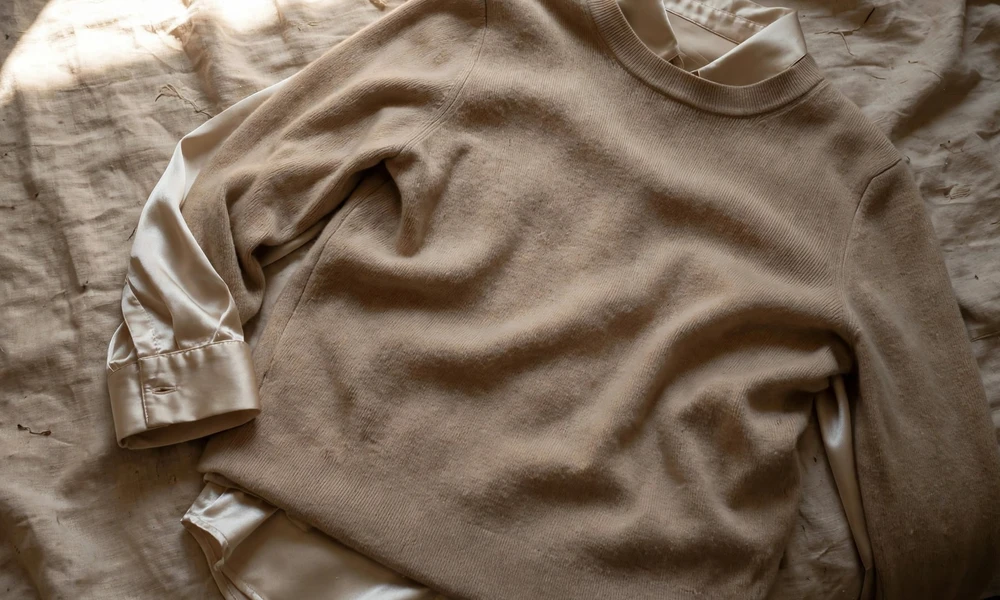
A fine-gauge silk blend looks polished and suits smarter outfits, while a looser gauge looks softer and suits relaxed ones. Hold the sweater up and let it fall. If it falls in a clean, straight line, it will drape well over trousers and skirts. Our guide to styling a pure silk sweater covers the same test, because the drape is what makes silk different from every other knit.
Finally, check the colour in daylight. Silk changes how a colour reads, because the sheen reflects light. Dark colours look richer and deeper, pale colours look softer and more luminous, and bright colours can look sharper than they would in wool. If you are choosing between two shades, the calmer one in daylight is usually the easiest to style.
9 ways to style a silk blend sweater for women
Let the sheen set the tone of the outfit
What to do: Build the outfit around the sweater’s glow, keeping the other pieces quiet and matte so the sheen has room to be noticed.
What to avoid: Pairing a silk blend with another shiny fabric, such as satin or patent leather, which makes the whole outfit look overdone. Best For: Smart daytime and evening outfits. Time Needed: A few minutes of choosing. Standout Tip: Matte wool trousers and suede shoes are the easiest partners for a silk blend sweater.
Silk reflects light, so it draws the eye. A matte fabric nearby, like wool, denim, or suede, gives the sheen something to stand out against, and that contrast is what makes the sweater look expensive rather than flashy.
Check the silk share before you buy the look
What to do: Read the fibre percentages and let them decide the outfit, choosing a simple, uncluttered look for a high-silk sweater and a more layered look for a low-silk one.
What to avoid: Treating a 70 percent silk sweater like a cotton crew neck, because it will stretch and lose its shape under heavy layering. Best For: Getting the fit and the drape right before you leave the house. Time Needed: Two minutes. Standout Tip: If the label hides the percentages, assume the silk content is low and style it accordingly.
A high-silk sweater wants space to drape, so keep the outfit simple. A low-silk sweater holds its shape, so it can take a belt, a tucked-in front, or a heavier jacket.
Wear silk-cashmere for evening, silk-cotton for daytime
What to do: Save the warmest, softest blends for evenings and cold days, and wear the lighter, crisper blends for daytime and warmer weather.
What to avoid: Wearing a silk-cashmere sweater on a warm day, when it will feel heavy and look out of place. Best For: Matching the blend to the occasion and the season. Time Needed: A moment of planning. Standout Tip: Silk-cotton is the most versatile blend, because it works from spring through autumn.
Each blend has a natural home. Silk-cashmere suits evenings and cold weather. Silk-cotton suits daytime and transitional seasons. Silk-wool sits in between, for when you want a sweater that can do both.
Keep the neckline simple so the drape does the work
What to do: Choose a clean crew neck or a soft V-neck, and let the fabric fall naturally from the shoulder without a scarf or a statement necklace crowding it.
What to avoid: A chunky necklace or a bulky scarf over a fine silk blend, which crushes the drape and hides the sheen. Best For: Showing off the silk’s natural fall. Time Needed: No extra time. Standout Tip: Small, smooth jewellery suits silk best, because it does not snag the knit.
A silk blend does its best work at the neckline, where the fabric falls from the shoulder in a clean line. Anything bulky there interrupts that line, so keep the neckline clear.
Pair the drape with structure underneath
What to do: Wear a crisp shirt or a smooth camisole underneath, so the sweater has a clean layer to fall over and does not cling to skin.
What to avoid: Wearing a silk blend directly over bare skin in cold weather, when static can make the knit cling. Best For: Smart outfits and cooler days. Time Needed: A minute to layer. Standout Tip: A white shirt collar peeking out adds structure and makes a silk blend look intentional.
Silk is fluid, and fluid needs a frame. A structured layer underneath gives the sweater something to drape over, keeping the line clean and stopping the knit from clinging.
Wear it with a slip skirt for a polished evening look
What to do: Pair a silk blend sweater with a silk or satin slip skirt, letting the two fabrics move together for an evening outfit that feels effortless.
What to avoid: Matching the sweater and the skirt in the exact same colour, which can look like a set rather than an outfit. Best For: Evenings, dinners, and special occasions. Time Needed: Five minutes. Standout Tip: A darker skirt with a lighter sweater is the easiest combination, because the contrast shows off both fabrics.
A slip skirt and a silk blend sweater share the same language: fluid, soft, and slightly luminous. Worn together they move as one. Keep the colours close but not identical, and add a simple heel and a small bag.
Layer it under a tailored coat, not a bulky one
What to do: Choose a coat with a clean shoulder and a smooth lining, so the sweater slides underneath without bunching or crushing.
What to avoid: A puffy or heavily padded jacket over a silk blend, which crushes the drape and can pill the knit. Best For: Autumn and winter outfits. Time Needed: No extra time. Standout Tip: A wool coat with a silk lining is the best partner, because the lining lets the sweater move freely.
A silk blend is light, so it needs a coat that respects that. A tailored wool coat with a smooth lining lets the sweater fall naturally underneath, while a bulky jacket presses it flat. The coat should frame the sweater, not fight it.
Hand-wash it cold and dry it flat on a towel
What to do: Wash the sweater by hand in cool water with a mild detergent, press the water out gently, and lay it flat on a clean towel to dry.
What to avoid: Hot water, harsh detergent, wringing, and the tumble dryer, all of which damage silk fibres and shrink the knit. Best For: Keeping the sweater looking new for years. Time Needed: Ten minutes of washing, then air-drying. Standout Tip: Reshape the sweater while it is damp, pulling the cuffs and hem back into shape before it dries.
Care is part of styling, because a silk blend that has been washed badly will never drape properly again. Cool water keeps the fibres strong, a mild detergent protects the sheen, and flat drying keeps the shape.
Store it folded with cedar, never on a hanger
What to do: Fold the sweater loosely, place it in a drawer or on a shelf with a cedar block or a lavender sachet, and keep it out of direct light.
What to avoid: Hanging a silk blend sweater, which stretches the shoulders and the hem out of shape within weeks. Best For: Keeping the shape and the sheen between wears. Time Needed: A minute. Standout Tip: If the sweater creases in storage, steam it gently rather than ironing it, because direct heat can scorch silk.
A hanger is the quiet enemy of a silk knit. The weight of the fabric pulls on the shoulders and the knit stretches, and it never quite recovers. Folded storage, with cedar to deter moths, keeps the sweater in the shape it was made in. Our guide to styling a linen blend sweater makes the same point about folding, because all natural-fibre knits suffer on hangers, and silk suffers most.
Which silk blend to choose for your wardrobe
If you live somewhere warm, or you run warm, a silk and cotton blend is the most useful, because it is breathable and easy to wash. If you live somewhere cold, or you want a sweater that feels like a luxury purchase, a silk and cashmere blend is the one to save for. For a sweater you can wear three times a week without thinking about it, silk and wool is the most forgiving, because the wool gives the knit spring and shape retention.
Colour is the second decision, and it matters more with silk than with other fibres. The sheen changes how a colour reads, so a dark silk blend looks richer and a pale one looks softer than the same colour in wool. Neutrals are the safest first purchase, because the sheen does the work. The cashmere blend sweater guide suggests the same approach with neutrals, and it works just as well here, because a blend sweater’s beauty is in the fabric, not in a loud colour.
A silk blend works hardest with tailored trousers, a slip skirt, and a clean coat, because those pieces give the drape a frame. If your wardrobe is mostly relaxed, a silk blend in a slightly firmer knit, with more cotton or wool in the mix, will be easier to style than a very fluid high-silk one.
The caveats that matter
The most common mistake is washing too hot, which weakens the fibres and can shrink the sweater by a size. Hanging stretches the shoulders, and rough jewellery or a heavy bag strap snags and pills the knit. None of these are hard to avoid, but they all need a moment of attention.
| Detail | What is known |
|---|---|
| Best partner fabrics | Matte wool, denim, suede, and leather, which let the sheen stand out |
| Best blend for evening | Silk and cashmere, warm, soft, and slightly formal |
| Best blend for daytime | Silk and cotton, light, breathable, and easiest to care for |
| Best blend for frequent wear | Silk and wool, springy and resilient, holds its shape best |
| How to wash | Cool hand wash with a mild detergent, or cold delicate cycle in a mesh bag |
| How to dry | Flat on a clean towel, reshaped while damp, away from heat and sun |
| How to store | Folded with cedar or lavender, never hung, out of direct light |
| What it does not do | No styling trick fixes a sweater washed hot, dried in a dryer, or stretched on a hanger |
Snagging deserves a special mention, because it is the one problem that is hard to fix. A pulled thread in a silk knit cannot be repaired invisibly, because silk fibres are smooth and fine. Keep rings and bracelets smooth, and take the sweater off before handling anything rough. If a snag does happen, do not pull it. Push the thread gently back through to the inside with a fine needle, and the damage will be far less visible.
Checklist: styling a silk blend sweater honestly
- Check the label: know the silk share, because it decides how much layering the sweater can take.
- Check the drape: hold the sweater up and let it fall; a clean line means it will style well.
- Check the partners: pair the sheen with matte fabrics, and avoid another shiny fabric in the same outfit.
- Check the neckline: keep it simple, with small, smooth jewellery that will not snag the knit.
- Check the coat: a tailored coat with a smooth lining protects the drape, while a bulky jacket crushes it.
- Check the storage: fold the sweater, never hang it, and steam out creases rather than ironing.
Frequently asked questions
Can I machine-wash a silk blend sweater?
Sometimes, if the care label allows it. Use a cold delicate cycle, a mesh laundry bag, and a mild detergent, and dry the sweater flat. A high-silk or silk-cashmere blend is safer hand-washed.
Will a silk blend sweater keep me warm in winter?
A silk and cashmere blend will, because cashmere is warm and silk regulates temperature well. A silk and cotton blend is too light for deep winter, but it works as a layer under a coat.
What is the difference between silk-cashmere and silk-cotton blends?
Silk-cashmere is warmer, softer, and more luxurious, with a gentle drape and a premium price. Silk-cotton is lighter, cooler, and more structured, with an easier care routine and a lower price.
Does a silk blend sweater pill?
Yes, especially silk and cashmere, because the fibres are soft and short. Pilling happens where fabric rubs, under the arms and where a bag strap sits. Pilling usually lessens after the first few wears as loose fibres shed.
Can I wear a silk blend sweater to the office?
Yes, it is one of the best office knits, because the sheen looks polished without trying. Choose a fine-gauge crew neck in a neutral colour, pair it with tailored trousers, and keep the jewellery small and smooth.
How do I stop a silk blend sweater from stretching out of shape?
Fold it instead of hanging it, wash it cool, and dry it flat while reshaping it damp. A hung sweater stretches at the shoulders, and one dried on a line stretches at the hem. Flat drying and folded storage are what keep the shape.
The bottom line
Styling a silk blend sweater is about letting the fabric lead. Keep the outfit simple, balance the fluid drape with something structured, and choose the blend that matches the occasion: silk-cashmere for evening, silk-cotton for daytime, silk-wool for everyday wear.
Wash it cool, dry it flat, fold it instead of hanging it, and keep rough jewellery and heavy bag straps away from the knit. Do that, and the sweater will keep its drape and its glow for years.