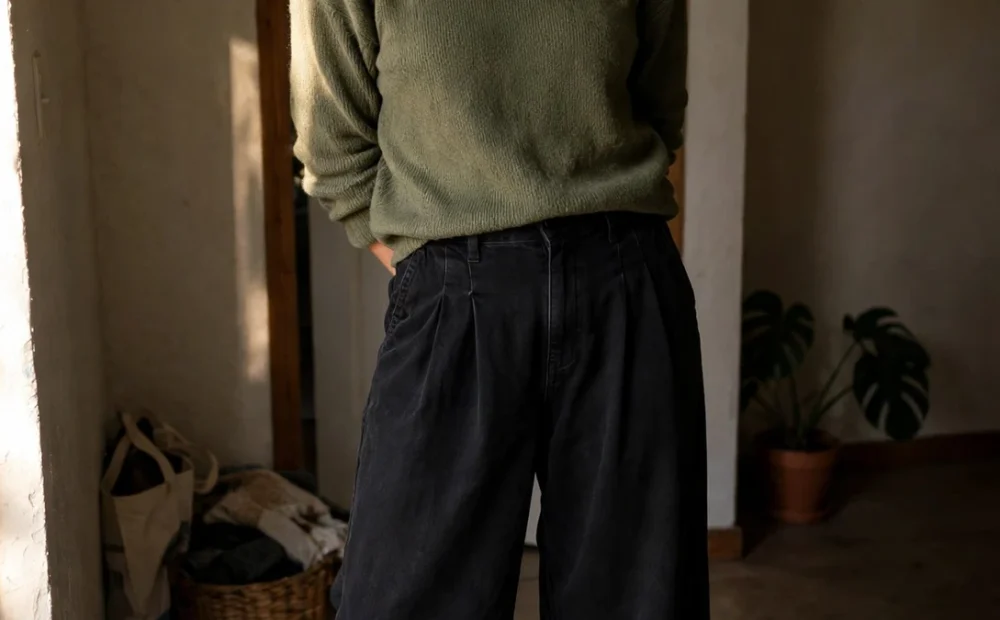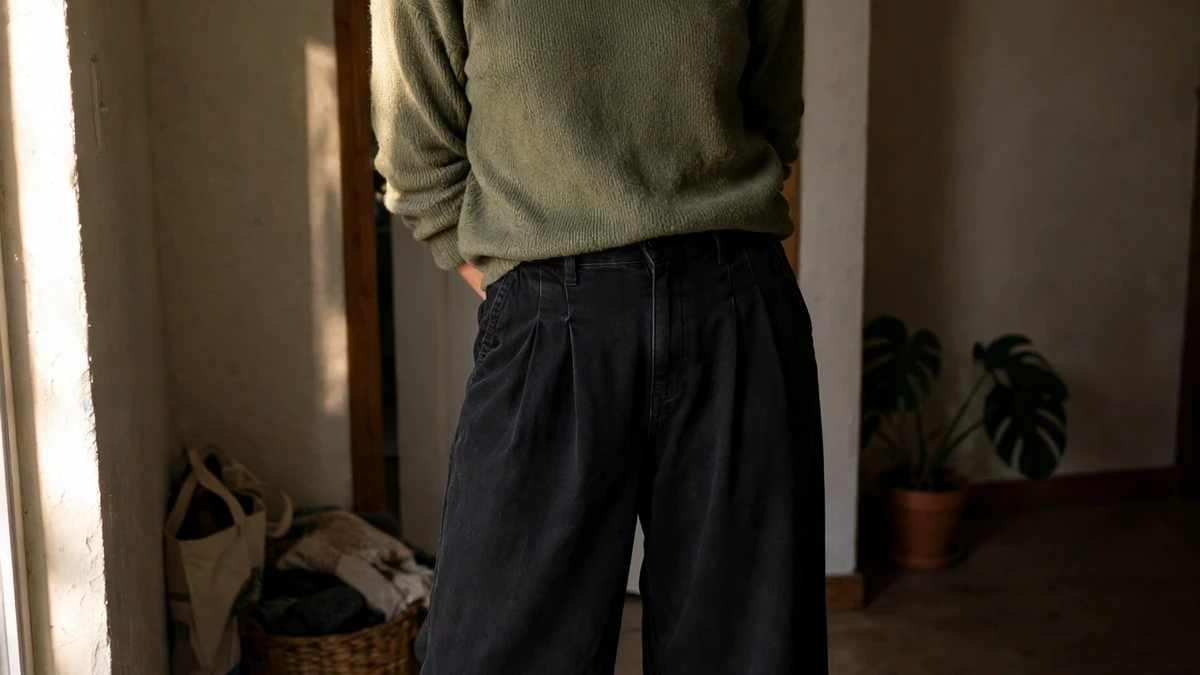
Pleated jeans look simple, but they ask more of an outfit than a flat-front pair does. The fold at the waist changes the silhouette from the waist down, and every choice on top and at the shoe either works with that fold or fights it. Get the balance right and the jeans look tailored and relaxed at once. Get it wrong and it looks bulky where it should look clean.
The rules are short and practical. A fitted top shows the waistband. A slim shoe keeps the leg line clean. A belt only works when the waistband stays flat. The pleat itself does most of the styling for you, as long as you do not cover it with a long, loose layer. This guide walks through nine ways to style pleated jeans for women, from a weekday outfit to an evening look, with the mistakes to avoid at each step.
None of these ideas needs a new wardrobe. They use the tops, jackets and shoes most women already own, and they focus on proportion: what sits close, what hangs loose, and where the eye lands. Pleated jeans reward that thinking more than most denim, because the fold is a visible detail, and visible details punish careless pairing.
Key takeaways
- A fitted, tucked-in top is the safest partner, because it shows the waistband and lets the fold be the detail.
- A slim shoe keeps a wide pleated leg clean, while a chunky shoe fights the drape.
- A belt only works when the waistband lies flat; if the pleat gapes, skip the belt and fix the fit.
- Dark washes with a shallow pleat dress up; light washes with a deep pleat stay casual.
- No styling trick rescues a pair that does not fit, and a gaping waistband or pooling hem will show in every outfit.
What makes pleated jeans different from flat-front jeans
A flat-front jean is a straight line from waist to ankle, taking its shape from the body underneath. A pleated jean adds a fold, and that fold has its own shape. It opens when you sit, closes when you stand, and catches light differently from the flat denim around it, so the front is never a plain surface. Styling them means working with a moving detail, not a flat one.
The second difference is volume. Even a shallow pleat adds a little fullness at the hip, and a deep pleat adds a lot. That fullness has to be balanced, and the easiest place is the top half: a close-fitting top, a tucked shirt, or a cropped jacket all keep the upper body slim while the lower body has room. A loose, long top does the opposite, adding fullness until the outfit loses its shape.
The third difference is the waistband. On a flat-front pair it is a quiet edge. On a pleated pair it is the anchor for the whole design, and if it gapes at the back or pulls at the front, the pleat cannot sit properly. That is why fit matters more here than on any other jean, and why the checks in the next section are worth doing before you plan an outfit.
Before you style them: fit, fabric and first checks
Start with the fit, not the outfit. Step into the jeans, fasten them, and take a seat. The waistband should stay flat against your back, the pleat should open as you sit and close as you stand, and the pockets should lie flat. If the waistband gaps, the size is wrong, or your shape needs a curved waistband. If the pleat stays stuck open, the jeans are too tight across the hip. No top or shoe fixes these problems, so sort the fit first.

Next, check the fabric. Rigid denim holds the pleat crisply and suits a smarter outfit, but it needs a few wears to soften. A stretch blend is comfortable immediately, but the pleat softens through the day, so the jeans look sharper in the morning than in the evening. Plan around that: rigid denim where the fold must stay sharp, stretch denim where comfort matters more.
Last, check the length against the shoes you will actually wear. A wide-leg pleated jean should end just above the shoe, not pool on the floor, and not stop halfway up the ankle unless the crop is deliberate. A skinny jean tucks into a boot and hides the hem, but a pleated wide leg shows the hem, so the shoe and the hem have to agree. Try the outfit on a flat floor, walk a few steps, and watch whether the hem catches or drags.
9 ways to style pleated jeans for women
Start with a top that sits close to the body
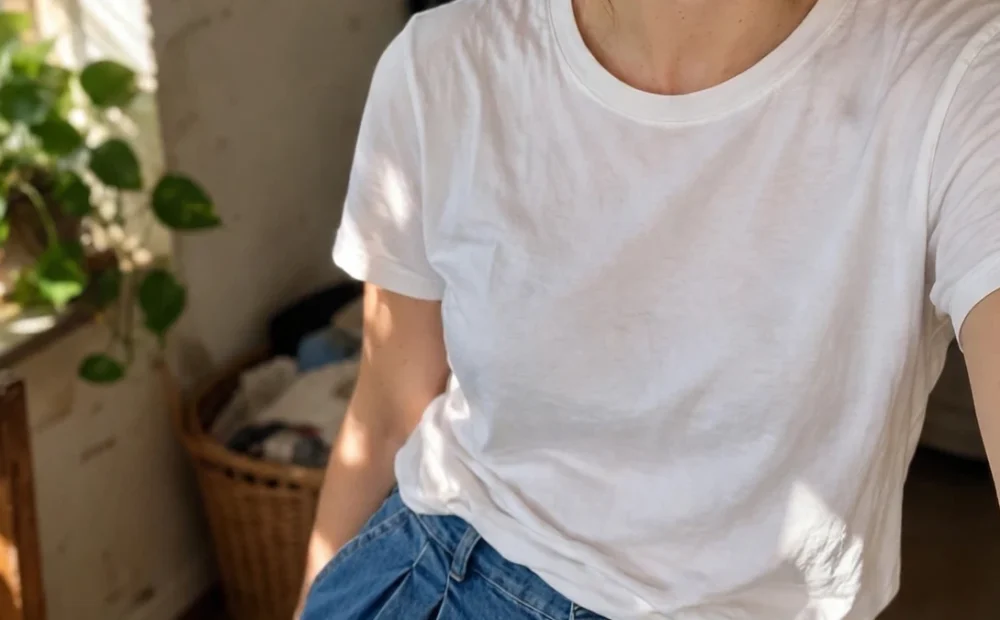
What to do: Choose a slim knit, a fitted tee or a close bodysuit, tucked in so the waistband and the top of the fold show. What to avoid: A long, loose tunic that covers the pleat. Best For: A first outfit. Time Needed: Five minutes. Standout Tip: A light top makes the pleat read as a shadow line.
This is the foundation for every other idea here. A close top keeps the upper body slim while the pleated leg has room, and the tuck shows the waistband, where the whole design starts.
Put the outfit through its paces at home first
What to do: Wear the outfit at home for an hour, sitting, walking and bending, and watch the pleat. What to avoid: Judging the fit only in a mirror while standing still. Best For: Checking a new pair. Time Needed: An hour at home. Standout Tip: A pleat that stays open when you stand means the jeans are too tight.
Pleats are made to move, and an outfit that looks right standing still can look wrong after an hour of sitting. The hour at home tells you whether the fold behaves, and it costs nothing. Do it with the top tucked in.
A shirt tucked in shows where the pleats start
What to do: Tuck a slim cotton shirt in, leave the top button undone, and let it sit flat over the waistband. What to avoid: A wide, flared hem that bunches over the pleat. Best For: Smart-casual days. Time Needed: Five minutes. Standout Tip: A solid colour shows the fold better than a busy print.
A tucked shirt is the fastest way to make pleated jeans look smart. The shirt gives a clean top line, the tuck shows the waistband, and the pleat reads as a tailoring detail. Keep the shirt slim, because a billowing one will bunch and hide the fold.
Pick a slim shoe for a wide pleated leg
What to do: Wear a slim loafer, a pointed flat, or a narrow ankle boot, so the shoe does not compete. What to avoid: A wide, chunky trainer that fights the drape. Best For: Wide-leg pleated jeans. Time Needed: No extra time. Standout Tip: A shoe in the same tone as the jeans lengthens the leg.
A wide leg needs a quiet shoe. The leg already has volume, so a slim shoe keeps the silhouette clean, while a chunky shoe adds width at the bottom. A slim trainer works; a bulky one does not.
A narrow belt works only on a flat waistband
What to do: Use a narrow leather belt in a tone close to the jeans, fastened flat against the waistband. What to avoid: A wide belt, or any belt on a waistband that already gapes. Best For: Tucked tops with the waistband on show. Time Needed: One minute. Standout Tip: If the belt bulges at the front, take it off.
A belt is a finishing touch, not a fix. If the waistband lies flat, a narrow belt adds polish and holds the tuck. If it gapes, a belt only draws attention to the gap, so fix the fit instead.
Dark denim and heels are an evening pairing
What to do: Pair a dark wash with a heeled ankle boot or a block heel, and keep the top simple. What to avoid: A light wash with heels, which reads as daytime denim. Best For: Dinners and evenings out. Time Needed: Five minutes. Standout Tip: In dim light, a dark wash makes the fold read as a smooth line.
Dark denim and heels turn a pleated jean into an evening outfit. The dark wash makes the jeans look closer to trousers, the heel lifts the hem, and the pleat gives the leg a shape a plain dark jean lacks. Keep the top dark and simple.
A hem that shows the ankle looks deliberate
What to do: Hem the jeans, or choose a cropped length, so the hem sits just above the shoe. What to avoid: A hem that pools on the floor, or one that stops mid-calf by accident. Time Needed: A hemming appointment, or five minutes in store. Standout Tip: An ankle hem makes the pleat look intentional.
Length makes or breaks a pleated wide leg. A dragging hem hides the fold and looks careless, while a hem just above the shoe shows the whole line of the leg. Get long jeans hemmed rather than rolling them, because a rolled hem adds bulk where the pleat needs a clean line.
A jacket cut to the waist leaves the pleats free
What to do: Add a cropped denim jacket, a short blazer, or a cropped cardigan. What to avoid: A long coat or knee-length cardigan that covers the pleat. Best For: Cool days that need a layer. Time Needed: Five minutes. Standout Tip: A different texture from the jeans keeps the outfit from looking like a suit.
A cropped layer ends where the pleat begins, so the fold stays visible while the top half gets warmth and structure. A long layer covers the pleat, hides the waistband, and turns the outfit into a shapeless column.
Keep the fold crisp with a cool iron
What to do: Wash cold and inside out, hang to dry, and press the fold with a cool iron while the denim is damp. What to avoid: Tumble drying on high heat, which flattens the pleat. Best For: Keeping a pleated pair looking new. Time Needed: Ten minutes after washing. Standout Tip: Follow the stitch line at the waistband, and the fold falls back into place.
Styling does not end when the outfit comes off. A pleated jean washed hot and tumble dried loses its fold, and no pairing brings a flattened pleat back. Pressing the fold while the denim is damp takes ten minutes and keeps the jeans looking as they did when you bought them.
Matching pleated jeans to the occasion
For a weekday, the safest combination is a dark or mid-blue pleated jean, a tucked slim shirt, and loafers. It reads as smart, and it works in most offices that allow denim. For a weekend, swap the shirt for a fitted tee and the loafers for slim trainers. The pleat carries both versions, a tailoring detail in one context and a relaxed detail in the other.
For an evening, choose the darkest wash you own and a heeled boot, and keep the top dark. A silk camisole under a cropped jacket works well, because the camisole is slim and the jacket ends at the waistband, so the pleat stays visible. A bootcut jean flares from the knee and suits a heel in the same way, but the pleated wide leg needs the heel to lift the hem, so check the length with the actual shoes before you go out.
For a smart-casual event, a black pleated jean with a tucked blouse and a narrow belt is the strongest choice. Black denim reads as closer to trousers than blue, the pleat gives it a shape a plain black jean lacks, and the belt adds polish. Avoid a light wash here, because light denim always reads as daytime, however well you style it.
The caveats that matter
Pleated jeans forgive a lot, but not a bad fit, and not a top that fights the fold. The two mistakes that appear most often are a loose top over a deep pleat, which adds volume at the hip, and a belt on a gaping waistband, which pushes the pleat open and draws the eye to the gap. Both are easy to spot and fix, but easy to miss standing still.
| Detail | What is known |
|---|---|
| Best top | Fitted and tucked in, so the waistband stays visible |
| Best shoe for a wide leg | A slim loafer, pointed flat, or narrow ankle boot |
| When to wear a belt | Only when the waistband lies flat |
| Best wash for evenings | Dark wash with heeled shoes |
| Best layer | A cropped jacket or short blazer |
| Hem length | Just above the shoe, never pooling |
| Washing | Cold wash, hang to dry, press the fold while damp |
| What styling cannot fix | A gaping waistband, a stuck-open pleat, or a dragging hem |
One more caution: pleated jeans change shape through the day, because the fold opens as you move and the denim softens as it warms up. A sharp morning outfit can look softer by evening, especially in a stretch blend. That is normal, not a failure, but worth knowing before you plan a long day around a crisp morning look. A flared jean holds its shape more steadily, because the flare is cut into the leg rather than folded into it, so if you need a look that stays identical from morning to night, the flare is the safer choice.
Checklist: styling pleated jeans honestly
Use these checks before you leave the house, and again after an hour sitting.
- Check the top: fitted and tucked in, waistband visible.
- Check the waistband: flat, with no gap at the back and no bulge at the front.
- Check the pleat: sit, stand, and confirm the fold opens and closes.
- Check the hem: just above the shoe, not pooling.
- Check the shoe: slim enough not to fight the drape of the leg.
- Check the layer: a cropped jacket ends at the waistband, a long coat covers the pleat.
Frequently asked questions
Is a loose sweater a good match for pleated jeans?
Yes, but only if the sweater is cropped or tucked in at the front. A long, loose sweater covers the pleat and adds bulk at the hip. A cropped sweater keeps the pleat visible and the outfit balanced.
Can I wear flat shoes with pleated jeans?
Yes, as long as the shoe is slim. A pointed flat, a slim loafer, or a narrow ballet flat all work with a wide pleated leg. A wide, chunky flat fights the drape, so choose the slimmest flat you own.
Should the top always be tucked in?
Almost always. A tucked top shows the waistband and the fold, which are the point of the style. The exception is a cropped top, which shows the same line without a tuck. An untucked top hides the pleat and makes the outfit look shapeless.
Can I wear pleated jeans to a wedding?
Probably not, unless the dress code is explicitly casual. Even a dark wash pleated jean reads as denim, and most weddings expect something smarter. A black pleated jean with a silk top can work for a casual garden celebration, but not a formal wedding.
How do I keep the pleats sharp between washes?
Hang the jeans, and press the fold with a cool iron if it softens. Do not fold along the pleat for storage, because a crease in the wrong place competes with the fold. A quick steam also helps between washes.
Are pleated jeans comfortable for a long day?
Yes, more comfortable than a flat-front pair in the same size, because the fold gives the hip and thigh room to move. The comfort depends on the fabric: a stretch blend is comfortable immediately, while rigid denim needs a few wears to soften.
The bottom line
Styling pleated jeans comes down to one idea: let the fold be the detail. A fitted, tucked-in top shows the waistband, a slim shoe keeps the leg clean, a cropped layer ends where the pleat begins, and a narrow belt only appears when the waistband already lies flat. Everything else follows from that one decision.
The most common mistake is covering the pleat with a long, loose top, and the second is belting a waistband that does not fit. Avoid those two, press the fold after washing, and pleated jeans will do what they were designed to do: give you room to move, a clean line from waist to shoe, and an outfit that looks considered.