Sunglasses are the fastest way to change how an outfit reads. A pair of dark lenses can make a plain white shirt and jeans look considered, and the wrong pair can make an otherwise careful outfit feel off. The difference is rarely price. It is fit, proportion, and knowing when the glasses should lead the look and when they should simply finish it.
Styling sunglasses is not about owning many pairs. It is about owning one or two that suit your face, and knowing how to wear them with the clothes you already have. A classic black frame works with almost everything, a tortoiseshell frame warms up neutrals, and a coloured lens can be the one bold note in an otherwise quiet outfit. The rules are simple, but they are worth learning, because sunglasses sit on the most visible part of your body.
Below are nine ways to style sunglasses in 2027, from the everyday pairing that never fails to the statement looks that need a little more confidence. Each one is described by what works about it, what to watch for, and how much time and money it takes, so you can choose the looks that fit your life, not just a photograph.
Key takeaways
- Fit comes first: sunglasses should sit level, cover the brow line without hiding it, and stay put without pinching behind the ears.
- Match the frame to the scale of your face and your outfit, not to the trend of the moment.
- One strong element per outfit is enough: if the sunglasses are bold, keep the rest of the look quiet.
- UV protection is not a style choice, so check the lens rating before you buy for looks alone.
- No single frame suits every face and every occasion, and a pair that looks perfect on someone else may not work on you.
What styling sunglasses actually means
Styling sunglasses means choosing a frame that works with your face shape, your colouring, and your clothes, and then wearing it in a way that looks natural rather than staged. It is less about fashion rules and more about proportion. A frame that is wider than your face will overwhelm it. A frame that is much narrower will look like it belongs to someone else. The right pair sits comfortably, looks like it was made for you, and disappears into the outfit until someone notices it and thinks it looks good.
Colour matters as much as shape. Black frames are the most forgiving, because they read as neutral and work with warm and cool wardrobes alike. Tortoiseshell adds warmth and suits people who wear a lot of beige, brown, camel and olive. Gold metal frames flatter warm skin tones and add polish to simple outfits. Silver and gunmetal suit cooler colouring and sharper, more minimal clothes. Coloured frames and tinted lenses are the fun part, but they are harder to wear every day, so they work best as a second pair rather than your only pair.
Styling also means knowing when to take sunglasses off. Worn indoors, on your head for hours, or hanging from a neckline, they stop being an accessory and start looking like an afterthought. A good pair earns its place by being worn properly, in daylight, with an outfit that has room for it. That sounds obvious, but it is the difference between looking polished and looking like you forgot you were wearing them.
How we chose these styling tips and what to look for
Look first at fit. The frame should sit straight across your face, with the top edge roughly following your brow line. The arms should rest lightly on your ears without pressing, and the nose pads or bridge should hold the frame without sliding down when you move. If you have to push your sunglasses up every few minutes, the fit is wrong, and no amount of styling will fix it. Try them on with your hair as you usually wear it, because a ponytail, a bun or loose hair all change how a frame sits.
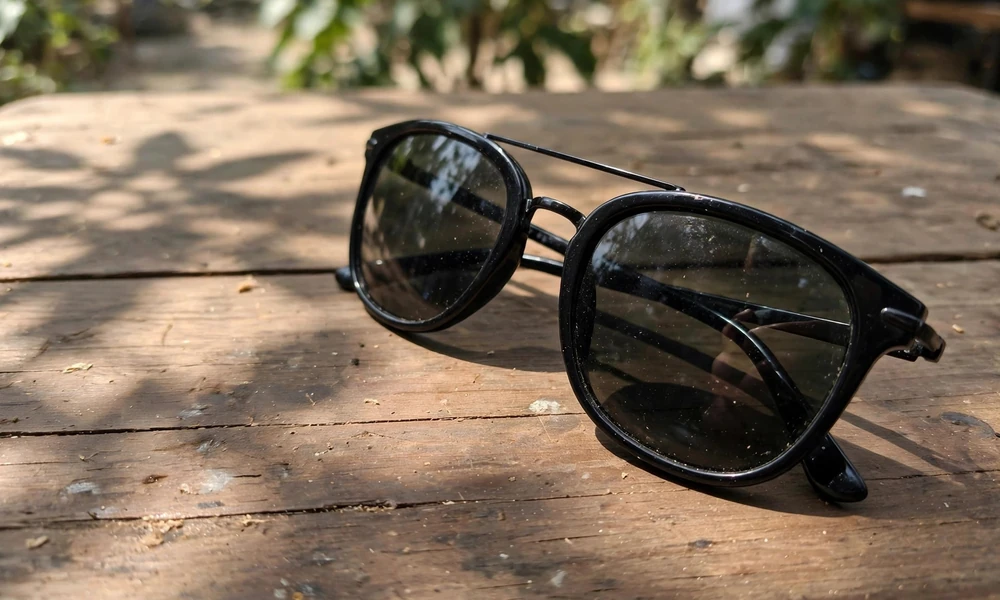
Look next at the lens. A good pair should block 100 percent of UVA and UVB rays, and that rating should be printed on the lens or the packaging. Polarised lenses cut glare from water, roads and glass, which makes them useful for driving and holidays, but they can make some phone and car screens look strange. Darker lenses are not automatically better protection, so check the UV label rather than judging by the tint. Our guide to the best seasonal sunglasses explains how lens choice changes through the year, because what works in bright summer sun is not always what you need on a pale winter afternoon.
Finally, look at how the frame works with your wardrobe. If most of your clothes are neutral, almost any frame will work, and you can afford to be playful with colour. If your wardrobe is already bold, a simple black or tortoiseshell frame will balance it. If you wear a lot of gold jewellery, a gold frame will tie the look together. If you wear silver, choose silver or gunmetal. These small matches are what make an outfit look intentional rather than accidental.
The 9 ways to style sunglasses in 2027
The classic black frame with a white shirt
What we like: A black acetate frame with a white shirt and jeans is the most reliable sunglasses look there is, clean, simple, and flattering on almost everyone. What to consider: The frame should not be so large that it hides your eyebrows entirely, and the lenses should be dark enough to read as sunglasses rather than tinted glasses. Best for: Everyday wear, errands, and casual lunches. Cost: Nothing beyond the sunglasses themselves. Time needed: None, it is a matter of choosing the right frame.
The gold frame with warm neutrals
What we like: A thin gold metal frame warms up camel, cream, beige and olive, and it ties in naturally with gold jewellery and warm-toned bags. What to consider: Gold frames can look washed out against very pale skin in harsh light, so try them in daylight before you commit. Best for: Warm-weather outfits, linen, and smart-casual days. Cost: Nothing beyond the sunglasses themselves. Time needed: None.
The tortoiseshell frame with denim
What we like: Tortoiseshell softens the contrast of denim and adds warmth to blue, white and black outfits without looking as stark as black. What to consider: The pattern varies a lot between brands, so look for a tortoiseshell with depth and variation rather than a flat printed effect. Best for: Weekend outfits, denim jackets, and casual dresses. Cost: Nothing beyond the sunglasses themselves. Time needed: None.
The oversized frame as a statement
What we like: An oversized frame makes a simple outfit look deliberate and glamorous, and it offers the most sun coverage of any style. What to consider: Oversized frames suit larger faces and longer hair best, and they can overwhelm a small face, so check the proportions in a mirror before you buy. Best for: Holidays, beach days, and days when you want the sunglasses to be the outfit. Cost: Nothing beyond the sunglasses themselves. Time needed: None.
The coloured lens as the outfit’s accent
What we like: A green, amber or rose-tinted lens adds one clear note of colour to a neutral outfit, and it can lift an all-black or all-white look without any extra accessories. What to consider: Coloured lenses change how colours look, so they are best for short wear rather than all day, and they suit simple outfits better than patterned ones. Best for: Summer days, festivals, and outfits that need one bold detail. Cost: Nothing beyond the sunglasses themselves. Time needed: None.
The aviator with a leather jacket
What we like: Aviators and leather jackets share the same relaxed, slightly rebellious energy, and the combination has looked good for decades without ever feeling dated. What to consider: Aviators suit longer faces best, and the teardrop shape can look heavy on a round face, so try the size carefully. Best for: Autumn days, biker jackets, and casual evenings. Cost: Nothing beyond the sunglasses themselves. Time needed: None.
The round frame with a vintage-inspired outfit
What we like: A round frame adds a soft, retro note to floral dresses, high-waisted trousers and vintage-style blouses, and it balances angular outfits beautifully. What to consider: Round frames can make a round face look rounder, so they work best on square or angular faces, or in a slightly oval shape. Best for: Vintage-inspired days, markets, and relaxed summer outfits. Cost: Nothing beyond the sunglasses themselves. Time needed: None.
The sporty wraparound for active days
What we like: A wraparound frame stays put when you move, blocks light from the sides, and looks right with activewear in a way a dressy frame never will. What to consider: Wraparounds are a practical choice, not a dressy one, so they look out of place with tailored clothes or evening outfits. Best for: Walking, cycling, running, and outdoor days. Cost: Nothing beyond the sunglasses themselves. Time needed: None.
The minimal metal frame with tailored clothes
What we like: A slim metal frame in silver or gold is the quietest way to wear sunglasses, and it suits tailored jackets, silk shirts and smart dresses without drawing attention away from the clothes. What to consider: Thin metal frames show scratches more easily and need a hard case, because they bend if they are tossed into a bag. Best for: Work days, smart lunches, and occasions when the outfit should lead. Cost: Nothing beyond the sunglasses themselves, plus a hard case. Time needed: None.
Which sunglasses look is right for you
Start with your face shape, but do not let it rule you. Square faces usually suit round or oval frames, which soften the angles. Round faces usually suit square or rectangular frames, which add definition. Oval faces can wear most shapes, which is why they are the easiest to shop for. Heart-shaped faces suit frames that are wider at the bottom, or a classic wayfarer. These are guidelines, not laws, and the mirror is a better judge than any chart. If a pair looks good on you and feels comfortable, it is the right pair.
Then think about your wardrobe. If you wear mostly black, white and navy, a black or tortoiseshell frame will never look wrong. If you wear a lot of colour, a neutral frame will keep your outfits balanced. If you wear a lot of gold jewellery, a gold frame ties the look together. If you wear silver, choose silver or gunmetal. The best sunglasses for men roundup shows the same principle from the other side, because the frames that work best are the ones that match the clothes they are worn with, not the ones that are most fashionable in isolation.
Finally, think about how you actually live. If you drive a lot, polarised lenses and a frame that does not slip are worth paying for. If you spend weekends outdoors, a wraparound or a sturdy acetate frame will last longer than a delicate metal one. If you travel, a foldable case and a second, cheaper pair for the beach will save you from losing your best pair to sand and salt water. The right sunglasses are the ones that fit your days, not just your face.
The caveats that matter
Sunglasses are not only a style choice. Cheap lenses without a UV rating can do more harm than good, because dark lenses make your pupils widen, which lets in more UV if the lens does not block it. Always check for a 100 percent UVA and UVB rating, or the CE mark in Europe, and be wary of pairs with no labelling at all. A high price does not guarantee protection, and a low price does not mean a pair is unsafe, but the label is the only reliable guide.
| Detail | What is known |
|---|---|
| Most important check | 100 percent UVA and UVB protection, printed on the lens or packaging |
| Best first pair | A classic black or tortoiseshell frame in a shape that suits your face |
| Fit | Level across the face, top edge near the brow line, no pinching or sliding |
| When to wear them | In daylight, outdoors, and while driving in bright sun |
| When to take them off | Indoors, in low light, and when talking closely with someone |
| What to avoid | Dark lenses with no UV rating, and frames that are far too large or small for your face |
| Care | Hard case, microfibre cloth, lukewarm water and mild soap, never a shirt tail |
| What they do not do | They do not replace sunscreen, and they do not protect the skin around the eyes fully |
Care matters too. Sunglasses scratched by a shirt tail or tossed loose into a bag will look tired within a season, however much they cost. Keep them in a hard case, clean them with a microfibre cloth and lukewarm water, and never leave them on a car dashboard in summer heat, which can warp the frame and damage the lens coating. A pair you look after will last years, and a pair you do not will not survive the summer.
Checklist: styling sunglasses honestly
Use these checks before you buy, and again each spring when you bring your sunglasses out.
- Check the fit: level, comfortable, no sliding down and no pinching behind the ears.
- Check the UV rating: 100 percent UVA and UVB, printed on the lens or the packaging.
- Check the scale: the frame should suit the width of your face and the weight of your outfit.
- Check the wardrobe match: the frame colour should work with the clothes and jewellery you wear most.
- Check the occasion: one dressy pair and one practical pair covers most lives better than one pair for everything.
- Check the case: a hard case and a microfibre cloth, kept in your bag, will protect the pair you paid for.
Frequently asked questions
How should sunglasses fit?
They should sit level across your face, with the top edge roughly following your brow line. They should not slide down when you look down, and the arms should not pinch behind your ears. If they leave red marks, the fit is wrong.
Are polarised lenses worth it?
For driving, water, and bright reflective surfaces, yes, because they cut glare that ordinary lenses do not. They are not essential for everyone, and they can make some screens look dark or rainbowed, so try them before you commit.
Can I wear sunglasses with a formal outfit?
Yes, if the frame is minimal and the outfit is outdoors in daylight. A slim metal frame works with tailored clothes. An oversized or sporty frame does not, so save those for casual days.
Do expensive sunglasses protect your eyes better?
Not necessarily. Protection comes from the UV rating, not the price. A well-labelled affordable pair can protect as well as a luxury pair, though the frame quality, hinges and lens clarity often improve with price.
How do I stop sunglasses sliding down my nose?
Check the fit first, because a frame that is too wide will always slide. Adjustable nose pads help, and an optician can usually adjust the arms for free. Avoid pushing them up with one finger, which bends the frame over time.
Can I wear sunglasses indoors?
You can, but it usually looks better not to. Indoors, sunglasses read as a barrier rather than an accessory, and they make it harder for people to read your expression. Take them off when you come inside, and keep them in a case. A bug-eye sunglasses pair is a good example of a bold style that works outdoors in bright light, but looks out of place inside.
The bottom line
The best way to style sunglasses in 2027 is to start with fit and protection, then choose a frame that suits your face and your wardrobe. A classic black or tortoiseshell pair covers most days, a gold frame warms up neutrals, and a bold or coloured pair is best kept as a second pair for the days you want it to lead the outfit. One strong element per outfit is enough, and the rest of the look should stay quiet enough to let the glasses work.
Buy one good pair that fits, look after it with a hard case and a microfibre cloth, and wear it in daylight with clothes it suits. That is the honest way to make sunglasses look like they belong to you, rather than like a trend you borrowed for a photograph.