A scarf with a coat should look effortless, but it rarely is. A scarf that is too bulky makes a coat collar sit wrong, a scarf that is too thin disappears under a heavy collar, and a scarf that is tied badly will come undone the moment you step outside. The result is either a look that feels unfinished or a morning spent tugging at fabric in the cold.
The good news is that wearing a scarf with a coat is a skill, not a talent, and it comes down to a few simple choices: the right scarf for the coat, the right knot for the day, and the right balance between warmth and shape. Once those three are settled, the rest is just practice, and most of the looks in this guide take less than a minute once you have tried them twice.
Below are nine steps and looks that work in 2027, from a simple loop that keeps out the wind to a draped style that suits a tailored coat. Each one is described by what it does well, what to watch for, and who it suits best, so you can choose with your coat and your morning in mind.
Key takeaways
- Match the scarf to the coat: a chunky knit suits a heavy coat, a fine cashmere suits a tailored coat.
- A loop or a simple wrap is the warmest choice for cold days, because it seals the gap at the neck.
- Drape, do not stuff: a scarf that is pushed inside a coat will bulk out the collar and spoil the line.
- Colour and pattern should sit with the coat, not fight it: one statement piece is enough.
- No scarf fixes a coat that does not fit, and a scarf that is too short will not stay put in the wind.
What wearing a scarf with a coat actually involves
It starts with the neck. A coat collar leaves a gap where cold air gets in, and a scarf closes that gap, which is why the warmest way to wear one is wrapped close to the throat, not draped loosely over the shoulders. The scarf is doing a practical job first, and a style job second, and the looks that work best do both at once.
It also involves proportion. A long, heavy scarf will overwhelm a slim coat, and a short, fine scarf will vanish under a heavy parka. The scarf should sit in scale with the coat: a chunky knit with a chunky coat, a fine wool or cashmere with a tailored coat, and a silk or light wool scarf with a lighter jacket in the in-between seasons.
Finally, it involves the coat itself. A coat with a high collar, a lapel, or a hood each calls for a different approach, because the scarf has to work with what is already there. A lapel coat suits a scarf worn inside the collar, a parka suits a scarf wrapped over the top, and a coat with a hood suits a scarf worn low, so the hood still sits properly.
How we chose these steps and what to look for
Look first at the scarf. Length matters more than most people think: a scarf that is long enough to loop once and still hang to the waist is the most versatile, while a short scarf is best kept for a simple drape or a single knot. Width matters too, because a wide scarf can be folded into a neat band, while a narrow scarf suits a simple loop.
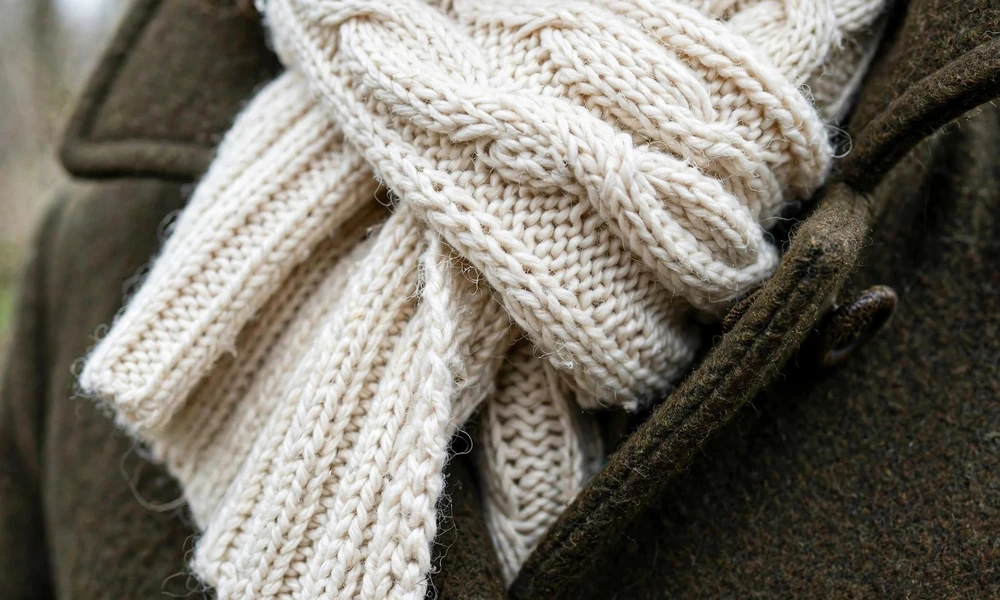
Look next at the coat. A tailored wool coat suits a neat, flat scarf that does not bulk out the collar, while a heavy parka suits a chunky knit that fills the gap at the neck. A guide to the best winter coats is a useful starting point here, because the coat sets the scale, and the scarf should follow it, not fight it.
Finally, think about your day. A knot that looks smart in a mirror may not survive a windy walk or a crowded train, so the best look for a busy morning is often the simplest one: a loop, a tuck, or a drape that stays put. Try each look at home before you wear it out, and give yourself a minute to adjust it in front of a mirror.
The 9 steps to wear a scarf with a coat in 2027
Start with the right scarf for the coat
What we like: Matching weight to weight makes the whole outfit look considered, and it keeps the collar sitting properly. What to consider: A scarf that is too heavy for a slim coat will pull the collar open. Best for: Anyone building a winter outfit from scratch. Cost: Nothing, if you already own the scarf. Time needed: A minute to compare them side by side.
Hold the scarf against the coat before you put either on. A chunky knit belongs with a heavy coat, a fine cashmere belongs with a tailored coat, and a silk scarf belongs with a lighter jacket. If the two fight, swap one of them.
Loop it once for warmth
What we like: A single loop seals the gap at the neck, stays put in the wind, and works with almost any coat. What to consider: It needs a scarf long enough to loop and still hang to the waist. Best for: Cold mornings and windy walks. Cost: Nothing. Time needed: Under a minute.
Fold the scarf in half, drape it round your neck, and pull the loose ends through the loop. Pull it snug, then let the ends fall straight. It is the warmest simple look, and it suits a parka, a wool coat and a puffer alike.
Drape it flat under a tailored collar
What we like: A flat drape keeps a tailored coat looking sharp, with no bulk at the collar. What to consider: It is less warm than a loop, so save it for milder days. Best for: A smart outfit with a wool coat. Cost: Nothing. Time needed: Under a minute.
Lay the scarf flat round your neck, cross the ends loosely at the front, and tuck them inside the coat. The collar should sit flat over the scarf, and the front should look like one clean line, not a bundle of fabric.
Wrap it over a parka hood
What we like: Wrapping over the top fills the gap a hood leaves, and it stops the wind getting in at the neck. What to consider: A chunky scarf can make the hood sit awkwardly if it is too thick. Best for: Heavy coats and hooded parkas. Cost: Nothing. Time needed: A minute.
Put the coat on first, then wrap the scarf round the outside of the collar, over the hood if you are wearing it down. Tuck the ends inside the coat so they do not flap, and check the hood still moves freely.
Try a single knot for a smart look
What we like: A single knot looks tidy and deliberate, and it holds well through a working day. What to consider: It suits a medium-weight scarf best, and a very thick scarf will make a bulky knot. Best for: Office days and smart outfits. Cost: Nothing. Time needed: A minute.
Drape the scarf round your neck with one end longer than the other, cross the long end over the short end, and pull it through. Slide the knot up to the throat, then straighten the ends so they hang evenly.
Let the ends hang long with a long coat
What we like: Long ends add a line of colour and length to a long coat, and they move well as you walk. What to consider: Long ends catch on bags and car doors, so tuck them in when you sit down. Best for: A long wool coat and a relaxed walk. Cost: Nothing. Time needed: Under a minute.
Drape the scarf round your neck and let both ends hang straight down the front of the coat. Keep the lengths even, or let one end fall slightly longer for a relaxed look. A guide to layering in winter makes the same point about length: a long layer should read as a line, not as clutter, and a scarf is no different.
Use colour to lift a plain coat
What we like: A coloured or patterned scarf is the easiest way to lift a black or grey coat without buying anything new. What to consider: One statement piece is enough, so keep the rest of the outfit quiet. Best for: A plain coat that needs a lift. Cost: Nothing, if you already own the scarf. Time needed: A minute to try it on.
Hold the scarf against the coat in daylight and check the colours sit well together. A deep red, a camel or a soft plaid all work with black, grey and navy, while a bright pattern needs a plain coat to sit against.
Keep it flat when you sit down
What we like: A scarf that lies flat under a coat looks tidy indoors and does not bunch up when you sit. What to consider: It takes a moment to adjust, and a very thick scarf will never lie truly flat. Best for: Days spent moving between indoors and out. Cost: Nothing. Time needed: A few seconds each time.
When you sit, spread the scarf flat across your chest and let the coat fall over it, rather than letting it bunch at your neck. It keeps the outfit looking neat, and it stops the scarf from riding up and spoiling the collar.
Choose the right scarf material for the day
What we like: The right material makes the whole look work: cashmere for smart days, wool for cold days, silk for mild ones. What to consider: Silk slips and will not stay put in the wind, while a heavy knit can overwhelm a light coat. Best for: Anyone who owns more than one scarf. Cost: Nothing, if you already own them. Time needed: A minute to choose.
Cashmere is the softest and warmest for a tailored coat, wool is the practical choice for a cold day, and silk suits a mild day or an evening out. Our guide to the best cashmere scarves is a useful place to start if you want one scarf that does most of the work, because a good cashmere scarf is warm, light and easy to wear with almost any coat.
Which scarf look is right for your coat
A tailored wool coat suits a neat, flat look. Drape the scarf inside the collar, keep the ends short, and let the coat do the talking. A chunky knit will bulk out the collar and spoil the line, so save it for a heavier coat.
A parka or puffer suits a chunky, wrapped look. Loop the scarf once, wrap it over the collar, and let the ends tuck inside the coat. The scarf should fill the gap at the neck, because that is where the cold gets in, and a neat look matters less than a warm one.
A long coat suits long ends. Let the scarf hang straight down the front, keep the lengths even, and let the colour add a line to the outfit. The same rule applies to a leather jacket in winter: the layers should sit in scale with each other, and a scarf is no exception.
The caveats that matter
A scarf will not fix a coat that does not fit. If the collar gapes, the shoulders are too wide, or the coat is too short, no scarf will make it look right, and a bulky scarf will only draw attention to the problem. Get the coat right first, then add the scarf.
| Detail | What is known |
|---|---|
| Warmest look | A single loop, pulled snug at the neck, sealing the gap at the collar |
| Smartest look | A flat drape inside a tailored collar, ends tucked inside the coat |
| Best scarf length | Long enough to loop once and still hang to the waist |
| Best material for cold days | Wool or cashmere, which stay warm even in the wind |
| Best material for mild days | Silk or light wool, which drape neatly without bulk |
| What to avoid | Stuffing a thick scarf inside a slim coat, and a scarf too short to stay put |
| Colour rule | One statement piece is enough, so keep the rest of the outfit quiet |
| What it does not do | It does not fix a badly fitting coat, and it will not keep you warm on its own |
A scarf also needs to be long enough. A scarf that is too short will not loop, will not knot, and will not stay put in the wind, and no amount of tucking will fix that. If you are buying one scarf to wear with a coat, buy a long one in a medium weight, and it will do most of the work.
Checklist: wearing a scarf with a coat honestly
Use these checks before you leave the house.
- Check the weight: a chunky scarf with a heavy coat, a fine scarf with a tailored coat.
- Check the length: long enough to loop once and still hang to the waist.
- Check the neck: the gap at the collar should be closed, with no cold air getting in.
- Check the collar: it should sit flat over the scarf, not bulked out by it.
- Check the ends: even, untangled, and tucked in when you sit down.
- Check the colour: one statement piece is enough, so the scarf should sit with the coat, not fight it.
Frequently asked questions
Should a scarf go inside or outside a coat?
Both work, and it depends on the coat. Inside the collar suits a tailored coat, because it keeps the line clean, while outside suits a parka, because it fills the gap at the neck. Try both and see which sits better with your coat.
How long should a scarf be to wear with a coat?
Long enough to loop once round your neck and still hang to the waist. A shorter scarf suits a simple drape, but it will not loop or knot, and it will not stay put in the wind.
Can I wear a chunky scarf with a tailored coat?
It is not ideal. A chunky knit will bulk out the collar and spoil the line of a slim coat, so save it for a heavier coat and choose a fine wool or cashmere scarf for a tailored one.
What is the warmest way to wear a scarf?
A single loop, pulled snug at the neck, with the ends tucked inside the coat. It seals the gap at the collar, which is where most of the cold gets in, and it stays put in the wind.
How do I stop a scarf slipping off?
Loop it or knot it, rather than draping it loosely, and choose a scarf with some grip, like wool or cashmere. Silk slips easily, so it suits a mild day or an evening indoors, not a windy walk.
What colour scarf goes with a black coat?
Almost any colour works, because black is neutral. A deep red, a camel, a soft grey or a plaid all sit well against black, and a patterned scarf is an easy way to lift a plain coat without buying anything new.
The bottom line
Wearing a scarf with a coat in 2027 comes down to three choices: the right scarf for the coat, the right knot for the day, and a fit that closes the gap at the neck. A loop for warmth, a flat drape for a tailored coat, and a long, even hang for a long coat will cover most days, and each one takes less than a minute once you have tried it twice.
Start with the scarf you already own, match its weight to your coat, and check the collar sits flat before you leave the house. That is the honest way to wear a scarf well, without buying a new one or spending a morning in front of the mirror.