


What do a hand-woven leather sandal, a fried masa boat piled with beans, and a 1991 basketball sneaker have in common? In Mexico and well beyond it, all three answer to the same word: huaraches. That single word carries centuries of craft, a regional food culture, and a modern design legacy, and untangling it is the fastest way to understand why the term shows up in so many unrelated places.
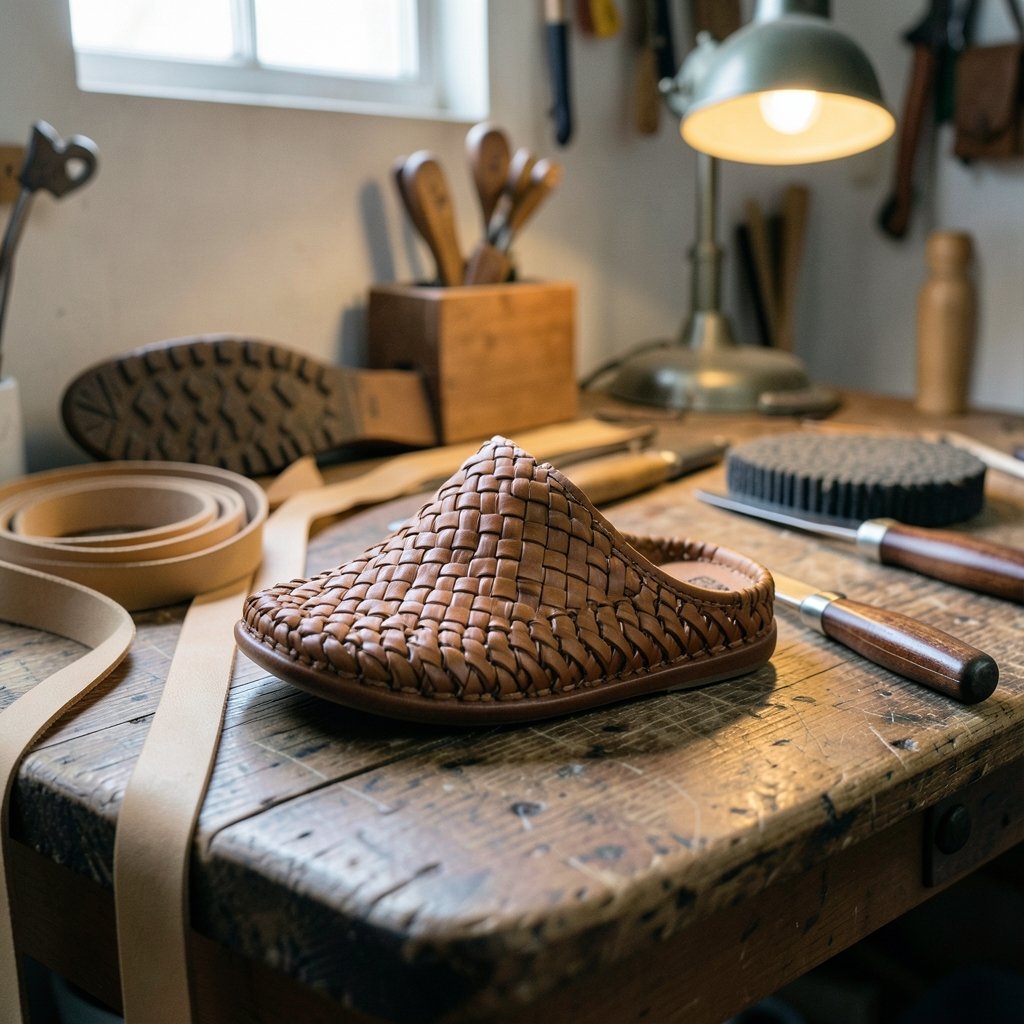
This guide sorts out the meanings, explains how traditional huaraches are actually made, separates them from the Nike shoe that borrowed the name, and covers what to check before buying a pair. Whether you stumbled on the word in a menu, a sneaker forum, or a market stall, the picture below should clear things up.
What Are Huaraches? Separating Three Very Different Things
The most common meaning of huaraches is a traditional Mexican sandal: an open-toe flat with a woven or braided leather upper and a flat sole. That is the sense most people mean when they talk about Mexican leather footwear, and it is the one this article treats as the main subject.
But the word does triple duty, and mixing the meanings causes real confusion:
| Meaning | What it is | Where you meet it |
|---|---|---|
| The sandal | Woven leather flat, open toe, flat sole | Markets, craft shops, footwear articles |
| The food | Oblong fried masa cake with toppings | Mexican menus, street-food writing |
| The sneaker | Nike Air Huarache, a 1991 athletic shoe | Sneaker culture, sportswear retail |
A fourth, narrower use has grown inside the barefoot and minimalist running community, where “huarache” describes a thin-soled running sandal with a lace system. That is a modern repurposing rather than the traditional form, and it helps to say which sense you mean whenever the context is unclear.
Where the Word Comes From
The term derives from the Rarámuri (Tarahumara) word for sandals, commonly given as warachi or huarache, which Spanish then adopted. A fair warning for anyone digging into etymology: the exact indigenous spelling varies across sources, so treat any single “correct” form with a little caution.
The sandal tradition itself is associated with Indigenous peoples of northern and central Mexico, including the Rarámuri of the Sierra Tarahumara in Chihuahua. That community is widely known for long-distance running in thin-soled sandals, an association repeated across ethnographic and popular accounts. The precise dates and attributions shift from source to source, but the broad picture is consistent: this is a footwear tradition with deep roots in northern Mexico, not a recent design invention.
How Traditional Huaraches Are Made
Traditional huaraches use strips of leather woven or braided into a flat sole, often finished with a tire-tread or leather sole. The woven upper is the defining feature. Regional variants differ in weave pattern and sole material, which is why two pairs from different towns can look like distant cousins.
The construction process, in broad strokes, runs like this:
- Leather is cut into long, narrow strips rather than assembled from large panels.
- The strips are braided or woven into an interlaced upper, often in one continuous piece.
- The upper is joined to a flat sole, historically leather or repurposed tire tread.
- The finished sandal is shaped and softened so it molds to the foot over time.
That strip-based approach is what gives huaraches their look and their breathability. It also explains why the craft resists cheap imitation: a woven upper takes time, and the pattern is the maker’s signature.
Traditional Huaraches vs. Modern Running Huaraches
Since roughly the 2000s and 2010s, the barefoot and minimalist running community has adopted the word for DIY or commercial running sandals built around a thin sole and a lace system. The intent is different from the traditional craft: these are made for ground feel and light weight, not market-day style.
| Feature | Traditional huarache | Modern running huarache |
|---|---|---|
| Upper | Woven or braided leather strips | Laces or cords over a thin sole |
| Sole | Flat leather or tire tread | Minimal, flexible sole |
| Main purpose | Everyday wear, craft heritage | Running, ground feel |
| Typical maker | Artisan workshops | DIY makers and specialist brands |
Neither is a fake version of the other. They simply share a name and a philosophy of minimal structure underfoot. The boundary between them is blurry in popular usage, so when someone recommends “huaraches for running,” it is worth asking which kind they mean.
The Nike Huarache Is Not a Sandal
Nike released the Air Huarache in 1991, designed by Tinker Hatfield, featuring an internal neoprene sleeve and a heel strap. The name borrows from the sandal, but the product is a distinct athletic shoe with a closed upper and a completely different construction.
This is the single most common mix-up. Searching for huaraches online will surface sneaker resale pages, retro colorway announcements, and basketball nostalgia long before it surfaces a leather sandal. If your goal is footwear for warm weather or an artisan pair, filter out the sportswear results early. The 1991 date is widely reported, though anyone citing it formally should check it against design-press or brand archives rather than repeating it secondhand.
Huaraches on the Plate: The Food Namesake
In Mexican cuisine, a huarache is a masa-base antojito shaped like a sandal sole and topped with ingredients such as beans, nopales, and salsa. The shape is where the name comes from, and it is a genuinely useful visual cue: oblong, flat, and slightly cupped to hold its toppings.
It is related to but distinct from the sope and the tlacoyo, both also masa-based. Culinary descriptions are consistent across sources, though regional variation is real, so a huarache in one state may carry different toppings than in another. If you order one expecting a sandal and receive a plate of masa and salsa, you have not been tricked. You have simply met the other huarache.
Cultural Continuity and Craft Heritage
Huaraches remain in use in rural Mexico and are sold as artisanal footwear in markets and tourist contexts. They also function as a symbol of Mexican craft heritage, which is a lot of weight for a flat leather sandal to carry.
That symbolic status cuts both ways. On one hand, it keeps demand alive for hand-woven work and supports makers who have refined patterns over generations. On the other, tourist demand can flatten regional differences into a generic “Mexican sandal” look. Buyers who care about craft can push back simply by asking where a pair was made and who wove it.
What to Check Before You Buy
Practical buying advice matters more than most people expect with woven leather footwear. A few checks save a lot of disappointment.
The weave matters as much as the silhouette. A tightly and evenly braided upper signals care. Loose, uneven strips tend to stretch out of shape and rub in the wrong places.
Ask about the sole material. Leather soles are traditional and comfortable once broken in but wear faster on pavement. Tire-tread soles are tougher and better for rough ground. Neither is universally better; it depends on where you walk.
Expect a break-in period. Woven leather molds to the foot, which means the first week can feel snug or stiff. That is normal. Pain that persists past a couple of weeks is not.
Size for the foot you have at the end of the day. Feet swell, and an open sandal with a fixed woven upper has limited give. Trying pairs in the afternoon avoids the classic mistake of buying too small in the morning.
Check the strap and heel fit. Because the upper is often a single woven piece, fit is less adjustable than on a buckled sandal. If the heel slips or the toe box pinches at the try-on stage, it will not fix itself.
One more practical note: leather huaraches and water do not mix well. Keep them out of rain, dry them away from direct heat, and they will last far longer than the price suggests.
How Huaraches Fit Into Modern Wardrobes
Styling is simpler than the word’s complicated history implies. A plain woven pair in tan or natural leather works with linen trousers, denim, and summer dresses without effort. The open weave keeps them breathable, which is why they suit hot climates better than closed leather shoes.
For anyone comparing textures and weaves across hair and fiber topics, the vocabulary of pattern and strand is oddly transferable: discussions of 4c hair and 2b hair use the same language of coil, wave, and strand that leather braiders use. It is a small reminder that craft vocabulary travels.
There is also a growing market for huarache-style sandals in minimalist footwear circles, where buyers want a flat sole and minimal structure. Those shoppers should read listings carefully, since a “huarache-inspired” sandal may be a running sandal rather than a woven leather one. Checking the product description for the word “woven” is usually enough to tell them apart. Fashion coverage of artisanal footwear trends, much like the coverage collected under the row tag, tends to blur the line between heritage craft and modern reinterpretation, so treat any single article as a starting point rather than a definitive source.
Common Mistakes People Make
A few errors come up again and again, and each is easy to avoid once you know about it.
The first is conflating the sandal with the sneaker. They share a name and nothing else. The second is assuming all huaraches are cheap. Hand-woven leather takes hours, and price reflects that. The third is buying a pair online without checking the sole material, then discovering it is too thin for daily city walking.
The fourth is treating the food and the footwear as a translation error. They are both correct uses of the word in Mexican Spanish. The fifth, and most avoidable, is expecting a woven leather sandal to behave like a rubber flip-flop. It will not survive puddles, and it should not be asked to.
Conclusion
Huaraches are one word with several lives. The traditional woven leather sandal is the heart of it: a northern Mexican craft built from braided strips and flat soles, still made and still worn. Around that core sit the masa antojito that borrowed the sandal’s shape, the 1991 Nike sneaker that borrowed only the name, and the modern running sandal that borrowed the minimalism.
Knowing which huarache you are looking at changes how you shop, cook, and read. Check the weave, ask about the sole, expect a break-in, and keep them dry. Do that, and a pair of woven huaraches will earn its place as the most practical thing in a summer wardrobe.
Frequently Asked Questions
What are huaraches made of?
Traditional huaraches are made from strips of leather woven or braided into an upper and attached to a flat sole. The sole is often leather or repurposed tire tread. Regional variants differ in weave pattern and sole material, and modern running versions use laces or cords over a thin sole instead of woven leather.
Are huaraches the same as Nike Air Huaraches?
No. The Nike Air Huarache, released in 1991 and designed by Tinker Hatfield, is an athletic shoe with an internal neoprene sleeve and a heel strap. It borrowed the name from the sandal but shares no construction with it. The two are entirely different products that happen to use the same word.
Is a huarache a food or a shoe?
Both, depending on context. In footwear, a huarache is a woven leather Mexican sandal. In Mexican cuisine, a huarache is a masa-base antojito shaped like a sandal sole and topped with beans, nopales, salsa, and other ingredients. The food takes its name from the sandal’s shape, so neither use is a mistake.
Can you run in huaraches?
Some people do, but they mean the modern running version: a thin-soled sandal with a lace system, used in barefoot and minimalist running circles since roughly the 2000s and 2010s. Traditional woven leather huaraches are everyday sandals, not running footwear, and are not built for that kind of wear.
How should huaraches fit?
They should feel snug but not tight across the woven upper, with no heel slip and no pinching at the toe box. Because the upper is often a single woven piece, there is limited adjustability. Try them in the afternoon when feet are at their largest, and expect a short break-in period as the leather molds.
How do you care for leather huaraches?
Keep them away from water and dry them away from direct heat, since soaking and rapid drying both damage woven leather. Store them out of direct sun, and avoid wearing them in rain. With basic care, a hand-woven pair holds its shape and lasts considerably longer than its light construction suggests.









