


Can you love cats and still breathe? That question sits behind every search for hypoallergenic cats, and the honest answer is more interesting than the marketing suggests. Millions of people share their homes with cats despite mild to moderate allergies, and many of them have found workable routines. The trick is knowing where the allergen actually comes from, which breed claims hold up, and which practical steps make a measurable difference. This guide walks through the science, the myths, and the realistic options so you can plan with clear eyes.
The uncomfortable truth: no cat is truly hypoallergenic
Start with the fact that veterinarians and allergy specialists repeat constantly: there is no such thing as a cat that cannot trigger allergies. Every cat produces Fel d 1, the protein responsible for most cat allergies. It is made mainly in sebaceous glands and saliva, then spread across the coat during grooming and released into the air on tiny skin flakes called dander. Because every cat produces it, “allergen-free” is not a category that exists.
What does exist is enormous variation between individual cats. Fel d 1 levels differ widely from one animal to the next, even within the same breed and even among littermates. Intact males tend to produce more than females and neutered males. This is why one person can react badly to a friend’s cat and feel fine around another cat of the same breed. The individual matters more than the label.
Why hairless cats don’t solve the problem

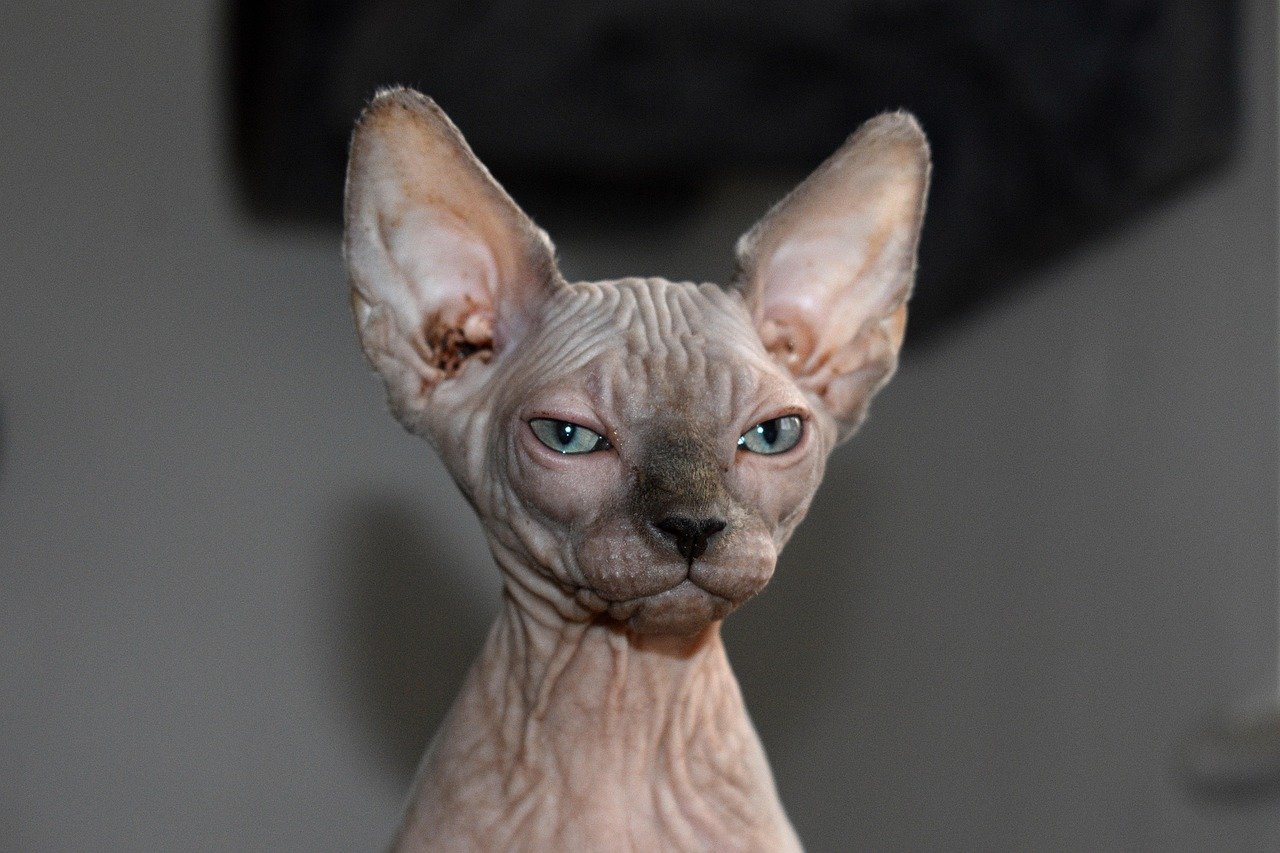
A common assumption is that less fur means less allergen. It sounds logical, and it is wrong. Because Fel d 1 is delivered through saliva and skin secretions rather than manufactured by hair follicles, a hairless breed such as the Sphynx still produces and spreads the protein. Those cats need regular bathing precisely because oils and allergen accumulate on exposed skin, and they still shed dander into the environment.
The same logic applies to coat length and texture. A cat with a dense coat, including many 4c hair type coats seen in some breeds, may trap dander close to the body, while a fine coat releases it more readily into the air. Neither extreme eliminates the allergen. Coat type changes how the protein is distributed, not whether it exists.
The breeds marketed as low-allergen
Several breeds carry a reputation for being easier on allergy sufferers. The most frequently named are the Siberian, Balinese, Devon Rex, Cornish Rex, Russian Blue, and Bengal. Some breeders claim these cats produce less Fel d 1, and a few small studies have hinted at lower levels in certain lines. The problem is replication: controlled evidence that any breed is reliably lower-allergen than another is thin, and results vary by cattery and individual cat.
| Breed | Common claim | What the evidence supports |
|---|---|---|
| Siberian | Low Fel d 1 in saliva | Some individual cats may test lower; not consistent across the breed |
| Balinese | Low-shedding, lower allergen | Less fur shed, but Fel d 1 production unchanged |
| Devon Rex | Curly coat traps less dander | No controlled evidence of lower allergen |
| Cornish Rex | Minimal coat, easier to bathe | Bathing helps temporarily; breed itself is not low-allergen |
| Russian Blue | Tolerated by some sufferers | Anecdotal reports; individual variation likely explains it |
The practical takeaway: treat breed claims as a starting point for a conversation, never a guarantee. If a breeder promises an allergy-free cat, that is a sales pitch, not a scientific claim. “Hypoallergenic” is not a regulated term for cats, so anyone can use it.
Meet the cat before you commit
For anyone with a known allergy, the single most useful step is spending time with the actual cat. Breeders who take allergies seriously will allow a visit, and some will let you handle the cat and sit in the room for an hour. Pay attention to how you feel during and after the visit, not only in the moment. Reactions can be delayed, so a follow-up visit on another day tells you more than a single hello.
This is where individual variation works in your favor. If a particular cat happens to produce lower Fel d 1, you may tolerate that cat even if the breed as a whole offers no advantage. Adopting an adult cat also means you can test the fit before making a lifelong commitment, which is far safer than bringing home a kitten on a promise.
What actually reduces allergen at home
Since breed selection is unreliable, the real progress comes from managing the environment. These measures have the strongest practical support:
- Run a HEPA air purifier in the rooms where you spend the most time, especially the bedroom. Choose one sized for the room and keep it running continuously rather than intermittently.
- Keep the cat out of the bedroom. This one change often delivers the biggest improvement, because you spend hours there with your face close to bedding and pillows.
- Vacuum frequently with a HEPA-filter vacuum. Carpets and upholstery hold dander, and a machine without proper filtration can blow fine particles back into the air.
- Wash bedding and throws weekly in hot water. Cat dander settles into fabric, and bedding is a major reservoir.
- Bathe the cat periodically. Bathing temporarily reduces allergen on the coat and skin. Start when the cat is young if possible, use a cat-safe shampoo, and accept that some cats will tolerate this better than others.
- Wipe surfaces and use washable covers on sofas and chairs. Hard floors are easier to keep clean than wall-to-wall carpet.
- Wash your hands after handling the cat and avoid touching your face afterward. This reduces the allergen that reaches your eyes and nose.
A note on grooming: brushing removes loose fur and some dander, but it also puts allergen into the air. Brush outdoors or in a well-ventilated room, and consider wearing a mask if your symptoms are strong. Many people find that a partner or family member without allergies handles grooming duties, which is a sensible division of labor.
Diet, vaccines, and the science in progress
Cat food designed to reduce Fel d 1 has become one of the most talked-about developments. An allergen-reduction diet launched in the United States in 2020 works by including an egg-yolk antibody that binds Fel d 1 in the cat’s saliva, with the manufacturer reporting lower allergen on hair and dander. It is a genuinely novel approach, but independent replication is limited, so treat the efficacy claims as manufacturer-reported rather than settled science. If you try it, give it several weeks and judge by your own symptoms.
Research is also moving on two other fronts. In 2019, scientists reported using CRISPR gene editing to knock out the Fel d 1 genes in cat cells, a laboratory proof of concept rather than a cat you can adopt. Separately, researchers have explored immunizing cats to reduce their Fel d 1 production. Both avenues are experimental. Neither has produced a commercially available low-allergen cat, and anyone selling one today is ahead of the science.
The clinical route: testing and treatment
If your symptoms are significant, the most reliable path runs through a clinician rather than a breeder. Allergy testing can confirm whether cat allergen is actually your trigger, since dust mites, pollen, and mold often cause overlapping symptoms. Confirmation matters because it changes what you do next.
For confirmed cat allergy, allergen immunotherapy is the established treatment. Allergy shots given over months to years can reduce sensitivity, and sublingual tablets for cat allergen have been studied and approved in some countries. Regulatory status varies by market, so ask a local allergist what is available. Medication, including antihistamines and nasal sprays, manages symptoms but does not change the underlying sensitivity. None of this is a cure, but many people find that treatment plus home measures makes living with a cat entirely feasible.
Setting realistic expectations
It helps to go in knowing what success looks like. For most allergic cat owners, the goal is not zero symptoms but manageable ones. Some people improve over months as their exposure settles; others find their sensitivity stays the same or worsens. Asthma changes the calculation, because cat exposure can trigger serious flare-ups, and anyone with asthma should get medical advice before bringing a cat home.
There is also a hard truth about rehoming. Shelters take in many cats each year because someone’s allergies turned out to be worse than expected. Planning ahead, testing before adopting, and having a backup plan protects both you and the animal. It is far kinder to spend an hour with a cat before adoption than to surrender one afterward.
If you are still narrowing down breeds and coat types, it helps to understand how different coats behave. A cat with a wavy 2b hair type coat, for instance, sheds differently than a long-haired breed, and that affects how much dander lands on furniture. Similarly, stories about particular cats and their grooming needs, like the ones collected under the row tag, show how much individual routine matters. Coat and grooming are variables you can work with, not guarantees you can buy.
Conclusion
Hypoallergenic cats, as a category, do not exist. Every cat produces Fel d 1, hairless breeds included, and breed labels are marketing rather than medicine. What does exist is real, measurable variation between individual cats, plus a set of home and medical strategies that let many allergic people live comfortably with a cat. Spend time with the specific animal, keep the bedroom cat-free, filter and clean the air, wash bedding often, and talk to an allergist about testing and immunotherapy. Do that, and you are making decisions based on evidence instead of hope. The right cat for an allergic household is not a breed on a list. It is a particular cat, in a well-managed home, with a plan in place.
Frequently Asked Questions
Are hypoallergenic cats real?
No. Every cat produces Fel d 1, the main cat allergen, so no breed is truly allergen-free. Some individual cats produce less than others, and that variation is why certain cats seem easier to tolerate. “Hypoallergenic” is not a regulated term for cats, so the label carries no standard definition.
Are hairless cats better for allergies?
Generally not. Fel d 1 comes from saliva and skin glands rather than fur, so a hairless cat such as the Sphynx still produces and spreads the allergen. These cats often need regular bathing because oils and allergen collect on their skin, and they still shed dander into the home.
Which cat breed is best for allergy sufferers?
There is no reliable answer, because controlled evidence that any breed is consistently lower-allergen is thin. Breeds like the Siberian and Balinese are often mentioned, but levels vary by individual cat and cattery. Spending time with a specific cat before adopting is more useful than choosing by breed.
Can special cat food reduce allergens?
An allergen-reduction diet launched in 2020 uses an egg-yolk antibody to bind Fel d 1 in the cat’s saliva, and the manufacturer reports lower allergen on fur and dander. Independent replication is limited, so treat the claims as manufacturer-reported. It may help, but it is not a substitute for cleaning and air filtration.
What actually works to reduce cat allergen at home?
HEPA air filtration, frequent vacuuming with a filtered machine, weekly hot-water washing of bedding, keeping the cat out of the bedroom, and periodic bathing of the cat all help. Washing your hands after handling the cat also reduces allergen reaching your eyes and nose. These measures have stronger support than breed selection.
Should I see an allergist before getting a cat?
Yes, especially if you have asthma or strong reactions. Testing confirms whether cat allergen is your trigger, and immunotherapy, given as shots or in some markets as sublingual tablets, can reduce sensitivity over time. A clinician can also advise on medication and on whether cat exposure is safe for you.









