

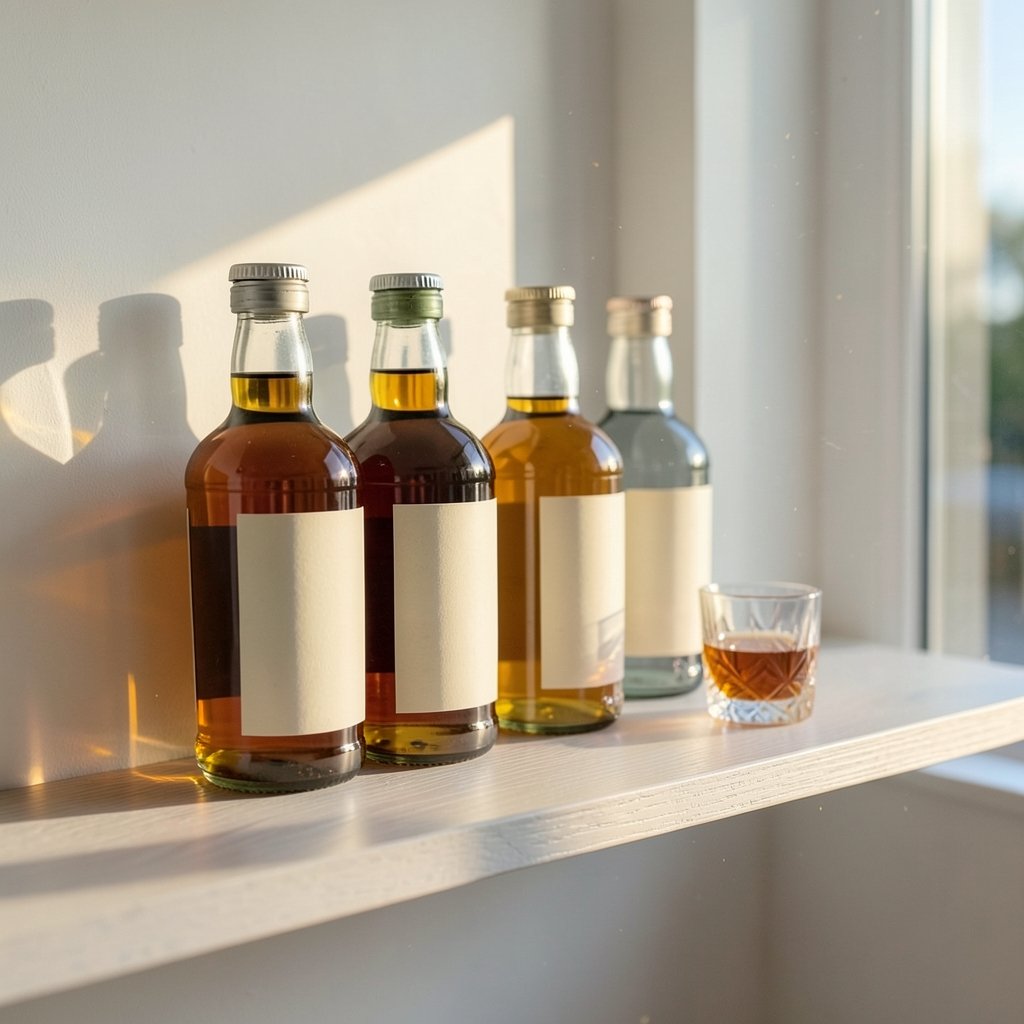
Why does a bottle of Japanese whisky often cost more than a bottle of Scotch of the same age? The answer is a tangle of history, a voluntary labelling rule, a genuine supply shortage, and a global fan base that fell hard and fast. Once you understand how Japanese whisky is made, what the label actually promises, and where the bargains hide, the prices start to make a strange kind of sense. This guide walks through the origins, the rules, the styles, the shortage, and the practical buying advice that separates a smart purchase from an expensive mistake.
What Japanese Whisky Is, and Why the Spelling Matters
Start with the small detail that trips people up: in Japan, the word is spelled whisky, without the “e,” following the Scotch convention rather than the Irish and American one. That spelling is a clue to the whole project. Japanese distillers built their industry by studying Scottish methods closely, then refining them with a patience that borders on obsession.
Commercial whisky production in Japan is usually dated to the 1920s. Masataka Taketsuru, a young chemist who had travelled to Scotland to study distilling, returned home and joined Shinjiro Torii, the founder of what became Suntory. Torii’s Yamazaki distillery, near Kyoto, began operating in 1923. Taketsuru later left to found his own distillery at Yoichi in Hokkaido in 1934, the base of what became Nikka. Those two companies, Suntory and Nikka, still dominate the market, though the picture has changed dramatically in the last decade.
The style is generally modelled on Scotch. You will find single malts, grain whiskies, and blends, and the flavour profile often leans toward soft fruit, honey, gentle smoke, and a distinctive clean finish. Japanese distillers have also become known for experimentation with cask types, including mizunara oak, which can add incense-like and coconut notes that are hard to find elsewhere.
The Labelling Rule That Changes Everything

Here is the fact that surprises most buyers. For a long time, Japan had no product-specific law defining “Japanese whisky” at all. The industry’s own standard is voluntary. That meant a bottle with Japanese branding and Japanese-sounding names was not automatically made entirely in Japan. Historically, some “Japanese” brands included imported whisky, a practice that frustrated purists and confused shoppers.
The industry moved to fix this. The Japan Spirits & Liqueurs Makers Association adopted a labelling standard in 2021, with full effect from 2024. Under that voluntary standard, to be labelled Japanese whisky, a product must be mashed, fermented, distilled, and matured in Japan; matured for at least three years in wooden casks; and bottled in Japan, while meeting rules on colouring and strength. The exact wording and effective dates are worth checking against the association’s own materials, because the standard is industry-run rather than written into law.
What does this mean in practice? The standard is only as strong as the industry’s willingness to follow it. Most major producers do, and the direction of travel is clearly toward transparency. But because the rule is voluntary, a bottle labelled with Japanese branding is not automatically made entirely in Japan. A label that says “Japanese whisky” under the new standard is a meaningful promise; a label that merely looks Japanese is not.
How to Read a Japanese Whisky Label
A few habits will protect you from disappointment:
- Look for the words “Japanese whisky” in the formal sense, ideally with the producer’s own disclosure about where the liquid was distilled and matured.
- Check for an age statement. If there is none, it is NAS (no age statement), which is not a flaw but does mean the blend may include young spirit.
- Read the back label for the word “blended” versus “single malt,” and for any mention of imported whisky.
- Treat unfamiliar brand names with caution, especially at low prices. If a bottle costs far less than its neighbours and has no clear provenance, ask why.
- Buy from retailers who can answer questions about the producer. A good shop knows its stock.
The most common mistake people make is assuming that a beautiful bottle with kanji on the front guarantees authenticity. The second most common mistake is the opposite: dismissing every NAS bottle as inferior. Some of the best-value Japanese whiskies carry no age statement at all.
The Supply Shortage and the Price Problem
From around 2015 to 2018, several major producers discontinued or limited age-statement bottlings, including some Hibiki and Yamazaki expressions, because demand had outrun the stocks laid down years earlier. This is the key to understanding the market. Whisky cannot be rushed. If a distillery sold every drop of its 12-year-old stock in 2015, it could not simply make more 12-year-old whisky by 2018. It had to wait.
That mismatch between demand and supply pushed prices sharply higher in the late 2010s and early 2020s, including at auction, where scarcity and collector demand fed on each other. The exact magnitude varies enormously by bottle, and specific figures are best treated with suspicion unless they come from a named source. What matters for a buyer is the pattern: rare age statements became collector items, and everyday drinkers were pushed toward NAS bottles and blends.
The shortage also had a creative side effect. Since the 2010s, many new distilleries have opened across Japan, and some produce whisky that does not meet the voluntary “Japanese whisky” standard. That is not automatically bad. A young distillery experimenting with local barley or unusual casks can produce something genuinely interesting. But it does mean the word “Japanese” on a bottle now covers a wider range of quality than it did a decade ago.
The Highball Culture That Made Whisky Everyday
One reason Japanese whisky has such a strong domestic base is the highball, a simple mix of whisky and soda over ice. In Japan, the highball is a mainstream drink, and domestic highball sales grew markedly in the 2010s. It is served in bars, poured from cans, and paired with food in a way that makes whisky feel casual rather than ceremonial.
This matters for anyone learning to drink Japanese whisky. The highball is forgiving. It stretches an expensive bottle further, tames the alcohol heat, and lets the softer fruit and honey notes come forward. A common practical tip: use a tall glass, plenty of ice, and a ratio of roughly one part whisky to three or four parts soda, stirring gently rather than vigorously so you keep the fizz. Cheap blends work perfectly well here; there is no need to pour a rare single malt into soda.
The highball habit also explains part of the shortage. When a whole country drinks whisky with dinner, the volume disappears fast.
Japanese Whisky vs Scotch: A Practical Comparison
The two traditions share methods but differ in feel and market behaviour. Here is a plain comparison for shoppers.
| Feature | Japanese whisky | Scotch whisky |
|---|---|---|
| Spelling | Whisky | Whisky |
| Legal status | Voluntary industry standard | Protected by law with strict rules |
| Core styles | Single malt, grain, blended | Single malt, grain, blended |
| Common flavour notes | Soft fruit, honey, clean finish, mizunara spice | Wide range, from light to heavily peated |
| Age statements | Increasingly rare and expensive | Widely available at many ages |
| Price trend | Sharply up since the late 2010s | Mixed, with more entry-level options |
| Best value | Blends and NAS bottles | Entry-level single malts |
The practical takeaway is simple. If you want a reliable, affordable single malt with an age statement, Scotch usually wins on price. If you want the particular character of Japanese whisky, its elegance and its mizunara-influenced spice, you will pay a premium, and you should choose carefully to get value.
How to Buy Well: Practical Advice That Actually Works
Experience from the shop floor and the bar suggests a few rules that hold up.
Buy blends before you buy age statements. The biggest price jumps hit the rare single malts. Blended Japanese whiskies and NAS bottles remain more reasonable and are often excellent. They are the sensible entry point.
Do not chase every limited edition. Collectors drive auction prices, and a bottle bought at a markup rarely tastes better than the standard release. If you want to drink, buy to drink.
Check the provenance, not the packaging. Because the labelling standard is voluntary, the producer’s own disclosures matter more than the box design. A short conversation with a knowledgeable retailer beats an hour of reading marketing copy.
Store it properly. Keep bottles upright, away from direct sunlight and heat. Once opened, a bottle will slowly change over months as oxygen interacts with the spirit, so finish open bottles within a reasonable time or decant into a smaller container.
Try before you commit to a bottle. Bars and tasting events are the cheapest way to learn your own palate. Japanese whisky varies more than its reputation suggests, and a bottle you love on a menu may not suit your shelf.
For readers who enjoy the naming and cultural side of Japanese products, the way names carry meaning is part of the appeal, much like the stories behind Japanese names with kanji or the layered history of traditional Japanese surnames. Bottles and brands carry that same sense of heritage.
Common Mistakes and What to Do Instead
The most frequent error is paying collector prices for a bottle that will be opened and shared. If the goal is drinking, value matters more than rarity. The second error is assuming age equals quality. A well-made NAS blend can beat a tired age statement, and in Japan the NAS category has received serious attention from producers forced to stretch their stocks.
A third mistake is ignoring the highball as a legitimate way to drink. Many newcomers treat mixing as a compromise. In Japan it is the default, and it is a good one.
Finally, do not overlook the wider world of Japanese drinks and naming culture. If you are curious about how names and meanings shape Japanese products, from bottles to babies, the subject of Japanese baby name meanings offers a fascinating parallel in how carefully words are chosen. And if you are shopping for a gift with a personal touch, browsing ideas around Japanese baby names shows how much thought goes into a single word in Japan.
Conclusion
Japanese whisky is a young industry with an old soul. It borrowed Scotch methods in the 1920s, refined them over decades, and then found itself overwhelmed by global demand in the 2010s. The voluntary labelling standard that took full effect in 2024 brought welcome clarity, but it is still voluntary, which is why reading the label and asking questions remains essential. The shortage pushed prices up and age statements off the shelf, yet it also opened the door to blends, NAS bottles, and a wave of new distilleries worth watching. Buy thoughtfully, drink the highball, and treat the rare bottles as what they are: pleasant extras, not the point.
Frequently Asked Questions
Is Japanese whisky actually made in Japan?
Not always, and that is the catch. Japan has no product-specific law defining Japanese whisky; the industry standard is voluntary. Under the standard adopted in 2021 and fully effective from 2024, a bottle labelled Japanese whisky must be mashed, fermented, distilled, and matured in Japan, aged at least three years in wooden casks, and bottled in Japan. But because the rule is voluntary, a bottle with Japanese branding is not automatically made entirely in Japan. Check the producer’s disclosures.
Why is Japanese whisky so expensive?
The main cause is a supply shortage. From around 2015 to 2018, several major producers discontinued or limited age-statement bottlings because demand had outrun stocks laid down years earlier. Whisky cannot be rushed, so the gap could not be closed quickly. Scarcity and collector demand then pushed prices sharply higher in the late 2010s and early 2020s, including at auction. Blends and no-age-statement bottles remain the better value.
What does NAS mean on a Japanese whisky bottle?
NAS stands for no age statement. It means the bottle carries no minimum age figure on the label, so the whisky inside may be a blend of different ages, including younger spirit. NAS is not a sign of poor quality by itself. Many producers turned to NAS releases precisely because their aged stocks were limited, and some of these bottles are excellent and reasonably priced.
What is a Japanese whisky highball?
A highball is whisky mixed with soda over ice, and in Japan it is a mainstream everyday drink rather than a cocktail curiosity. Domestic highball sales grew markedly in the 2010s. It is a practical way to enjoy whisky: use a tall glass, plenty of ice, and roughly one part whisky to three or four parts soda, stirring gently to keep the fizz. Blends work perfectly well.
How is Japanese whisky different from Scotch?
The methods are closely related, since Japanese distillers modelled their craft on Scotch, and both spell the word whisky. The differences are legal and commercial. Scotch is protected by strict law, while the Japanese standard is voluntary. Japanese whisky is known for a soft, clean style with notes of fruit and honey, sometimes with mizunara oak influence, and its age statements are now rarer and more expensive than Scotland’s.
Which Japanese whisky should a beginner buy?
Start with a blend or a no-age-statement bottle from a well-known producer rather than a rare age statement. These offer the house style at a fairer price and are forgiving in a highball. Buy from a retailer who can explain where the whisky was distilled and matured, and try before committing to a full bottle where possible. If value is the priority, entry-level Scotch single malts usually cost less.









