

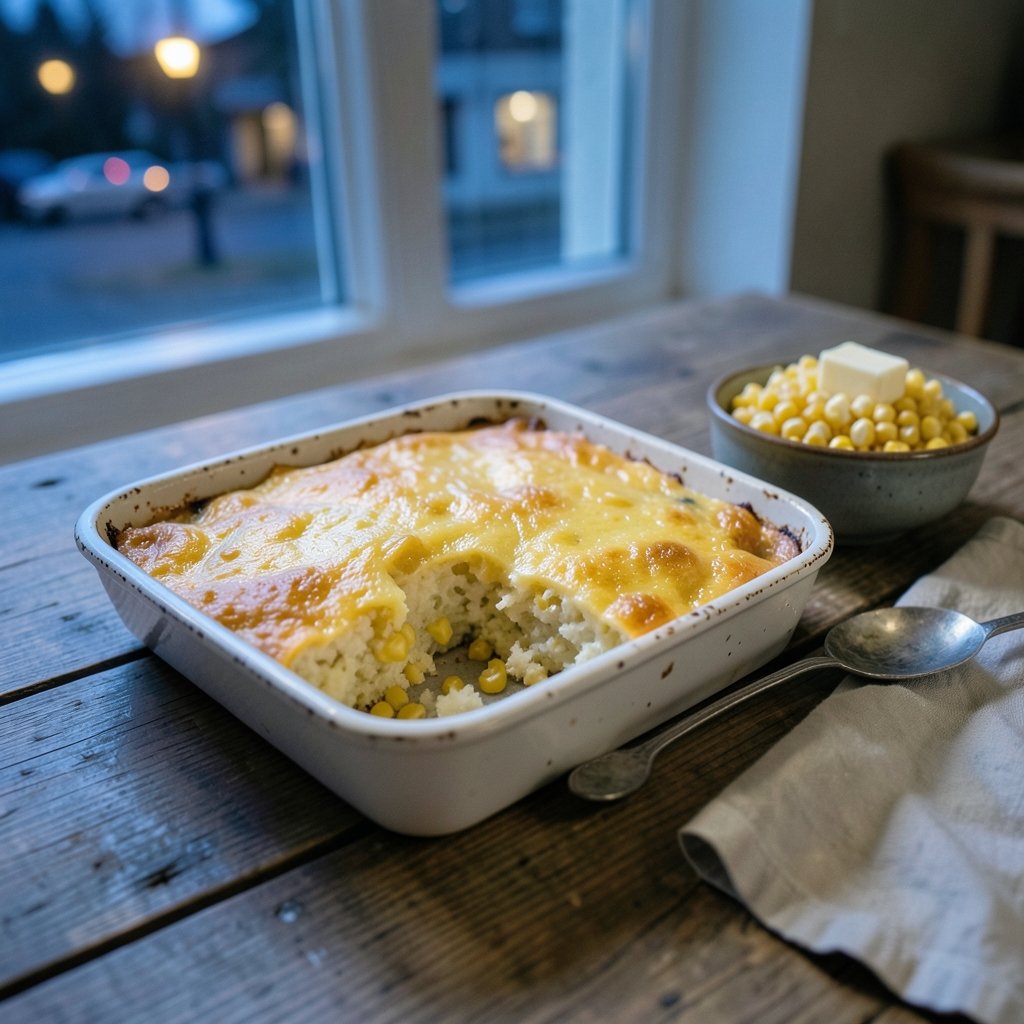
What is it about a humble boxed corn muffin mix that turns a plain vegetable side into the most scraped-clean dish at a holiday potluck? If you have ever watched a stranger hover over the buffet with a spoon, waiting for the last golden corner of corn casserole to be freed, you already know the answer. This dish is sweet, savory, custardy, and just firm enough to hold its shape on a plate. It takes about ten minutes of actual effort, and it forgives almost every mistake a distracted cook can make.
This guide walks through a reliable version of the classic recipe, explains why it works, covers the swaps and pitfalls that matter, and answers the questions people actually ask when the casserole is already in the oven and something looks off.
What Jiffy Corn Casserole Actually Is
Despite the name, this is not a cornbread. It is closer to a savory pudding or a spoonbread, built on a base of corn muffin mix, canned corn, sour cream, butter, and eggs. The mix provides structure and sweetness, the cream-style corn and sour cream provide moisture and richness, and the whole-kernel corn gives it texture so it does not turn into mush.
The dish is a folk recipe, not a corporate invention. It circulates through community cookbooks, church fundraiser collections, family recipe cards, and potluck tables across the Midwest and South rather than originating from the manufacturer. That matters for anyone trying to find “the” authentic version, because there isn’t one. There are dozens of near-identical variations, and nearly all of them work.
The Jiffy brand itself comes from Chelsea Milling Company, a family-owned business in Chelsea, Michigan, that has been producing baking mixes since the 1930s. The 8.5-ounce box of corn muffin mix is the standard called for in this recipe, and its sweet, slightly coarse crumb is a big part of the finished dish’s character. Substituting a different cornbread mix changes the sweetness and texture more than most cooks expect.
The Classic Jiffy Corn Casserole Recipe

This version serves eight to ten as a side dish and fits an 8×8 or 9×9 inch baking pan. A 9×13 pan works too, but the casserole will be thinner, so it bakes faster and gets more edge pieces, which some people consider the best part.
Ingredients
- 1 box (8.5 oz) Jiffy corn muffin mix
- 1 can (15 oz) whole-kernel corn, drained
- 1 can (15 oz) cream-style corn, undrained
- 1 container (8 oz) sour cream
- 1 stick (½ cup) butter, melted and slightly cooled
- 2 large eggs, lightly beaten
- ½ teaspoon salt
- ¼ teaspoon black pepper
- Optional: 1 cup shredded cheddar, a diced jalapeño, or a pinch of sugar
Step-by-Step Method
- Heat the oven to 350 °F (175 °C) and grease an 8×8 or 9×9 inch baking pan.
- In a large bowl, whisk the eggs, sour cream, and melted butter until smooth.
- Stir in both cans of corn, including the liquid from the cream-style corn.
- Add the corn muffin mix, salt, and pepper. Fold gently until just combined. Small lumps are fine; overmixing makes the texture tougher.
- Pour the batter into the prepared pan and spread it evenly.
- Bake for 45 to 55 minutes, until the center is set and the top is golden. A thin knife inserted in the middle should come out clean or with only moist crumbs.
- Rest for 10 to 15 minutes before serving. This lets the custard firm up so it slices cleanly.
The batter will look wetter than cornbread batter, and that is correct. If it looks like a thick pancake batter, the proportions are right. (4c hair)
Why the Recipe Works
Three things do the heavy lifting here. First, the cream-style corn adds body and natural sweetness without extra sugar. Second, the sour cream brings fat and acidity, which keeps the dish from tasting flat and gives it that tangy edge people cannot quite identify. Third, the butter carries flavor into every bite and helps the top brown.
The eggs are the quiet workhorse. They set the custard so the casserole holds together, and skipping them turns the dish into something closer to a corn pudding that must be spooned rather than sliced. Two eggs is standard for an 8×8 pan; three eggs make a firmer, more sliceable result that some cooks prefer for buffet service.
Baking time is the most common source of trouble. Ovens run hot or cold, pan materials conduct heat differently, and glass versus metal changes browning. Start checking at 40 minutes and judge by the center, not the clock.
Texture Variations and What Changes Them
| Variation | What to Change | Result |
|---|---|---|
| Denser, more sliceable | 3 eggs, 9×9 metal pan | Firm custard, clean slices, good for buffets |
| Looser, spoonable | 1 egg, 8×8 glass pan | Softer pudding texture, needs a spoon |
| Cheesier | Add 1 cup shredded cheddar before baking | Savory, richer, browner top |
| Spicier | Add 1 diced jalapeño and ½ teaspoon chili powder | Heat that cuts through the sweetness |
| Less sweet | Use a savory cornbread mix instead of Jiffy | Drier, more corn-forward flavor |
If you are cooking for a crowd with mixed tastes, the cheese version tends to disappear fastest. If the table already has a lot of rich food, the plainer version holds its own better because the sweetness stays balanced.
Common Mistakes and How to Avoid Them
Overmixing the batter. Once the muffin mix hits the wet ingredients, gluten starts developing. Fold until the dry streaks disappear and stop. Overmixed batter bakes up dense and slightly rubbery.
Not draining the whole-kernel corn. The liquid in that can is mostly water, and leaving it in throws off the moisture balance. The cream-style corn, by contrast, should go in with its liquid because that is where its body comes from.
Using cold butter or cold sour cream. Cold dairy can cause the melted butter to seize into clumps when mixed. Let both come to room temperature, or at least soften the sour cream before combining.
Underbaking because the top looks done. The top browns well before the center sets. Trust the center test, not the color.
Cutting it immediately. The casserole needs that rest. Slicing hot means the first servings collapse into a puddle on the plate.
Baking in a pan that is too large. A 9×13 pan spreads the batter thin, and thin batter overcooks at the edges while the middle stays loose. If you only have a 9×13, reduce the time and check early.
Make-Ahead, Storage, and Reheating
This casserole is a gift for hosts because it can be assembled ahead. Mix the batter, pour it into the pan, cover, and refrigerate for up to 24 hours. Add about 5 to 10 extra minutes to the bake time since the batter starts cold. Do not freeze the raw batter; the corn and dairy separate and the texture suffers.
Leftovers keep in the refrigerator for three to four days in a sealed container. Reheat covered at 325 °F for about 15 minutes, or in single portions in the microwave with a splash of milk to bring back moisture. The texture will be slightly firmer than fresh, which is normal for a custard-style dish. (The row)
The casserole also freezes well after baking. Cut it into portions, wrap tightly, and freeze for up to two months. Thaw overnight in the refrigerator before reheating.
Serving Suggestions That Balance the Plate
Because the dish is sweet and rich, it pairs best with something sharp, salty, or smoky. Think glazed ham, roast chicken, pulled pork, or a vinegar-based slaw. A green salad with a lemon dressing cuts through the butter nicely. For holiday tables, it sits comfortably next to green bean casserole, mashed potatoes, and cranberry sauce.
If you are bringing it to a potluck, bake it in a disposable pan and bring it wrapped in a towel to hold heat. It stays warm for a surprising amount of time, and the towel prevents the bottom from scorching on a hot buffet table.
A Note on Nutrition and Food Safety
This is not a light dish. Between the butter, sour cream, corn, and muffin mix, it is high in fat and carbohydrates, and portion size drives the numbers more than any single ingredient. Anyone tracking intake should measure a serving rather than eyeball it, because a “small scoop” of this casserole is rarely small.
On safety, treat it like any baked custard containing eggs and dairy. It should be baked until the center is fully set, and leftovers should be refrigerated within two hours of serving. Undercooked egg dishes carry risk, especially for pregnant people, young children, and anyone with a weakened immune system, so err on the side of a few extra minutes in the oven.
Conclusion
The Jiffy corn casserole endures because it asks almost nothing of the cook and delivers something that tastes like far more effort than it took. One box, two cans, a tub of sour cream, a stick of butter, and a couple of eggs produce a side dish that regularly outshines the main course. The technique is simple, the margin for error is wide, and the variations are nearly endless. Master the base recipe once, learn how your oven behaves, and you will have a dependable contribution for every holiday, cookout, and covered-dish dinner for years to come.
Frequently Asked Questions
Can I make Jiffy corn casserole without eggs?
Yes, but the texture changes. Eggs set the custard, so leaving them out produces a looser, spoonable pudding rather than a sliceable casserole. A common substitute is a quarter cup of plain yogurt or an extra quarter cup of sour cream per egg, though the result stays softer. If you need a firm slice, keep at least two eggs. (2b hair)
Why did my corn casserole turn out mushy?
Mushiness almost always comes from excess liquid or underbaking. Drain the whole-kernel corn thoroughly, do not add extra milk or water, and bake until the center is set rather than until the top browns. A glass pan in a cool oven can also leave the middle underdone while the edges look finished.
Can I use a different brand of cornbread mix?
You can, but expect a different dish. Jiffy corn muffin mix is noticeably sweet and fairly coarse, and those qualities shape the final flavor. A savory or savory-leaning cornbread mix yields a drier, more corn-forward casserole. If you swap, taste the batter before baking and adjust with a pinch of sugar or salt.
How far ahead can I assemble it?
The batter can be mixed and poured into the pan up to 24 hours ahead, covered, and refrigerated. Add 5 to 10 minutes to the bake time because the batter starts cold. Do not freeze the unbaked batter, since the dairy and corn separate and the texture breaks down.
Is this the same thing as corn pudding or cornbread casserole?
Largely, yes. The names are used interchangeably across community cookbooks and family recipes, and there is no standardized distinction. Some cooks reserve “corn pudding” for a looser, spoonable version and “casserole” for a firmer one, but the ingredients are nearly identical.
What is the best pan size for Jiffy corn casserole?
An 8×8 or 9×9 inch pan gives the classic thick, custardy result and is the safest choice. A 9×13 pan works but produces a thinner casserole that bakes faster and gets more browned edges, so reduce the time and start checking around 35 minutes. Metal pans brown faster than glass, so adjust accordingly.









