

What happens to a fashion icon’s wardrobe when she turns 55, loses her best friend, and has to figure out what to wear to a funeral, a podcast studio, and a first date all in the same season? That question drives And Just Like That…, the HBO Max revival that brought Carrie Bradshaw back to television in December 2021. The outfits dressed the characters and also became the most argued-about part of the show, dissected in fashion magazines, on social media, and around dinner tables. Some viewers loved the risk-taking. Others felt the clothes were trying too hard. Both camps have a point, and looking closely at how the wardrobe works reveals a lot about what the show is trying to say about middle age, money, and identity.
Who actually dresses the cast
The first thing to know is that the original Sex and the City costume designer, Patricia Field, did not return for the revival. The wardrobe for And Just Like That… is credited to Molly Rogers and Danny Santiago, two designers who understand the franchise’s visual language deeply. That continuity matters. Rogers in particular had worked within the Sex and the City world before, so the new team was not starting from zero.
What changed is the brief. The original series dressed a thirty-something columnist chasing romance. The revival dresses a fifty-something widow, podcast host, and grieving friend. The clothes have to carry more weight now, in both senses of the phrase. That is why the wardrobe leans harder on statement pieces, unusual layering, and outfits that read as deliberate armor rather than effortless flirtation.
The looks everyone remembers

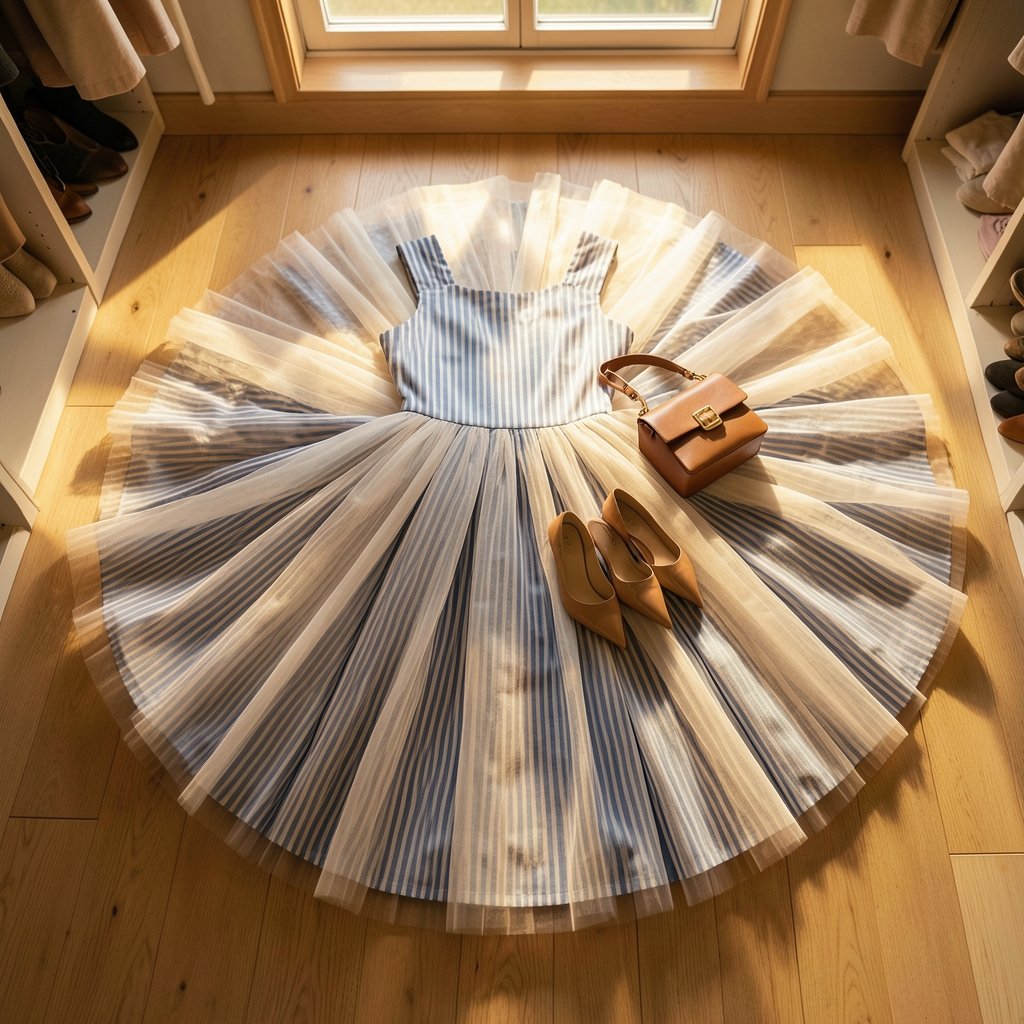
A few outfits from the revival became instant talking points. The most famous is the blue-and-white striped dress with the enormous tulle skirt, worn in the promotional imagery that launched the series in 2021. It is the kind of garment that photographs beautifully and makes almost no practical sense, which is exactly the point. It announced that the show would still be theatrical.
The revival also brought back the Fendi Baguette, the small shoulder bag that became a cultural object during the original series. Its return was a callback, a wink at longtime viewers, and a reminder that this character has always treated accessories as emotional objects rather than practical ones. Manolo Blahnik shoes appear too, because of course they do.
Beyond those headline pieces, the wardrobe built a whole vocabulary: oversized blazers, clashing prints, dramatic sleeves, and a willingness to mix high fashion with pieces that looked almost costume-like. Whether that vocabulary works depends on what you want from the show.
Why the styling divides viewers
Here is the honest split. Some fashion commentary has argued that the revival’s outfits are less influential than the original series, which genuinely changed how a generation dressed. That criticism has merit. The original show made tutus, nameplate necklaces, and visible designer bags feel like real-life options. The revival’s looks are often so specific, so expensive, and so deliberately strange that they are hard to copy. (Fran time good crossfit fran score really looks like)
There is also the age-appropriate dressing debate. Some commentators felt the wardrobe pushed the characters into clothes that read as younger than they are. Others argued the opposite: that a woman over fifty should be allowed the same fashion freedom as a woman in her thirties, and that policing her hemline is the real problem. The show does not resolve this tension, and arguably it does not want to.
The practical takeaway for anyone watching for style inspiration is this: separate the character choices from the wearable ideas. You probably will not recreate the tulle dress. But the layering tricks, the bold color combinations, and the confidence to wear one dramatic piece with simple basics are all transferable. If you are shopping for a big event, the same logic applies to summer wedding outfits: one statement element, everything else supporting it. (Summer outfits for infants)
The wardrobe as a storytelling tool
The most useful way to watch the outfits is as dialogue. When Carrie wears something enormous and impractical to a casual lunch, the clothes say something about how she is coping. When a character appears in a perfectly tailored neutral outfit, that reads as control. The costume team dresses bodies and signals grief, denial, ambition, and nostalgia.
This is where the revival actually improves on the original. In Sex and the City, the clothes were often about desire and performance. In the revival, they are often about loss and reinvention. A widow’s wardrobe is a strange thing, and the show knows it. Some of the most interesting outfits are the ones that look slightly wrong, because the character wearing them is slightly lost.
That same principle shows up in real life whenever people dress through a transition. New parents often discover that dressing a baby is its own kind of storytelling, which is why guides to newborn summer outfits and summer outfits for infants focus so much on practicality over performance. Clothes carry meaning whether we plan it or not. (Summer wedding outfits)
How to actually shop the look
If you want to borrow from the revival without copying it literally, the strategy is simpler than the show makes it look. The characters rely on a few repeatable moves.
- Pick one loud piece per outfit. A dramatic sleeve, a bold print, or an unusual bag. Everything else stays quiet.
- Use tailoring to anchor the chaos. Oversized blazers and structured coats make wild pieces look intentional rather than accidental.
- Repeat your signatures. Carrie’s Baguette and her heels are recurring characters. Find your own and wear them until people associate them with you.
- Mix high and low. The show pairs expensive pieces with unexpected casual items. That contrast is what keeps an outfit from looking like a costume.
- Dress for the occasion, then add one risk. The risk is what makes it feel like television.
That last point is where most people go wrong. They either play it completely safe or go all-in on a single dramatic outfit and feel awkward all night. The show’s better looks sit in between. The same approach works for women’s wedding outfits, where one confident choice beats five competing ones.
Common mistakes viewers make when copying the style
The biggest mistake is treating the show’s outfits as a shopping list. They are not. Many of the pieces were custom, vintage, or pulled from archives, and the proportions were tuned to specific bodies and specific scenes. Chasing an exact replica usually ends in disappointment and a lot of returns.
The second mistake is ignoring fit. A giant tulle skirt works on camera because it is tailored at the waist and photographed from flattering angles. On a real person at a real event, an untailored version looks like a costume. Fit is the unglamorous foundation of every outfit that photographs well.
The third mistake is forgetting context. The characters live in a version of New York where dramatic dressing is normal. In most towns, the same outfit reads as a theme party. That does not mean you should not wear it. It means you should wear it on purpose, to a place where it will land.
What the franchise’s fashion history tells us
The revival sits on top of a long fashion legacy. The original Sex and the City ran from 1998 to 2004 and produced two films, in 2008 and 2010. Across that run, the wardrobe became a reference point for designers, retailers, and viewers alike. The revival inherits that expectation, which is both a gift and a trap. Every outfit is compared to something from twenty years earlier.
That comparison is not always fair. Fashion has changed. So has the way people talk about it. The revival arrived into a culture of instant outfit criticism, where a single look can be screenshotted and judged within minutes. The original series aired in a slower media environment. Some of the criticism of the revival is really criticism of that shift, not of the clothes themselves.
What holds up is the show’s willingness to let older characters be visually interesting. That is rarer than it should be. Plenty of television writes women over fifty into beige. This show does not, and even its critics tend to admit that the ambition is worth something.
What actually works in practice
For readers who want to translate the revival’s energy into their own wardrobe, the practical advice is to focus on confidence and contrast rather than specific garments. Buy the one coat that makes you stand out. Wear the color you have been avoiding. Pair something formal with something casual. These are the moves the show makes constantly, and they cost far less than a designer bag.
It also helps to accept that some outfits will not work. The revival has produced looks that even devoted fans found baffling. That is fine. Experimenting means occasionally getting it wrong, and the characters themselves model that fearlessness. A wardrobe built entirely on safe choices is its own kind of failure.
If you want a low-stakes way to practice, start with accessories. A bold bag or an unexpected shoe changes an entire outfit without requiring a new wardrobe. The show’s most memorable moments are often about one object, not one dress. That is a lesson anyone can use, regardless of budget.
Conclusion
The outfits in And Just Like That… are not trying to be universally loved. They are trying to keep a character visually alive across a decade of change, and they succeed at that more often than the loudest criticism suggests. The wardrobe is theatrical, uneven, occasionally baffling, and frequently beautiful. It gives a fifty-something woman the same visual freedom the original series gave a thirty-something one, and that alone is worth paying attention to. Watch the show for the story if you like. Watch it for the clothes if you want a masterclass in dressing with nerve. Either way, the outfits will give you something to argue about, and that has always been the point.
FAQ
Who designs the outfits on And Just Like That?
The costume designers credited on the series are Molly Rogers and Danny Santiago. Patricia Field, who designed the original Sex and the City, did not return for the revival. Rogers and Santiago built on the franchise’s existing visual language while updating it for older characters and a new decade.
What is the most famous outfit from the revival?
The blue-and-white striped dress with the oversized tulle skirt, used in the promotional imagery when the series launched on HBO Max in December 2021, is the most widely recognized look. The return of the Fendi Baguette bag is a close second, largely because it referenced the original series so directly.
Why do some viewers dislike the new outfits?
Critics have argued that the revival’s styling is less influential than the original series and that some looks feel over-styled or hard to wear in real life. Others have raised questions about age-appropriate dressing. Supporters counter that women over fifty deserve the same fashion freedom as younger characters.
Can you buy the actual clothes worn on the show?
Some pieces were custom-made or pulled from designer archives, so exact replicas are often unavailable. However, many brands featured on the show sell similar items, and resale platforms have reported increased interest in pieces connected to the franchise. Expect to pay premium prices for anything confirmed as screen-worn.
How can I copy the style without copying the exact outfits?
Focus on the formula rather than the garments. Wear one statement piece per outfit, anchor it with tailored basics, repeat your signature accessories, and mix expensive-looking items with casual ones. The goal is the confidence and contrast, not a specific designer label.
Does the revival reference the original series and films?
Yes, frequently. The original Sex and the City ran from 1998 to 2004, followed by films in 2008 and 2010, and the revival uses callbacks to that history, including the Baguette bag and Manolo Blahnik shoes. These references reward longtime viewers and tie the new wardrobe to the old one.









