


What if the security cameras already mounted in your office lobby could tell your boss who you stood next to at lunch? That question drove a short-lived chapter in workplace technology. Kogniz contact tracing refers to a camera-based system that a California computer-vision company adapted during 2020 to detect person-to-person proximity and screen for elevated body temperature, part of a set of COVID-19 workplace tools that promised safety without phone apps.
The story matters beyond one company. It shows how quickly existing surveillance infrastructure got repurposed for public health, and why that repurposing raised hard questions about accuracy, privacy, and consent that still echo through workplace monitoring debates today.
What Kogniz Actually Built
Kogniz marketed AI camera systems for workplace safety and security before the pandemic arrived. When COVID-19 shut down offices in early 2020, the company adapted that same camera infrastructure into a contact-tracing and fever-screening package aimed at employers trying to reopen safely.
The core idea was straightforward on paper. Instead of asking employees to install a Bluetooth app on their phones, the system used security cameras plus computer vision to detect when two people came within a set distance of each other. In some configurations, it could identify individuals rather than just count anonymous bodies. Thermal cameras added elevated-body-temperature screening to the package.
That approach differed sharply from the phone-based method public health agencies and major tech platforms centered on in 2020. The dominant model used Bluetooth signals between phones to log anonymous encounters, an approach built into the Exposure Notification framework that Apple and Google released jointly. Camera-based proximity detection skipped the phone entirely and worked with infrastructure the building already had.
For employers, the pitch was appealing. No app adoption problem. No employee phones to manage. No Bluetooth dead zones. Just cameras, software, and a dashboard.
How Camera-Based Proximity Detection Works
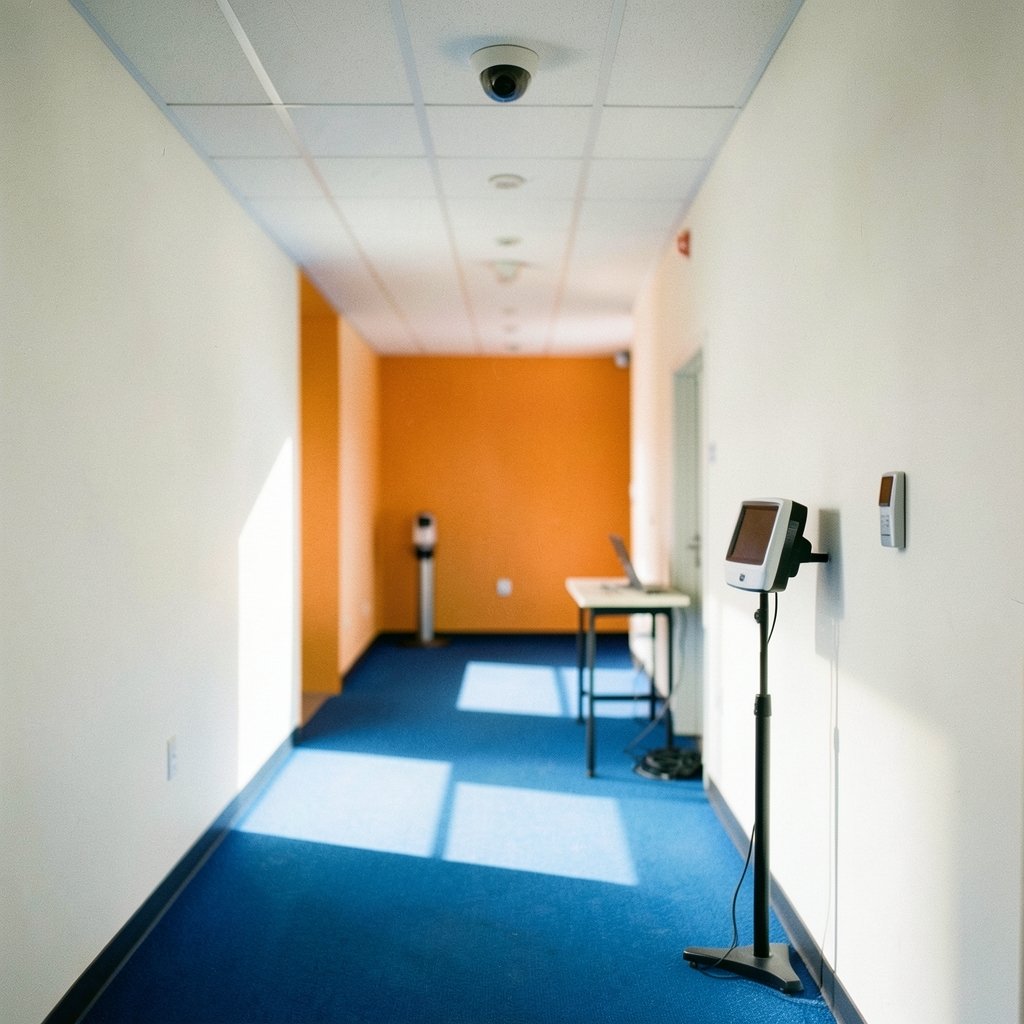
Understanding the technology helps explain both its appeal and its limits. A camera-based system typically combines several layers.
Detection and distance estimation
Computer vision models identify people in a frame, then estimate the distance between them using perspective, known camera geometry, and calibration data. When two detected people fall within a defined threshold, the system logs an encounter with a timestamp.
Identification
Some deployments tie detections to specific individuals, either through facial recognition or through integration with badge and access-control systems. This is where the privacy stakes rise sharply, because an identified proximity log is a record of who spent time near whom.
Thermal screening
Thermal cameras measure surface temperature and flag people whose readings exceed a threshold. This was marketed as a fast, contactless way to screen people entering a workplace.
The practical weak points
Distance estimation from video is sensitive to three things that are easy to get wrong in a real building. Camera placement matters, because a camera mounted at a steep angle distorts distance estimates. Occlusion matters, because a pillar or a crowd hides people and creates gaps in the log. Calibration matters, because an uncalibrated camera produces confident but wrong numbers.
In practice, this means a camera system’s encounter log is only as good as its installation. A camera aimed down a long corridor behaves very differently from one covering an open-plan floor with desks, plants, and partitions. Anyone evaluating such a system should ask for the calibration process, the occlusion handling, and independent accuracy data rather than accepting vendor performance claims at face value. No peer-reviewed evaluation specific to this system appeared in the research reviewed for this article, so treat performance figures as vendor claims.
The Regulations Employers Faced
Two regulatory threads ran through every camera-based workplace deployment in 2020: medical device rules for fever screening and biometric privacy law for identification.
Fever screening and FDA enforcement discretion
Thermal imaging systems marketed for elevated body temperature screening fell into a regulatory gray zone during the COVID-19 public health emergency. The US Food and Drug Administration issued enforcement-discretion guidance in 2020 covering thermal imaging systems used for this purpose, effectively allowing certain products onto the market without the full premarket review that a medical device claim would normally trigger.
That guidance mattered for two reasons. First, it gave vendors a legal route. Second, it did not certify accuracy. Enforcement discretion is not an endorsement of clinical performance, and public health and academic commentary through 2020 and 2021 questioned mass temperature screening more broadly, pointing to asymptomatic spread and device measurement error. A fever check that misses a large share of infected people creates a false sense of security, which is arguably worse than no check at all if it changes behavior.
Biometric privacy and camera identification
Camera-based identification of employees triggers US state biometric privacy law, most notably the Illinois Biometric Information Privacy Act, passed in 2008. BIPA imposes notice, written consent, retention-schedule, and data-security obligations on private entities that collect biometric identifiers, and it carries a private right of action that has generated substantial litigation.
Whether a given deployment triggers BIPA obligations depends entirely on configuration. A system that counts anonymous bodies and measures spacing is a different legal animal from one that identifies faces and stores encounter histories tied to names. The gap between those two configurations is where many workplace privacy problems live, because procurement documents often describe the first while the deployed system does the second. The Federal Trade Commission’s 2023 policy statement on biometric information reinforced the federal view that careless handling of biometric data can violate Section 5 of the FTC Act.
Employers evaluating any camera-based safety system should ask a blunt question: does this configuration identify people, and if so, what consent and retention rules apply? Getting a clear answer in writing before installation is far easier than untangling it afterward.
Camera Tracking Versus Phone-Based Contact Tracing
The two approaches solve the same problem with very different tradeoffs. Here is how they compare.
| Dimension | Camera-based proximity detection | Phone-based Bluetooth tracing |
|---|---|---|
| Hardware needed | Existing or new security cameras | Employee smartphones with an app |
| Coverage | Only areas with camera coverage | Wherever phones travel |
| Works off-site | No | Yes |
| Identification | Possible, depending on configuration | Typically anonymous or pseudonymous |
| Accuracy drivers | Camera placement, calibration, occlusion | Signal strength, phone models, background interference |
| Consent model | Building access and employment policy | App installation and permissions |
| Privacy exposure | Visual surveillance of the workplace | Location and proximity metadata |
Neither approach is automatically better. A camera system covers a factory floor where phones are banned but misses the parking lot, the cafeteria line that spills outside, and every off-site encounter. A phone system covers the commute and the weekend but depends on adoption and honest app behavior.
Public health agencies built their contact tracing guidance around interviews and phone-based tools, not camera networks. That is a clear sign of where institutional confidence sat. Camera proximity detection was a commercial adaptation, not a public health standard.
What Actually Worked, and What Tripped People Up
Looking back at how these deployments went, a few practical lessons stand out for anyone considering similar technology.
Start with the question, not the product. The most common mistake is buying a system because it exists rather than because it answers a specific operational question. If the goal is reducing crowding in a break room, a spacing dashboard might help. If the goal is outbreak investigation, a camera log with identity attached creates legal exposure that may outweigh its usefulness.
Test calibration in the actual space. Vendor demos happen in tidy rooms with good lighting. Real workplaces have odd angles, reflective floors, and furniture. Ask for a pilot in the actual environment with measured results before signing anything long-term.
Decide the identity question deliberately. Anonymous proximity counting and identified encounter logging are different products with different legal profiles. Many organizations drifted from one to the other without a documented decision, which is exactly the scenario that creates compliance trouble later.
Plan data retention before day one. Encounter logs accumulate fast. A retention schedule written before deployment, with automatic deletion, prevents the awkward situation of holding months of proximity data with no policy governing it.
Communicate with the workforce. Surveillance technology deployed quietly tends to generate trust problems that outlast the pandemic that justified it. Clear notice about what is measured, what is stored, and who can see it does more for adoption than any technical feature.
For teams thinking through how to communicate policies like this internally, a clear contact form workflow for employee questions can help route concerns to the right person instead of letting them fester.
Where Kogniz Stands Now
Here is the honest gap in the public record. The company’s current corporate status, product lineup, and whether the contact-tracing offering remains available are not things this article can confirm. The contact-tracing product was a 2020 adaptation of an existing safety and security platform, and like many pandemic-era pivots, its long-term fate is unclear from available information.
Readers researching the company today should check primary sources directly: archived versions of the company’s own pages, state procurement databases, court records, and any regulatory actions naming the company. The absence of such records in secondary coverage is not proof that none exist. That is a general research principle worth applying to any vendor in this space, because pandemic-era workplace technology moved fast and documentation has not always kept up.
What can be said with confidence is that the underlying category, AI camera systems for workplace monitoring, did not disappear when the pandemic emergency ended. It expanded. Proximity detection, occupancy analytics, and thermal screening features now appear across a broad range of physical security platforms, often bundled into existing camera systems. The questions Kogniz contact tracing raised about calibration, identification, consent, and data retention apply to every one of those systems.
Why This Case Still Matters
The Kogniz episode is a useful case study because it compressed several large trends into a short window. Existing surveillance infrastructure got repurposed for a health emergency. A commercial vendor filled a gap that public health agencies addressed with different tools. Regulators responded with enforcement discretion rather than certification. And employers had to make consequential privacy decisions on tight timelines with incomplete information.
Those dynamics have not gone away. Workplace monitoring keeps expanding, biometric privacy litigation keeps growing, and the line between safety technology and surveillance technology keeps blurring. Anyone making decisions in this space benefits from understanding how the last wave played out, including its unresolved questions.
For deeper context on related topics in this space, the BrassSmile editorial team covers workplace technology and privacy issues, and their material on textured hair care categories like 4c hair shows how specialized coverage works across very different subject areas.
Conclusion
Kogniz contact tracing represents a specific moment when AI cameras got drafted into public health. The technology combined computer vision for proximity detection with thermal screening for fever checks, and it offered employers a phone-free alternative to Bluetooth tracing. It also concentrated every hard question about workplace surveillance into a single product category: how accurate is the detection, who gets identified, what consent applies, and how long data sticks around.
The answers were never fully settled, and the company’s current status remains unclear from available records. What is settled is the lesson. Camera-based safety systems are only as good as their calibration and only as lawful as their configuration. Employers who ask hard questions before deployment, document their decisions, and write retention rules in advance end up far better positioned than those who let a pandemic-era purchase quietly become permanent infrastructure. That advice outlasted the emergency that inspired it, and it applies to every camera watching a workplace today.
Frequently Asked Questions
What was Kogniz contact tracing?
It was a camera-based system that a California computer-vision company adapted in 2020 to detect person-to-person proximity in workplaces and screen for elevated body temperature. It used security cameras and computer vision rather than Bluetooth phone apps.
How did it differ from phone-based contact tracing?
Phone-based tracing uses Bluetooth signals between smartphones to log anonymous encounters and works wherever phones travel. Camera-based tracing only covers areas with camera coverage but requires no app installation and can identify specific individuals depending on configuration.
Was the fever screening accurate?
Thermal screening accuracy is contested. The FDA issued enforcement-discretion guidance in 2020 that allowed thermal systems onto the market without full premarket review, but that guidance did not certify clinical accuracy. Public health commentary through 2020 and 2021 questioned mass temperature screening because of asymptomatic spread and device measurement error.
Does camera-based identification violate privacy law?
It can. Illinois’ Biometric Information Privacy Act imposes notice, written consent, retention, and security obligations on private entities collecting biometric identifiers, and it carries a private right of action. Whether a specific deployment triggers those obligations depends on whether the system identifies individuals and how data is handled.
What are the main accuracy limits of camera proximity detection?
Three factors dominate: camera placement, occlusion, and calibration. A camera at a steep angle distorts distance estimates, pillars and crowds hide people and create log gaps, and uncalibrated cameras produce confident but wrong numbers. Independent accuracy data for this specific system was not available in the research reviewed.
Is the contact-tracing product still available?
That cannot be confirmed from available information. The company’s current corporate status, product lineup, and whether the offering remains on the market are unclear. Researchers should check archived company pages, procurement databases, and court records directly rather than relying on secondary coverage.









