

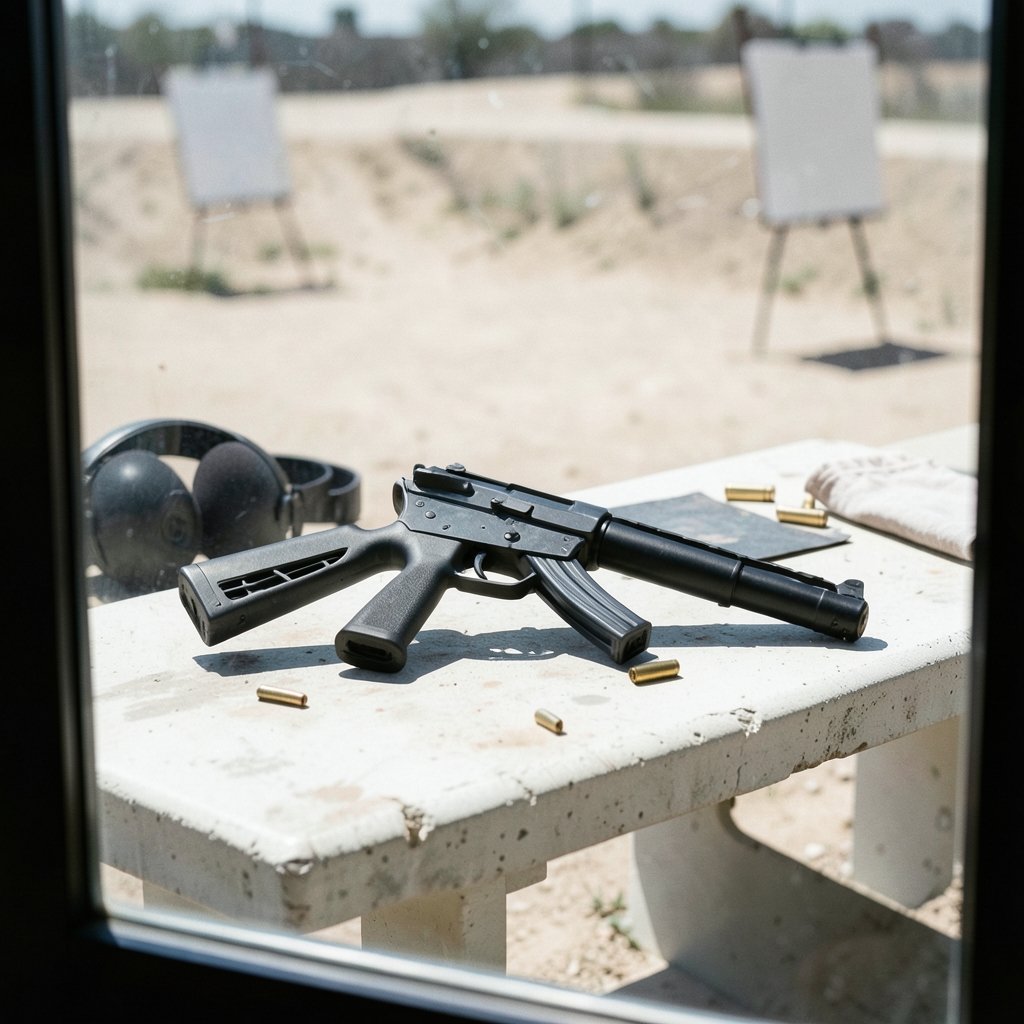
What if a gun could push its recoil downward instead of straight back into your shoulder? The KRISS TDI Vector is built around that idea, and it is one of the most recognizable submachine guns of the past two decades. Its strange, angular frame and downward-sliding bolt have made it a fixture in video games, action films, and gun-store conversations. But how much of the hype survives contact with reality? This article separates the design story from the marketing, explains what “TDI” actually means, and looks at where the Vector fits in the real world.
What Is the KRISS Vector?
The KRISS Vector is a submachine gun and pistol-caliber carbine built around a delayed-blowback action. It was designed by Swiss engineer Renaud Kerbrat and is produced by KRISS USA, a company originally called Transformational Defense Industries, or TDI. That older name is where the “TDI” in “KRISS TDI Vector” comes from. It is a naming-history detail, not a separate model or a special edition.
Development was announced in the mid-to-late 2000s, and the design was publicly shown around the late 2000s. Sources disagree on the exact first reveal, placing it somewhere between roughly 2007 and 2009, so treat any precise date with caution. What matters more is the concept: a compact weapon firing pistol cartridges, built to stay on target during rapid fire.
The Vector is chambered primarily in .45 ACP, with 9×19mm Parabellum and .40 S&W versions offered at various points. The lineup has shifted over the years, so anyone shopping for a specific caliber should confirm what is currently in production rather than relying on older reviews.
How the Super V System Works
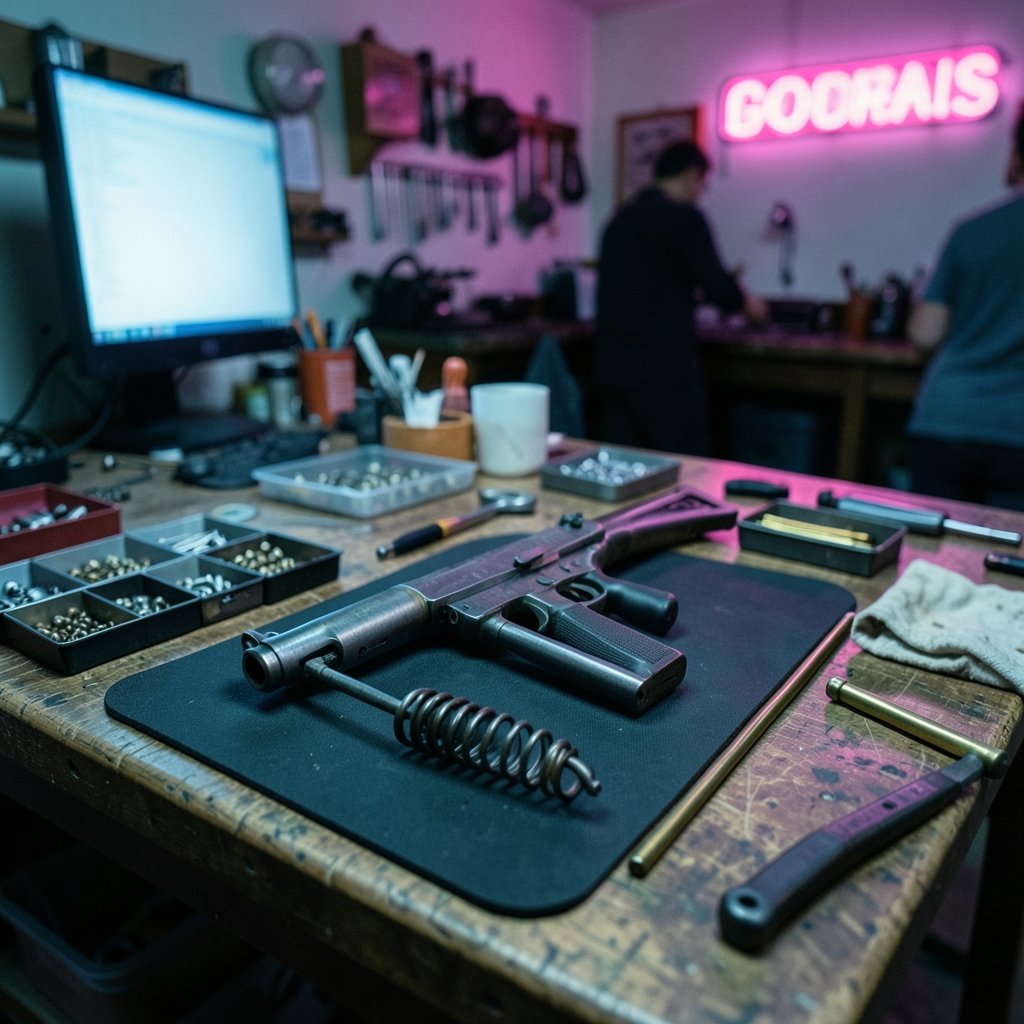
Most firearms with a simple blowback action send the bolt straight backward into a spring. The Vector does something different. Its Super V delayed-blowback system routes the bolt downward into the frame instead of straight back. The result, in theory, is a recoil impulse that pushes down rather than rearward, which should reduce felt recoil and muzzle climb, especially in full-auto fire.
Think of it as redirecting a punch. Instead of absorbing the force along the axis of your arm, the energy is channeled into a different plane. The mass of the bolt moving down inside the frame also sits closer to the shooter’s hand and shoulder, which changes how the weapon balances.
Here is the honest caveat: the recoil-reduction claims are manufacturer claims. Independent, peer-reviewed studies on the Super V system are scarce. There is no large body of neutral ballistic or ergonomic research confirming exactly how much the design reduces muzzle rise compared with conventional submachine guns. The mechanism is real and unusual; the performance numbers are harder to verify.
Why the Low Bore Axis Matters
The Vector’s barrel sits low relative to the shooter’s grip. A low bore axis generally means less leverage for recoil to rotate the gun upward. Combined with the downward bolt travel, this is the core of the design philosophy. Whether it feels dramatically better than a well-tuned conventional carbine is something shooters tend to debate, and preferences vary widely.
The Name, the Company, and the Confusion
Newcomers often ask whether the “TDI Vector” and the “KRISS Vector” are two different guns. They are not. The company began as Transformational Defense Industries, then rebranded as KRISS. The weapon is the same lineage throughout. You will see “KRISS TDI Vector,” “KRISS Vector,” and “TDI Vector” used interchangeably in forums, game wikis, and older articles.
This kind of naming drift is common in firearms history, and it creates real confusion in search results. If you are researching the gun, treat all three names as one subject. If you are buying accessories or parts, check the specific generation and caliber, because the platform has evolved across versions.
Vector Variants and Configurations
The Vector has appeared in several broad configurations, and the differences matter for anyone in the United States because of legal classifications.
| Configuration | Typical Description | Legal Note (US) |
|---|---|---|
| Submachine gun | Full-auto, select-fire, short barrel | Restricted; dealer sample or government use |
| Short-barreled rifle | Shoulder stock with a short barrel | Requires NFA registration |
| Pistol-caliber carbine | Shoulder stock with a longer barrel | Generally non-NFA |
| “Pistol” variant | No shoulder stock, short barrel | Classified as a pistol under federal rules |
Under the National Firearms Act, a short-barreled rifle generally requires registration and a tax stamp. This is why the same basic Vector can be a straightforward purchase in one configuration and a regulated item in another. Buyers should always confirm current federal and state rules, since state law can be stricter than federal law.
The caliber question also shapes the experience. The .45 ACP version is the flagship and the one most associated with the platform’s reputation. The 9mm version offers cheaper ammunition and softer shooting for many users. The .40 S&W option has appeared in the lineup at times. Each caliber changes magazine capacity, ammunition cost, and how the recoil system feels in practice.
What It Is Actually Like to Live With
Practical experience with the Vector tends to produce a few consistent observations, and they are worth knowing before you get swept up in the mystique.
The recoil system is genuinely different. Shooters commonly describe a straight-back push rather than a sharp muzzle flip, particularly in rapid fire. The downward bolt travel gives the gun a distinct feel that is hard to compare to anything else.
The ergonomics divide people. The Vector’s controls and layout are unconventional. Some shooters adapt quickly; others find the grip angle and control placement take time. Handling one before committing is the single most useful step you can take.
The platform is heavy for its size. The mass that helps tame recoil also makes the gun feel substantial. That is a trade-off, not a flaw, but it matters if you plan to carry it.
Maintenance rewards attention. The Super V mechanism has more going on than a simple blowback gun. Owners who follow the manufacturer’s cleaning and lubrication guidance tend to have smoother experiences than those who treat it like a basic carbine.
Accessories need the right generation. Because the platform has changed across versions, parts and mounts that fit one variant may not fit another. Confirm compatibility by generation and caliber rather than by the name “Vector” alone.
A common mistake is buying based on game familiarity alone. The Vector in a video game is tuned for a certain feel; the real firearm has its own weight, controls, and cost of ammunition. Another frequent error is assuming the recoil system makes the gun effortless to shoot well. It helps, but fundamentals still decide the outcome. (The row)
Pop Culture Made the Vector Famous
Ask most people where they first saw the Vector and the answer is usually a screen. The weapon is widely known through video games, notably the Call of Duty series and Tom Clancy’s Splinter Cell titles, where its futuristic silhouette reads instantly as “advanced.” Specific appearances and release dates vary by title, so it is worth checking each game individually rather than trusting a single list.
That pop-culture presence drives most of the public recognition. It also inflates expectations. A gun that looks like science fiction invites assumptions about performance that no real firearm fully delivers. The Vector’s design is genuinely innovative, but it is still a pistol-caliber weapon with the limits that come with that class.
Real-World Adoption: Modest, Not Universal
The Vector has seen limited adoption by law-enforcement and security units. It is not a standard-issue military weapon, and claims about specific agencies should be treated carefully unless backed by a primary source. The platform’s cost, complexity, and specialized role keep it out of mass-issue service.
This is not a knock. Many respected firearms occupy a niche rather than a frontline role. The Vector’s story is one of a bold engineering idea finding a smaller, dedicated audience rather than reshaping infantry equipment.
How the Vector Compares to Conventional Options
It helps to place the Vector beside the categories it competes with. The table below summarizes the broad trade-offs rather than declaring a winner, because the right choice depends on the job.
| Factor | KRISS Vector | Typical 9mm Carbine | Traditional SMG |
|---|---|---|---|
| Recoil character | Downward-redirected bolt travel | Straight blowback or delayed | Varies by action |
| Bore axis | Low | Usually moderate | Usually moderate |
| Weight | Substantial for its size | Often lighter | Varies |
| Complexity | Higher | Simpler | Varies |
| Ammunition cost | Higher in .45 ACP | Lower in 9mm | Varies |
| Parts and support | Specialized | Broad | Varies |
The takeaway is not that one design wins. It is that the Vector trades simplicity and cost for a distinctive recoil system and a look nobody forgets. Buyers who value the unusual mechanism will find plenty to like; buyers who want cheap ammunition and easy parts may prefer a mainstream carbine.
If you are comparing hair-care routines while reading gun content, that is a different rabbit hole entirely, but the same principle applies: match the tool to the job. Curly-hair readers chasing definition often study 2b hair and tighter textures like 4c hair for the same reason shooters compare actions. Specific needs beat general hype.
Common Mistakes and Practical Tips
A few habits separate informed buyers from frustrated ones.
- Confirm the caliber lineup before buying. Production has changed over time, so verify what is currently offered rather than trusting an old review.
- Check the legal classification. A short barrel plus a stock can change everything under the NFA. Know which configuration you are actually purchasing.
- Handle one first. The ergonomics are polarizing, and no article substitutes for gripping the weapon.
- Budget for ammunition. .45 ACP costs more than 9mm, and the Vector invites rapid fire.
- Verify parts compatibility. Match components to your specific generation and caliber.
- Treat recoil claims as claims. The mechanism is real; the marketing numbers are not independently confirmed.
One more tip: when reading about the Vector online, separate enthusiast enthusiasm from technical fact. Forum posts and game wikis blend the two constantly. Cross-check anything that sounds like a hard performance number.
Conclusion
The KRISS TDI Vector earns its fame honestly. A Swiss-designed, downward-traveling bolt, a low bore axis, and a silhouette that looks borrowed from the future make it one of the most distinctive firearms of its era. The “TDI” in the name simply recalls the company’s origins as Transformational Defense Industries, not a separate model.
At the same time, balance matters. The recoil-reduction story is largely a manufacturer claim without a deep body of independent research behind it. Real-world adoption is modest. The platform is heavier, more complex, and more expensive to feed than a mainstream 9mm carbine. None of that makes it a bad weapon; it makes it a specialized one.
For buyers, the practical path is clear: confirm the current caliber lineup, understand the NFA rules around short barrels and stocks, handle one before committing, and treat the marketing with healthy skepticism. For everyone else, the Vector remains a fascinating case study in how a single engineering idea, paired with unforgettable styling and a lot of screen time, can turn a niche firearm into a cultural icon.
Frequently Asked Questions
Is the KRISS TDI Vector the same as the KRISS Vector?
Yes. “TDI” refers to Transformational Defense Industries, the company’s original name before it became KRISS. The “KRISS TDI Vector,” “KRISS Vector,” and “TDI Vector” all describe the same weapon lineage. The different names reflect the company’s rebranding and the way older articles and game wikis recorded it, not separate models or editions.
What is the Super V system on the Vector?
The Super V is a delayed-blowback system in which the bolt travels downward into the frame rather than straight backward. The design is intended to redirect recoil and reduce muzzle climb, particularly during full-auto fire. It is the Vector’s defining engineering feature. The mechanism itself is real and unusual, though the specific performance benefits rest largely on manufacturer claims rather than independent published research.
What calibers does the Vector come in?
The Vector is chambered primarily in .45 ACP, with 9×19mm Parabellum and .40 S&W variants offered over the years. The lineup has changed across production cycles, so the safest approach is to confirm current chamberings before purchase. Caliber affects magazine capacity, ammunition cost, and how the recoil system feels in practice, so it is worth deciding deliberately rather than defaulting to the flagship .45.
Is the Vector legal to buy in the United States?
It depends on the configuration. Pistol-caliber carbine versions with a longer barrel and shoulder stock are generally straightforward. Short-barreled rifle versions require registration under the National Firearms Act, including a tax stamp. “Pistol” configurations without a stock fall under different rules. State law can be stricter than federal law, so buyers should verify both before purchasing.
Why is the Vector so famous if it is not widely used by militaries?
Much of its fame comes from pop culture. The Vector appears prominently in video games such as the Call of Duty series and Tom Clancy’s Splinter Cell titles, where its futuristic look reads as advanced technology. That visibility drives public recognition far beyond its limited adoption by law-enforcement and security units. It is a case of design and media exposure outpacing real-world deployment.
Does the Vector really have less recoil than other submachine guns?
Shooters commonly report a distinct straight-back push and reduced muzzle flip, and the low bore axis supports that impression. However, the strongest recoil-reduction claims come from the manufacturer, and independent, peer-reviewed studies on the Super V system are scarce. The honest answer is that the design changes how recoil feels, but the exact advantage over well-tuned conventional carbines is debated and not firmly established by neutral research.









