

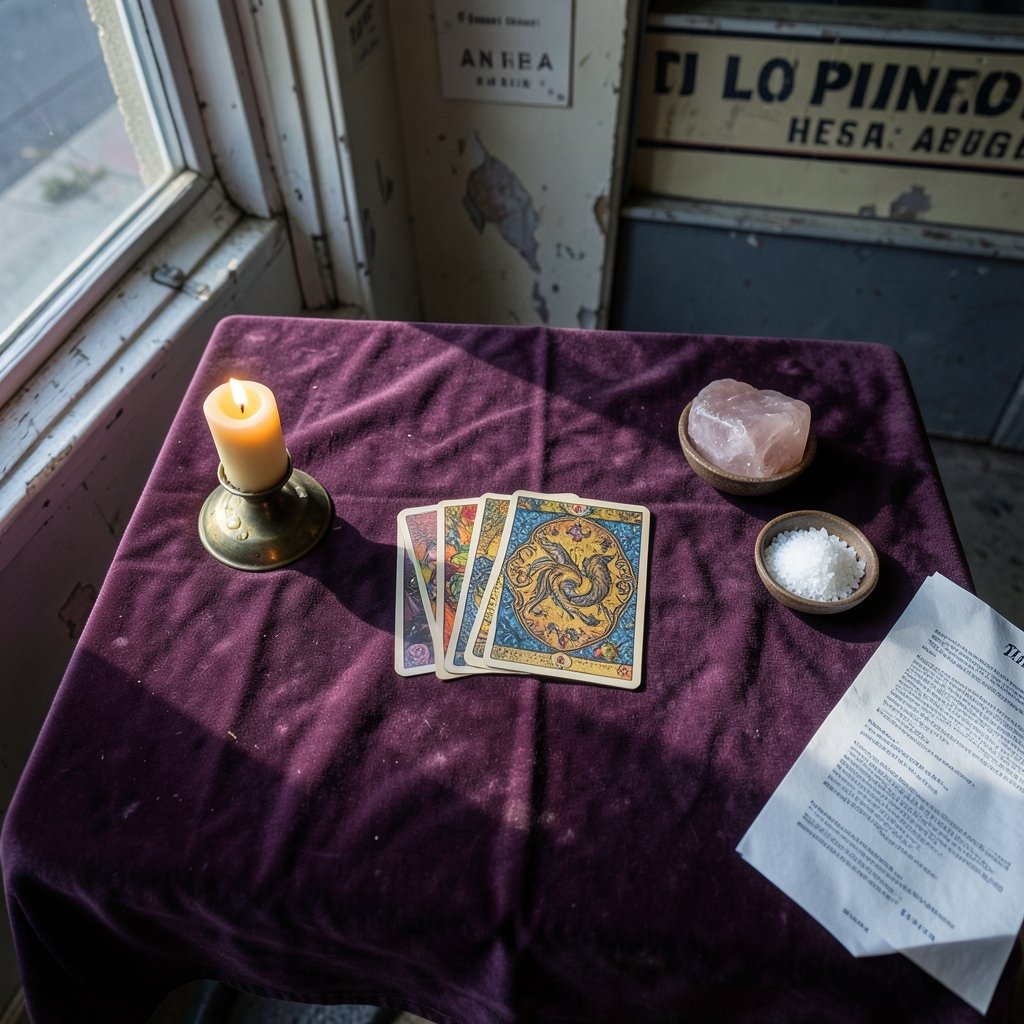
Can a stranger really know your future from a deck of cards and a candle? Walk down almost any commercial strip in Los Angeles and you will find a storefront promising exactly that. The LA psychic business is a strange mix of old-world fortune-telling, modern wellness culture, and a consumer-protection headache that regulators have been chasing for decades. Some people walk away with a fun story. Others walk away with a drained bank account.
This article looks at what the LA psychic industry actually is, how the law treats it, why smart people fall for high-pressure readings, and how to enjoy the experience without getting burned. Whether you are curious, skeptical, or just planning a birthday outing, the goal here is the same: know what you are walking into.
What “LA Psychic” Usually Means
The phrase covers a lot of ground. In Los Angeles, a “psychic” might be:
- A storefront reader offering palm, tarot, or crystal readings for a flat fee
- A phone or online hotline charging by the minute
- A wellness practitioner who blends astrology, energy work, and coaching
- A performer who reads for entertainment at parties and events
- A spiritual advisor who builds long-term relationships with repeat clients
Most of these are small businesses. Many are legitimate in the sense that they deliver what they promise: an hour of attention, a ritual, a conversation, and a bit of theater. The trouble starts when the service shifts from entertainment into claims of special power over your health, money, or safety.
That shift matters because it changes the legal picture. A tarot reading sold as fun is one thing. A reading sold as a cure for illness, or as the only way to remove a curse, is something else entirely.
The Law Has a Say, and It Varies

Fortune-telling is regulated unevenly across the United States. Some cities license it, some ban it outright, and some ignore it. Los Angeles sits in a state where the rules lean heavily on general consumer-protection law rather than a single “psychic statute.”
California’s main tool is its false advertising law, which bars deceptive statements made to sell a service. Consumer advocates have used that framework against psychic businesses that promised guaranteed outcomes. The lesson for buyers is simple: promises of guaranteed results are a red flag, and they are also legally shaky.
There is a second layer, too. The First Amendment protects speech, and courts have had to weigh free-expression claims against fraud statutes in fortune-telling cases. That tension is why the industry survives in a gray zone. Readers can talk about spirits and energies all day. What they cannot do is take your money through outright deception.
The practical upshot: a storefront being open does not mean it has been vetted. Licensing, if it exists locally, is thin. Enforcement usually only arrives after complaints pile up.
Why the Industry Keeps Growing
Psychic services sit at an interesting crossroads. On one side is a long tradition of fortune-telling that immigrant communities brought to Los Angeles and kept alive for generations. On the other is a modern wellness boom that has made astrology, tarot, and energy healing mainstream. (4c hair)
That combination gives the LA psychic scene a wide customer base. Some clients are grieving. Some are at career crossroads. Some are dealing with relationship uncertainty. Some just want a fun afternoon. A good reader can serve all four, and the best ones are honest about which category they are in.
There is also a supply side that rarely gets discussed. Reading tarot or palms is a skill that can be learned, and plenty of practitioners treat it as a craft. They study symbolism, practice cold reading, and build a persona. That does not make them frauds. It makes them performers who understand how suggestion and framing work.
The Science Side: What Testing Has Shown
Decades of controlled experiments have tried to find psychic ability under laboratory conditions. The results have not held up. Meta-analyses of “ganzfeld” experiments, a method used to test telepathy, produced small effects that later replications failed to confirm. When researchers tightened the controls, the effects shrank toward chance.
That does not mean everyone who visits a reader is being defrauded. It means the mechanism behind apparent accuracy is usually something else, and the something else has a name.
Cold reading, explained
Cold reading is a set of conversational techniques that make a stranger feel known. It works through:
- Statements broad enough to be true of almost anyone
- Quick observation of age, clothing, accent, and body language
- Watching for reactions and following the ones that land
- Framing misses as “the energy is unclear” while hits get remembered
Researchers in psychology and skepticism have documented these techniques for decades. The reason they work is not supernatural. It is human. People remember the two statements that fit and forget the twenty that did not. That is called confirmation bias, and it is the engine under most successful readings.
None of this makes a reading worthless. A skilled reader can function like a mirror, reflecting back what you already suspect. That can be genuinely useful. It just is not prophecy.
The High-Cost Trap: Where People Get Hurt
Consumer complaints about psychic services cluster around one pattern: escalating payments. A reading starts cheap, often free or under twenty dollars. Then comes a warning. There is a curse, a blockage, a dark energy attached to you. Removing it requires a cleansing, and the cleansing costs money. Then it requires more money. Then more.
This script shows up again and again in complaint files and in warnings from consumer agencies. It preys on people in vulnerable moments, which is exactly when judgment is weakest. The Federal Trade Commission has brought cases against psychic hotlines and mail schemes over deceptive practices, and “psychic surgery,” a ritual sold as a medical procedure, was exposed as fraud decades ago.
The pattern is worth memorizing because it is so consistent:
| Stage | What the buyer hears | What is really happening |
|---|---|---|
| Hook | A cheap or free first reading | Low-risk entry to build trust |
| Diagnosis | You have a curse or blockage | A problem invented to be solved |
| Solution | Pay for a cleansing or ritual | Escalating charges with no endpoint |
| Pressure | Bad things will happen if you stop | Urgency to prevent second thoughts |
If a reader tells you that you must keep paying to stay safe, stop. That is not spiritual guidance. That is a sales funnel. (The row)
How to Book a Reading Without Regret
Practical experience from people who have navigated this scene points to a few habits that separate a fun outing from a bad one.
- Set a hard budget before you go. Decide the total you will spend and treat it as fixed. Bring cash and leave the card at home.
- Choose flat-fee services over per-minute pricing. Open-ended billing invites pressure.
- Ask what the session includes. A reputable reader will tell you the length, the price, and what happens in the room.
- Refuse any reading that diagnoses a curse. This is the single most reliable warning sign in the industry.
- Never let a reading influence a medical or financial decision. See a doctor for health issues and a licensed advisor for money.
- Take a friend if you are feeling vulnerable. Grief and heartbreak are exactly when high-pressure readers do the most damage.
There is also a cultural point worth making. Plenty of readers are honest craftspeople who charge fair prices and turn away clients who seem fragile. Word of mouth is the best vetting tool in this business. Ask around before you book.
Reading the Reader: Style Matters
Los Angeles has no shortage of aesthetic variety. Some readers work out of dim rooms with incense and velvet. Others operate from clean, bright studios and present themselves more like therapists. Neither style is a guarantee of quality.
What tends to correlate with a good experience is transparency. A reader who explains their method, names their price up front, and avoids dramatic warnings is usually safer than one who performs mystery. The same goes for online services. Hotlines that advertise a low introductory rate and then bill by the minute are structured to keep you on the line.
One more detail: the tools do not matter as much as the conversation. Tarot, palmistry, runes, and astrology are all frameworks for talking about your life. A reader who uses any of them well will make the session feel collaborative. A reader who uses them to frighten you is running a different business.
Culture, Curiosity, and Respect
It is easy to mock the whole enterprise, and just as easy to over-credit it. A balanced view holds both truths at once. Fortune-telling has real cultural roots, and for many families it is a familiar ritual passed down through generations. Dismissing it outright disrespects that history.
At the same time, the LA psychic market includes operators who exist purely to extract money from people in pain. Both things are true. The trick is to approach the scene with curiosity and a working radar.
That radar gets sharper with practice. First-time visitors often describe the same arc: initial awe, then a nagging sense that the reading was vague, then a realization that the accuracy came from their own reactions. That is not a failure. It is the experience working as designed.
What About Psychic Claims in Pop Culture?
Los Angeles has always been a media town, and psychic themes sell. Television shows, podcasts, and social feeds have made readers into personalities with large followings. That visibility cuts both ways. It brings curious customers through the door, and it also invites copycats who borrow the aesthetic without the ethics. (2b hair)
For readers themselves, the pressure to perform is real. A quiet, honest session does not make for a viral clip. The dramatic warning does. That incentive structure explains a lot about why the scariest readers are often the most visible ones.
Conclusion
The LA psychic scene is not one thing. It is a storefront tradition, a wellness trend, a performance craft, and, in its worst corners, a fraud business. The difference between a memorable afternoon and a financial wound comes down to a few habits: a fixed budget, a refusal to accept curse-based upsells, and a clear-eyed understanding that cold reading explains most of what feels like magic.
Go for the ritual, the conversation, and the strange comfort of sitting across from someone who listens closely. Skip the warnings, the escalating payments, and anyone who claims power over your health or your money. Curiosity is fine. Credulity is expensive.
Frequently Asked Questions
Is it legal to work as a psychic in Los Angeles?
Yes, with caveats. Fortune-telling is regulated unevenly across the country, and California leans on general false advertising law rather than a single psychic statute. A reader can legally offer readings, but promising guaranteed outcomes or using deceptive claims to sell services can run into consumer-protection law. Local licensing rules also vary, so the rules depend on where the business operates.
How can I tell if a psychic reading is a scam?
The clearest sign is a curse diagnosis followed by a paid cleansing. Legitimate readers charge a flat fee for a session and do not claim you are in danger unless you keep paying. Other warnings include per-minute billing that never ends, pressure to decide immediately, and any suggestion that a reading can replace medical or financial advice.
Does science support psychic ability?
No. Controlled tests, including meta-analyses of ganzfeld experiments, have not produced results that hold up under replication. Effects shrink toward chance when controls tighten. What does hold up is cold reading, a documented set of conversational techniques that make a stranger feel known through broad statements, observation, and reaction-watching.
What is cold reading?
Cold reading is a technique used by readers, performers, and con artists to appear to know personal details about a stranger. It relies on statements broad enough to fit almost anyone, quick observation of appearance and manner, and close attention to the client’s reactions. Hits get remembered and misses get explained away, which is why sessions can feel uncannily accurate.
How much should a psychic reading cost?
Prices vary widely, from under twenty dollars for a short session to well over a hundred for an extended one. The safer approach is a flat fee agreed in advance rather than per-minute billing. Set a total budget before you go and do not exceed it, no matter what comes up during the session.
Why do people visit psychics if the science does not support it?
People go for many reasons that have nothing to do with proof. Grief, uncertainty, and major life transitions create a real need for someone to listen and reflect. A reading can function as a structured conversation that helps someone articulate what they already suspect. That value is real even when the mechanism is psychology rather than prophecy.









