


What do a wooden chair leg, a car’s brake disc, and a titanium bone screw for surgery have in common? Each one probably spent time spinning on a lathe m/c. The abbreviation is shop-floor shorthand for “lathe machine,” and it covers one of the oldest and most versatile tool types in manufacturing. If you have ever wondered what actually happens inside a lathe, which type fits which job, or where the real safety risks hide, this guide walks through it in plain language.
What Is a Lathe Machine?
A lathe is a machine tool that rotates a workpiece around an axis while a cutting tool is fed into it to remove material. Britannica’s definition of a lathe is essentially this: the work turns, the tool stays relatively still, and material comes away as chips. That is the opposite of milling, where the tool spins and the work stays put.
That single idea produces a surprising range of operations. On a typical lathe, an operator can:
- Turn a cylinder down to a smaller diameter.
- Face the end of a bar flat.
- Drill and bore a hole along the part’s centerline.
- Cut screw threads.
- Knurl a grip pattern onto a handle.
- Part off a finished piece from the stock.
Because almost every round or conical part in the world starts life on one of these machines, lathes sit at the foundation of machining. Shafts, pulleys, bushings, fittings, valve bodies, and fasteners all pass through a turning operation at some point.
The Core Parts of a Lathe
Most engine lathes share the same anatomy, and knowing the names helps when reading specs or talking to a machinist:
- Headstock: houses the spindle and holds the chuck that grips the work.
- Tailstock: supports the far end of long work with a center, or holds a drill.
- Carriage and cross slide: carry the tool along and across the bed.
- Bed: the heavy base that keeps everything aligned.
- Lead screw: drives the carriage for thread cutting.
- Change gears or gearbox: set the feed and thread pitch.
Two capacity numbers matter more than any others when comparing machines: swing (the largest diameter that clears the bed) and distance between centres (how long a part can be held between headstock and tailstock). Buyers who ignore these two figures often end up with a machine that cannot handle their real work.
A Short History of the Lathe
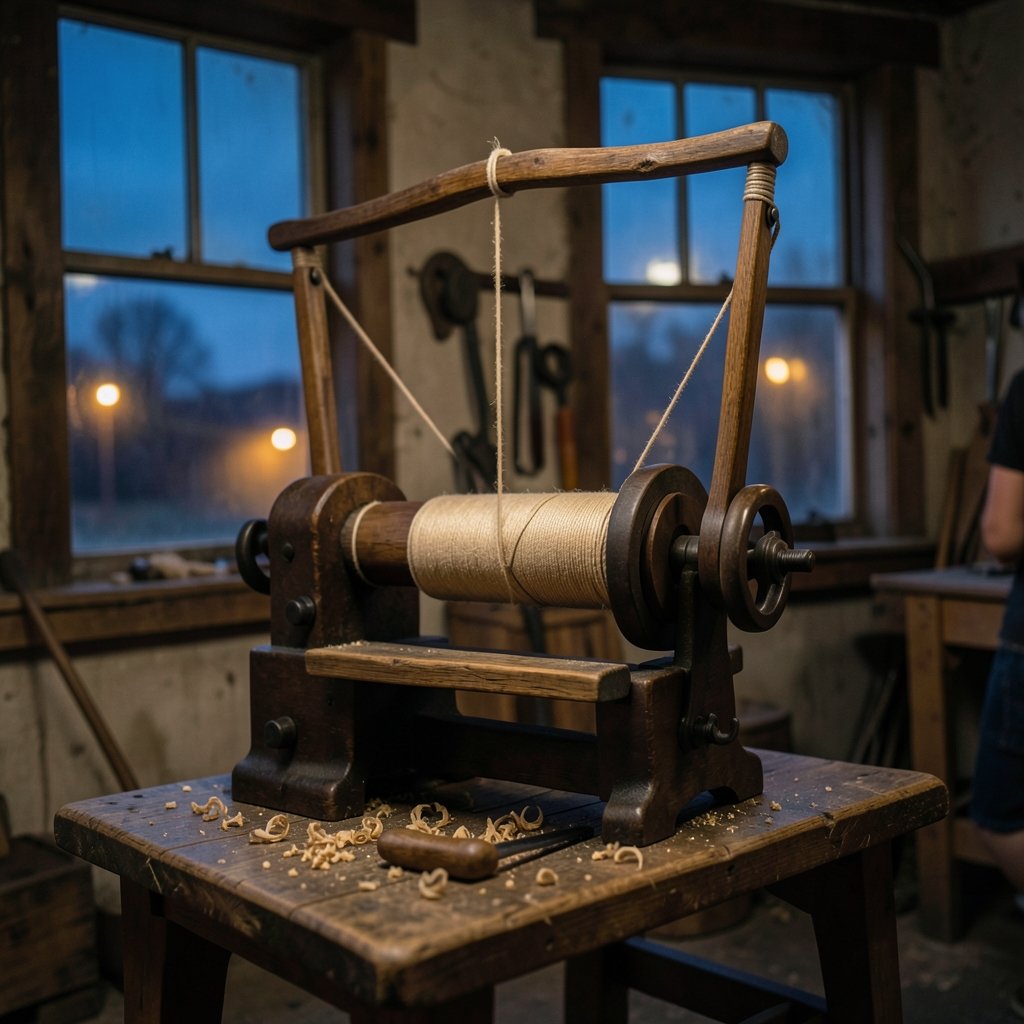
Lathes are far older than the Industrial Revolution. Pole lathes and bow lathes, powered by a springy branch or a bowstring, were turning wood centuries before anyone cut metal on one. Geared lathes appear in the 15th and 16th centuries, with designs such as those published by Jacques Besson in 1569 showing how gearing could drive the work smoothly.
The modern engine lathe came together in the 19th century, when the headstock, tailstock, carriage, lead screw, and change gears were consolidated into one machine. Henry Maudslay’s screw-cutting lathe, built around 1800, is widely credited as a landmark because it could cut accurate, repeatable threads. One caution: popular and academic sources disagree about exact dates and about who deserves credit for “the first” lathe. Treat any single definitive date with suspicion.
Types of Lathe Machines
Lathes are usually classified by how they are driven and controlled. The table below compares the main families.
| Type | Control | Best for | Typical setting |
|---|---|---|---|
| Engine (manual) lathe | Hand wheels and levers | One-offs, repairs, training | Job shops, maintenance |
| Turret lathe | Manual, indexed tool head | Repeat batches of small parts | Production shops |
| Capstan lathe | Manual, lighter sliding turret | Small, light components | High-volume small parts |
| CNC lathe | Programmed via G-code | Complex, tight-tolerance work | Modern factories |
CNC lathes now dominate industrial turning. Instead of an operator cranking handles, a program tells the machine where to move, how fast to spin, and how deep to cut. That makes repeatability easy and lets one operator run several machines. Manual lathes have not disappeared, though. For a single repair part or a quick prototype, setting up a program can take longer than simply turning the part by hand.
Specialized variants exist too: toolroom lathes built for precision, Swiss-type lathes for tiny long parts, and vertical lathes for very large, heavy workpieces that are better spun on a horizontal table.
How a Lathe Cuts Metal
The physics is simple even when the practice is not. As the work rotates, the tool presses into it and shears away a chip. Three variables decide whether that goes well:
- Speed: how fast the surface of the work moves past the tool.
- Feed: how far the tool advances per revolution.
- Depth of cut: how deep the tool bites.
Get these right and chips curl off cleanly. Get them wrong and you get chatter, a poor finish, or a dull tool in seconds. The material matters enormously: aluminum tolerates high speeds, mild steel sits in the middle, and hard alloys demand slower speeds and more rigid setups. A machinist’s instinct for these numbers comes from experience, and it is usually the difference between a scrapped part and a good one.
Tooling has changed the game as well. Replaceable carbide inserts let a shop swap a worn cutting edge in seconds rather than regrinding a tool by hand, which is one reason modern turning is so much faster than it was a few decades ago.
Practical Tips That Save Time and Money
First-hand shop experience produces a set of habits that rarely appear in manuals. These are the ones that come up again and again.
Rigidity beats power. A modest lathe set up solidly will out-perform a bigger machine that vibrates. Bolt the machine down properly, keep the tool overhang short, and chuck work as close to the jaws as the job allows.
Never trust a chuck key. The most common near-miss on any lathe is a key left in the chuck. Make removing it a reflex before the spindle starts.
Measure before the final pass. Beginners often cut to the finished size in one go. Leaving a small allowance for a final light pass lets you hit tolerance instead of scrapping the part.
Watch the chip color. Straw-colored steel chips usually mean the speed is about right; blue or purple chips mean you are pushing too hard or running too fast for the setup.
Keep the bed clean. Chips and grit under the carriage wear the ways and slowly destroy accuracy. Brush down the machine at the end of every session.
Learn the material, beyond the machine. The same lathe behaves completely differently on brass, steel, and plastic. Treat every new material as a fresh learning curve.
Mistakes tend to cluster around a few themes: working with a dull tool because sharpening feels like downtime, running too fast to “save time,” and skipping lubrication. None of these shortcuts actually save anything once a part is ruined.
Lathe Safety: What Actually Matters
Rotating work and chucks create two serious hazards: entanglement and ejection. Loose sleeves, jewelry, and long hair are the classic entanglement risks, while a workpiece that comes loose from its grip can fly across the shop.
The regulatory picture varies by country. In the United States, machine guarding falls under OSHA 29 CFR 1910 Subpart O, including 1910.212 on general requirements for all machines. In the United Kingdom, the Health and Safety Executive publishes guidance for metalworking machinery. Wherever a shop operates, the practical rules are similar: (The row)
- Guard or cover exposed rotating parts wherever the work allows.
- Fit a chuck guard and use it, even for “quick” jobs.
- Wear eye protection and keep the tool post clear of swarf.
- Stop the spindle before measuring, adjusting, or clearing chips.
- Never reach across a rotating workpiece.
Standards also exist for accuracy and safety. ISO 1708 covers acceptance conditions for general-purpose parallel lathes, and ISO 23125 addresses machine tool safety for turning machines. Buyers comparing new machines can ask suppliers which standards a model is tested against, which says more than a glossy brochure.
Who Uses Lathes?
The range of users is wider than most people expect. Job shops turn repair parts and small batches. Production factories run CNC lathes around the clock. Schools and training centers use manual lathes because they teach the fundamentals of cutting in a way that watching a program run cannot. Hobbyists and home machinists, meanwhile, have driven a healthy market for small bench lathes.
There is a hair-care analogy that turns up in beauty writing, oddly enough: just as different curl patterns need different handling, different materials and part shapes need different turning setups. Writers covering curl types sometimes reference 4c hair and 2b hair as examples of how one label covers very different needs, and the same logic applies to lathe work: a brass fitting and a hardened steel shaft are not the same job even if they look similar on paper. The habit of matching method to material is universal.
Manual or CNC: How to Decide
The manual-versus-CNC question comes up in almost every shop that is buying its first or second lathe. The honest answer depends on volume and complexity.
Choose a manual lathe when work is varied, quantities are tiny, and setup speed matters more than cycle time. Repairs, prototypes, and training all favor manual control.
Choose a CNC lathe when parts repeat, tolerances are tight, or shapes are complex. A CNC machine also makes it easier to run unattended for part of the day, though someone still has to set up and inspect the work.
Many shops end up with both. A manual lathe handles the odd jobs and second operations, while the CNC does the production work. That combination is common enough that it is worth considering before committing to one type.
Buying a Lathe: A Practical Checklist
Before money changes hands, work through these points:
- Confirm the swing and distance between centres against your largest realistic job.
- Check spindle bore, because it limits the bar stock you can pass through.
- Ask about tooling included; a machine with no chucks or tool holders is a bigger purchase than it looks.
- Inspect the bed for wear if buying used, and run a test cut if possible.
- Confirm the electrical supply and floor space match your site.
- Ask which accuracy and safety standards the machine is built to.
Used machines can be excellent value, but wear on the bed and backlash in the screws are the usual trouble spots. A test cut on a known diameter tells you more than any inspection checklist.
Conclusion
The lathe m/c is one of those tools that quietly makes modern life possible. It turns the shafts, fittings, and fasteners that hold machines, vehicles, and plumbing together, and it has been doing so in one form or another for centuries. Understanding the basic anatomy, the main types, and the real safety risks is enough to hold a sensible conversation with any machinist or supplier. Whether the job calls for a hand-cranked engine lathe or a programmed CNC turning center, the principles stay the same: rigid setup, sharp tool, right speed, and respect for a spinning workpiece.
Frequently Asked Questions
What does “lathe m/c” mean?
It is informal shorthand for “lathe machine.” In professional writing, “lathe” or “turning machine” is the preferred term. The abbreviation shows up mostly in shop paperwork, inventory lists, and online listings.
What is the difference between a lathe and a milling machine?
On a lathe, the workpiece rotates and the tool is fed into it. On a milling machine, the tool rotates and the workpiece is moved past it. Lathes produce round parts; mills produce flat surfaces, slots, and complex shapes.
Can a lathe cut threads?
Yes. Engine lathes cut threads using a lead screw and change gears or a gearbox, and CNC lathes cut them by programming the tool path. Thread cutting is one of the defining capabilities of the engine lathe and a key reason it became so important historically.
How much space does a lathe machine need?
It depends heavily on size. A small bench lathe can sit on a sturdy workbench, while an industrial engine lathe may need several meters of floor space plus clearance for the carriage travel and safe access. Always allow room beyond the machine’s own footprint.
Is a CNC lathe harder to learn than a manual lathe?
They demand different skills. Manual turning teaches feel for the cut, tool pressure, and material behavior. CNC turning requires understanding programming, offsets, and setup. Many machinists learn manual work first because it builds judgment that carries over to programming.
What safety standard applies to lathes?
In the United States, machine guarding requirements fall under OSHA 29 CFR 1910 Subpart O, including 1910.212. In the United Kingdom, the Health and Safety Executive issues metalworking machinery guidance. On the standards side, ISO 1708 covers acceptance conditions for parallel lathes and ISO 23125 covers turning machine safety.









