

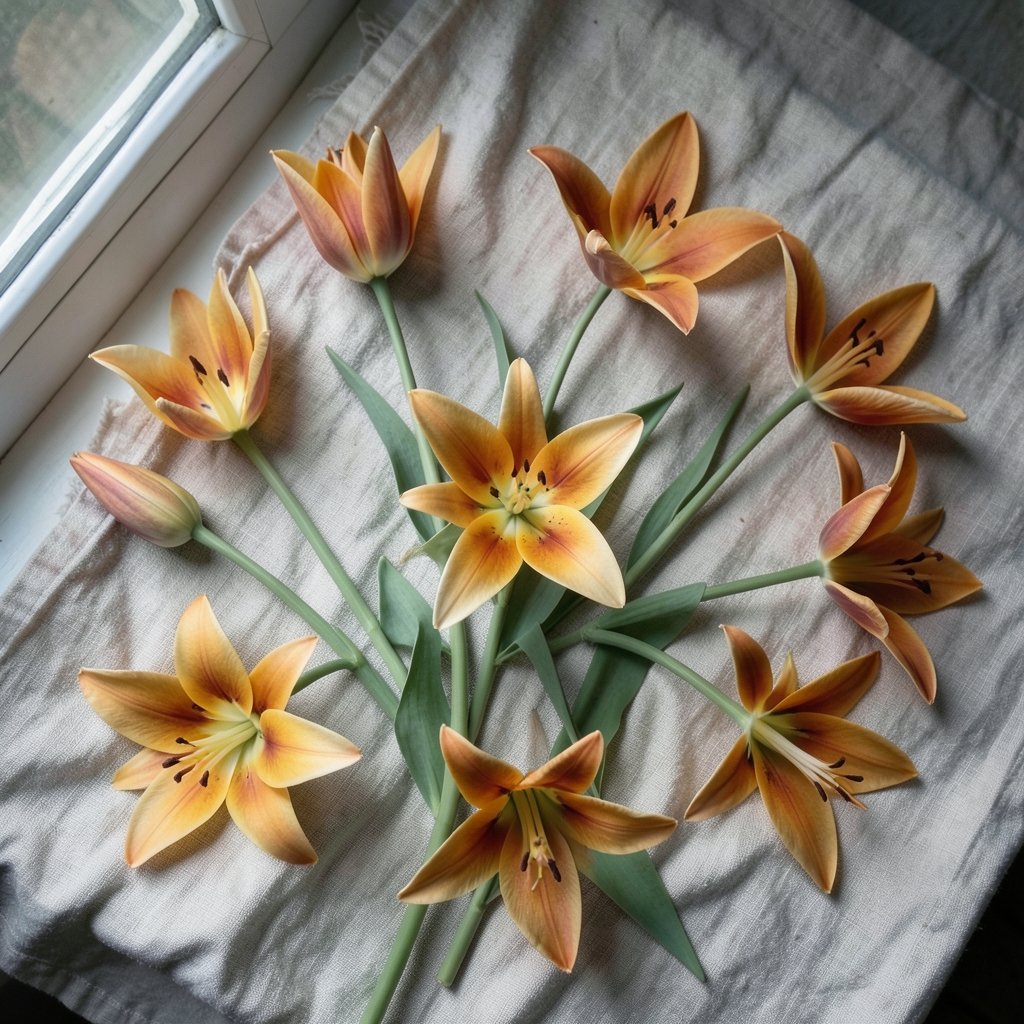
What makes a tulip look like it belongs in a vase on a painting rather than a garden bed? The answer, more often than not, is a single word: lily-flowered. It sounds like a poetic flourish, but it is actually a precise gardening term with real rules behind it. Once you learn what a lily-flowered tulip is, you will start noticing them everywhere, from formal borders to supermarket bouquets. You will also understand why they behave differently from the fat, cup-shaped tulips most people picture. This guide unpacks the term from every angle: the botany, the history, the growing advice, and the common mistakes that trip up even experienced gardeners.
What “lily-flowered” actually means
lily-flowered is a compound adjective describing a flower whose shape echoes a lily. Think of a funnel or a trumpet, with petals that flare outward rather than closing into a tight cup. In everyday prose, the word appears as a loose descriptive term for white, lily-like blossoms. In plant names and cultivar names, it carries a much stricter meaning.
This is the key distinction that confuses people. The term lives in two worlds. In the botanical and horticultural world, it is a classification label with defined characteristics. In literature and descriptive writing, it is a stock epithet, a shorthand for something delicate, pale, and elegant. The hyphenated form dominates in plant nomenclature, though you will sometimes see it written open as “lily flowered.” Both spellings appear in catalogs and garden writing, and neither is technically wrong, but the hyphenated version is the safer choice if you want to look like you know what you are doing.
The horticultural definition: lily-flowered tulips

Here is where the term earns its keep. Lily-flowered tulip is a recognized garden classification. These tulips share a distinct silhouette: long, pointed petals that curve outward at the tips, giving the bloom an airy, almost star-like profile. They typically fall into the late-flowering group, which means they bloom after the early and mid-season varieties have already peaked. That timing matters for garden design, because it extends the tulip season by a couple of weeks.
The classification is used by major horticultural bodies, including the Royal Horticultural Society, which organizes tulips into groups based on flower shape and bloom time. Lily-flowered is one of those groups, sitting alongside categories like Darwin hybrids, fringed, and parrot tulips. If you buy bulbs labeled “lily-flowered,” you know roughly what you are getting: slender, elegant flowers on stems that are often tall and graceful.
How they differ from other tulips
The differences go beyond appearance. Shape affects how a flower behaves in wind, how it holds up in a vase, and how it pairs with other plants. Here is a quick comparison to make the distinctions concrete.
| Feature | Lily-flowered tulips | Standard cup tulips | Parrot tulips |
|---|---|---|---|
| Petal shape | Long, pointed, outward-curving | Rounded, tightly cupped | Ruffled, deeply fringed |
| Bloom time | Late season | Early to mid season | Mid to late season |
| Stem habit | Often tall and slender | Sturdy, varied | Variable, sometimes weak |
| Best use | Cutting gardens, borders | Mass planting, beds | Statement displays |
| Wind resistance | Moderate | Good | Poor |
| Vase life | Good to excellent | Good | Fair |
The tall, slender stems that make lily-flowered tulips so graceful also make them a little more vulnerable. In an exposed site, they can flop after heavy rain. That is not a flaw so much as a design constraint. Plant them where they are sheltered, or pair them with sturdier neighbors that can lend support.
Beyond tulips: the term across the plant world
Tulips get most of the attention, but they are not the only plants described as lily-flowered. The word appears in species epithets and common names across several genera. Spider lilies, for instance, produce blooms that are frequently described as lily-flowered because of their long, spidery petals and funnel form. Various Lilium cultivars carry the descriptor too, which makes sense given the name.
This broader usage is worth understanding because it reveals how the term works. It is not a single species or a single genus. It is a shape descriptor that happens to have been formalized in tulip classification. Once you grasp that, you can read plant catalogs with more confidence. When a grower calls something lily-flowered, they are telling you about the silhouette, not the family tree.
A short history of a descriptive word
The term has literary roots that stretch back further than most gardeners realize. In nineteenth-century English, “lily-flowered” appeared in poetry and descriptive prose as a stock epithet for white, lily-like blossoms. Writers reached for it when they wanted to evoke purity, delicacy, or a certain pale elegance. It was the kind of phrase that signaled refinement.
Pinpointing an exact first use is tricky. The standard authority for attestation dates of compounds like this is the Oxford English Dictionary, which traces when a word first appears in print. Without a subscription and a direct entry check, any claim about a precise first-use date should be treated as unverified. What is safe to say is that the term was in active descriptive use by the nineteenth century, and it has been carried forward into modern horticulture largely unchanged.
That continuity is part of the charm. A gardener planting lily-flowered tulips today is using a word that Victorian poets would have recognized. The plants changed through breeding, but the vocabulary held steady.
How to grow lily-flowered tulips successfully
Growing these tulips is not difficult, but they reward attention to a few details. The most common mistakes are planting too shallow, planting too late, and expecting them to behave like compact bedding tulips.
Step-by-step planting
- Choose a sunny site with good drainage. Tulips rot in waterlogged soil. A raised bed or a slope helps if your ground stays wet.
- Plant in autumn, roughly six to eight inches deep. Deep planting helps stems stay upright and discourages the bulbs from being heaved out by frost.
- Space bulbs four to six inches apart. Lily-flowered varieties need room for their wide, open flowers.
- Water once after planting, then leave them alone. Autumn rain usually does the rest.
- Stake tall varieties before they need it. Set supports early so stems grow into them rather than being forced later.
- Deadhead after blooming but leave the foliage. The leaves feed the bulb for next year. Cut them back only when they have yellowed completely.
That last point is where many gardeners go wrong. Tidiness tempts people to cut foliage while it is still green, which starves the bulb and reduces next year’s bloom. Patience pays off.
Design ideas that actually work
Lily-flowered tulips shine in a few specific roles. In a cutting garden, their long stems and elegant shape make them ideal for arrangements. In a mixed border, they add vertical interest and a softer texture than blocky cup tulips. They also pair beautifully with early perennials that emerge as the tulips fade, hiding the yellowing foliage.
One practical tip from experienced growers: plant them in groups of at least nine to twelve bulbs. Single specimens look lost, and the slender flowers read better in a drift. If you are planning a cut-flower patch, think about timing the way you would think about rental property cash flow — small, steady inputs spread across the season beat one big burst that leaves you with nothing later. (The row)
Common mistakes and what to do instead
Even careful gardeners run into trouble. Here are the pitfalls that come up most often, along with fixes that work in practice.
- Planting in shade. Tulips need sun to bloom well. A shady spot produces leaves but few flowers.
- Overwatering in winter. Wet soil is the leading cause of bulb rot. Improve drainage before planting rather than after.
- Treating them as perennials without feeding. Many tulips bloom best the first year and decline afterward. Feed at emergence and after bloom if you want them to return.
- Cutting stems too long. Leave at least two leaves on the plant when you harvest flowers for the vase.
- Ignoring wind exposure. Tall lily-flowered stems snap in gusts. Site them where a hedge or wall breaks the wind.
There is also a subtler mistake: expecting every lily-flowered tulip to look identical. Cultivars vary in height, color, and how dramatically the petals reflex. Read the catalog description carefully rather than assuming a single template.
Why the term matters for buyers and gardeners
Vocabulary is a tool. When you know what lily-flowered means, you can shop more precisely. You can ask for a specific class at a nursery and get a plant that matches your design intent. You can read a bulb catalog and predict bloom time, stem height, and vase performance before you spend money.
The term also connects gardening to a wider world of plant naming. Species epithets, common names, and cultivar descriptors all carry information, and learning to read them is one of the quiet pleasures of horticulture. It is a bit like learning the vocabulary of a craft, whether that is 4c hair care or the jargon of a specific trade. The words are not decoration. They are instructions.
There is a practical payoff too. Gardeners who understand classification waste less money on plants that do not suit their site. They also get better results because they plant with the flower’s habits in mind rather than fighting them.
Lily-flowered tulips in the vase and in the garden
Cut-flower performance deserves its own note. Lily-flowered tulips generally hold well in water, and their open shape makes them a favorite for arrangements that need movement and lightness. The petals continue to curve outward as the flower ages, so an arrangement actually changes character over several days. Some people love that. Others prefer a bloom that holds a fixed shape.
In the garden, the same quality creates a sense of motion. A drift of lily-flowered tulips in a breeze looks alive in a way that tightly cupped tulips do not. That is why landscape designers reach for them when they want a border to feel less static. Pair them with grasses or airy perennials and the effect multiplies.
One more consideration: color. Lily-flowered tulips come in a wide range, from pure white and soft yellow to deep maroon and bicolor blends. White varieties carry the strongest association with the literary use of the word, since the “lily” comparison in prose almost always implied pale blossoms. If you want the poetic effect as well as the botanical one, white and cream cultivars deliver both.
Conclusion
Lily-flowered is a small term with a surprising amount of reach. It names a specific tulip class with pointed, outward-curving petals and late-season bloom. It describes a flower shape that appears across several plant families. It carries a literary history that stretches back to nineteenth-century descriptive prose. And it gives gardeners a practical tool for choosing plants that suit their site, their vase, and their design.
The next time you see the word on a bulb packet or in a catalog, you will know exactly what it promises: a slender stem, an open flower, and a bloom that brings a little grace to whatever it touches. Plant a drift in autumn, give them sun and drainage, and let the foliage ripen. The reward is a late-spring display that looks, quite literally, like something out of a poem.
Frequently asked questions
What does lily-flowered mean?
It is a descriptive term for flowers shaped like lilies, with long, pointed petals that curve outward in a funnel or trumpet form. In gardening, it is also a formal classification for a group of late-blooming tulips with that distinctive silhouette.
Are lily-flowered tulips perennial?
They can return for several years, but like most tulips they bloom best in their first season and often decline afterward. Leaving the foliage to ripen, feeding the bulbs, and ensuring good drainage all improve the odds of a repeat display.
When do lily-flowered tulips bloom?
They belong to the late-flowering group, so they typically bloom after early and mid-season varieties. In most temperate gardens, that means late spring, extending the tulip season by roughly two weeks.
Do lily-flowered tulips make good cut flowers?
Yes. Their long stems and open, elegant shape make them excellent for arrangements, and they generally hold well in water. Harvest stems early in the morning and leave at least two leaves on the plant so the bulb can recharge.
Why are my lily-flowered tulips flopping over?
Tall, slender stems are more vulnerable to wind and heavy rain than compact tulips. Plant them in a sheltered spot, set stakes early in the season, and avoid excessive nitrogen fertilizer, which encourages soft growth.
Is it spelled lily-flowered or lily flowered?
Both spellings appear, but the hyphenated form dominates in plant nomenclature and catalogs. Either way, the meaning is the same, and the hyphenated version is the safer choice in formal garden writing.









