


Choosing a luxury apartment is about matching the home and its everyday services to your budget, not simply picking the highest rent. You may be weighing a shorter commute, more room to relax, and housing costs that still leave space for other bills. The advertised amount can make that choice seem simple, but it may not include every monthly charge. Base rent is the monthly charge for the apartment before added fees, utilities, or other recurring costs.
In North Charleston and across the Charleston metro, listings can differ in location, layout, and what comes with the home. A clear comparison helps you sort out which options fit your routine and spending limit. Start with the features and location you will use most often, then compare the full monthly cost.
Key Takeaways
- Check building features and in-home finishes, not price alone.
- Compare the address with your daily destinations.
- Add recurring fees and utilities to base rent.
- Prioritize amenities you will use often.
- Get lease costs and terms in writing.
What Makes an Apartment Feel Like Luxury?
A luxury designation should reflect the building, the unit, and the amenities, not just a high price. Real quality shows in the home’s features and the care behind its shared spaces.
A higher asking price alone does not prove that an apartment offers luxury. Listings may use the CoStar Building Rating System, which classifies buildings using verified traits, design, and premium community amenities, rather than price alone.
Do not treat a high monthly price as proof of luxury when the building and unit details do not support the label.
Building Features and Shared Spaces
Shared features shape daily life outside your front door. A fitness room, rooftop terrace, lounge, or staffed package area can add value when you use it.
The CoStar Building Rating System offers one building-based way to compare properties. Propmodo’s overview of CoStar’s ratings explains their use for comparing building quality across markets. Its office-rating details should not be mistaken for apartment-specific rules.
Some Charleston apartments have more modest shared spaces but stronger layouts or finishes inside. A label alone cannot tell you how the community feels or how well it fits your needs.

Interior Finishes and Floor Plans
Listings may show open floor plans, high ceilings, hardwood floors, granite countertops, stainless steel appliances, or private balconies and patios. These are examples, not features every luxury home includes.
Look at the floor plan, not just a staged photo. A wide living area may suit hosting, while a separate nook may work better for remote work.
Check the actual floor plan and finishes, since a listing label cannot tell you whether the layout suits your routine.
Which Charleston Area Fits Your Routine?
A good location shortlist starts with the places you travel to most, not a neighborhood name alone. Your daily route should guide which Charleston apartments make the cut.
For luxury apartment complexes near me, center a map search on your actual daily destinations. Compare the addresses with work, school, errands, and the trips you make most often.
| Area | Example community | Floor-plan range |
|---|---|---|
| Downtown and Eastside | The Porter | Studios through two bedrooms |
| Cannonborough/Elliotborough | The Guild | Studios through two bedrooms |
| Eastside and Mazyck-Wraggborough | Meeting Street Lofts | Studios through two bedrooms |
| Upper Peninsula | 511 Meeting | Studios through two bedrooms |
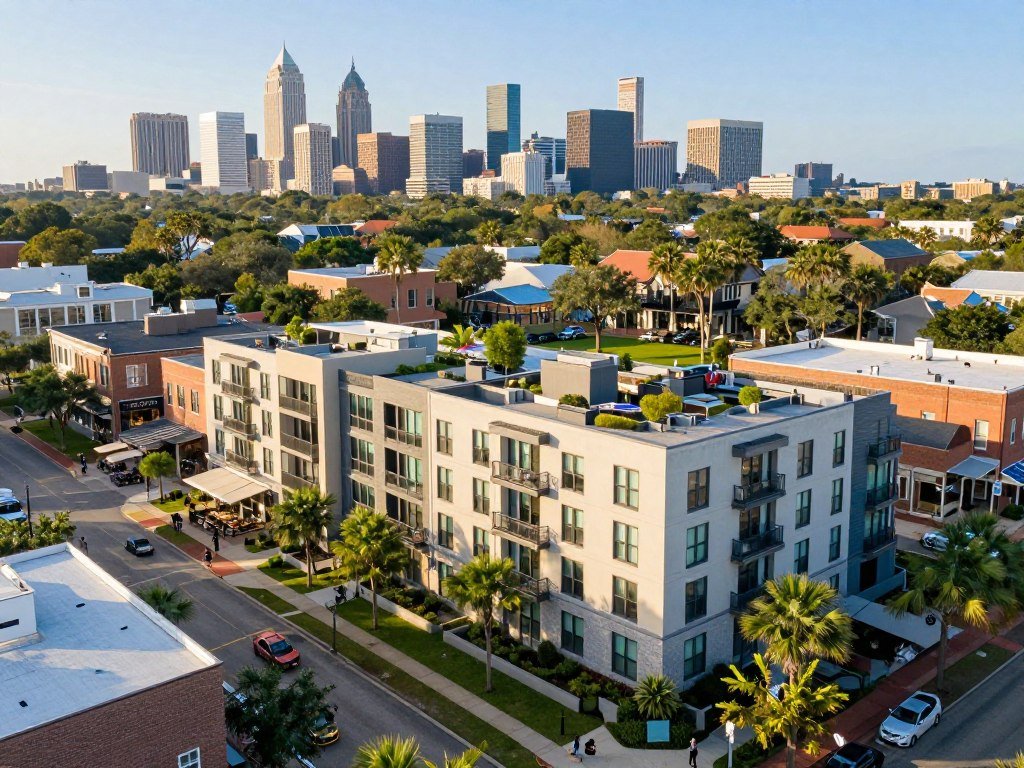
North Charleston apartments can belong in the same map-based search. The Factory at Garco Park is in Park Circle, North Charleston, with studio through three-bedroom homes, as the acquisition report describes.
Still, North Charleston and downtown are not interchangeable for every commute. Keep the search radius tied to your real commute so a convenient-looking listing does not create a daily time burden.
How Much Do Luxury Apartment Complexes Cost in Charleston?
In the North Charleston luxury listings, advertised monthly rents span $1,438 to $6,484, so compare the specific unit and what its price includes. That wide range reflects different homes and listings, not one standard price.
Compare base rent with the total monthly cost, including recurring fees and utilities. Charleston apartments show a $2,265 median rent, while 2,157 active listings averaged 56 days on the market. Those citywide figures describe a different inventory from luxury listings in North Charleston.
Compare Asking Rent With the Full Monthly Cost
The U.S. average monthly rent was $1,698 in 2026, up 2.91% from the year before. Professionally managed apartment rents fell 0.6% year over year in the fourth quarter of 2025.
Those short-term shifts sit beside a longer strain. From 2001 to 2024, renter incomes rose 9% in real terms while rents rose 30%. In 2024, 22.7 million renter households, or 49%, spent more than 30% of income on rent and utilities.
Another 12.1 million renters, or 26%, spent more than half their income on those costs. From 2014 to 2024, units priced at $2,000 or more grew by 5.8 million, while units below $1,400 fell by 9.3 million.
The 2026 U.S. average rent offers broad context, not a local price target. A $500 monthly budget is usually more suited to a room share or qualifying subsidized housing than a private luxury unit.
At $20 an hour and 40 hours each week, you gross about $3,467 monthly. A $1,000 rent payment equals about 29% of that gross income, before taxes, utilities, debt, and other bills.
Use Income Rules and Assistance Carefully
The 30% rule is a budgeting guideline, not a legal requirement. It can help you screen apartments, but it does not account for every bill or household need.
HOME is a separate income-restricted program, not a market-rate rent cap or an option for every renter. HUD’s FY 2026 HOME limits took effect June 1, 2026.
For HOME-assisted rentals, the rent cap is the lower of comparable-housing fair market rent or 30% of adjusted income for a family earning 65% of area median income. Limits adjust by bedroom size.
In HOME rental projects with at least five assisted units, 20% of assisted units must serve very low-income families at specified limits. Treat the 30% figure as a first-pass screen, then test the full monthly cost against take-home pay and other bills.

Which Amenities Are Worth Paying For?
The most valuable amenity is the one you will use regularly and can access without friction. Daily usefulness matters more than a long feature list.
Start with in-unit basics, then weigh shared spaces and connected services. In-unit laundry, air conditioning, and dishwashers remain in demand in 2026.
In-Unit Comfort
These features affect routine tasks inside your home. A washer and dryer can save trips, while reliable air conditioning matters during hot weather.
Use this short check when comparing apartments:
- In-unit laundry
- Working air conditioning
- Dishwasher
- Usable fitness or wellness space
- Balcony, patio, or rooftop access
- High-speed internet and simple digital building access

Shared Wellness and Outdoor Space
Equipped gyms, wellness areas, balconies, patios, rooftop terraces, and grilling areas are expected favorites for 2026. Private garage parking and EV charging also appear on that list.
A sauna and cold-plunge circuit can offer a wellness option in less space than a full gym expansion. Indoor or acoustically enclosed pickleball courts can allow year-round play while limiting noise complaints.
A polished amenity can still be poor value if the hours, access rules, or controls make it hard to use. Check whether the space fits your real schedule.
Connectivity and Smart Features
Smart-home tools can support daily tasks, from entry to thermostat controls. Explore how smart-home design is shaping the use of upscale spaces.
Connectivity matters beyond your unit. In a National Apartment Association survey, 91.2% of responses ranked it as key for communal workspaces, 79.3% for EV charging areas, 47.2% for package rooms, and 35.9% for fitness centers.
Residents expect high-speed internet and a simple digital experience for building entry, rent payment, and thermostat controls. The 2026 amenity findings point to the role of reliable connections in shared areas, too.
Ask whether internet, entry, payments, and thermostat controls work through one dependable, easy-to-use system.
How Can You Judge the Landlord Before Signing?
A transparent lease and responsive management can matter more than one extra amenity. Clear answers about money and repairs help you judge what daily renting may feel like.
Look for a written fee schedule, clear deposit terms, and a defined maintenance process. Prompt replies to basic questions are another practical sign of good communication.
Look for Clear Costs and Communication
A June 2026 U.S. survey of 905 renters found that 72% had passed on a property over landlord concerns. Another 60% had chosen not to renew for landlord-related reasons.
Hidden fees were the top dealbreaker for 19% of renters. Nearly seven in ten said landlord issues had cost them money, including unexpected fees for 23% and forfeited deposits for 22%.
Clear costs can build trust: 22% named transparent costs as the top trust-builder, and 67% would pay slightly higher rent for an excellent landlord reputation.
Check Maintenance and Lease Practices
Renters reported poor communication at 68%, poor maintenance at 66%, and frequent rent increases at 41%. The June 2026 renter survey also found that landlord concerns can affect choices, renewals, and finances.
Use these four warning signs during a conversation or lease review:
- Fees that appear late
- Unanswered questions about deposits
- Vague repair timelines
- Unexplained rent increases or renewal terms
A polished lobby or a high review score cannot replace clear written lease terms. Get every fee, deposit condition, and repair-reporting method in writing before you pay or sign.
Which Charleston Communities Should Make Your Shortlist?
A useful shortlist matches a community’s actual features to the renter’s daily priorities. These candidates offer different reasons to take a closer look, rather than one universal winner.
Choose by the feature you value most, then check current availability. The Porter may suit renters seeking a dog park and rooftop space; 10 WestEdge adds waterfront and pool features.
| Community | Area | Floor-plan range | Distinguishing feature |
|---|---|---|---|
| The Porter | Downtown | Studios through two bedrooms | Dog park and rooftop terrace |
| 10 WestEdge | Downtown Westside | Studios through two bedrooms | Waterfront setting and rooftop pool |
| Morrison Yard | Downtown Eastside | Studios through three bedrooms | 3,000-square-foot fitness facilities; porches or patios |
| Foundry Point | NoMo | One through three bedrooms | Dog park and urban green space |
| The Jasper | Harleston Village | Studios through three bedrooms | One-acre rooftop pool and lounge |
Morrison Yard opened in 2022 and has 3,000 square feet of fitness facilities, a two-story lobby and lounge, plus layouts with porches or patios. The Jasper has a one-acre rooftop with lounge seating and a pool.
Foundry Point offers one- through three-bedroom homes, a dog park, and urban green space. The Foundry Point acquisition report places the 275-unit community on Downtown Charleston’s Upper Peninsula.
These are feature-based candidates, not rankings or guarantees of current availability. Confirm current floor plans and availability directly before arranging a tour.
What Should You Check Before Applying?
Before applying, verify that the exact unit, price, and move-in date are still available. A loaded results page does not prove that a rental is still open.
Review the current offer and written terms before paying an application fee. A 12-month lease is common, but lease lengths vary.
Use these three checks to keep the application tied to the unit you want:
- Confirm the exact unit and move-in date.
- Request the total monthly cost and written fee schedule.
- Review lease length, renewal terms, deposit conditions, and application requirements.
Applications often ask for government-issued identification, proof of income, and rental history. Keep your records ready, but compare them with the community’s stated requirements.
A listing can remain in search results after a unit is no longer available. Confirm the exact apartment and move-in date before applying.
For help planning a move on a short timeline, see these moving and housing tips. Save the lease and fee documents so you can compare the written terms with the final application.
Conclusion
A strong choice is the community that fits your budget and routine on paper and still checks out in person. The right match should pair a manageable total monthly cost with features and management you can confirm.
That standard can keep a polished listing from distracting you from the details that shape daily life. It also gives you a clear way to compare options across North Charleston and the wider Charleston metro.
Shortlist three communities, request written total costs and current floor plans, then schedule tours. Build a three-community shortlist and request current written pricing before booking tours.
FAQ
What is a luxury apartment?
What is the 30% rule for apartments?
What are some good apartment amenities?
What is an apartment complex?
Where can I live for $500 a month in the USA?
Is living in an apartment complex worth it?
Can I afford $1000 rent making $20 an hour?
What are red flags when renting an apartment?









