


Quick Answer: How many ounces is a 750 ml?
A 750 ml bottle holds about 25.36 US fluid ounces. That is the exact figure you get when you divide 750 by 29.5735, the number of milliliters in one US fluid ounce. You will use this number when converting a wine or spirits bottle for a recipe, a cocktail menu, or a shipping form. If you are working in imperial ounces instead, the same bottle holds about 26.40 imperial fluid ounces.
The two answers differ by roughly 4%, so the ounce you mean changes the result. The US fluid ounce is about 29.57 ml, while the imperial ounce is about 28.41 ml. Most people in the United States want the US figure.
Before you rely on a number, check the unit system, the rounding, the bottle’s actual fill level, and whether the recipe or form expects US or imperial ounces.
Why This Conversion Trips Up So Many People
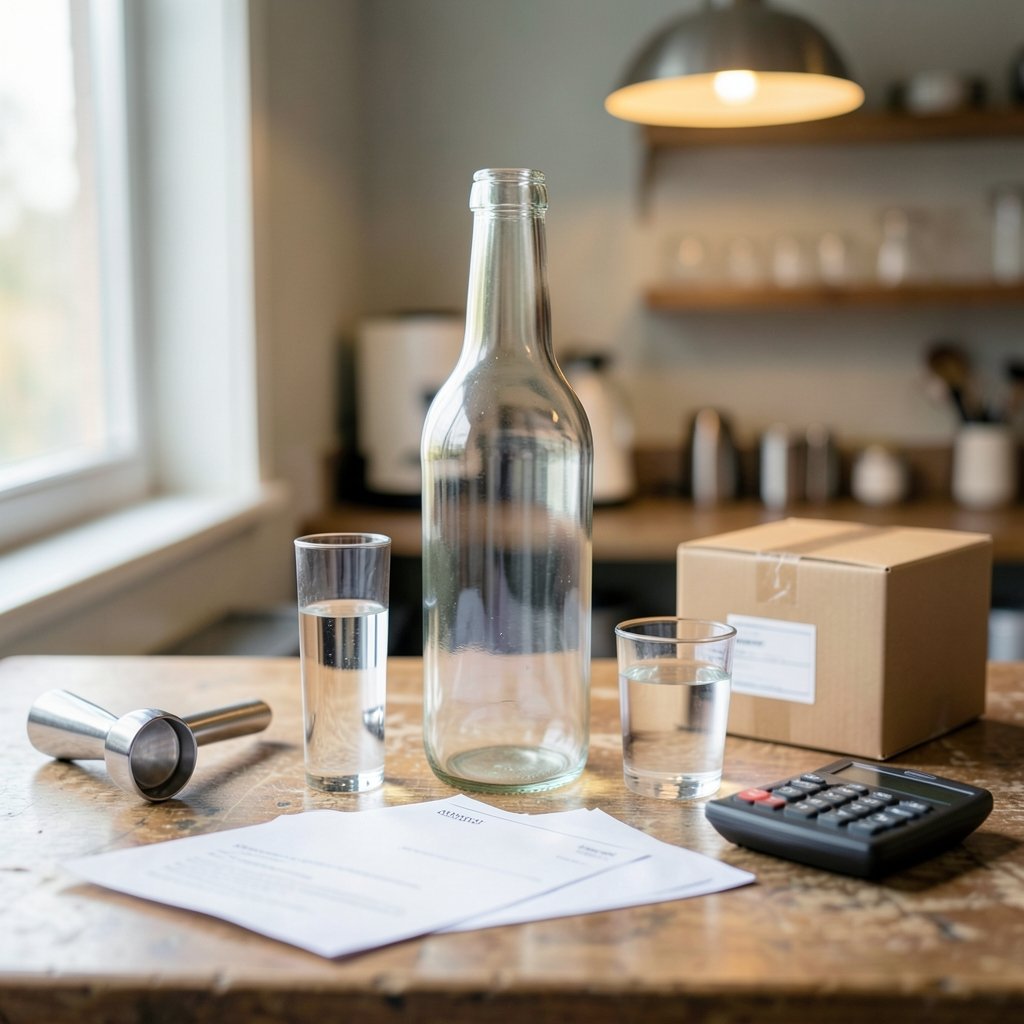
It looks like a simple question. It is not, quite. Ask five people how many ounces are in a 750 ml bottle and you will probably get three different answers: “about 25,” “25.4,” and “26.” All three are defensible, and all three can be wrong depending on the context.
The confusion comes from three places. First, there are two different fluid ounces in the world, and they do not match. Second, people round early and then keep calculating with the rounded number. Third, most of us grew up thinking of liquor bottles as “fifths,” a unit that no longer exists on store shelves in the United States.
Getting this right matters more than it sounds. A bartender building a cost sheet, a home cook scaling a wine-based sauce, and a traveler filling out a customs form all need the same conversion, but a sloppy answer can cost money or throw off a recipe. The good news: once you know the exact number and why the variants exist, the whole thing becomes simple.
The Exact Conversion, Step by Step
The math is fixed, not a measurement with wiggle room. One US fluid ounce is defined as exactly 29.5735295625 ml, a definition locked in by the 1959 international yard and pound agreement. That precision is deliberate; it keeps trade and science consistent.
So the calculation is:
- Start with the bottle size: 750 ml.
- Divide by the US fluid ounce: 750 ÷ 29.5735295625.
- The result is 25.3605…, which rounds to 25.36 US fl oz.
That is it. No estimating, no “about.” For everyday use, 25.4 is close enough. For trade, labeling, or a recipe you plan to repeat, use 25.36 and note the unit.
Here is how the same bottle looks across the units people actually use:
| Unit | Amount in a 750 ml bottle |
|---|---|
| US fluid ounces | 25.36 |
| Imperial (UK) fluid ounces | 26.40 |
| Milliliters | 750 |
| Liters | 0.75 |
| US cups (8 fl oz) | about 3.17 |
| US standard shots (1.5 fl oz) | about 16.9 |
| UK single measures (25 ml) | 30 |
Notice how the shot count and the ounce count tell different stories. The bottle is the same size either way; only the serving size changes.
US vs. Imperial Ounces: The 4% Gap
A US fluid ounce holds about 29.57 ml. An imperial fluid ounce holds about 28.41 ml. Because the imperial ounce is smaller, it takes more of them to fill the same bottle, which is why 750 ml comes out to 26.40 imperial ounces.
This gap is small but real. If a British recipe calls for “26 ounces of wine” and you pour 26 US ounces, you will be about one US ounce over, roughly 4% too much. In cooking that rarely ruins a dish. In a commercial setting, where every pour is tracked, 4% adds up across thousands of bottles.
The practical rule: know which ounce your source uses, and never mix the two in a single calculation. If a number looks suspiciously high for a 750 ml bottle, it is probably imperial.
The “Fifth” Is Gone, and That Explains the Odd Numbers
Older bartending books and family recipes often call a standard bottle a “fifth.” That name came from the bottle holding one-fifth of a US gallon, which worked out to 25.6 US fluid ounces, or about 757 ml.
In 1979, the United States moved to metric bottle sizes for wine and spirits. The 750 ml bottle became the standard, and it is very slightly smaller than the old fifth, by roughly 0.9%. That tiny difference is why older recipes sometimes seem to come up a hair short when you use a modern bottle.
This history also explains a common mistake. People who learned to pour from a fifth sometimes still quote “25.6 ounces” for a standard bottle. It is close, but it is not the current bottle. If you are building a drink menu or a cost sheet today, use 25.36 US fl oz for a 750 ml bottle and leave the fifth in the past where it belongs.
What 750 ml Means in the Real World
The 750 ml bottle is the workhorse of the drinks world. It is the most common still-wine bottle size globally, and it is one of the authorized sizes for wine and distilled spirits in the United States. It holds roughly five standard 150 ml glasses of wine, which is a useful number when you are planning a dinner and guessing how many bottles to chill.
For spirits, the serving math depends entirely on pour size. At the US standard shot of 1.5 fl oz (about 44.4 ml), a 750 ml bottle gives about 16.9 shots. In the UK, where a single measure is 25 ml, the same bottle gives 30 measures. Neither number is “correct” in the abstract; they simply reflect different local conventions.
Labeling rules reinforce why the metric size won. In the US, wine and spirits bottle sizes and net contents are set by regulation, and 750 ml is on the approved list. In the EU, prepackaged liquids must show their nominal volume in milliliters or liters. That is why you see “750 ml” printed plainly on the label and rarely see ounces at all.
Quick Reference for Common Bottle Sizes
Once you know the 750 ml figure, the neighboring sizes fall into place. A half bottle (375 ml) is 12.68 US fl oz. A magnum (1.5 L) is 50.72 US fl oz. A standard 12-ounce beer bottle, for comparison, is about 355 ml, which is why it looks so much smaller next to a wine bottle even though the numbers feel similar.
Practical Tips That Actually Work
A few habits save people from conversion headaches. None of them are complicated, but each one catches a mistake that shows up again and again. (The row)
Write the unit every time. “25.4 oz” is ambiguous. “25.4 US fl oz” is not. In notes, recipes, and cost sheets, the unit is the whole ballgame.
Round at the end, not the start. If you need ounces for a multi-step recipe, keep the full 25.36 until the final line. Rounding to 25 first and then multiplying can drift noticeably.
Do not trust a kitchen scale for fluids. Ounces by weight and fluid ounces are different things. A fluid ounce measures volume; an ounce on a scale measures mass. Water happens to line up closely, but wine and spirits do not, because alcohol is less dense than water. Weigh solids, measure liquids.
Check the fill level, not the label alone. A 750 ml bottle is nominally 750 ml, but the actual pour you get depends on how full it is and how much clings to the glass. For casual use this does not matter. For inventory counts, it does.
Keep one conversion anchor in your head. Memorize that 750 ml equals about 25.4 US fl oz. From there you can halve it (12.7), double it (50.7), or scale it to any bottle on the shelf without reaching for a calculator.
There is a broader lesson hiding in this topic about how units get tangled. Hair typing has the same problem: a “2b” wave and a “4c” coil are precise categories, but people casually blur them, and the results get messy. The fix is the same as with ounces. Name the exact system you mean, and the confusion disappears. If you have ever sorted out 2b hair versus tighter patterns, you know how much difference a clear label makes. (4c hair)
Common Mistakes to Avoid
The most frequent error is mixing ounce systems without noticing. A recipe written in the UK and cooked in the US will run about 4% heavy if you use the numbers at face value. It is rarely a disaster, but it is avoidable.
The second mistake is treating fluid ounces as weight. People pour wine onto a scale expecting 25.36 ounces of weight and get a different reading, then assume something is wrong. Nothing is wrong; volume and mass are simply different measurements.
The third is quoting the old fifth as if it were current. “About 25.6 ounces” sounds authoritative and is outdated. The modern bottle is 25.36 US fl oz.
Finally, some people round so aggressively that the number stops being useful. “About 25 ounces” is fine for small talk and useless for a bar’s inventory spreadsheet. Match the precision to the job.
Conclusion
A 750 ml bottle holds 25.36 US fluid ounces, or about 26.40 imperial fluid ounces if you are working in UK units. That is the whole answer, and it does not change. Everything else, the shot counts, the glass counts, the old “fifth” comparison, is just that number wearing different clothes.
The next time a recipe, a menu, or a form asks you to convert, start with the exact figure, name your unit system out loud, and round only at the end. Do that, and you will never be the person who swears a wine bottle holds 26 ounces when it holds 25.36. Small precision, real payoff.
FAQ
Is 750 ml the same as 25.4 oz?
Close, but not exact. A 750 ml bottle is 25.36 US fluid ounces. The 25.4 figure is a rounded version that works fine for everyday cooking and casual pouring. If you are doing trade work, inventory, or a recipe you plan to scale, use 25.36 and label it as US fluid ounces.
How many shots are in a 750 ml bottle?
At the US standard shot of 1.5 fl oz (about 44.4 ml), a 750 ml bottle gives about 16.9 shots. In the UK, where a single measure is 25 ml, the same bottle gives 30 measures. Actual pour sizes vary by venue and jurisdiction, so treat these as arithmetic estimates rather than guarantees.
Why do some sources say 26 ounces instead of 25?
Those sources are usually using imperial fluid ounces, which are smaller than US ounces. A 750 ml bottle holds about 26.40 imperial ounces. Others simply round up from 25.36. When a number looks high for a 750 ml bottle, check whether it is imperial.
Is a 750 ml bottle bigger than a fifth?
No, it is slightly smaller. A “fifth” was one-fifth of a US gallon, or 25.6 US fluid ounces (about 757 ml). The 750 ml bottle that replaced it in 1979 is roughly 0.9% smaller. The difference is tiny, but it explains why very old recipes can come up just short.
How many glasses of wine are in a 750 ml bottle?
About five standard 150 ml glasses. Pour sizes vary widely, though. A generous restaurant pour of 175 ml gives closer to four glasses, and a small tasting pour stretches the bottle further. For planning a dinner, five glasses per bottle is a reliable working estimate.
Does 750 ml equal 0.75 liters?
Yes. 750 ml is exactly 0.75 liters, since there are 1,000 milliliters in a liter. That is why the bottle is sometimes labeled 75 cl on European products. The liter figure is exact; the ounce figure is the one that needs rounding.









