


What does “matte size” actually mean when you see it on a framing order form, a paper listing, or a print shop menu? Here is the catch: the phrase carries at least three different meanings depending on where you encounter it. A picture framer means one thing, a paper supplier means another, and a video editor means something else entirely. Getting the wrong one can cost you a reframed print, a mislabeled paper order, or a mat that will not fit its frame. This guide untangles the term, gives you the standard dimensions and thicknesses that matter, and shows you how to measure correctly the first time.
The Three Meanings of Matte Size
The word “matte” (often spelled “mat” in the framing trade) describes a low-gloss surface in printing, but it also names the stiff board that sits between artwork and glass. That double life is the root of most confusion.
In picture framing, matte size refers to the dimensions of the mat board: its outer edge, which must match the frame, and its inner opening, which must match the artwork. In printing and photography, matte size usually means the sheet size of a matte-finish paper, such as A4 or 8 × 10 inches. In digital imaging, a matte is a mask or alpha channel that defines transparency, and its “size” is simply the canvas dimensions it covers. (Matte black nails)
Professional framers in the United States tend to write “mat,” while general usage and UK sources often write “matte.” Neither is wrong, but an article or order form should define the term at first use. For the rest of this guide, “matte” refers to the framing board unless stated otherwise.
Matte Size in Picture Framing: Outer Size vs. Opening
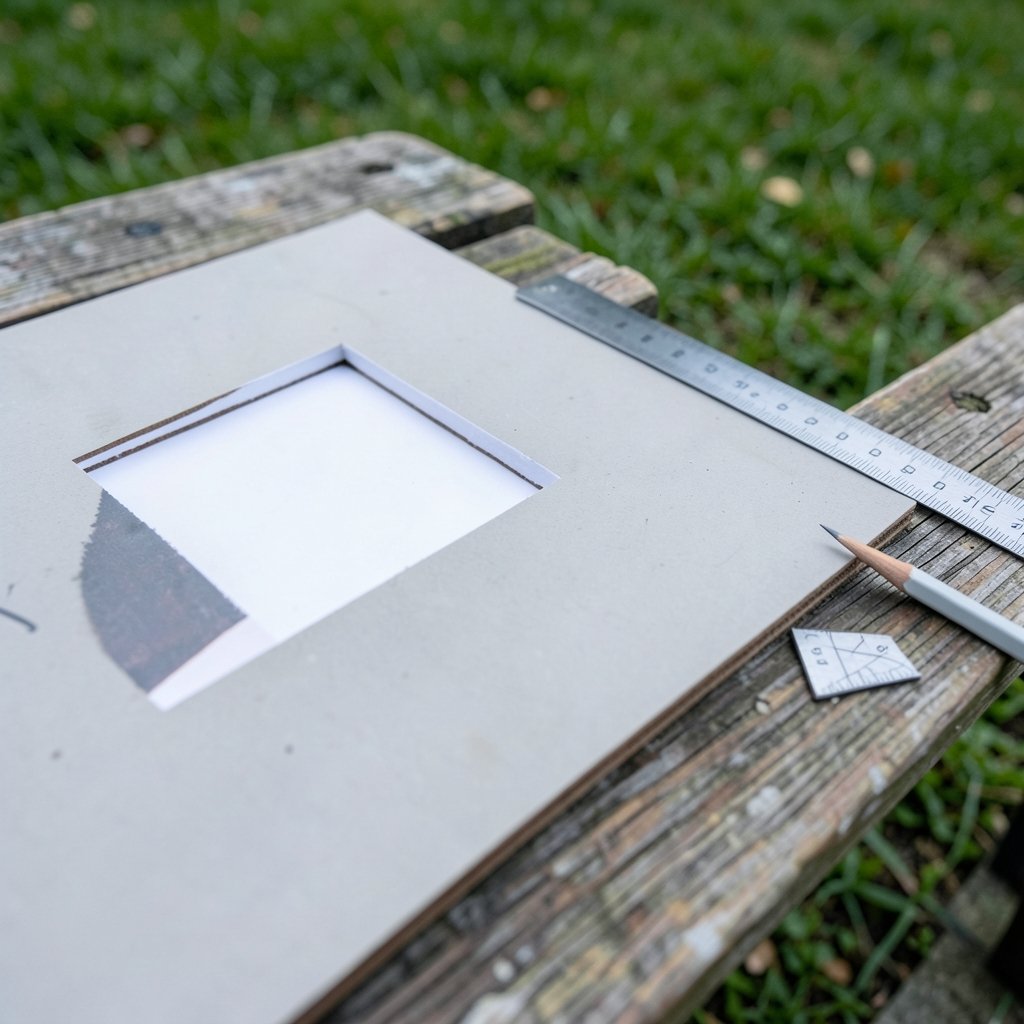
A mat board has two measurements, and mixing them up is the single most common framing mistake. The outer size is the full rectangle that drops into the frame’s rabbet. The opening is the window cut in the middle. The opening is usually cut slightly smaller than the artwork so the board overlaps the edges and holds the piece flat and in place.
That overlap, called the reveal, matters more than most people expect. A typical reveal runs about 3 to 6 millimeters (roughly 1/8 to 1/4 inch) on each side. Cut the opening to the exact artwork size and the piece can sag or slip. Cut it too small and you hide part of the image, which is a real problem with signed prints where the signature sits close to the edge.
How to Measure for a Mat
- Measure the artwork’s visible image area, not the paper edge, unless you want the full sheet shown.
- Measure the frame’s inside rabbet, the recess where the glass and mat stack sit.
- Subtract the artwork measurement from the frame measurement, divide by two, and you have your border width per side.
- Decide the reveal, then subtract it from the artwork size to get the opening.
- Check that the border is at least as wide as the frame’s rabbet depth allows for the stack of glass, mat, art, and backing.
A quick worked example: an 11 × 14 inch frame with an 8 × 10 inch print leaves 3 inches of total difference on the short side and 4 on the long, giving borders of 1.5 and 2 inches. Add a 1/4 inch reveal and the opening becomes 7.5 × 9.5 inches. That asymmetry is normal and often looks intentional.
If you are sizing a mat for a room-wide display rather than a single frame, the same logic of matching outer dimensions to a fixed space applies to other home fittings, such as working out home cinema seat sizes or planning around apartment sizes before you buy furniture.
Standard Mat Board Sheet Sizes and Thickness
Mat board is sold in a handful of nominal sheet sizes. In the US, the most common are 32 × 40 inches and 40 × 60 inches. Metric markets commonly use 70 × 100 cm sheets. Treat these as approximate trade conventions rather than a formal standard, because suppliers vary and a “32 × 40” sheet may arrive a fraction off.
Thickness is expressed in ply, where 1 ply equals 1/100 inch. The table below shows the common grades.
| Grade | Nominal thickness | Typical use |
|---|---|---|
| 2-ply | About 0.05 in / 1.4 mm | Small prints, posters, low-cost framing |
| 4-ply | About 0.06–0.08 in / 1.5–2 mm | Standard framing for most artwork |
| 8-ply | About 0.12–0.16 in / 3–4 mm | Large pieces, museum-style presentation |
Exact thickness varies by manufacturer, so “4-ply” is a nominal label, not a precise measurement. If a project depends on a tight fit, ask for the technical data sheet rather than trusting the ply number alone. The same principle of checking real dimensions against a spec sheet applies when you compare luxury home cinema seating: the labeled size and the delivered size are not always identical.
Conservation Grade: What “Archival Matte” Really Means
Walk into any framing shop and you will hear the phrase “conservation grade.” It sounds official, but it is not a single regulated standard. It is a trade and marketing term backed by a few testable properties: an acid-free or buffered core (buffered board typically sits around pH 7.5 to 9.5), lignin-free pulp, and passing the Photographic Activity Test, or PAT.
The PAT was developed by the Image Permanence Institute at Rochester Institute of Technology and is now codified in ISO 18916. A mat board that passes PAT is considered safe for long-term contact with photographs and works on paper. Separately, ISO 18902 covers albums, framing, and storage materials, and preservation guidance from major institutions recommends mat board that meets it.
Here is the practical trap: ordinary cardboard and cheap mat board are acidic. Put a photograph against them and the acids migrate into the paper over months and years, leaving yellow-brown burn lines known as mat burn. The damage is permanent. If a piece has sentimental or monetary value, pay for buffered, lignin-free board and ask the shop to confirm the PAT claim in writing.
Matte Size in Printing: Sheet Formats for Matte Paper
Switch contexts to a print shop and “matte size” almost always means the sheet size of matte-finish paper or canvas. There is no dedicated industry standard for matte paper sizes. They simply follow general paper systems.
The ISO 216 A-series is the most common. A0 has an area of one square meter, and each subsequent size halves the area, so A4 measures 210 × 297 mm. US markets lean on letter, legal, tabloid, and photo sizes such as 8 × 10 and 11 × 17 inches. When a listing says “matte, A3,” it is telling you two things at once: the surface finish and the sheet dimensions.
A frequent mistake is ordering matte paper in a size that fits the printer’s feed but not the final frame. Print first, then frame, and match the mat opening to the print. Framing around a print you already own is easier than hunting for a print that fits a frame you bought on impulse. The same forethought pays off with textiles and decor, where one size fits most fashion rarely delivers a perfect result, and with flooring, where a carpet size guide saves you from a rug that swallows the room.
Digital Mattes and Canvas Dimensions
In image and video software, a matte is a mask or alpha channel that controls transparency. Its size should match the image canvas, otherwise the mask and the picture drift out of alignment. This sense of the term rarely appears in consumer contexts, but it matters in compositing, where a mismatched matte size produces visible edges or cut-off subjects. If you encounter “matte size” in a software manual, check whether it refers to the mask dimensions rather than any physical product. (Carpet size guide)
Common Mistakes and What Works in Practice
Most matte-size problems trace back to a handful of avoidable errors.
- Measuring the paper, not the image. Prints usually carry a white border. Decide whether you are showing the full sheet or just the image, then measure accordingly.
- Forgetting the frame’s rabbet. The rabbet is the recessed lip that holds the stack. A mat that matches the frame’s outer edge will not fit inside it.
- Mixing units. Fractional inches, millimeters, and centimeters all appear on framing forms. Convert everything to one unit before you cut.
- Skipping the reveal. An opening cut exactly to the artwork size looks sloppy and lets the piece shift.
- Assuming “4-ply” is exact. Measure the board if a tight fit matters, especially in deep frames or shadow boxes.
- Buying acidic board to save money. The savings evaporate the moment a photo fades.
What actually works is boring but reliable: write the three numbers down before you order anything. Frame opening, mat outer size, and mat opening. Keep them in one unit. Then check them against the physical frame and the physical artwork, not against a product photo.
A Quick Decision Guide
| You are… | “Matte size” means… | Check first |
|---|---|---|
| Framing a print | Outer board size and opening size | Frame rabbet and artwork image area |
| Buying paper | Sheet format (A3, 8 × 10, etc.) | Printer feed and final frame |
| Editing images | Mask or alpha channel dimensions | Canvas size |
| Ordering custom framing | Both board and opening, plus ply | Conservation grade and PAT claim |
Conclusion
Matte size is not one number but a small family of measurements that depend entirely on context. In framing, it means the outer board dimension plus the opening, cut with a slight reveal and matched to the frame’s rabbet. In printing, it means a sheet format from the ISO 216 series or a US photo size. In software, it means the dimensions of a transparency mask. The reliable habit across all three is to measure the real object, convert to a single unit, and confirm the numbers before anything gets cut or ordered. Do that, and the ambiguity of the phrase stops mattering.
What is the difference between matte size and mat opening?
Matte size usually refers to the outer dimensions of the mat board, which must match the inside of the frame. The mat opening is the window cut in the center, which must match the artwork. Both numbers matter, and framers need both to cut a board correctly.
What are the standard mat board sheet sizes?
In the US, mat board is commonly sold in nominal sheets of 32 × 40 inches and 40 × 60 inches. Metric markets often use 70 × 100 cm sheets. These are trade conventions rather than a formal standard, so expect small variations between suppliers.
What does 4-ply mean for matte thickness?
Ply is a thickness unit where 1 ply equals 1/100 inch. A 4-ply board is nominally about 0.06 to 0.08 inches, or roughly 1.5 to 2 millimeters. Because exact thickness varies by manufacturer, treat the ply number as a label rather than a precise measurement.
Does matte size matter for archival framing?
Yes, but the more important factor is the board’s material quality. Look for acid-free or buffered, lignin-free board that passes the Photographic Activity Test, codified in ISO 18916. Acidic board can cause permanent brown staining on photographs and works on paper over time.
What size is matte paper sold in?
Matte paper follows general paper systems rather than a matte-specific standard. The ISO 216 A-series is the most common internationally, with A4 at 210 × 297 mm. US buyers more often see letter, tabloid, and photo sizes such as 8 × 10 or 11 × 17 inches.
How much should a mat overlap the artwork?
A typical reveal is about 3 to 6 millimeters, or roughly 1/8 to 1/4 inch, on each side. The overlap holds the artwork flat and prevents it from slipping. Avoid going much larger on signed prints, since a wide overlap can hide the signature.









