


What if the loudest, most rule-breaking decade in menswear could actually make you look sharper today? Men’s 70s fashion has a reputation problem. People picture powder-blue polyester, chest hair, and collars wide enough to land a plane. But strip away the punchlines, and the 1970s handed modern men a set of genuinely useful ideas: flattering flared trousers, rich earth tones, textured knits, and the freedom to dress with color instead of apologizing for it. The trick is knowing which parts to borrow and which to leave in the attic.
This guide breaks down the real silhouette of the decade, the pieces worth buying, and the mistakes that make retro styling look like a costume. Whether you are building a full period look or just want one strong vintage piece in a modern wardrobe, the details below are what separate style from dress-up.
Why the 1970s Changed Men’s Clothes Forever
The 1960s suit was tight, dark, and disciplined. The 1970s suit was wide, warm, and expressive. That shift did not happen in a vacuum. It came from a broader cultural loosening: younger men rejecting formal dress codes, music scenes pushing men toward flamboyance, and mass manufacturing making colorful, easy-care clothing cheap enough for everyone.
Fashion historians call the late 1960s and early 1970s wave the Peacock Revolution — a period when men adopted ruffled shirts, wide ties, velvet, bold prints, and colors that would have been unthinkable a decade earlier. Much of it started in London tailoring shops and Carnaby Street boutiques before spreading into mainstream stores.
Two things matter for anyone wearing the look now. First, the decade was not one style. It moved through distinct phases, and mixing them carelessly is the fastest way to look off. Second, the 1970s ended with a backlash. Punk emerged around 1976 and 1977 in London and New York as a deliberate rejection of mainstream menswear, which tells you how dominant the flared, flamboyant look had become.
If you want context on how menswear evolved across the mid-century before this explosion, the breakdown of 1950s fashion trends for men makes a useful comparison point. The jump from the 1950s to the 1970s is one of the biggest silhouette swings in modern dress.
The 1970s Silhouette, Decoded
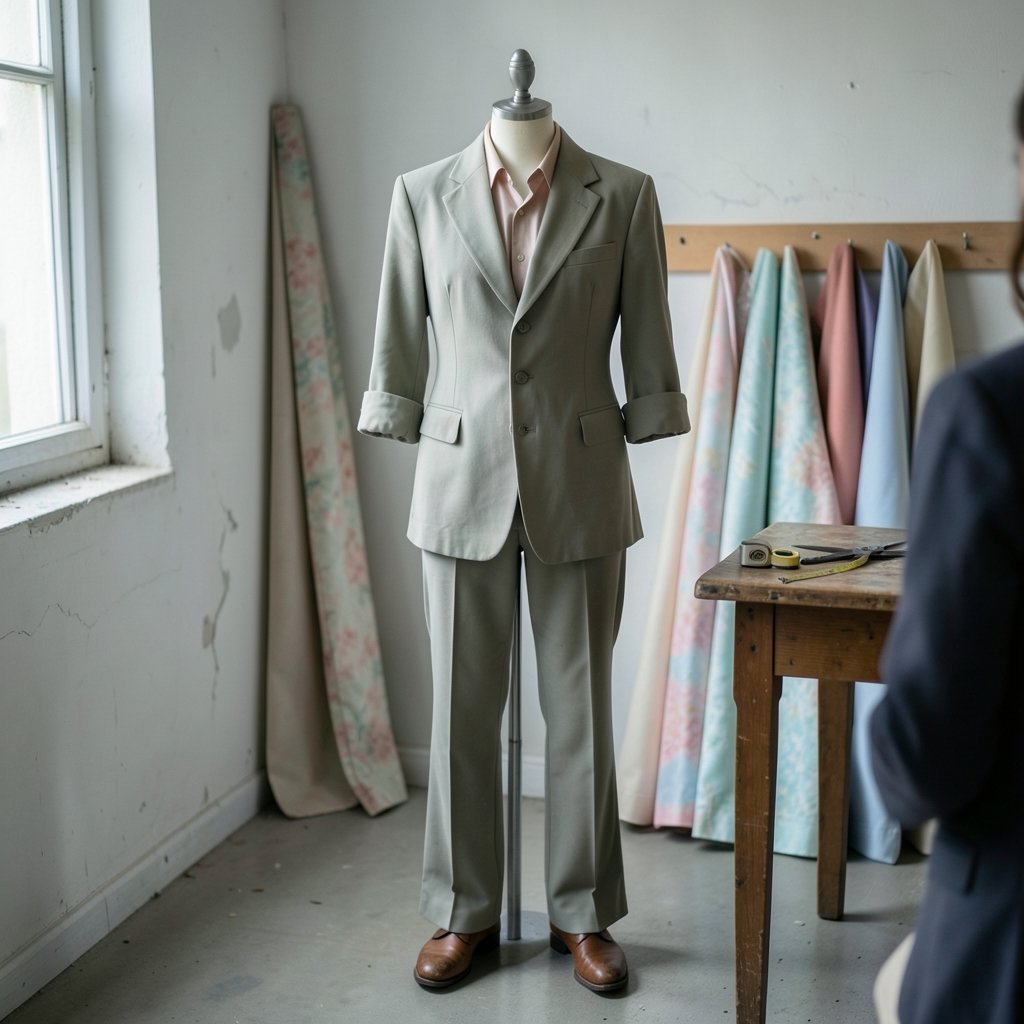
The shape of 1970s menswear is easy to describe and surprisingly hard to wear well. Here is what actually defined it.
| Element | 1970s Version | What to Look For Today |
|---|---|---|
| Jacket lapels | Wide, often very wide, with low button stances | Wide but proportionate; lapel should not pass mid-chest |
| Trousers | Flared or bell-bottom, sitting at the natural waist | A gentle flare, not a full bell, with a clean break |
| Shirts | Wide collars, long points, sometimes ruffled | One wide-collar shirt, worn open or under a jacket |
| Knitwear | Patterned cardigans, tank tops, turtlenecks | Fine-gauge knits in earth tones |
| Shoes | Platform soles, stacked heels | Low platforms or stacked heels, worn sparingly |
| Fabric | Polyester and synthetic blends | Wool, cotton, and blends that breathe |
The critical insight: the 1970s silhouette is about proportion, not volume. A wide lapel works when the trousers have a matching flare and the shirt collar is substantial. It falls apart when one element is exaggerated and the rest is slim. That mismatch is the single most common mistake men make with retro styling.
The Pieces Worth Owning
Not every 1970s garment deserves a comeback. These do.
The Wide-Lapel Jacket
Look for a jacket with a low button stance and a lapel that widens gradually. Avoid anything so extreme that it reads as a costume. A single-breasted jacket in brown, rust, camel, or olive is the most versatile entry point. Textured fabrics — corduroy, tweed, heavy cotton — carry the decade’s feel better than shiny synthetics.
Flared Trousers
Flares began in the late 1960s and peaked in the early to mid-1970s. The wearable version today has a moderate flare starting below the knee, a high-ish rise, and a hem that just covers the shoe. Pair them with a fitted top half so the leg line stays clean. If you are unsure, a bootcut is the safe middle ground.
The Wide-Collar Shirt
Long-point collars were everywhere in the 1970s. One well-cut version in a solid color or subtle print does more work than five loud ones. Wear it open with a jacket for a relaxed evening look, or under a crewneck knit for something more controlled.
Patterned Knitwear
Cardigans, turtlenecks, and sleeveless tank tops in geometric or striped patterns were standard. Modern versions in merino or cotton blend are far more comfortable than the originals and fit better. This is the easiest category to integrate into a normal wardrobe.
Stacked Heels and Low Platforms
Elevated soles for men became fashionable in the early to mid-1970s, tied to disco and glam rock. A low stacked heel on a boot or a modest platform on a loafer adds height and attitude without turning an ankle. Skip anything above roughly an inch and a half unless you are going full period.
For anyone assembling a broader capsule, these overlap heavily with the classics in a men’s wardrobe essentials checklist — good trousers, a versatile jacket, and strong knitwear all pull double duty.
Earth Tones, Prints, and the Color Question
The 1970s palette is one of its best exports. Browns, mustard, rust, burnt orange, olive, cream, and deep burgundy still look rich and grown-up today. The decade’s prints — geometric patterns, wide stripes, abstract florals — work best in small doses.
A practical rule: one loud element per outfit. If the trousers are flared and patterned, keep the shirt plain. If the shirt has a wide collar and a print, keep the trousers solid and straight-ish. Men who wear the decade well treat color as the statement and everything else as support.
This is also where the decade connects to broader movements in luxury design. The 1970s saw Italian houses push bold color and relaxed tailoring into the mainstream, and that sensibility still shapes Italian luxury fashion today. If you like the idea of warm tones and softer construction, the Italian approach is a natural bridge between 1970s style and modern wear.
The Disco Effect and the Leisure Suit Problem
Two 1970s looks get confused constantly, and they should not be.
The disco look is the one with legs. The 1977 film Saturday Night Fever is widely credited with popularizing the white three-piece suit and open-collar shirt, and that combination still works at a party or a summer event. A white or cream suit, a dark open-collar shirt, and a low-heeled boot is a genuinely strong outfit.
The leisure suit is the one to approach with caution. Matching polyester jacket-and-trouser sets became a mass-market staple in the 1970s, especially in the United States, and museums hold plenty of examples. They were practical and easy-care. They also aged badly — the fabric shines, the cut sags, and the whole thing reads as a punchline. If you want the vibe, take the matching-set idea and apply it to a modern fabric like cotton twill or a wool blend.
Disco also connects to the decade’s evening side, which overlaps with warm-weather formal dressing. If you are planning a wedding or a party with a retro brief, the guidance on men’s summer wedding attire covers the tailoring rules that keep a bold look from tipping into costume.
How to Wear 1970s Style Without Looking Like a Costume
This is where most attempts fail. Follow these steps in order.
- Start with one piece, not a full outfit. A flared trouser or a wide-collar shirt on its own reads as stylish. Both at once, plus platforms, reads as a theme party.
- Keep the fit modern. The originals were cut loose in ways that flatter almost nobody. Buy 1970s shapes in contemporary sizing so the shoulders and waist actually sit where they should.
- Choose matte fabrics over shiny ones. Polyester sheen is the fastest route to looking dated. Wool, cotton, corduroy, suede, and linen all carry the decade’s spirit without the glare.
- Anchor with one neutral. Brown boots, a cream shirt, or a plain knit gives the eye somewhere to rest.
- Get the hem right. Flares live or die by length. Too short and they look chopped; too long and they drag. Aim for a slight break over the shoe.
- Skip the novelty accessories. Oversized sunglasses, medallions, and giant belt buckles push the look from retro to parody.
A useful test before leaving the house: if you removed one item, would the outfit still make sense? If yes, you are probably wearing one piece too many.
Where the Decade Still Shows Up
1970s influence never really left. It resurfaces every few years in wider trousers, brown palettes, and textured knitwear. Current runways keep recycling the decade’s proportions, and the broader direction of 2026 fashion trends for women shows the same appetite for warm tones and relaxed tailoring — menswear and womenswear tend to move together on these cycles.
The revival also shows up in how designers document and reinterpret the era. Fashion illustration has become a way of capturing runway moments and translating them into wearable ideas, and work like that of Angelica Hicks, the fashion illustrator turning runway moments into drawings, shows how a period look gets filtered into something current rather than copied.
There is also a quieter 1970s influence in modern menswear brands that build entire identities around relaxed, characterful clothing. Labels that lean into personality over formality — the kind of approach behind a name like Helt, whose menswear name actually means modern men’s style — owe a real debt to the decade’s insistence that men’s clothes could be interesting.
Common Mistakes and What Actually Works
In practice, a few failure points come up again and again.
Buying vintage without checking condition. Old polyester holds odors, and vintage flares often have shortened hems from previous owners. Always check the inseam length and the underarm fabric before buying.
Mixing eras. A 1970s jacket with skinny jeans and a modern slim shirt creates a silhouette clash. Commit to one proportion system per outfit.
Overdoing the accessories. The decade’s most famous accessories are also its most dated. Let the clothes carry the look.
Ignoring the waist. Flared trousers sit higher than modern low-rise jeans. If you wear them at hip level, the flare starts in the wrong place and the leg looks short.
Assuming it only works for parties. A brown wide-lapel jacket over a plain tee and dark flares is a perfectly normal dinner outfit. The decade is more wearable than its reputation suggests.
What actually works is restraint applied to a bold base: one strong 1970s piece, modern fit, matte fabric, neutral anchor, correct hem. That formula holds whether you are dressing for a themed event or just want something with more personality than another navy blazer.
Conclusion
Men’s 70s fashion earns its bad reputation honestly — the leisure suits were real, and so were the platforms. But the decade also produced the wide lapel, the flared trouser, the earth-tone palette, and the patterned knitwear that designers still recycle every few seasons. The difference between looking sharp and looking like a costume comes down to proportion, fabric, and restraint. Pick one piece, buy it in a modern fit, keep the fabric matte, and anchor it with something plain. Do that, and the 1970s stops being a joke and starts being a genuinely useful part of a modern wardrobe.
Frequently Asked Questions
What is the most iconic piece of men’s 70s fashion?
The flared trouser is probably the most recognizable. It began in the late 1960s, peaked in the early to mid-1970s, and defined the decade’s silhouette more than any other single garment. The wide-lapel jacket is a close second.
Can you wear 1970s fashion today without looking like you’re in costume?
Yes, if you follow three rules: wear one retro piece at a time, buy it in a modern fit, and choose matte fabrics over shiny synthetics. Most costume failures come from stacking too many period details at once.
Were platform shoes really worn by men in the 1970s?
They were. Elevated soles and stacked heels for men became fashionable in the early to mid-1970s, linked to disco and glam rock. Today, a low stacked heel or a modest platform works best — anything higher reads as fancy dress.
What colors defined 1970s menswear?
Brown, mustard, rust, burnt orange, olive, cream, and deep burgundy dominated. The decade favored warm earth tones over the greys and navy of the previous decade, and those colors remain easy to wear now.
Why do people associate the 1970s with polyester?
Polyester and synthetic blends became dominant in mass-market menswear during the decade, largely because of the leisure suit and the demand for easy-care clothing. The fabric was practical but aged poorly, which is why the decade’s reputation suffered.
What ended the 1970s look?
Punk emerged around 1976 and 1977 in London and New York as a deliberate rejection of mainstream menswear, with ripped shirts and bondage trousers replacing flares and wide lapels. Historians debate the exact dates, but the backlash was swift and decisive.



