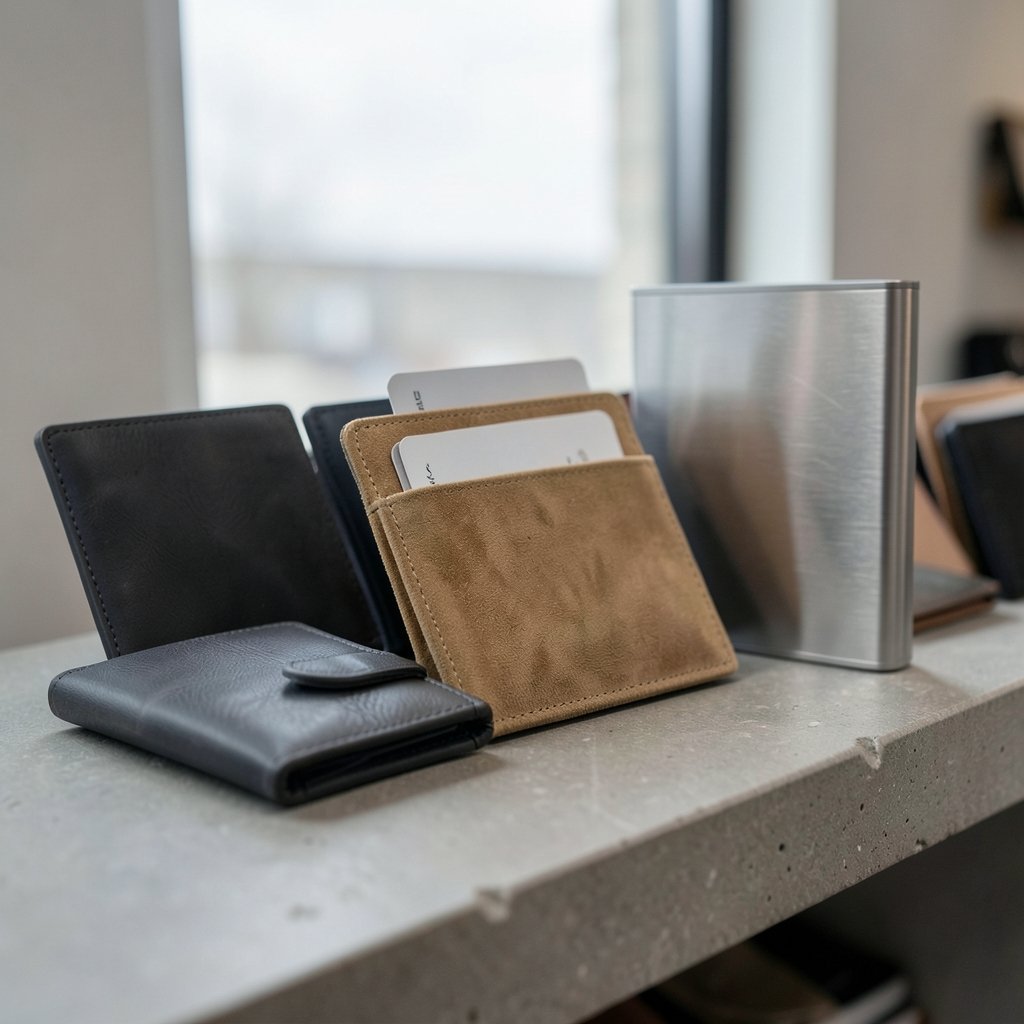
What really happens when you swap a bulging bifold for a slim cardholder and carry it for a month? Most people expect a lighter pocket and a cleaner line. What they don’t expect is how quickly a cheap elastic band stretches out, or how often a rigid metal plate turns into a small, awkward brick that scratches the cards stacked against it. The best minimal wallets are not the thinnest ones on the shelf. They’re the ones that survive real life without making you regret leaving the old wallet at home.
This guide looks at the category honestly: what a minimal wallet is, which designs suit which habits, where the marketing oversells, and the practical mistakes that make people give up on slim wallets within weeks.
What “Minimal Wallet” Actually Means
There is no industry standard and no legal definition behind the term. Minimal wallet is a marketing descriptor, not a regulated product category. That matters because it means two wallets labeled “minimal” can differ wildly in size, capacity, and construction. One might be a 2mm cardholder that holds four cards. Another might be a slim bifold that still swallows a dozen.
In practice, the label usually signals three things:
- Reduced bulk. Fewer folds, no coin pouch, no bulky bill compartment.
- Lower card capacity. Typically somewhere between four and twelve cards.
- Front-pocket intent. A design meant to sit flat against the thigh rather than ride on a hip.
Because the term is undefined, comparisons across products are often apples to oranges. A reviewer praising a metal plate wallet for thinness is judging a different product than someone testing an elastic-band cardholder. Read specs, not labels.
The Main Design Families and How They Compare
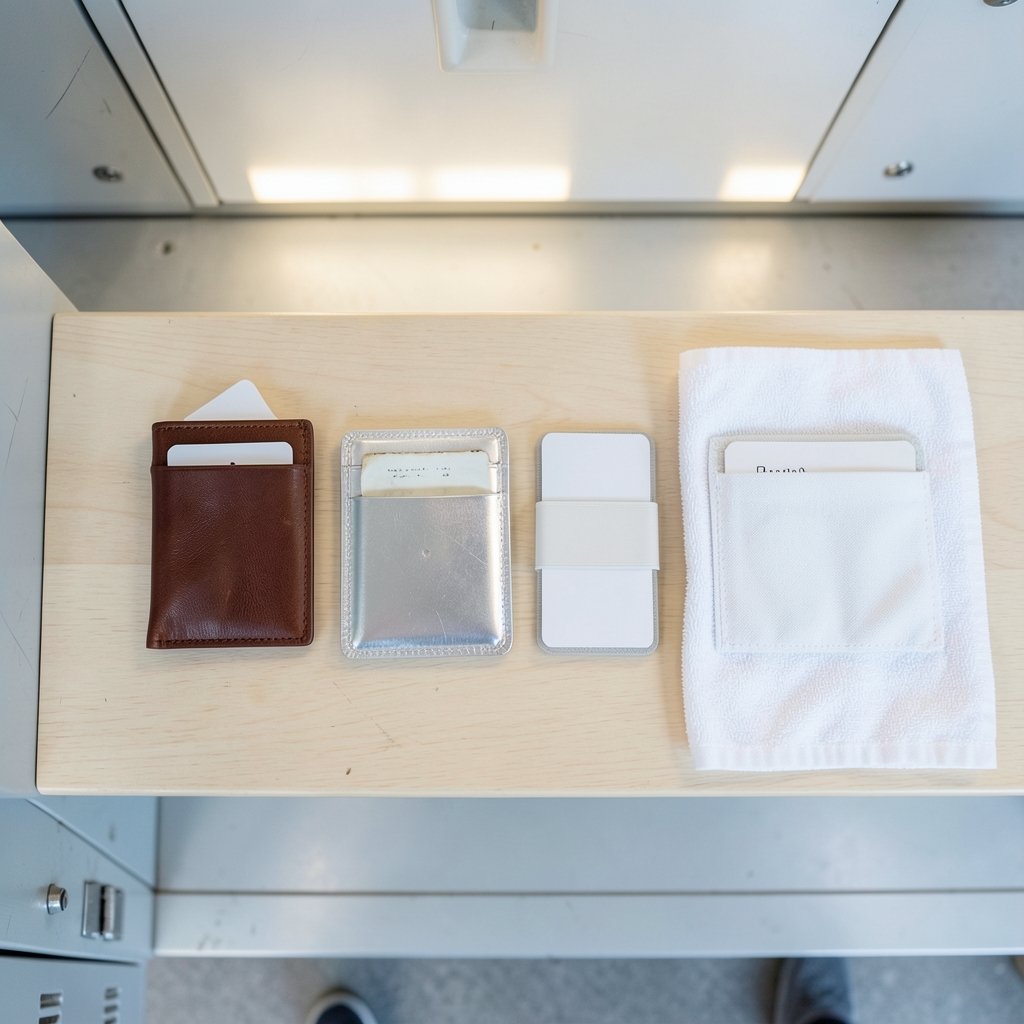
Most minimal wallets fall into a handful of recognizable shapes. Each one solves a different problem and creates a different one.
| Design | Typical capacity | Strengths | Weaknesses |
|---|---|---|---|
| Slim bifold | 6–10 cards plus cash | Familiar layout, holds bills well | Slightly thicker than cardholders |
| Cardholder | 4–8 cards | Very thin, cheap to replace | Limited cash handling |
| Elastic-band | 4–10 cards | Light, quick access | Band stretches over time |
| Metal plate | 4–12 cards | Rigid, thin profile | Can scratch cards, blocks wireless charging |
| Money clip hybrid | 5–9 cards plus bills | Good for cash users | Clip tension loosens |
The pattern is consistent: the thinner and more rigid the wallet, the more you trade away in flexibility and cash handling. The most comfortable choice for most people sits in the middle, not at the extreme end of thinness.
Materials: Where the Real Trade-Offs Live
Material choice drives almost everything about how a minimal wallet feels after six months.
Full-grain leather is durable, develops a patina, and flexes as it breaks in. It’s also heavier and thicker than alternatives, and it needs occasional conditioning to avoid cracking at fold points. Aluminum and titanium plates are rigid and extremely thin, but that rigidity is a double-edged sword. Cards pressed against a hard metal edge can scuff, and the wallet has no give when your card count creeps upward.
Elastic and technical fabrics are the lightest option and the fastest to access. They’re also the fastest to degrade. Elastic loses tension, stitching frays, and the whole wallet often becomes unusable before the cards inside show any wear.
A practical rule: match material to how long you intend to keep the wallet. If you replace wallets every year or two, elastic is fine. If you want five years, leather or a well-machined metal body is the safer bet.
RFID-Blocking Claims Deserve Skepticism
Walk down any wallet aisle and you’ll see RFID-blocking printed on half the packaging. The claim is that a lining blocks wireless signals so a thief can’t skim your card details from a distance.
The honest position is that this protection is oversold. Contactless payment cards use dynamic cryptograms, meaning each transaction generates a fresh code rather than replaying a static one. A copied signal generally can’t be reused in the way the marketing implies. Independent testing of these wallets has been limited, and much of the reassurance comes from the sellers themselves.
That doesn’t make an RFID-blocking wallet a bad purchase. It makes it a feature you shouldn’t pay a big premium for. If two wallets are otherwise equal and one blocks signals, fine. Don’t let it be the deciding factor.
Practical Tips That Actually Work
These are the habits that separate people who stick with a slim wallet from people who abandon it after two weeks.
- Count your cards before you buy. Empty your current wallet, lay every card on the table, and count. Then buy a wallet rated for at least two more than that number. Capacity claims are usually optimistic at the top end.
- Decide where cash goes first. If you still carry bills regularly, a pure cardholder will frustrate you. Choose a design with a bill slot or a clip before you fall in love with a thinner model.
- Check the fold, not the spec sheet. A wallet that’s thin when empty can balloon once loaded. Look for photos of the wallet with cards inside, not just the empty hero shot.
- Break in leather slowly. Stuffing a new leather wallet to maximum capacity on day one stretches the stitching. Add cards gradually over the first week.
- Keep a backup card elsewhere. Slim wallets leave less room for error. A single spare card in a bag or phone case covers you when a primary card fails.
Common Mistakes People Make
The most frequent error is buying for the fantasy version of yourself rather than your actual routine. Someone who uses cash daily buys a four-card holder because it looks clean in photos, then spends months folding bills into thirds.
The second mistake is over-trusting thinness as a quality signal. A wallet that’s 3mm thick because it uses cheap elastic isn’t better than a 6mm leather bifold that lasts four times as long. Thinness is a design goal, not a durability guarantee.
The third is ignoring the wireless charging conflict. A metal-plate wallet placed between a phone and a charging pad will block inductive charging. That’s physics, not a product defect, but it’s a daily annoyance if you charge wirelessly and keep your wallet in the same pocket.
The fourth is assuming price predicts longevity. There’s no widely published independent durability dataset for wallets, so a high price tag mostly reflects branding and materials marketing. Read construction details, look at stitching and edge finishing, and check return policies.
Matching the Wallet to Your Life
A few scenarios map cleanly onto specific designs.
The commuter with a transit card does well with an elastic-band or cardholder design that allows quick one-handed access. Speed matters more than longevity here.
The traveler benefits from a slim bifold that handles a passport-adjacent stack of cards plus local currency. If you’re also sorting out the rest of your kit, this guide on how to choose best travel wallet your next trip covers the broader packing logic.
The style-conscious minimalist tends to favor leather cardholders that pair with a pared-back wardrobe. The same instinct that drives minimalist fashion choices, where fewer and better pieces beat variety, applies directly to wallets. If you’re building that wardrobe, the minimalist fashion men section has more on editing down to essentials.
The person who wants everything to match often extends the same logic to grooming and accessories. The same restraint shows up in Charli xcx makeup get smudged minimal look, where less product does more work, and in how Emma stone skincare her minimal routine actually looks like strips a routine down to what earns its place.
Durability: What to Inspect Before You Buy
Since vendor durability claims are hard to verify, inspect the physical details instead.
- Stitching density. Tight, even stitches at stress points (corners, fold lines) last longer than sparse ones.
- Edge finishing. Painted or burnished edges resist fraying. Raw cut edges on cheap leather split over time.
- Elastic tension. A band that already feels loose in the store will be useless in six months.
- Card slot depth. Shallow slots let cards slide out. Deep slots make retrieval awkward. Somewhere in between is right.
- Hardware quality. Rivets and clips are common failure points on hybrid designs.
If you can, handle the wallet before buying. Online reviews help, but the feel of a fold and the tension of a band are things photos can’t convey.
Care and Longevity
A minimal wallet rewards basic maintenance. Leather needs conditioning every few months to stay supple at fold points. Metal bodies should be wiped clean so grit doesn’t grind against card surfaces. Elastic bands should be stored without cards when not in use, since constant tension accelerates stretching.
Replacing a worn elastic band is often possible and cheap, which extends the life of an otherwise simple wallet considerably. Leather stitching repairs are harder and usually not worth it on a budget model.
Conclusion
The best minimal wallet isn’t the thinnest one you can find. It’s the one that matches your card count, your cash habits, and how long you expect to keep it. Count your cards, decide where bills go, and inspect construction rather than trusting the label. Skip the RFID premium unless everything else is equal, and check whether a rigid metal body will fight with your wireless charger. Do those things and a slim wallet stops being a novelty and becomes the thing you reach for without thinking. Get the capacity right first, and the rest of the decision gets much easier.
Frequently Asked Questions
How many cards should a minimal wallet hold?
Most minimal wallets hold roughly four to twelve cards, and the practical limit depends on the design. Elastic and metal-plate wallets strain past about eight cards, while slim bifolds handle more comfortably. Count your current cards and buy a wallet rated for at least two more than that.
Are RFID-blocking wallets worth it?
Usually not as a premium feature. Contactless cards use dynamic codes that change with each transaction, so a copied signal generally can’t be replayed the way marketing suggests. If an RFID-blocking wallet costs the same as a comparable one without it, take it. Don’t pay extra for it.
Is a metal wallet better than leather?
They solve different problems. Metal is thinner and more rigid, but it can scuff cards and blocks wireless charging when placed between a phone and a charging pad. Leather is thicker but flexes, ages well, and handles a growing card stack. Choose based on whether you value thinness or adaptability.
Why does my slim wallet feel too small after a month?
Capacity claims are usually measured with the wallet empty or lightly loaded. Cards accumulate, receipts pile up, and the wallet strains. The fix is to buy for your realistic maximum card count, not your ideal minimum, and to clear receipts weekly.
Can a minimal wallet still hold cash?
Yes, but the design matters. Cardholders usually can’t. Slim bifolds have a bill compartment, and money clip hybrids fold bills against the outside. If you use cash more than once a week, avoid pure cardholders.
How long should a minimal wallet last?
It varies enormously by material. Elastic-band wallets often lose tension within a year or two. Well-made leather and machined metal bodies can last five years or more with basic care. Since durability claims come mostly from sellers, inspect stitching, edges, and hardware before buying rather than trusting the price.