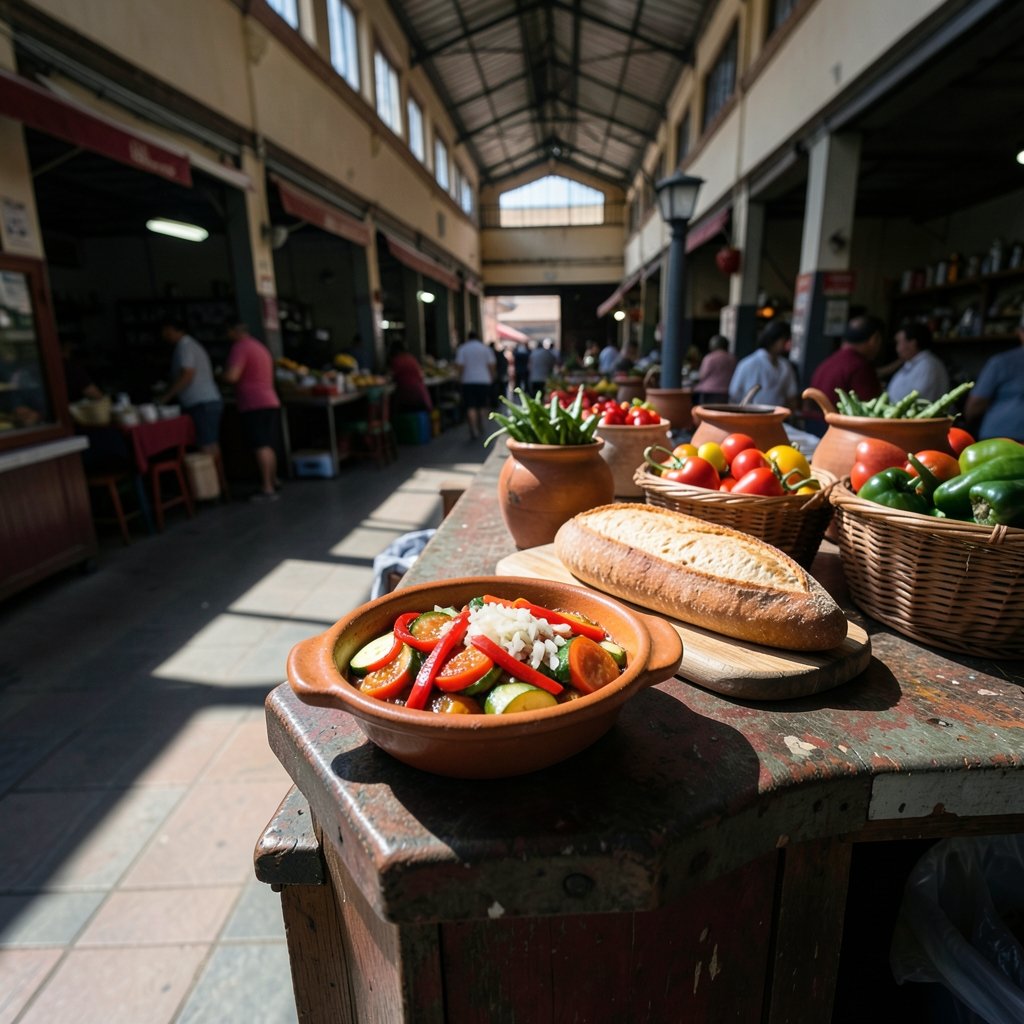
What if the most satisfying dish you eat on your next night out costs less than a coffee and comes in a small clay pot? That is often the case with pisto manchego, a slow-cooked Spanish vegetable stew that quietly outperforms fancier plates. The problem is finding a good one. Anyone can type “best pisto manchego near me” into a search box, but the results you get depend on where your phone thinks you are, not on where the best cooking happens.
This guide is about closing that gap. It covers what a proper pisto should taste like, which signals on a menu and in a review pile point to quality, how to order it well, and how to judge a restaurant in the first five minutes. No ranking of specific places, because “best” is personal and local, but plenty of practical criteria you can apply in any city.
What Pisto Manchego Actually Is
Pisto manchego is a Spanish stew of tomato, onion, zucchini, and often red or green pepper, cooked slowly in olive oil until everything softens into a thick, sweet-savory mixture. It is tied to La Mancha, the high plain region south of Madrid, though versions exist across Spain.
The name carries two clues. “Manchego” simply means from La Mancha. “Pisto” is generally traced to pistum, Latin for mashed or crushed, which describes the texture better than any adjective: soft, stewed, spoonable, never chunky-crunchy like a stir-fry. That etymology is widely repeated but hard to pin to a single primary source, so treat it as the accepted story rather than settled fact.
Pisto is frequently compared to French ratatouille and Sicilian caponata. The comparison is culinary shorthand, not a documented family tree. All three belong to the Mediterranean tradition of cooking summer vegetables down in olive oil, and each has its own personality. Pisto tends to be sweeter and softer than ratatouille, with less acidity and no herbs shouting over the tomato.
Why “Near Me” Results Can Mislead You

Search engines build local results from your device location, your search history, and a ranking system you cannot see or reproduce. Two people on the same street can get different lists. A restaurant with a strong map listing can outrank a better kitchen that never claimed its profile.
That means the top of a “near me” list is a starting point, not a verdict. A smarter approach is to search the dish name plus your neighborhood or city, then cross-check with the restaurant’s own menu, recent reviews, and photos. If you are also hunting for other local spots in the same session, the same logic applies to any local guide: the list is a map, and your own checks do the real work.
Another practical habit: search from where you will actually be eating. Searching from home for a restaurant near your office produces a list that is useless by dinnertime.
The Signals That Separate Good Pisto From Bad
Pisto is cheap to make and easy to rush, which is exactly why it reveals a kitchen’s standards. Here is what to look for, in order of reliability.
On the menu
A restaurant that lists pisto as a tapa, a starter, or a side for eggs is usually cooking it in-house. A place that mentions it only inside a set menu, or as a vegetarian option buried at the bottom, may be buying it in. Neither is automatically bad, but house-made pisto almost always tastes different: more olive oil, less uniform, sweeter at the edges.
Watch for menu language that signals care. “Pisto with a fried egg” or “pisto with bread” suggests the kitchen knows how the dish is normally served. A version described with ham, tuna, or chorizo is a legitimate variation, but it is no longer the vegetarian baseline.
In the reviews
Counting stars alone will not tell you much. Search the review text for the dish itself. A handful of reviews that mention pisto by name, describe the texture, and mention bread or egg are worth more than a hundred generic five-star ratings. Look for the phrase “like my grandmother’s” in a Spanish-language review; it is a strong signal, if an unscientific one.
Photos matter too. A good pisto looks glossy and slightly loose, with visible olive oil pooling at the edges and no bright, raw-looking tomato chunks. If every photo shows a dry mound, expect a dry mound.
In the room
A short menu is usually a good sign. So is a kitchen that serves pisto warm rather than piping hot, since the dish is traditionally served warm and is also eaten cold. Bread on the table, good olive oil, and a small clay dish rather than a wide white plate all suggest a kitchen that respects the dish. (Chinese restaurants near me find good one fast)
How to Order Pisto Like Someone Who Knows
Ordering well is half the battle. These steps work in a tapas bar, a casual Spanish restaurant, or a neighborhood place that happens to make it.
- Ask if it is made in-house. A direct question gets a direct answer, and the pause before the answer tells you something too.
- Ask what is in it. Traditional pisto is tomato, onion, zucchini, pepper, and olive oil, which makes it vegetarian and often vegan. Restaurant versions may add egg, ham, or tuna, so ask if that matters to you.
- Order it with a fried egg on top. This is the classic serving and the best way to judge the dish: the runny yolk against the sweet vegetables is the whole point.
- Ask for bread. Pisto is frequently paired with bread, and a kitchen that brings good bread is usually a kitchen that cares.
- Try a spoonful before adding anything. Good pisto needs no salt, no hot sauce, no cheese. If it needs help, that is information.
- Order a second dish to compare. Pisto alongside a tortilla or a plate of peppers tells you whether the kitchen is consistent or has one good trick.
One common mistake: treating pisto as a main course for one. It is rich and concentrated, and a portion designed as a tapa is usually enough alongside other plates. Another mistake is ordering it in high summer from a place that clearly buys frozen or canned tomatoes. Seasonality matters, and late-summer tomatoes make the best version. Restaurant quality can vary by season, and that is a fair thing to notice rather than a reason to complain.
Regional Variation and What It Means for Your Search
Spanish regional cooking is not standardized, and pisto proves it. Versions in Murcia and Andalusia may differ in ingredients, sometimes adding peppers, eggplant, or ham. La Mancha’s version is the reference point, but even within the region, families disagree.
For a diner, this is good news. It means there is no single correct pisto to fail against, only a range of good ones. It also means a menu claiming “authentic pisto manchego” deserves a follow-up question about what makes it manchego. If the answer is vague, the claim probably is too.
A Quick Comparison: Pisto and Its Mediterranean Cousins
| Dish | Origin | Base ingredients | Texture and character |
|---|---|---|---|
| Pisto manchego | Spain (La Mancha) | Tomato, onion, zucchini, pepper, olive oil | Soft, sweet, spoonable, mild acidity |
| Ratatouille | France (Provence) | Tomato, eggplant, zucchini, pepper, herbs | Chunkier, more herbal, sometimes layered |
| Caponata | Italy (Sicily) | Eggplant, tomato, celery, olives, capers, vinegar | Sweet-sour, tangy, more aggressive |
Use this table as a menu-reading tool. If you order pisto expecting ratatouille’s herbaceous bite, you will misjudge a good bowl. If you order it expecting caponata’s vinegar punch, you will be confused. Pisto is the gentlest of the three, and that restraint is the appeal.
Practical Tips That Actually Work
These habits come from how people really navigate local food searches, not from theory.
Search twice. Once by dish name plus city, once by dish name plus the specific neighborhood. The second search often surfaces smaller places that do not rank in broad results.
Check the menu before you go. A restaurant that does not list pisto online may still serve it as a special. A phone call settles it in thirty seconds.
Read the negative reviews for the right reasons. A complaint about slow service is not about the food. A complaint that the pisto was “watery” or “tasteless” is worth weighing.
Go at lunch. Spanish kitchens often serve their most traditional cooking at midday, and pisto fits a lunch menu better than a dinner tasting menu.
Ask staff where they eat pisto. Restaurant workers are a genuinely useful source, and the question flatters them enough to get an honest answer.
If you are building a broader shortlist of local places, the same checklist approach applies here: verify the specifics, ignore the hype, and trust the details you can check yourself.
Common Mistakes People Make
The biggest one is choosing a restaurant by star rating alone. A place with 4.8 stars and two hundred reviews may be a coffee shop that happens to serve a pisto nobody mentions. A place with 4.3 stars and a dozen reviews that specifically praise the pisto is the better bet.
The second mistake is ordering pisto at a restaurant that does not specialize in Spanish food. It appears on plenty of generic Mediterranean menus as a vegetarian box-tick, and it usually tastes like one.
The third is not asking about ingredients. Traditional pisto is vegetarian and often vegan, but restaurant versions may include egg, ham, or tuna. If that matters to you, ask before ordering rather than after.
The fourth is judging it cold. Pisto is traditionally served warm and is also eaten cold, so a lukewarm bowl is not necessarily a mistake. Judge the flavor, not the temperature.
Conclusion
Finding the best pisto manchego near you is less about luck and more about knowing what to look for. The dish itself is simple: tomato, onion, zucchini, pepper, and olive oil, cooked slowly until it collapses into something sweet and glossy. The search is simple too, once you stop trusting the top of a “near me” list and start checking menus, reading reviews for the dish itself, and asking direct questions about what is in the bowl.
A good pisto does not need to be expensive or fancy. It needs a kitchen that respects slow cooking, good olive oil, and ripe tomatoes. When you find one, order it with a fried egg and bread, and you will understand why a humble vegetable stew has held its place on Spanish tables for generations. If you want a broader method for evaluating local businesses before you commit an evening to them, the same verify-before-you-go discipline applies in any context.
FAQ
Is pisto manchego vegetarian?
Traditional pisto is vegetarian because its base is tomato, onion, zucchini, pepper, and olive oil, and it is often vegan. Restaurant versions may include egg on top, ham, or tuna, so ask before ordering if that matters to you.
What does pisto manchego taste like?
It tastes sweet, savory, and softly stewed, with a mild acidity from the tomato and a clear olive oil richness. It is gentler and less herbal than ratatouille and far less tangy than caponata.
How is pisto manchego usually served?
It is traditionally served warm, often topped with a fried egg, as a tapa or a starter, and frequently paired with bread. It is also eaten cold, so a lukewarm serving is not a mistake.
Why do “near me” search results differ from person to person?
Local results depend on your device location, your search history, and a ranking system you cannot see. Two people nearby can get different lists, so treat the results as a starting point and verify with menus, reviews, and a phone call.
Is pisto manchego the same as ratatouille?
No. They belong to the same Mediterranean family of stewed vegetable dishes, but pisto is typically softer, sweeter, and less herbal, and it comes from Spain rather than France.
When is the best time of year to order pisto manchego?
Late summer is the best time, when tomatoes are at their ripest. Restaurant quality can vary by season, so a bowl in August often tastes better than the same dish in February.