


What if the most memorable stop on your trip is a place where the road simply ends and the mountains take over? New Zealand rewards that kind of thinking. The country is roughly the size of the United Kingdom but holds a fraction of its population, so even famous destinations can feel surprisingly empty once you leave the main highway. The catch is distance: driving from the top of the North Island to the bottom of the South Island takes days, not hours. That single fact shapes every good itinerary.
This guide covers the places that consistently justify the effort, with honest notes on timing, weather, and the mistakes visitors make most often. Whether you are planning a two-week sprint or a slower month, the list below should help you choose where to spend your nights.
Why New Zealand Rewards Careful Planning
New Zealand sits in the southern hemisphere, so its seasons run opposite to Europe and North America. Peak visitor season is roughly December to February, when locals take their own summer holidays and prices climb accordingly. The shoulder months of March, April, October, and November often deliver the best balance of weather, availability, and quiet roads.
The second thing to understand is scale. Attractions that look close on a map may be separated by winding mountain roads where average speeds drop sharply. A practical rule: plan for fewer stops than you think you need. Two nights in one place beats one night in two places almost every time, especially in Fiordland and the central plateau.
If you are building a trip around a specific season, it helps to compare destinations by weather first. A guide to the best places to visit in July is useful for northern-hemisphere travelers trying to match school holidays with southern-winter conditions, while the best places to visit in spring covers the shoulder-season sweet spot that suits much of New Zealand.
Fiordland and Milford Sound

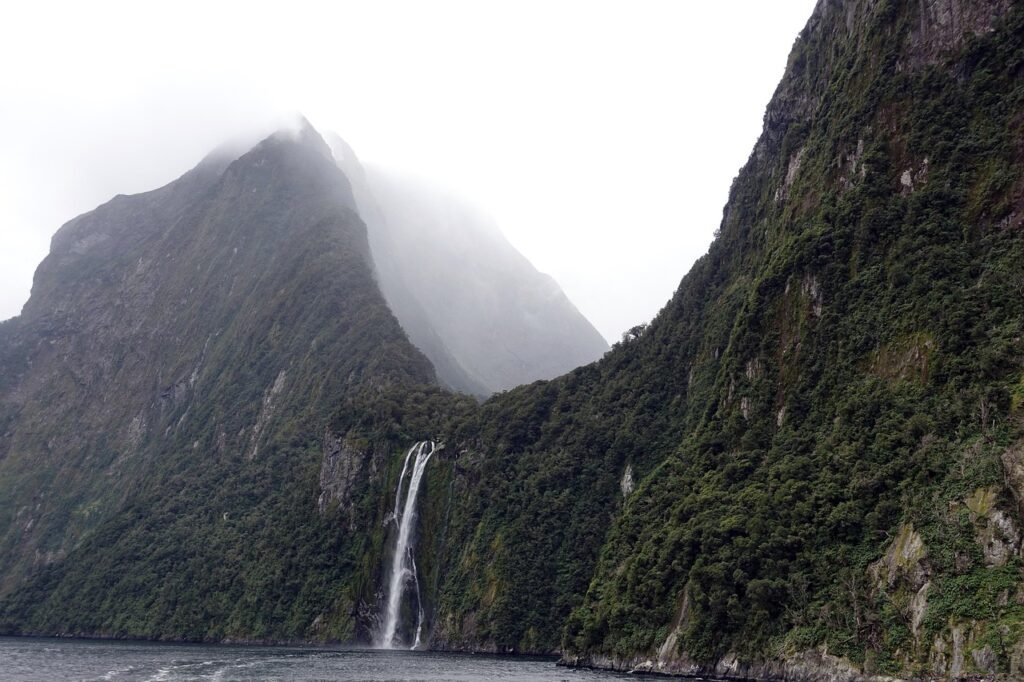
Milford Sound is the image most people carry home, and for once the reality holds up. This fiord in the southwest of the South Island cuts between sheer rock walls that rise straight from the water, with waterfalls that appear and vanish depending on rainfall. It sits within Fiordland National Park, part of the Te Wāhipounamu World Heritage Area inscribed in 1990.
The most common mistake is treating Milford Sound as a day trip from Queenstown. The drive takes around four hours each way, and the last stretch through the Homer Tunnel can close in bad weather. Staying in Te Anau, roughly two hours from the fiord, gives you a buffer. Rain is not a disaster here; it is arguably the point, since wet days produce hundreds of temporary waterfalls.
Book boat trips and the famous multi-day walks well ahead in summer. The region’s Great Walk huts use a booking system with limited beds, and they sell out months in advance.
Aoraki / Mount Cook National Park
Aoraki / Mount Cook is New Zealand’s highest peak at 3,724 meters, and the national park around it offers some of the easiest access to serious alpine scenery anywhere in the country. The park forms part of the same Te Wāhipounamu World Heritage Area.
What works in practice: base yourself at the village inside the park rather than driving in from Twizel each day. The Hooker Valley Track is a relatively flat walk to a glacial lake with views of the peak, and it suits most fitness levels. The bigger climbs, including the Mueller Hut route, demand proper gear and settled weather.
The mistake people make is underestimating the weather. Mountain conditions change fast, and the valley floor can be sunny while the ridge line is wrapped in cloud. Check forecasts the morning of any hike and have a backup plan.
Queenstown and the Adventure Capital
Queenstown built its reputation on adrenaline, and the cluster of activities around it remains the densest in the country. Commercial bungy jumping took off here at the Kawarau Bridge in 1988, and jet boating, paragliding, and skiing at The Remarkables and Coronet Peak followed.
Beyond the thrills, Queenstown works as a base for the wider region: wine country in Gibbston, the historic mining town of Arrowtown, and the road over to Wanaka. The town gets busy and expensive in summer and during winter ski season. Book accommodation early, or consider staying in Arrowtown and commuting in.
A practical tip: many operators bundle activities at a discount, but only if you book directly rather than through resellers. Compare prices before committing.
Tongariro National Park and the Alpine Crossing
The Tongariro Alpine Crossing is a roughly 19.4-kilometer day hike across volcanic terrain, past emerald crater lakes and steaming vents. Tongariro National Park holds dual World Heritage status, listed for both natural and cultural values in 1993, recognizing its importance to Māori.
The crossing is a one-way walk, so you need transport to the start and from the finish; shuttle operators in nearby towns handle this. The Department of Conservation periodically closes sections for volcanic risk, weather, or maintenance, so check the current status before you travel. Alpine conditions can arrive in any month, and the exposed sections are no place for jeans and sneakers.
The most common error is starting late. Most walkers need seven to eight hours, and the last shuttle leaves in the afternoon. An early start is not optional.
Rotorua: Geothermal Landscapes and Māori Culture
Rotorua sits on an active geothermal field, with geysers, hot pools, and bubbling mud within the town itself. It is also one of the best places in the country to engage with Māori culture, through guided experiences at sites such as Te Puia and Whakarewarewa.
The smell of sulphur takes some getting used to, and it clings to clothing. That is a small price for scenery you will not find elsewhere. Nearby, the Redwoods forest offers mountain biking and walking trails, and the lakes around the town suit swimming and kayaking in summer.
Book cultural experiences in advance and choose operators that are Māori-owned or run in partnership with local iwi, where possible. The difference in depth is noticeable.
Abel Tasman National Park
Abel Tasman is New Zealand’s smallest national park, established in 1942, and its coastal track runs about 60 kilometers over three to five days. Golden beaches, clear water, and bush-lined paths make it the country’s most relaxed Great Walk.
You do not need to walk the whole thing. Water taxis drop hikers at different points along the coast, so a half-day or one-day section is easy to arrange. Sea kayaking is another excellent way to see the coastline.
Hut and campsite bookings run through a central system and fees change annually, so confirm details before you go. Summer bookings fill quickly, particularly around the Christmas period.
Bay of Islands and the Far North
The Bay of Islands combines marine wildlife with some of the country’s most significant history. Waitangi, where the Treaty of Waitangi was signed in 1840, sits within the region and remains central to New Zealand’s national story.
Dolphin and whale watching trips depart from Paihia and Russell, though wildlife-viewing rules have been under review to protect vulnerable species, so choose operators that follow current guidelines. Further north, the road to Cape Reinga rewards those with time, passing through kauri forests and long empty beaches.
The mistake here is rushing. The far north looks small on a map but the roads are slow, and a day trip from Auckland barely scratches it.
Waiheke Island
A roughly 40-minute ferry from central Auckland, Waiheke Island pairs vineyards with quiet beaches and a genuinely relaxed pace. It makes an easy introduction to New Zealand wine without committing to a full wine-region detour.
Ferry operators and timetables change, so check schedules the day before. Weekdays are noticeably quieter than weekends, when Aucklanders arrive in numbers. Many visitors do a half-day; an overnight stay reveals a calmer island once the day-trippers leave.
Kaikōura
Kaikōura is one of the few places where you can reliably see sperm whales close to shore, thanks to a deep underwater canyon just offshore. The town also offers seal colonies and dolphin swimming.
The 2016 Kaikōura earthquake reshaped the coastline and disrupted road and rail links, and while infrastructure has largely recovered, it is worth confirming current conditions before driving in from Christchurch or Picton. The coastal road itself is part of the attraction, with seals often hauled out beside the highway.
How to Choose Between the Islands
Most first-time visitors face the same question: North Island or South Island? The honest answer is that they offer different things.
| Factor | North Island | South Island |
|---|---|---|
| Landscapes | Volcanic plateau, geothermal areas, beaches | Fiords, alpine peaks, glaciers |
| Culture | Strong Māori cultural experiences, Waitangi | History in gold-mining towns |
| Driving | Shorter distances between highlights | Longer, more scenic, slower roads |
| Best for | First-timers wanting variety | Hikers and scenery chasers |
If you have two weeks, pick one island and do it properly. If you have three or more, a one-way route with an internal flight between islands saves days of driving.
When to Go and What to Book Early
Timing matters more here than in most destinations. December to February brings the best weather and the biggest crowds. March and April offer settled conditions with fewer people. Winter suits skiers and travelers who do not mind short days.
Book these early, ideally months ahead: Great Walk huts and campsites, Milford Sound cruises in peak season, alpine hikes with guided operators, and accommodation in Queenstown and Rotorua over holidays.
If your travel dates are fixed around a cooler season, it helps to see how other destinations handle the same months. A roundup of the best places to visit in December shows how southern-summer travel compares with winter trips elsewhere, and the warm places to visit in December list is useful if you want to pair New Zealand with a beach stop on the way home.
Practical Mistakes That Catch Visitors Out
A few patterns show up again and again among travelers.
- Overpacking the itinerary. Distances deceive. Build in slack, especially on the South Island.
- Ignoring weather alerts. Mountain roads and alpine tracks close without much notice. Have alternatives ready.
- Skipping sun protection. The ozone layer is thin here, and UV levels are extreme even on cloudy days.
- Booking activities through resellers. Direct booking is often cheaper and easier to change.
- Underestimating fuel stops. In remote areas, fill up whenever you see a station.
Conclusion
The best places to visit in New Zealand depend less on a ranking than on what you want from the trip. Fiordland delivers scenery on a scale that is hard to match. Tongariro and Abel Tasman suit walkers. Rotorua and the Bay of Islands add culture and history. Queenstown brings the adrenaline, and Waiheke offers an easy escape from the city.
What ties them together is a simple truth: this is a country that rewards slowing down. Choose fewer places, stay longer, and leave room for the weather to change your plans. The travelers who enjoy New Zealand most are rarely the ones who saw the most. They are the ones who gave each place enough time to make an impression.
FAQ
How many days do you need to visit New Zealand?
Two weeks is the practical minimum for a satisfying trip, and that is enough for one island done well. Three to four weeks allows a route across both islands without constant driving. Anything under ten days usually means choosing a single region.
What is the best month to visit New Zealand?
March and April are hard to beat for settled weather, fewer crowds, and available accommodation. December to February offers the warmest conditions but the highest prices and busiest tracks. October and November are a good compromise for travelers who want spring conditions and quieter roads.
Is the North or South Island better for a first trip?
The North Island suits first-timers who want variety: geothermal areas, Māori cultural experiences, beaches, and shorter drives. The South Island suits travelers chasing alpine scenery, fiords, and multi-day hikes. If scenery is the priority, choose the South Island.
Do you need a car in New Zealand?
A rental car or campervan gives the most flexibility, particularly outside the main cities. Intercity buses cover major routes, and guided tours handle the driving for you. For remote areas such as Fiordland and the far north, self-driving is by far the easiest option.
How expensive is a trip to New Zealand?
Costs are moderate to high by global standards. Accommodation and activities are the biggest expenses, and peak-season pricing in Queenstown and Rotorua is steep. Self-catering, shoulder-season travel, and booking activities directly all reduce the total significantly.
What should you pack for New Zealand?
Layers, waterproof outerwear, sturdy walking shoes, and strong sun protection. Weather changes quickly, and a sunny morning can turn wet by afternoon. If you plan to hike alpine tracks, add warm insulation and check whether the operator requires specific gear.














