A moisturizer is supposed to be the calm, safe step in your routine, the one product that never causes trouble. So when your skin stings, turns red, or starts peeling after you apply it, it feels wrong, and a little alarming. The good news is that most moisturizer reactions are mild, temporary, and easy to fix once you know what you are looking at.
The tricky part is that not every sting is a reaction. A brief tingle on freshly exfoliated or very dry skin is common and usually harmless, while a burn that lingers, spreads, or comes with swelling is a different matter entirely.
Below are nine signs your skin is reacting to a moisturizer, what each one usually means, and what to do about it. This is general skincare information, not medical advice, and anything severe, spreading, or not improving should be checked by a dermatologist.
Key takeaways
- A brief sting that fades in seconds is usually harmless, while burning that lingers, spreads, or comes with swelling is a sign to stop the product.
- Redness, peeling, breakouts, and itching after a new moisturizer usually mean the formula, or an ingredient in it, does not suit your skin.
- Fragrance, essential oils, and strong actives are the most common triggers, especially on sensitive or barrier-damaged skin.
- The fix is almost always the same: stop the product, simplify your routine, and let the skin barrier recover before trying anything new.
- A moisturizer reaction is not a diagnosis, and severe, spreading, or blistering reactions need professional care, not a different cream.
Why a moisturizer can burn at all
A moisturizer works by adding water and oil to the top layer of the skin and by helping the skin barrier hold moisture in. That only works well when the barrier is intact. When the barrier is damaged, by over-exfoliating, by a strong active ingredient, by cold weather, or by a skin condition, the tiny gaps in the skin let ingredients in more deeply and more quickly than they should.
Ingredients matter too. Fragrance, essential oils, and certain preservatives are the most common irritants in moisturizers, and they are also the ingredients most likely to cause a true allergic reaction. Strong actives such as retinol, high-strength vitamin C, and exfoliating acids can also sting when they are layered under or mixed with a moisturizer, especially if you have introduced several new products at once.
Finally, there is the simple fact that no single product suits everyone. Skin is individual, and a formula that is a bestseller for thousands of people can still be wrong for you.
How to tell a sting from a reaction
The single most useful test is time. Apply the moisturizer to one small area, such as your jawline, and watch the clock. A sting that appears immediately and fades within thirty seconds is usually just the product meeting dry or slightly sensitised skin, and it is rarely a problem. A burn that lasts minutes, gets worse instead of better, or spreads beyond where you applied the product is a reaction, and the product should be removed.
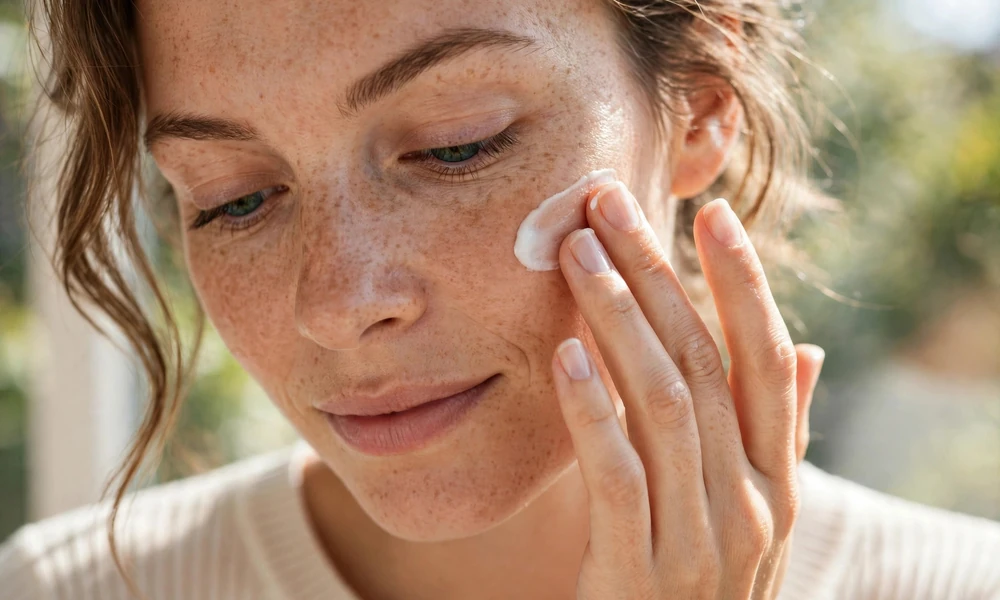
Patch-testing is the habit that prevents most of these problems. Try a new moisturizer on a small area for two or three days before using it on your whole face, and introduce only one new product at a time, so you know what caused a problem if one appears. Our guide to the skin barrier explains why this matters, because a healthy barrier is what keeps a moisturizer feeling soothing instead of stinging, and a damaged barrier is what turns a gentle cream into an irritant.
Keep a note of what you used and when. It sounds fussy, but when a reaction appears two days after a new product, the only way to identify the cause is to know what changed.
9 signs your moisturizer is reacting with your skin
1. Stinging that fades in seconds
What we like: A brief, mild tingle that disappears within thirty seconds is common on dry, freshly exfoliated, or slightly sensitised skin, and it usually means nothing is wrong. What to consider: If the sting happens every time you apply the product, or it is getting worse, the formula may be too strong for your skin right now. Best for: This sign applies to everyone,. Cost: Free to check. Time needed: Thirty seconds of observation.
Do not wash the product off for a brief sting. Wait, and see if it fades. If it does, and there is no redness afterwards, you can keep using the product, but use it less often for a week, or apply it over a damp face, which usually reduces the tingle. If the sting returns stronger each day, stop and switch to a simpler formula.
2. Burning that lingers or spreads
What we like: There is nothing to like about this sign, but it is a clear, useful signal, because it tells you immediately that the product does not suit your skin. What to consider: A burn that lasts minutes, spreads beyond where you applied the cream, or feels worse after five minutes is a reaction, not a tingle. Best for: This sign matters for everyone,. Cost: Free to check. Time needed: A few minutes of observation.
Rinse the product off with lukewarm water, pat dry, and apply nothing else until the burning calms down. Once the skin is calm, go back to the simplest routine you have, and do not reintroduce the product that burned.
3. Redness that spreads or lasts
What we like: Mild, brief pinkness that fades in a few minutes is normal after applying any product,. What to consider: Redness that spreads, deepens, or is still there an hour later is a sign of irritation or allergy, and it should not be ignored. Best for: This sign is most important for people with sensitive, rosacea-prone, or fair skin. Cost: Free to check. Time needed: An hour of observation.
Stop the product, simplify your routine to a gentle cleanser and a plain, fragrance-free moisturizer you already trust, and give the redness a day or two to settle.
4. Peeling or flaking
What we like: A little flaking can be part of normal skin renewal,. What to consider: New, noticeable peeling that starts within days of a new moisturizer, especially around the mouth, nose, or eyes, usually means the formula is too strong or the skin barrier is damaged. Best for: This sign matters most for dry, mature, or over-exfoliated skin. Cost: Free to check. Time needed: A few days of observation.
Stop exfoliating and stop any strong actives, and use only a gentle cleanser and a plain, barrier-supporting moisturizer until the flaking stops. A moisturizer with ceramides is often a good choice during recovery, and our roundup of the best barrier repair creams covers the formulas designed for exactly this situation.
5. Breakouts after a new moisturizer
What we like: A single small spot is normal. What to consider: A cluster of new spots, especially small bumps or whiteheads in areas where you do not usually break out, within a week of starting a new moisturizer, is a sign the formula is too heavy or is clogging your pores. Best for: This sign matters most for oily, combination, or acne-prone skin. Cost: Free to check. Time needed: A week of observation.
Stop the new moisturizer and go back to the one you used before, then wait a week to see if the breakouts calm down. Heavy, rich creams and products with certain oils are the usual culprits for oily skin, and a lighter, gel-based moisturizer is usually a better match.
6. Tightness that gets worse, not better
What we like: A moisturizer should leave skin feeling comfortable and supple,. What to consider: If your skin feels tighter after moisturising than it did before, or the tightness returns within an hour, the product is not hydrating your skin properly, and it may be stripping the barrier instead. Best for: This sign matters most for dry, dehydrated, or mature skin. Cost: Free to check. Time needed: An hour of observation.
Try applying the moisturizer to damp skin, which helps it lock in water, and give it a week. If the tightness persists, the formula is probably too light for your skin, or it contains an ingredient that is drying you out.
7. Itching
What we like: Mild, occasional itching is common and often has nothing to do with your moisturizer,. What to consider: Itching that starts within minutes of applying a new moisturizer, and that keeps coming back every time you use it, is a sign of irritation or allergy, and it should not be ignored. Best for: This sign matters most for sensitive or eczema-prone skin. Cost: Free to check. Time needed: A few minutes of observation.
Stop the product and do not scratch, because scratching damages the barrier further and makes the itching worse. If the itching is intense, spreads, or comes with a rash, seek professional advice, and do not try to treat it with another new product.
8. Swelling
What we like: There is nothing to like about swelling,. What to consider: Swelling of the lips, eyes, or face after applying a moisturizer is a sign of an allergic reaction, and it needs prompt attention. Best for: This sign matters for everyone, and it is the one sign where waiting is not the right response. Cost: Free to check. Time needed: Immediate attention.
Rinse the product off, take an antihistamine if you have one and know it is safe for you, and seek medical advice promptly, especially if the swelling is spreading, or if you have any difficulty breathing or swallowing. Keep the product and its ingredient list, because a clinician or dermatologist will want to see it.
9. Purging versus a reaction, how to tell
What we like: Purging is a real, temporary effect of some active ingredients, and it means the product is speeding up skin renewal,. What to consider: A true reaction is different: it appears in new areas, it itches or burns, and it does not improve with time, while purging appears where you usually break out, is not itchy, and improves within a few weeks. Best for: This sign matters most for people using retinol, exfoliating acids, or other strong actives. Cost: Free to check. Time needed: Two to four weeks of observation.
If the breakouts are in your usual spots, are not itchy or painful, and are slowly improving, it is probably purging, and you can continue cautiously. If the breakouts are in new areas, are itchy, red, or painful, or are getting worse after two weeks, it is a reaction, and you should stop the product.
What to do when a moisturizer reacts
The recovery routine is the same whatever the sign. Stop the product that caused the problem, and stop any other new products you started at the same time. Go back to the simplest routine that has worked for you before, usually a gentle cleanser, a plain fragrance-free moisturizer, and sunscreen.
Choosing the replacement matters. Look for a fragrance-free formula with a short ingredient list, and with barrier-supporting ingredients such as ceramides, glycerin, and hyaluronic acid. Our guide to the best moisturizers for sensitive skin covers the formulas most likely to suit skin that has reacted, because they are designed without the common triggers.
Keep a simple record of what caused the reaction. Note the product name, the ingredients if you can, and what happened. That note is useful in two ways: it stops you buying the same product again, and it helps a dermatologist identify the trigger if you need one.
The caveats that matter
A moisturizer reaction is usually mild, but it is not always a simple irritation. A true allergy can develop to a product you have used happily for months, because allergies can appear at any time, and a reaction that keeps getting worse, spreads, or comes with swelling should always be checked professionally. Do not try to treat a severe reaction with another over-the-counter product, and do not assume that a natural or organic label means a product is safe, because many natural ingredients, including essential oils and plant extracts, are common allergens.
| Detail | What is known |
|---|---|
| Most common triggers | Fragrance, essential oils, preservatives, and strong actives |
| Brief sting under 30 seconds | Usually harmless, especially on dry or freshly exfoliated skin |
| Burning that lingers or spreads | A reaction, stop the product and rinse it off |
| Redness lasting over an hour | A sign of irritation or allergy, simplify your routine |
| New breakouts within a week | Usually a formula that is too heavy or pore-clogging |
| Swelling of lips, eyes, or face | A possible allergic reaction, seek medical advice promptly |
| How to recover | Stop the product, simplify to cleanser and a plain moisturizer, wait a week |
| What it does not mean | It does not mean your skin is broken, or that all moisturizers will react |
If you are pregnant, breastfeeding, or using prescription skincare, check with your clinician or dermatologist before trying a new moisturizer, especially one with active ingredients. Prescription treatments change what your skin can tolerate, and a simple check avoids weeks of irritation.
Checklist: choosing a moisturizer that will not burn
Use these checks before you buy, and again after two weeks of use.
- Check the ingredient list: fragrance-free, short, and without essential oils if your skin is sensitive.
- Patch-test first: apply to your jawline for two or three days before full-face use.
- Introduce one product at a time, so you know what caused a problem if one appears.
- Time any sting: under thirty seconds and fading is usually fine, lingering or spreading is not.
- Keep a note of what you used and when, including the product name and any reaction.
- Simplify first if anything goes wrong: stop the new product, go back to a trusted routine, and wait a week before trying anything new.
Frequently asked questions
Why does my moisturizer burn my face?
It is usually one of three things: your skin barrier is temporarily damaged, the formula contains an irritant such as fragrance or an essential oil, or you have introduced a strong active at the same time. A burn that lingers, spreads, or comes with redness is a reaction, and you should rinse the product off and stop using it.
Is it normal for moisturizer to sting?
A brief, mild tingle is common, especially on dry or freshly exfoliated skin, and it usually fades within thirty seconds. If it does, the product does not suit your skin, and you should stop using it.
Can a moisturizer cause breakouts?
Yes, especially if the formula is too heavy or contains ingredients that clog your pores. A cluster of new spots within a week of starting a new moisturizer, in areas where you do not usually break out, is a sign the formula is wrong for your skin.
What should I do if my moisturizer makes my skin red?
Rinse the product off with lukewarm water, pat dry, and apply nothing else until the redness calms down. If the redness spreads, comes with swelling, or does not improve, seek professional advice.
How do I know if it is purging or a reaction?
Purging appears where you usually break out, is not itchy or painful, and improves within a few weeks. A reaction appears in new areas, itches or burns, and gets worse rather than better.
What is the safest moisturizer for sensitive skin?
Look for a fragrance-free formula with a short ingredient list, and with barrier-supporting ingredients such as ceramides, glycerin, and hyaluronic acid.
The bottom line
A moisturizer that burns is not a product to push through, and it is not a sign that your skin is broken. It is a signal, and the signal is usually clear: a brief sting that fades is fine, while burning that lingers, spreads, or comes with redness, itching, or swelling means stop.
Choose the replacement carefully, patch-test it, and introduce one product at a time. A good moisturizer should feel like nothing at all, just comfortable, hydrated skin, and that is the standard worth holding on to.