

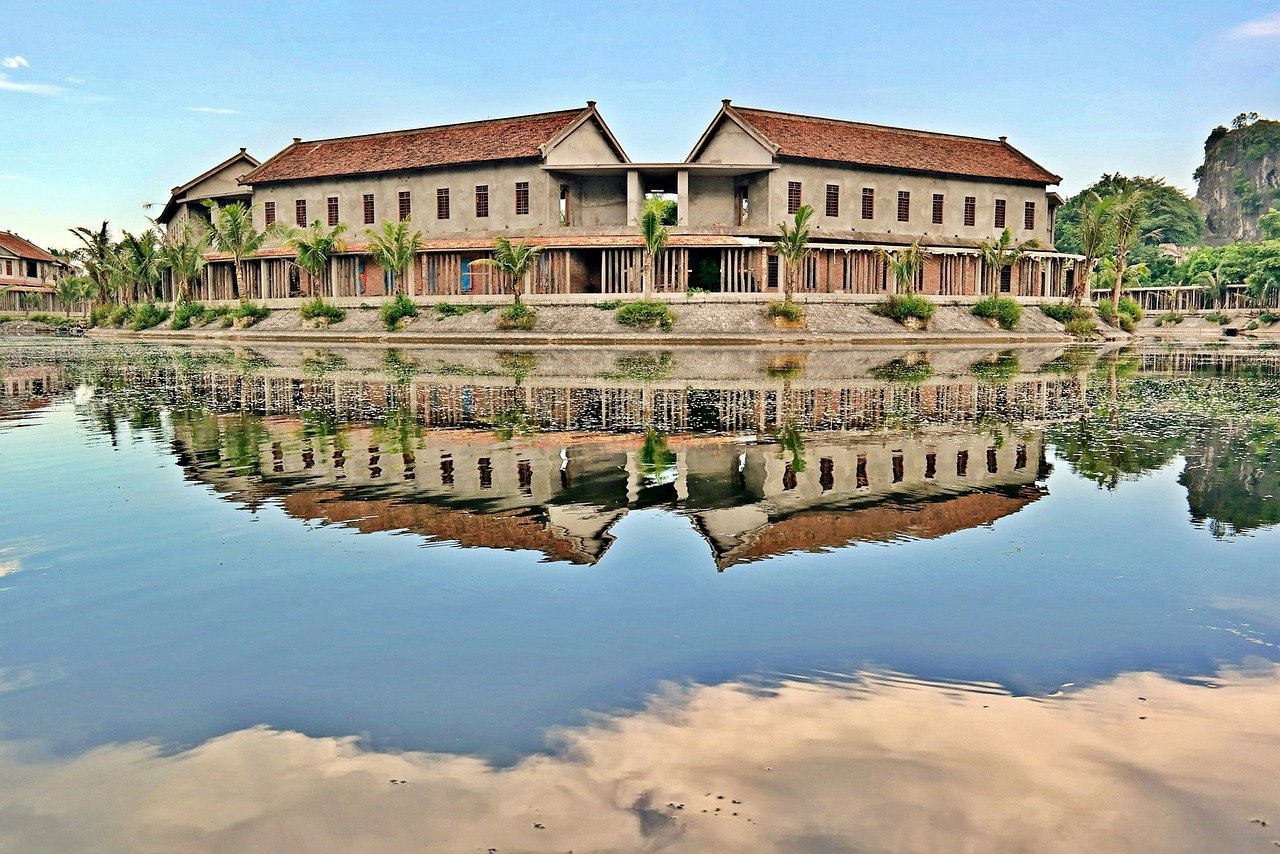
What makes a place worth a two-hour journey from a capital city? In Ninh Binh, the answer floats past you on a wooden boat: limestone towers rising straight out of flooded rice paddies, caves that swallow the river whole, and a silence broken only by the dip of an oar. This province in northern Vietnam’s Red River Delta has moved from a quiet stopover to one of the country’s headline destinations. Here is what actually shapes a visit, from the UNESCO-listed core to the practical details that decide whether your day runs smoothly or turns into a queue.
Where Ninh Binh Sits and Why It Matters
Ninh Binh is a province in the Red River Delta of northern Vietnam, south of Hanoi. Its capital city carries the same name. The province is roughly 90 to 100 kilometers from Hanoi depending on the route, which makes it reachable by road or rail within a few hours.
That proximity explains a lot. Ninh Binh works as a day trip, but it rewards an overnight stay far more. The landscape is a mix of karst limestone peaks, river valleys, wetlands, and low-lying coastal districts that face flooding and saltwater intrusion. Inland, the scenery is dramatic. Along the coast, the concerns are more practical and less photogenic.
The province has two very different personalities. One is ancient: a 10th-century capital, temple complexes, and cave shrines. The other is geological: a drowned karst landscape shaped over millions of years, now protected as a World Heritage site. Most itineraries touch both, often in the same afternoon.
Trang An: The UNESCO-Listed Core

The Trang An Landscape Complex was inscribed on the UNESCO World Heritage List in 2014 under mixed cultural and natural criteria. That dual listing is unusual. It means the site matters both for what people built there and for what nature carved there.
Practically, Trang An is a network of boat routes through flooded valleys, limestone caves, and temple stops. Visitors board small rowboats, often rowed by local women using their feet on the oars, and pass through a series of low cave passages. The water level determines how much ducking is required. In the dry season, some passages are tight. After heavy rain, routes may change or close.
A few things experienced visitors learn quickly:
- Route choice matters more than ticket price. Different piers serve different routes, and each has its own cave sequence and length. Ask before buying.
- Go early. Boats start in the morning, and the first hour or two is cooler, quieter, and better for photography.
- Bring a hat and water. There is little shade on the water, and trips run one to two hours or more.
- Cash is king. Smaller vendors and ticket counters may not handle cards well.
The common mistake is treating Trang An as a quick photo stop. It is not. A proper boat trip eats a solid half-day, and rushing it defeats the point.
Tam Coc: The Three Caves on the Ngo Dong River
Tam Coc means “three caves,” and the name is literal. Boat trips here follow the Ngo Dong River through three cave passages, with rice paddies pressing in on both sides. It is often described as “Ha Long Bay on land,” a nickname that is promotional rather than official, but it captures the visual effect.
Tam Coc is the more heavily visited of the two boat sites, and it shows. At peak times, boats form lines at the cave entrances. Photographers who want the classic shot of the river curving between karst peaks should aim for early morning or late afternoon, when the light softens and the crowds thin.
One honest comparison helps set expectations:
| Feature | Trang An | Tam Coc |
|---|---|---|
| Status | UNESCO World Heritage complex | Popular boat site on the Ngo Dong River |
| Setting | Flooded valleys, multiple cave routes, temple stops | River through three caves, rice paddies |
| Feel | Larger, more varied, slightly more spread out | Compact, scenic, busier at peak times |
| Best for | Half-day exploration with variety | Classic scenery and shorter trips |
Both are worth doing if time allows. If only one fits, Trang An offers more variety, while Tam Coc delivers the postcard view with less planning.
Hoa Lu: A Capital Before Hanoi
Hoa Lu was the capital of the Dinh and early Le dynasties in the 10th and early 11th centuries. Today it is a temple site set among the same limestone hills, with gates, courtyards, and shrines that reward a slow walk rather than a sprint.
History here is compact but significant. This was the seat of power before the capital moved to what became Hanoi. The temples are active places of worship, not museums, so dress respectfully and keep voices low in the inner sanctuaries.
Nearby, Bai Dinh Pagoda is a large modern temple complex, often cited as one of Southeast Asia’s biggest. It hosted Vesak events in 2014. Treat “largest” claims with caution, since they vary by measurement, but the scale is genuinely impressive. The site is sprawling, with long corridors and a lot of stairs. Visitors with mobility concerns should plan for shuttle rides and rest stops.
Cuc Phuong National Park: Vietnam’s First
Cuc Phuong National Park, established in 1962, was Vietnam’s first national park. It lies partly in Ninh Binh and is known for primate rescue work and old-growth forest. It sits apart from the Trang An cluster, so it needs its own half-day or full day.
The park suits travelers who want forest rather than river. Trails range from easy walks to longer hikes, and the primate rescue center offers a sobering look at conservation work. Birders and butterfly watchers do well here, especially in warmer months.
The practical warning: distances inside the park are larger than they look on a map, and transport between trailheads is limited. Arrange a driver or join an organized tour rather than assuming you can walk between everything.
How to Get There and Get Around
Most visitors base themselves in Hanoi and travel south. Road transfers take a few hours depending on traffic and route. The train is an option for those who prefer rail, though station logistics at both ends need planning.
Once in Ninh Binh, the sites are spread out. Trang An, Tam Coc, and Hoa Lu sit within a rough cluster. Cuc Phuong is farther. Options include:
- Hire a driver for the day. The most efficient choice for two or three sites, especially for groups.
- Rent a motorbike. Popular with confident riders, but traffic and road conditions demand care.
- Cycle. Good for the Tam Coc and Hoa Lu area, less practical for longer hauls.
- Join a small-group tour. Useful if you want logistics handled and don’t mind fixed schedules.
A common mistake is underestimating travel time between sites. Another is booking a day trip that tries to cover Trang An, Tam Coc, Hoa Lu, and Bai Dinh in one go. That schedule exists, but it produces a blur of ticket gates rather than a memorable day.
When to Go and What to Expect
Spring and autumn tend to offer the most comfortable temperatures. Summer brings heat and heavy rain, which can affect boat routes and trail conditions. Winter is cooler and often misty, which makes for atmospheric photos but chilly mornings on the water.
Rice season changes the scenery entirely. When the paddies are green or golden, Tam Coc looks its best. Timing varies year to year, so ask locally rather than relying on a fixed calendar.
Crowding is the real variable. Tourism has grown quickly since the 2010s, and Trang An and Tam Coc both feel the pressure at peak times. Going early, avoiding weekends and Vietnamese public holidays, and choosing less popular routes all help. So does accepting that some waiting is part of the experience.
Practical Tips That Actually Help
These are the details that separate a smooth visit from a frustrating one:
- Start before 7:30 a.m. Boats, temples, and roads are all calmer.
- Carry small cash notes. Change can be scarce.
- Wear shoes you can get wet. Cave passages and wet piers are common.
- Bring sun protection and insect repellent. The wetlands are beautiful and buggy.
- Check boat route options at the pier. Don’t assume the first ticket offered is the best fit.
- Respect temple etiquette. Cover shoulders and knees, and remove hats inside shrines.
- Book accommodation near Tam Coc or the city center depending on whether you want scenery or convenience.
Travelers with textured hair often ask about humidity management on long boat trips. The same principles that apply to caring for 4c hair in damp climates apply here: protective styles, breathable hats, and a light approach to products. Humidity is relentless in summer, and a packed itinerary plus heat is a bad combination for anyone unprepared. (2b hair)
If you are building a longer Vietnam route, Ninh Binh pairs naturally with Hanoi and the coast. Some travelers slot it in after a few days in the capital, then continue south. Others treat it as a reset between city stops, which suits the slower rhythm of boat trips and temple walks. The row of karst peaks at sunrise is the kind of image that ends up on the wall at home.
Common Mistakes to Avoid
First, don’t schedule Ninh Binh as a pure day trip from Hanoi if you can avoid it. The travel time eats the best light. Second, don’t skip Hoa Lu because it looks like “just temples.” The historical context makes the landscape legible. Third, don’t ignore weather. Heavy rain can close cave passages, and heat can flatten a tight schedule.
Finally, don’t treat the province as a single attraction. Trang An, Tam Coc, Hoa Lu, Bai Dinh, and Cuc Phuong are distinct experiences with different pacing. Pick two or three, do them well, and leave the rest for a return trip.
Conclusion
Ninh Binh earns its reputation, but not because of a single photo. The province works because geology, history, and daily life sit close together: a 10th-century capital within cycling distance of flooded caves, a national park with rescue centers, and boat routes that still feel slightly wild despite the crowds. The travelers who enjoy it most are the ones who slow down, start early, and accept that the best moments happen on the water, not in the queue. Plan for two days if you can, choose your boat route deliberately, and let the landscape set the pace.
Frequently Asked Questions
Is Ninh Binh worth visiting?
Yes, for most travelers. The Trang An Landscape Complex is a UNESCO World Heritage site, and the combination of boat trips, caves, temples, and a national park gives the province unusual variety for its size. It suits both short stopovers and slower two-day visits.
How far is Ninh Binh from Hanoi?
It is roughly 90 to 100 kilometers south of Hanoi, depending on the route. Travel by road or rail takes a few hours. Many visitors come as a day trip, though staying overnight makes the schedule far more comfortable.
What is the difference between Trang An and Tam Coc?
Trang An is a UNESCO-listed landscape complex with multiple boat routes through flooded valleys and caves. Tam Coc is a popular boat site on the Ngo Dong River that passes through three caves. Trang An offers more variety, while Tam Coc delivers the classic rice-paddy-and-karst view.
When is the best time to visit Ninh Binh?
Spring and autumn generally offer the most comfortable weather. Rice season, when the paddies turn green or gold, is a visual highlight, though exact timing varies. Summer brings heat and heavy rain that can affect boat routes.
How many days do you need in Ninh Binh?
Two days covers the highlights comfortably: one day for Trang An or Tam Coc plus Hoa Lu, and another for Bai Dinh or Cuc Phuong National Park. A single day is possible but rushed, especially from Hanoi.
Can you visit Ninh Binh independently?
Yes. Independent travel is common, with motorbike rental, cycling, and hired drivers all viable. The main challenges are spread-out sites and limited public transport between them. Booking a driver for a day often costs less than the time lost figuring out connections.









